
Autism Treatment Highland Park: When a Child Changes the Subject During Conversation

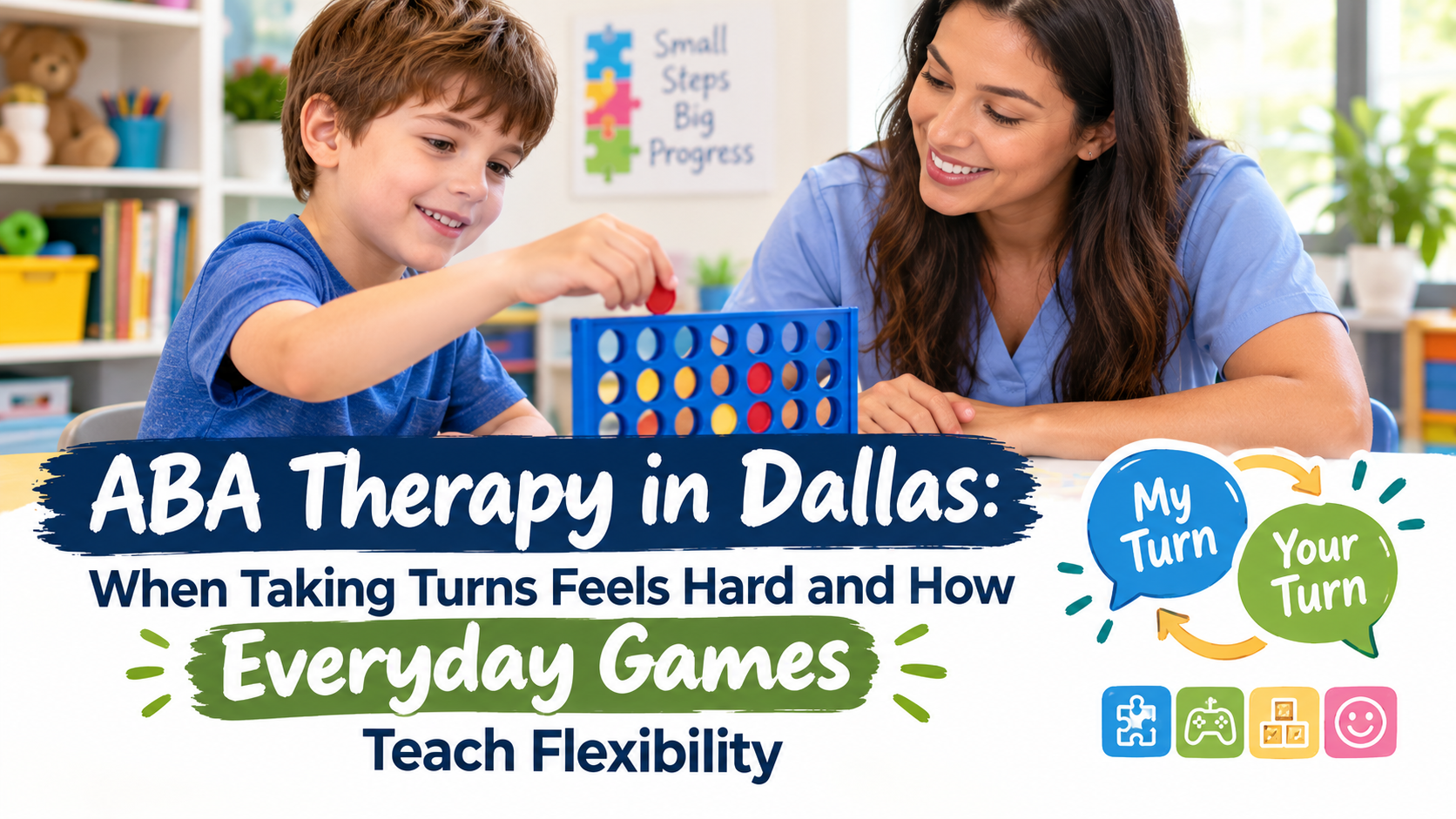
Turn-taking sounds simple on paper, but for many children — especially those going through ABA Therapy, early intervention, or autism assessment tests — conversation can feel like a fast-moving train. They want to jump in, share their thoughts, and respond immediately. When they interrupt, it’s usually not rudeness. It’s communication without a roadmap.
In a one-on-one session, an RBT often faces this exact challenge. One child wants to talk, the other can’t keep track of when it’s their turn, and the back-and-forth rhythm that makes conversation feel natural starts to fall apart. That’s where visual supports come in, and one of the simplest yet most powerful tools is a visual timer.
This blog walks you through how turn-taking can be taught step-by-step, why it matters, and how visual supports can help your child practice social communication in a way that feels safe and structured. These same concepts show up frequently during autism assessment questions, autism assessment tools, and even in ABA screening near me searches when families look for help. Whether you’re working with a local ABA clinic, an ABA clinic in Dallas, an Autism clinic, or even exploring options like Autism testing Dallas, understanding how turn-taking is taught can give you valuable insight into what to expect.
Turn-taking is the backbone of everyday interaction. It’s how we chat with friends, respond in class, talk at the dinner table, and share stories. When children struggle with waiting, interrupting, or listening, it can affect:
During ABA Therapy, RBTs frequently work on these skills because they support long-term independence. They help children communicate clearly, express needs respectfully, and understand the flow of a conversation.
Parents who go through autism assessment tests or ask autism assessment questions often learn that social communication is a core area evaluated. So when a child has difficulty with conversational timing, RBTs step in early with structured teaching strategies.
In a typical one-on-one session, the RBT notices the child interrupting during almost every conversation. Sometimes the child jumps in with exciting thoughts. Other times they feel anxious that they’ll forget what they want to say. In some cases, they simply don’t realize it isn’t their turn.
Because this behavior shows up across settings — home, school, therapy — it becomes an important target for treatment. Families searching for ABA therapy near me, ABA in Dallas, ABA, Dallas, or even an ABA clinic often want support for exactly this type of social challenge.
The RBT introduces a visual timer — a simple tool, often using color or movement — that shows whose turn it is to speak. When the child sees their color showing, they know it’s their moment to talk. When the timer switches, they practice listening.
This strategy supports the child in several ways:
Children who struggle with social communication often do better when they know what’s coming next. A visual timer takes the guesswork out of turn-taking.
Many children benefit from structured communication that isn’t rushed or overwhelming.
Instead of hearing “Wait your turn” repeatedly, they see a clear cue that tells them when to jump in.
Learning to listen is just as important as talking.
RBTs use this method in many environments — from home sessions to settings like an ABA clinic, an Autism clinic in Dallas, or programs that offer occupational therapy and tutoring for kids.
Here’s how a session typically unfolds:
The RBT introduces the timer and explains, in simple language, how each person gets a turn. For example:
“When the blue side is showing, it’s your turn to talk. When it switches to red, it’s my turn.”
Turns may start at 10–20 seconds. This keeps the child engaged and encourages success early in the process.
The RBT demonstrates waiting, hands still, eyes watching, body quiet. Children often learn best when they see the behavior instead of just hearing instructions.
They talk about a favorite topic — dinosaurs, video games, pets, or school. The RBT guides the child through:
When the child waits, even for a few seconds, the RBT praises the effort.
“That was great waiting! I can tell you’re working hard.”
As the child improves, the RBT increases the duration of each turn. This builds stamina and confidence.
Eventually, the timer fades out and the child uses internal cues rather than visual ones.
This structured approach is often part of the social goals developed during autism assessment tests, autism assessment tools, or early screenings like ABA screening Dallas or ABA screening near me.
Visual supports are widely used during ABA Therapy, occupational therapy and tutoring for kids, and even during Autism test procedures. They work because they:
Children often feel more in control when they can see the plan instead of relying only on verbal instructions. Many families visiting an Autism Clinic, an ABA clinic in Dallas, or an Autism Clinic in Dallas are introduced to visual tools early in the process for this reason.
Turn-taking affects daily life in ways parents often don’t expect. As the child becomes more comfortable with conversational timing, parents start to notice improvements such as:
Teachers may comment on improved participation and fewer interruptions.
Family routines like dinner-time talking or sharing stories become smoother.
Friends enjoy talking with a child who listens and responds naturally.
The child participates more during activities, clubs, or social events.
This growth often pairs well with early evaluations such as Autism testing Dallas, autism assessment questions, or support inside an ABA clinic. Turn-taking is a foundation skill, and once it improves, many other social behaviors follow.
You don’t need a therapy room to reinforce turn-taking. A few simple strategies make a big difference:
Kitchen timers, smartphone visual timers, or color-changing lights work well.
Board games provide natural opportunities to practice waiting and responding.
Say things like:
“I’ll talk first, then it’s your turn.”
Short exchanges help your child succeed and build confidence.
This skill grows slowly but steadily with repetition.
Parents exploring ABA therapy near me, ABA in Dallas, ABA therapy near me, or an Autism Clinic often receive similar guidance during parent training sessions. Reinforcement at home is just as important as what happens in the therapy room.
If your child continues to interrupt, becomes frustrated during conversations, or seems unsure about social expectations, it may help to seek support through:
Families in the DFW area often start with providers offering ABA, Dallas, ABA in Dallas, or clinics that assist with autism assessment tests and autism assessment tools.
Teaching turn-taking is not about stopping your child from talking — it’s about helping them feel confident and connected during conversations. With patient guidance, a clear visual timer, and consistent practice, children learn to balance speaking and listening in a way that opens the door to stronger relationships.
If you’re already exploring resources like ABA clinic, ABA therapy near me, ABA screening near me, or Autism testing Dallas, you’re on the right path. With the right support, turn-taking becomes not just a skill, but a natural part of everyday communication.
Contact us at 972–310–4991 or visit https://radiantspectrumtherapy.com/ to learn more.