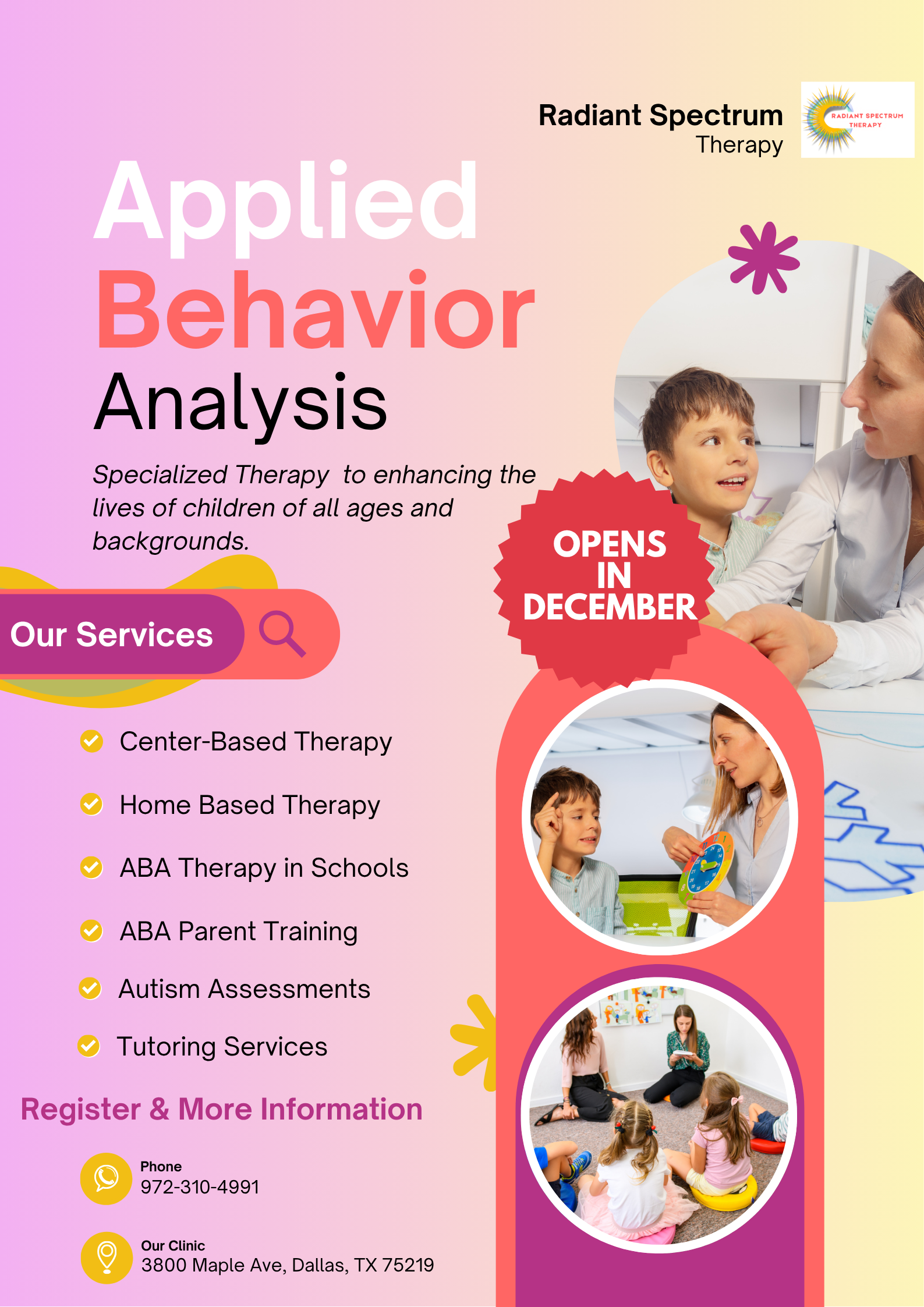
Showcasing practical ways ABA techniques are integrated into everyday life for different age groups.

ABA is a therapy based on the science of learning and behavior. While often associated with clinical settings, its principles are incredibly versatile and can be applied in everyday situations to teach new skills and reduce challenging behaviors. This article explores how ABA extends beyond the clinic walls, integrating into homes, schools, and workplaces to support individuals of all ages.
This article will showcase the practical ways ABA techniques are integrated into daily life. We will explore how learning can become organic and fun, and how specific challenges can be addressed effectively. Here are some of the key applications we’ll cover:
Natural Environment Training (NET)
Addressing challenges like food selectivity
Teaching workplace and independent living skills
Empowering parents with effective strategies
The true power of ABA is realized when skills learned in therapy are generalized to real-world environments. By involving parents and integrating strategies into daily routines, individuals can achieve greater independence and a higher quality of life. The goal is not just to learn in a session, but to thrive in life.
A Spectrum of Support
ABA offers a wide range of strategies that can be tailored to individual needs. These techniques are not a one-size-fits-all solution but a flexible toolkit. Below are some of the core areas where ABA makes a significant impact in daily life.
Natural Environment Training (NET) is a cornerstone of applying ABA in real life. Instead of structured drills, NET uses the individual’s natural interests and motivations to teach new skills. For example, learning colors can happen during playtime with blocks, and communication skills can be practiced during snack time by requesting desired foods. This makes learning engaging, fun, and highly effective, as skills are learned in the context where they will be used.
| # | Application Area |
|---|---|
| 01 | Natural Environment Training |
| 02 | Skill Acquisition |
| 03 | Emotional Regulation |
| 04 | Daily Living Skills |
| 05 | Reducing Challenging Behaviors |
| 06 | Social Skills Development |
| 07 | Parent & Caregiver Training |
| 08 | Workplace Readiness |
| 09 | Academic Support |
ABA is a lifelong support system that extends well into adulthood.
For adults with autism, ABA principles can be crucial for developing independence. This includes teaching workplace readiness skills, such as following multi-step instructions, professional communication, and time management. It also supports independent living skills, like cooking, cleaning, and managing finances, often through a technique called task analysis, which breaks down complex skills into smaller, manageable steps.
Addressing Specific Challenges
ABA provides effective strategies for specific difficulties. For example, food selectivity can be addressed through gradual exposure and positive reinforcement, making mealtimes less stressful. Techniques are also used to teach emotional regulation, helping individuals identify their feelings and develop appropriate coping strategies for frustration or anxiety.
The Crucial Role of Parents
Parent involvement is key to success. When parents and caregivers are trained to use ABA strategies, they can provide consistent support at home, at the park, or in the grocery store. This consistency helps skills generalize across different environments and ensures that learning is continuous, reinforcing progress made in therapy sessions and fostering long-term success.