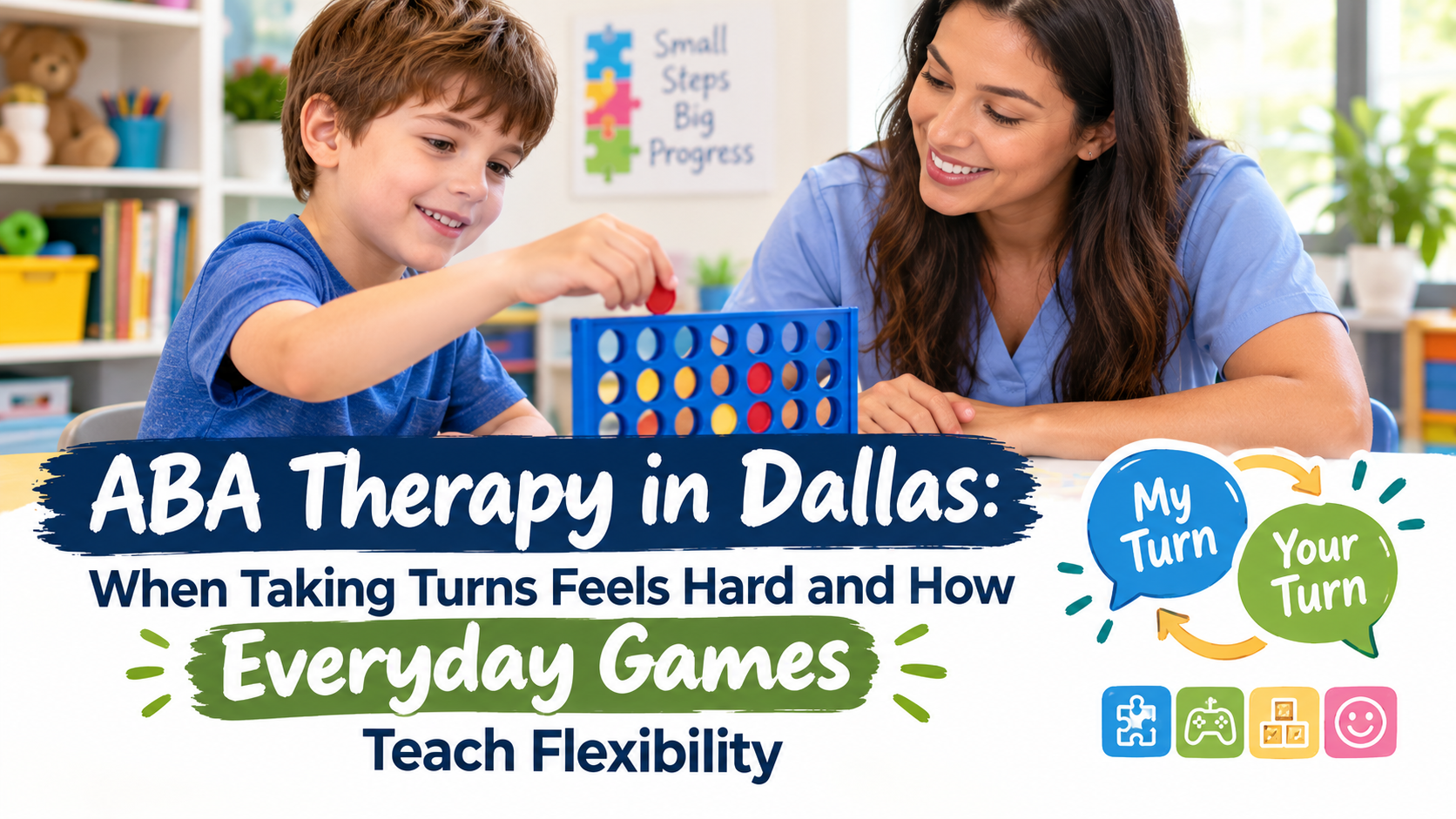

Autism Treatment Highland Park: When a Child Changes the Subject During Conversation

When a child is receiving Applied Behavior Analysis (ABA) therapy, progress doesn’t just happen during therapy sessions. The real impact often comes from what happens between sessions — in the everyday routines, interactions, and moments at home. That’s where parent training with a BCBA becomes essential.
At Radiant Spectrum Therapy, parent training is designed to empower families with practical tools, realistic goals, and confidence. One of the most common questions parents ask is: How do I set goals that actually work — and how do I follow through at home?
This blog will walk you through:
Whether your child is early in their ABA journey or you’re refining skills already introduced, this guide will help you turn therapy goals into meaningful daily habits.
Goal setting is the foundation of ABA therapy. Without clear, measurable goals, progress can feel confusing or inconsistent. But goals aren’t meant to be overwhelming. In fact, the most successful goals are often small, specific, and realistic.
BCBAs at Radiant Spectrum Therapy design goals based on:
The goal is not perfection — it’s progress that fits naturally into your family’s daily rhythm.
Long-term goals focus on big-picture outcomes, such as:
These goals can take months or years to achieve.
Short-term goals break long-term goals into manageable steps. For example:
Short-term goals are actionable, observable, and achievable, making them easier for parents to practice daily.
Parent training with a BCBA is not about handing you a checklist and expecting perfection. It’s about collaboration.
During parent training, your BCBA will:
This partnership ensures goals are realistic for your home, not just effective in a clinical setting.
One of the most common mistakes parents make is trying to work on too many skills at once. A BCBA will typically recommend focusing on one to three short-term goals at a time.
When selecting goals, ask:
For example, if mornings are chaotic, a goal related to transitioning from pajamas to clothes may be more meaningful than a table-based task.
The most effective parent training strategies focus on natural environment teaching — using real-life moments instead of structured drills.
Your BCBA will help you identify when and where each goal fits best so practice feels natural rather than forced.
Consistency is key in ABA therapy. During parent training, your BCBA will coach you on:
Reinforcement doesn’t always mean treats or toys. It can include:
The goal is to make success motivating and meaningful for your child.
Progress is not linear, and that’s okay. Short-term goals are designed to build confidence for both parents and children.
If a goal feels too difficult:
Parent training emphasizes flexibility. What works one week may need adjusting the next — and that’s a normal part of the process.
Tracking progress helps BCBAs adjust goals effectively, but it shouldn’t feel overwhelming. Your BCBA may suggest:
The purpose of data is not judgment — it’s guidance. Honest feedback helps ensure goals stay aligned with your child’s needs.
Parent training focuses on using time you already have, not adding extra tasks.
Your BCBA will model strategies, provide feedback, and remind you that learning takes time — for parents too.
This is extremely common. Parent training helps bridge that gap by teaching strategies that work in real-life environments.
Research consistently shows that children make greater progress when parents are actively involved. Parent training:
Setting short-term goals is not about perfection or rigid expectations. It’s about creating opportunities for growth in everyday moments.
With guidance from a BCBA, parent training becomes a powerful tool — one that turns daily routines into meaningful learning experiences. When goals are realistic, flexible, and woven into daily life, progress becomes sustainable and rewarding for the entire family.
Radiant Spectrum Therapy is committed to supporting parents every step of the way, ensuring that therapy doesn’t end when the session does — it continues where it matters most: at home.
Contact us at 972–310–4991 or visit https://radiantspectrumtherapy.com/ to learn more.