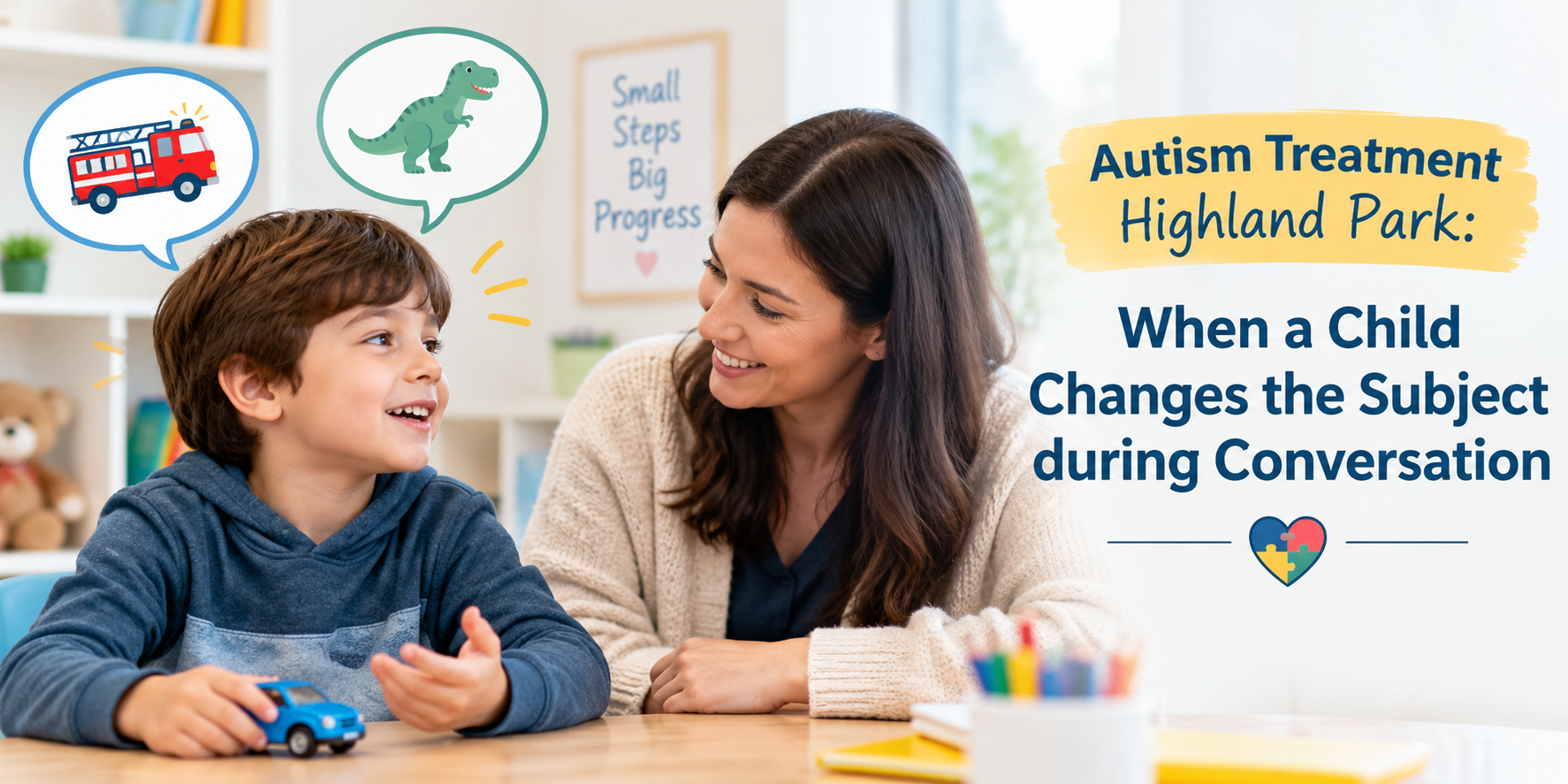
Autism Treatment Highland Park: When a Child Changes the Subject During Conversation

In behavioral therapy spaces, social validity has long been treated like a checkbox. Does the goal look appropriate? Would a typical person approve of it? Does it align with school, workplace, or family expectations?
But in 2026, that outdated definition is no longer enough.
True social validity is no longer about compliance, conformity, or appearing “typical.” It’s about whether a goal genuinely improves a client’s life as they experience it. It’s about relevance, dignity, and respect. And most importantly, it’s about whose standards we’re using when we define “success.”
At Radiant Spectrum Therapy, social validity isn’t a theoretical concept — it’s a daily clinical decision that shapes how goals are written, measured, and adjusted over time.
The concept of social validity in ABA therapy originally emerged to answer an important question: Are we working on things that actually matter? That question was well-intentioned. But over time, it often became filtered through a narrow lens.
Historically, goals were considered socially valid if they:
What got lost was the client’s internal experience.
A goal could technically be “socially acceptable” while still:
In other words, something could look successful on paper while quietly harming the person receiving services.
In 2026, client-centered behavioral therapy has shifted the question from “Does this behavior look appropriate?” to “Does this goal improve the client’s quality of life?”
Modern social validity asks:
This reframe recognizes that neurodiversity-affirming therapy is not about erasing difference — it’s about building skills that support safety, communication, regulation, and self-advocacy without demanding conformity.
One of the most important shifts in ethical ABA therapy is acknowledging that therapy goals have often been written to make other people more comfortable.
Examples include:
In 2026, socially valid goals start with a different anchor point: the client’s real daily life.
That includes:
A goal is not socially valid if it only benefits teachers, caregivers, or systems — even if it looks polished in a progress report.
A major evolution in behavioral goals in ABA is separating function from appearance.
For example:
Social validity in 2026 prioritizes what works over what looks normal.
That means therapists are expected to ask harder questions, not default to tradition.
A core component of social validity in autism therapy is meaningful client input. This doesn’t disappear just because a client is young, minimally verbal, or communicates differently.
Client voice can show up through:
In 2026, ignoring these indicators is considered poor clinical practice.
Goals that consistently trigger distress, shutdown, or escalation — even if they’re technically achievable — are not socially valid. Period.
Family involvement remains essential in individualized ABA therapy, but social validity is not the same as caregiver convenience.
Ethical practice requires balancing:
A goal may need revision if it:
In 2026, strong providers help families understand why certain goals are being adjusted — not simply agree to everything requested.
Traditional data collection doesn’t always capture quality of life.
Modern ABA therapy outcomes also look at:
If progress only exists during therapy sessions — but disappears at home or school — social validity should be re-evaluated.
When social validity is misunderstood, therapy risks becoming something clients endure instead of something that supports them.
But when goals are rooted in real life:
At Radiant Spectrum Therapy, social validity is not a buzzword. It’s a commitment to ethical, compassionate, and truly individualized care — care that evolves as our understanding of neurodiversity evolves.
In 2026, social validity in behavioral therapy means this:
If a goal doesn’t improve the client’s lived experience, it doesn’t belong in the treatment plan.
It’s no longer enough for goals to look good on paper. They must work in the client’s real world — their home, their relationships, their sensory reality, and their future.
That’s not lowering standards.
That’s raising them.
Contact us at 972–310–4991 or visit https://radiantspectrumtherapy.com/ to learn more.