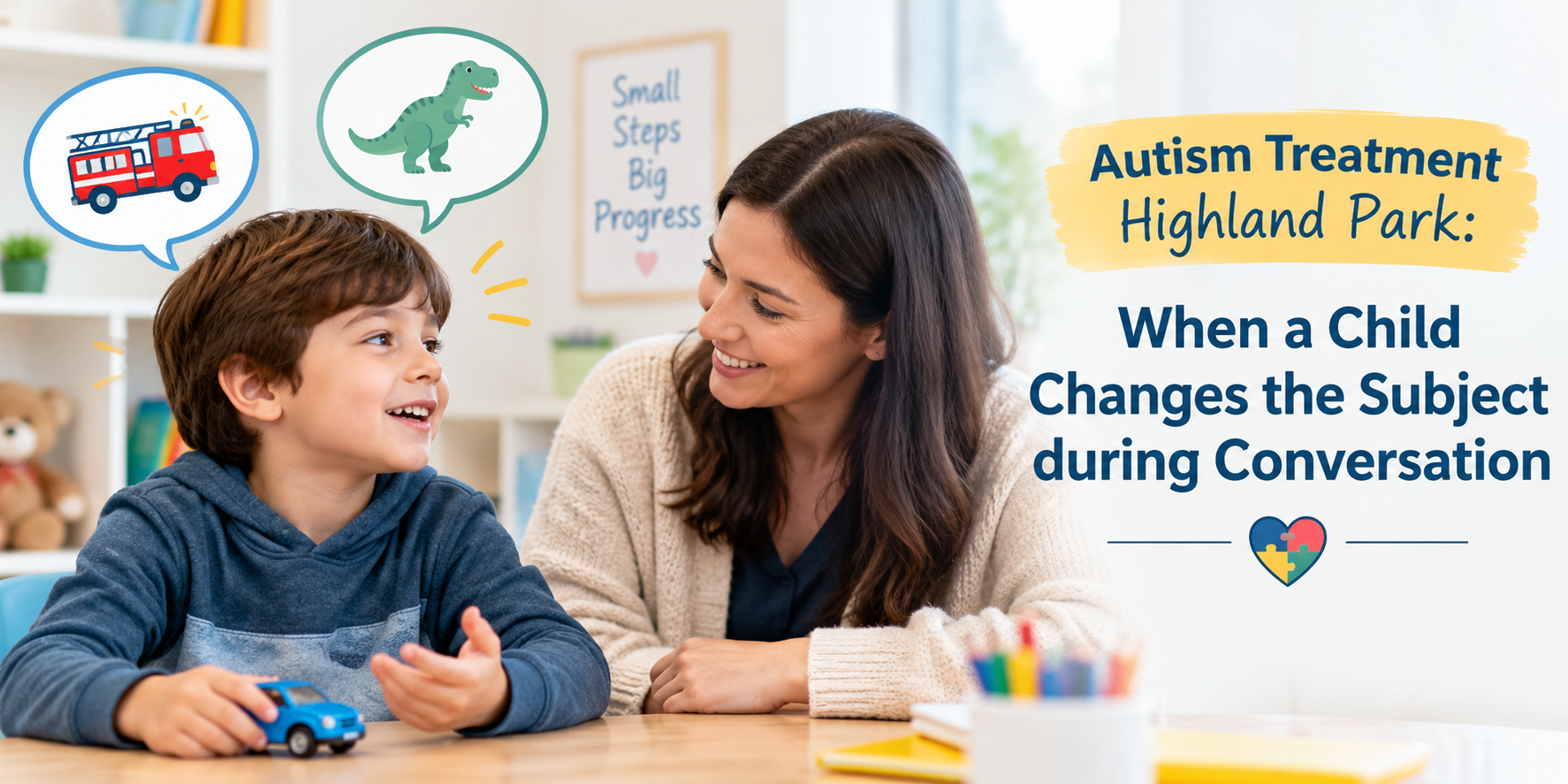
Autism Treatment Highland Park: When a Child Changes the Subject During Conversation

Public outings can be overwhelming for many children and adults with sensory sensitivities. Something as routine as a grocery store run or a car ride during a community safety event can quickly turn into a stressful experience when unfamiliar sounds, bright lights, strong smells, or unexpected transitions enter the picture.
At Radiant Spectrum Therapy, we believe preparation is one of the most powerful tools families can use to reduce sensory overload and build confidence in public spaces. One of the most effective strategies we recommend is the use of public outing “go-bags” — personalized, sensory-friendly kits designed specifically for high-stress environments.
These aren’t just bags filled with distractions. When thoughtfully curated, go-bags become portable regulation tools that support emotional resilience, independence, and participation in everyday life.
In this post, we’ll explore how to create sensory-friendly go-bags for two common high-stress situations: grocery shopping and National Child Passenger Safety Week car rides. We’ll also walk through why these kits matter, what to include, and how to tailor them to your child’s unique sensory profile.
Children with sensory processing differences, autism spectrum disorder, ADHD, anxiety, or developmental delays often experience the world more intensely. Public environments are unpredictable by nature, and unpredictability is a major trigger for sensory overload.
A well-designed go-bag offers:
From an occupational therapy perspective, go-bags align beautifully with sensory integration strategies, emotional regulation support, and functional life skills development.
When used consistently, they also help children learn what helps them feel better — an essential step toward long-term independence.
Before building a go-bag, it’s important to understand your child’s sensory preferences and sensitivities. Sensory needs are highly individual, and what calms one child may overstimulate another.
Consider:
If your child receives occupational therapy or sensory-based therapy services, their therapist can help identify specific sensory strategies that are most effective for them.
Grocery stores combine almost every sensory trigger imaginable:
For many families, grocery shopping becomes one of the most avoided public outings. A sensory-friendly go-bag can make a meaningful difference.
1. Noise-Reducing Tools
These help reduce auditory overload without eliminating awareness entirely.
2. Fidget and Tactile Items
Fidgets provide proprioceptive input and help regulate nervous system responses during waiting periods.
3. Visual Supports
Visual structure can dramatically reduce anxiety around transitions.
4. Comfort Objects
Familiarity equals safety in overstimulating environments.
5. Oral Sensory Support
Oral input is grounding and can help regulate attention and stress.
Over time, grocery shopping can become a skill-building opportunity rather than a source of dread.
National Child Passenger Safety Week often includes car seat checks, community events, longer drives, and unfamiliar routines. For children with sensory sensitivities, car rides can present unique challenges:
Preparing a car-specific go-bag helps children feel secure and supported throughout the ride.
1. Deep Pressure and Body Awareness Tools
Deep pressure input helps calm the nervous system during motion.
Predictability is especially important during longer drives.
These support proprioceptive input while seated.
4. Comfort and Familiarity Items
Smell is a powerful regulator and memory cue.
Giving children language for their feelings reduces meltdowns and builds self-advocacy skills.
A go-bag is only effective if the child knows how and when to use it.
Practice at home first:
Over time, children learn to identify their needs and independently reach for supportive tools — a huge milestone in emotional regulation development.
Sensory needs evolve. What works at age four may not work at age eight. Revisit go-bags regularly and involve your child in the process when appropriate.
Ask:
Empowering children to participate in their own regulation strategies fosters confidence and autonomy.
At Radiant Spectrum Therapy, we incorporate go-bags into a broader therapeutic framework that may include
Go-bags are not a one-size-fits-all solution — but when paired with professional guidance, they become a powerful tool for participation in daily life.
Public outings don’t have to be avoided or endured. With thoughtful preparation and sensory-friendly strategies, families can reclaim everyday experiences that once felt impossible.
Public outing go-bags are more than convenience items — they’re bridges to inclusion, confidence, and connection.
Whether you’re navigating a grocery store aisle or preparing for a car safety event, having the right tools on hand can transform stress into success — one outing at a time.
Contact us at 972–310–4991 or visit https://radiantspectrumtherapy.com/ to learn more.