
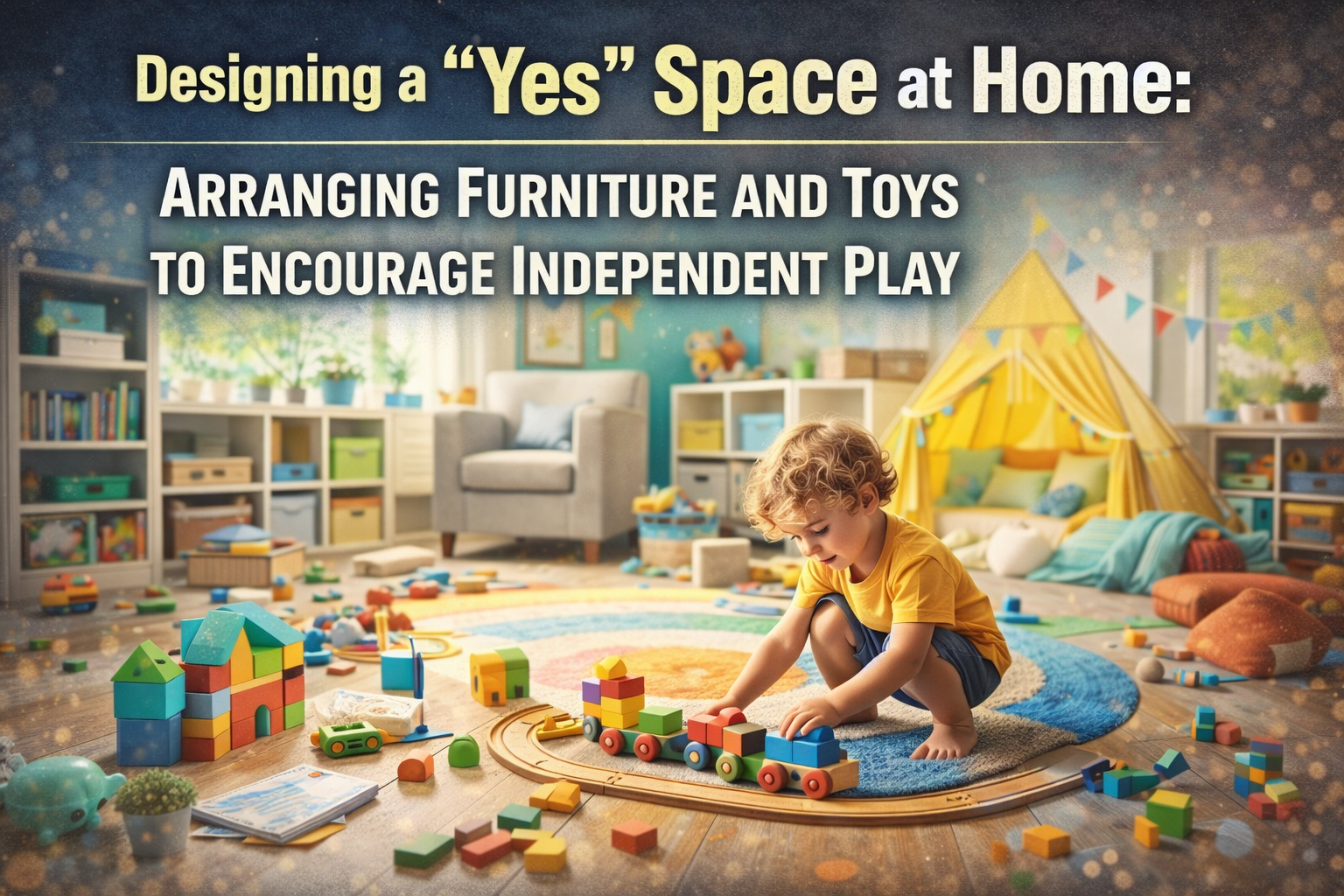
Tip: Use rugs or floor mats to visually define the space. This helps children understand boundaries and increases the sense of ownership over their “Yes” space.
2. Simplify Furniture Layout
The furniture in a “Yes” space should be minimal, safe, and functional. Avoid cluttered setups that can overwhelm a child. Consider the following:
- Low shelves for toy storage that your child can access independently.
- Soft seating like bean bags or small chairs that provide comfort.
- Tables or surfaces at the child’s height for activities such as drawing or building.
This aligns with ABA therapy principles by reducing frustration, promoting independence, and making the environment predictable and manageable.
3. Organize Toys Strategically
Not all toys belong in a “Yes” space. Choose items that are safe, age-appropriate, and conducive to learning and exploration. Some tips for organization:
- Store toys in bins or baskets that are easy to reach and labeled (with pictures for non-readers).
- Rotate toys periodically to maintain novelty and engagement.
- Place toys that encourage problem-solving, sensory exploration, or imaginative play prominently.
By carefully selecting and arranging toys, you can increase opportunities for positive reinforcement and skill development, key components of ABA therapy.
4. Minimize Triggers
Observe your child to identify triggers that lead to frustration or negative behavior. Common triggers include overstimulating environments, toys that are too advanced, or areas with constant interruptions. Adjust the “Yes” space accordingly:
- Keep visual distractions minimal.
- Ensure there is adequate space for movement, especially for children with high energy levels.
- Introduce calming elements like soft lighting, noise-reducing rugs, or sensory-friendly items.
A trigger-free space promotes engagement and supports consistent progress in therapy goals.
5. Foster Choice and Autonomy
The core of a “Yes” space is choice. Encourage your child to select activities, explore at their own pace, and make decisions independently. Examples include:
- Allowing the child to choose which toy to play with first.
- Offering options for art materials or building blocks.
- Giving control over the duration of play within the space.
ABA therapy emphasizes reinforcement of positive choices. Every time your child engages appropriately with the space, acknowledge and praise their efforts. This reinforcement strengthens independence and self-confidence.
6. Integrate Learning Opportunities
A “Yes” space doesn’t have to be purely recreational. You can integrate learning subtly:
- Add toys or games that support social skills, such as cooperative play activities.
- Include puzzles or blocks that enhance fine motor skills.
- Use visual supports, like charts or cards, to encourage communication skills.
These activities align with ABA therapy interventions, making learning a natural part of play rather than a structured, pressured experience.
7. Maintain Routine and Consistency
Children thrive on predictability. Establishing routines within the “Yes” space helps them understand expectations. For instance:
- Consistent playtimes each day.
- A predictable system for cleaning up and storing toys.
- Visual schedules to guide transitions between activities.
This consistency reinforces positive behavior, reduces resistance, and complements the structured approach of ABA therapy.
8. Encourage Positive Interaction
While independent play is the focus, occasional guided interaction can enhance learning:
- Model problem-solving or pretend play.
- Introduce simple social scripts or games to encourage sharing.
- Observe and record progress to share with your child’s ABA therapy team.
This balance ensures that your child develops social and communication skills while enjoying freedom in the space.
Common Mistakes to Avoid
- Overcrowding the Space: Too many toys or furniture items can overwhelm your child and reduce engagement.
- Ignoring Triggers: Failing to identify triggers may result in the space becoming a source of frustration.
- Lack of Rotation: Children can lose interest if the toys or materials remain static.
- Inconsistent Rules: Changing expectations frequently can create confusion and stress.
Conclusion
Designing a “Yes” space at home is an invaluable strategy for reducing negative triggers, encouraging independent play, and supporting the principles of ABA therapy. By carefully selecting a safe area, arranging furniture for accessibility, organizing toys thoughtfully, and fostering autonomy, parents can create an environment where children feel empowered to explore and learn.
When integrated with consistent routines and subtle learning opportunities, a “Yes” space not only enhances everyday play but also reinforces Applied Behavior Analysis principles naturally and effectively. Families often find that these spaces reduce stress, improve behavior, and build confidence — all while making the home a more joyful place for both children and caregivers.
Investing time into creating a “Yes” space is a step toward supporting independence, promoting positive behavior, and complementing ongoing ABA therapy interventions. With careful planning, observation, and adaptation, your child can thrive in an environment designed entirely for “Yes.”
Contact us at 972–310–4991 or visit https://radiantspectrumtherapy.com/ to learn more.