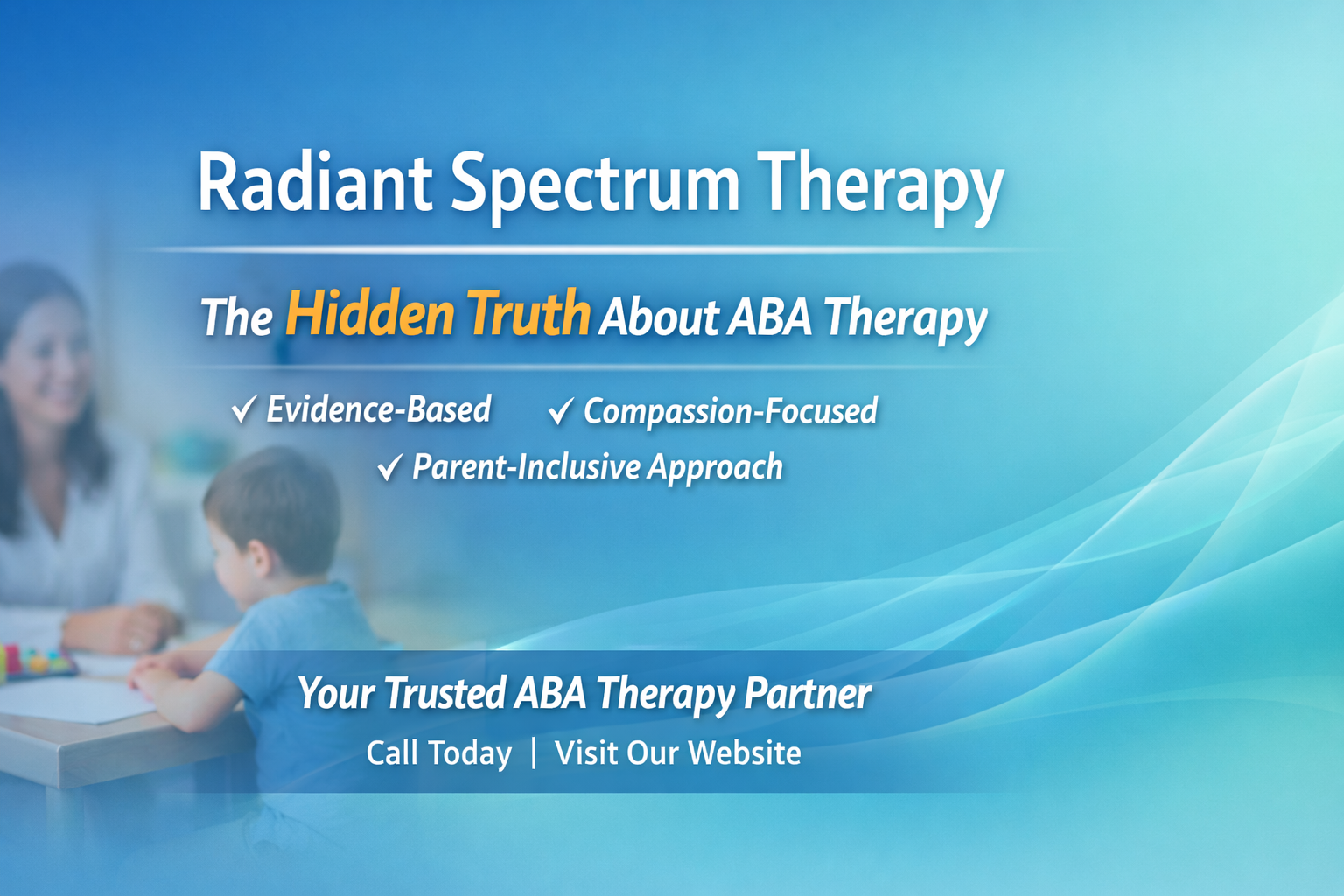
Radiant Spectrum Therapy: The Hidden Truth About ABA Therapy

ABA Clinic
The Hidden Truth About ABA Therapy

For decades, Applied Behavior Analysis (ABA therapy) has been promoted as the gold standard for autism intervention. Doctors recommend it. Insurance companies prioritize it. Schools rely on it. And many parents, desperate to help their children thrive, feel pushed toward it as the “only real option.”

But what if the story we’ve been told about ABA therapy is incomplete?

At Radiant Spectrum Therapy, we believe families deserve the whole truth — not just the version that’s easy to sell. As conversations around neurodiversity, trauma-informed care, and ethical therapy grow louder, many autistic adults and advocates are speaking up about their lived experiences. And what they’re revealing deserves attention.

This isn’t an attack. It’s an invitation to look deeper.

What Is ABA Therapy — and Why Is It So Widely Used?

Applied Behavior Analysis therapy focuses on modifying observable behaviors through reinforcement. Desired behaviors are rewarded; undesired behaviors are reduced through repetition, redirection, or consequences. On paper, it sounds simple, scientific, and effective.

ABA gained popularity because:

  • It produces measurable data
  • It aligns with insurance billing models
  • It emphasizes compliance and skill acquisition
  • It promises “independence” and “normalization”

But data does not always tell the full story — especially when the subject is a human being.

The Hidden Truth: ABA Was Never Designed for Autistic Well-Being

One uncomfortable truth rarely discussed is the historical foundation of ABA therapy. Its early development focused on making autistic children appear “indistinguishable from their peers.” The goal was not emotional well-being, self-expression, or autonomy — it was normalization.

Many autistic adults who experienced ABA therapy report that the process taught them one core lesson:

“Who I am is wrong, and I must perform to be accepted.”

This is not a fringe opinion. It’s a growing body of firsthand testimony.

Compliance Over Connection

A major criticism of traditional ABA therapy is its emphasis on compliance. Children are often taught to:

  • Maintain eye contact even when uncomfortable
  • Suppress stimming behaviors
  • Follow commands without questioning
  • Prioritize adult expectations over internal signals

While these behaviors may look “successful” to observers, they can come at a cost.

Many individuals report long-term effects such as:

  • Anxiety
  • Burnout
  • Difficulty recognizing personal boundaries
  • Masking that leads to identity confusion
  • Symptoms consistent with therapy-induced trauma

Compliance is not the same as consent — and it’s certainly not the same as healing.

The Emotional Toll No One Talks About

ABA data often tracks skill acquisition: words spoken, tasks completed, behaviors reduced. What it doesn’t track is how the child feels.

Children are not robots. When therapy ignores emotional safety, the nervous system remembers.

Autistic adults have described ABA as:

  • Exhausting
  • Dehumanizing
  • Emotionally invalidating
  • Focused on external approval rather than internal regulation

This is why many now question whether ABA therapy for autism truly supports long-term mental health.

The Rise of Trauma-Informed Autism Therapy

In recent years, there has been a powerful shift toward neurodiversity-affirming therapy — approaches that honor autistic traits instead of trying to eliminate them.

At Radiant Spectrum Therapy, we align with this movement because:

  • Autism is not a disease to cure
  • Differences in communication are not deficits
  • Regulation matters more than obedience
  • Authenticity is healthier than masking

Trauma-informed autism therapy asks different questions:

  • Is the child safe?
  • Is the child heard?
  • Is the child respected?
  • Is the child learning with us, not for us?

Why Many Families Are Rethinking ABA Therapy

Parents today are more informed than ever. They’re listening to autistic voices. They’re reading studies. They’re questioning old systems.

Common reasons families seek ABA therapy alternatives include:

  • Concern about emotional harm
  • Desire for child-led therapy
  • Respect for sensory needs
  • Focus on self-advocacy instead of compliance
  • Long-term mental health priorities

Choosing a therapy path is deeply personal — but informed choice requires honesty.

The Difference Between Skill-Building and Suppression

There’s an important distinction that often gets blurred.

Teaching a child how to navigate the world is helpful.
Teaching a child to hide who they are is harmful.

Some ABA programs still prioritize:

  • Quiet hands
  • Forced social behaviors
  • Reduction of harmless stims
  • Rewarding “normal” behavior

Neurodiversity-affirming support, on the other hand:

  • Supports communication in all forms
  • Honors sensory regulation
  • Encourages autonomy
  • Builds skills without erasing identity

This difference matters more than any chart or progress report.

Radiant Spectrum Therapy’s Perspective

At Radiant Spectrum Therapy, we don’t believe therapy should feel like training.

We believe:

  • Children deserve dignity
  • Emotions are communication
  • Behavior has meaning
  • Progress should never require self-betrayal

We support approaches that are:

  • Child-led
  • Relationship-based
  • Emotionally safe
  • Grounded in respect for neurodivergent identities

Families come to us not because their children are broken — but because they want support that honors who their child already is.

The Real Question Parents Should Ask

Instead of asking:

“Will this make my child act normal?”

We encourage parents to ask:

“Will this help my child feel safe, confident, and understood?”

That single shift changes everything.

Moving Forward With Awareness and Compassion

The conversation around ABA therapy and autism is evolving — and that’s a good thing. Growth requires reflection. Healing requires honesty.

This doesn’t mean every ABA experience is the same. It does mean families deserve transparent information, not fear-based pressure or one-size-fits-all solutions.

Autistic voices matter.
Emotional safety matters.
Choice matters.

And above all — children matter more than systems.

Final Thoughts

The hidden truth about ABA therapy isn’t that it’s universally harmful or universally helpful.

The truth is that autistic individuals are human beings, not behavior charts.

At Radiant Spectrum Therapy, we’re committed to approaches rooted in empathy, respect, and long-term well-being — because real growth doesn’t come from compliance. It comes from connection.

Contact us at 972–310–4991 or visit https://radiantspectrumtherapy.com/ to learn more.
Share This :