
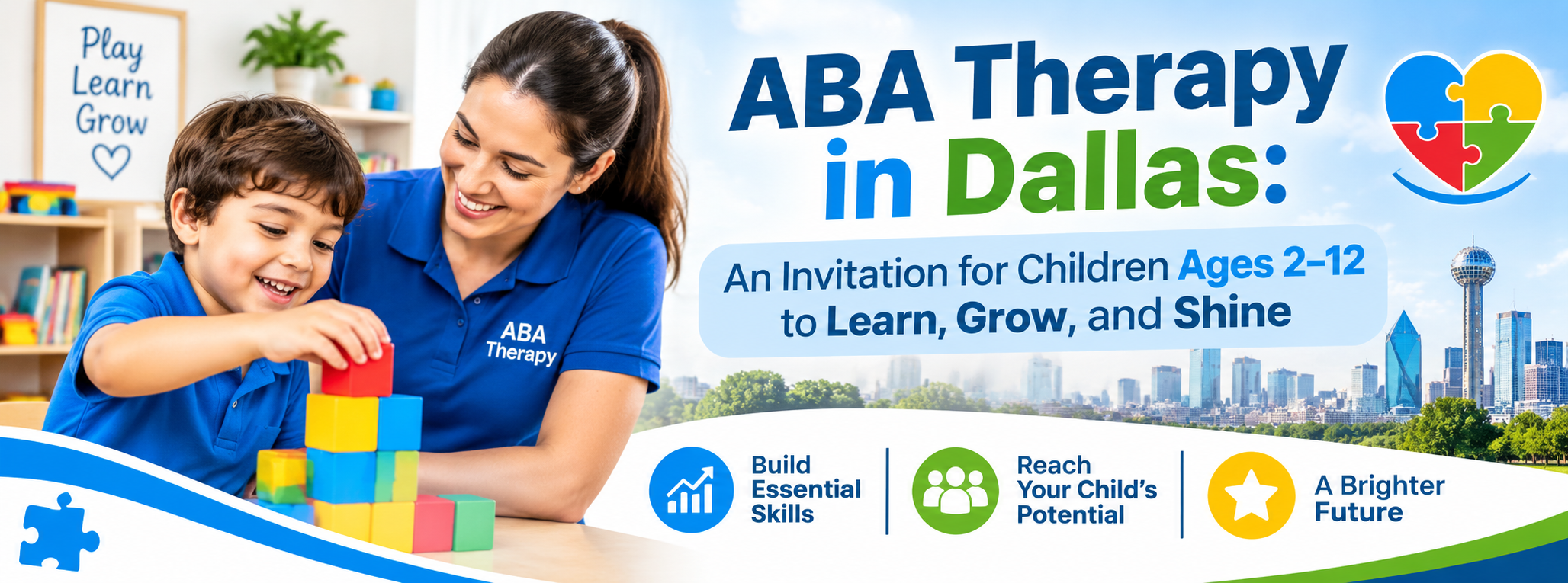
Every child deserves the opportunity to learn, grow, communicate, and discover their unique strengths. At Radiant Spectrum Therapy, we believe that progress begins with understanding each child’s individual needs and creating an environment where they feel supported, encouraged, and celebrated. Families looking for ABA Therapy in Dallas are invited to discover how personalized Applied Behavior Analysis (ABA) therapy can help children ages 2–12 develop meaningful skills and build confidence in everyday life.
Whether your child is just beginning to explore communication, learning to interact with others, developing daily routines, or working toward greater independence, the right support can make a meaningful difference. Radiant Spectrum Therapy is preparing to welcome families who want compassionate, individualized ABA therapy designed around their child’s abilities, interests, and developmental goals.
If you have been searching for support for your child, we would love to connect with your family.
An Invitation to Children Ages 2–12
At Radiant Spectrum Therapy, we welcome children between the ages of 2 and 12 whose families are exploring behavioral and developmental support. Childhood is an important period for learning new skills, building relationships, and developing greater independence. Every child reaches milestones differently, and having individualized support can help make learning more accessible and enjoyable.
Our goal is to create opportunities for children to practice important skills in ways that connect with their everyday experiences.
We invite parents and caregivers to learn more about our ABA therapy services and discover whether our programs may be a good fit for their child’s needs.
Who Can Benefit From ABA Therapy?
ABA therapy may benefit children who need additional support with:
- Communication and language development
- Social interaction and relationship-building
- Following directions and understanding routines
- Emotional regulation and coping strategies
- Developing independence with everyday activities
- Learning new play and learning skills
- Reducing behaviors that interfere with learning or daily activities
- Building confidence in different environments
Every child is different. Some children may need support with several developmental areas, while others may have a few specific goals they want to work toward.
ABA therapy is not about making every child behave or learn the same way. It is about understanding how each child learns and finding supportive strategies that encourage meaningful progress.
What Is Applied Behavior Analysis (ABA) Therapy?
Applied Behavior Analysis, commonly known as ABA, is an evidence-based approach to understanding how behavior relates to a person’s environment and experiences. ABA uses learning principles to help individuals develop useful skills and participate more successfully in everyday situations.
For children with autism and other developmental support needs, ABA therapy can provide structured opportunities to practice communication, social interaction, learning, and daily living skills.
The approach focuses on understanding each child’s strengths, challenges, interests, and individual learning style.
Rather than using one standard program for every child, effective ABA therapy involves individualized goals and strategies that are adjusted as children develop new skills.
How Does ABA Therapy Work?
ABA therapy begins with understanding the child.
A qualified Board Certified Behavior Analyst (BCBA) may conduct an assessment to learn about the child’s current abilities, developmental needs, interests, and areas where additional support may be helpful.
Based on this information, the clinical team can develop an individualized treatment plan.
Therapy may include:
- Breaking larger skills into smaller, manageable steps.
- Using positive reinforcement to encourage skill development.
- Practicing communication through meaningful everyday activities.
- Supporting social interaction and play.
- Teaching practical routines that encourage independence.
- Monitoring progress and adjusting strategies when necessary.
The purpose is to help children learn skills they can use beyond therapy sessions, including at home, school, and in their communities.
Why Early Support Can Make a Difference
Children between the ages of 2 and 12 experience important periods of development. During these years, they continue building communication abilities, learning social expectations, developing routines, and discovering how to navigate their surroundings.
For some families, early intervention ABA Dallas services may provide an opportunity to address developmental needs while children are still building foundational skills.
However, support is not limited to toddlers or preschool-aged children. School-aged children can also benefit from individualized programs that address their changing needs.
ABA Therapy for Toddlers Ages 2–3
For younger children, therapy may focus on foundational skills that support everyday learning.
These can include:
- Developing functional communication.
- Learning to request preferred items or activities.
- Practicing imitation and play.
- Building attention and engagement.
- Following simple directions.
- Developing early social interaction skills.
Activities can be incorporated into play-based learning opportunities to make participation engaging and meaningful.
ABA Therapy for Preschoolers Ages 4–5
As children approach school age, their learning environments and daily expectations may change.
ABA therapy for this age group may address:
- Communication with caregivers and peers.
- Sharing and turn-taking.
- Participating in group activities.
- Following daily routines.
- Developing self-help skills.
- Preparing for transitions between activities.
These skills can help children participate more comfortably in different environments.
ABA Therapy for School-Aged Children Ages 6–12
Older children may have different priorities as they navigate school, friendships, family routines, and greater independence.
Their individualized programs may focus on:
- Developing conversational and communication skills.
- Understanding social situations.
- Managing transitions and unexpected changes.
- Building problem-solving abilities.
- Practicing age-appropriate daily living skills.
- Developing self-advocacy and independence.
- Strengthening emotional regulation.
Therapy should reflect the child’s age, abilities, preferences, and personal goals rather than relying on a one-size-fits-all approach.
In-Home ABA Therapy in Dallas: Learning Where Children Feel Comfortable
For many families, the home is where children feel most familiar and comfortable. In-home ABA therapy Dallas services can provide opportunities to practice meaningful skills in the environment where many everyday routines naturally happen.
Instead of learning a skill only in a clinical setting, children can practice it in familiar surroundings with guidance from their therapy team.
For example, therapy may incorporate activities such as:
- Requesting snacks or preferred toys.
- Following morning or bedtime routines.
- Practicing dressing and personal care.
- Participating in family activities.
- Learning to transition between tasks.
- Communicating needs to family members.
One benefit of in-home services is the opportunity to work on skills that directly relate to a child’s daily experiences.
Parents and caregivers may also receive guidance on ways to support skill development between sessions, when appropriate.
Center-Based ABA Therapy: Structured Opportunities for Learning
In addition to in-home services, center-based ABA therapy Dallas programs can offer a structured environment designed to support individualized learning.
A therapy center may provide opportunities for children to participate in activities that encourage communication, interaction, play, and skill development.
Depending on the child’s treatment goals, sessions may include:
- Individualized learning activities.
- Communication practice.
- Structured play opportunities.
- Social skill development.
- Following schedules and routines.
- Practicing transitions.
- Learning through guided activities.
A center-based environment can also provide opportunities to practice skills in settings that differ from home.
The most appropriate setting depends on the child’s individual needs, treatment goals, family preferences, and clinical recommendations.
Why Choose Radiant Spectrum Therapy?
Choosing an ABA provider is an important decision for any family. Parents want to feel confident that their child will be treated with compassion, respect, and an understanding of their individual needs.
At Radiant Spectrum Therapy, our mission is to provide compassionate ABA therapy that helps children connect, grow, and shine.
We believe every child has strengths worth celebrating and potential worth supporting.
Our approach centers on several important values.
Individualized Care
No two children have exactly the same needs, interests, or learning styles.
Individualized ABA therapy services Dallas families explore should consider the child’s developmental abilities, communication preferences, interests, and personal goals.
Treatment plans should be designed around meaningful outcomes rather than expecting every child to follow the same path.
Compassionate Support
Children learn best when they feel safe, respected, and understood.
A supportive therapy environment should recognize individual differences, respect communication styles, and encourage children to participate at their own pace.
At Radiant Spectrum Therapy, compassion is an important part of the care we aim to provide.
Family Collaboration
Parents and caregivers understand their children in ways that no one else can.
Their observations, experiences, and goals are valuable when developing an effective treatment plan.
Family collaboration can help create consistency between therapy sessions and everyday activities. It also gives caregivers opportunities to learn strategies that support their child’s progress at home.
Meaningful Skill Development
Progress does not always happen in big steps.
Sometimes it begins with a child making a new request, participating in an activity, communicating a preference, or completing a familiar routine with less assistance.
These everyday achievements matter.
We believe meaningful progress should be recognized and celebrated, regardless of how big or small a milestone may seem.
The Importance of BCBA Services in Dallas
A qualified clinical team is an important part of effective ABA care.
Board Certified Behavior Analysts (BCBAs) are professionals with specialized training in behavior analysis. They may oversee assessments, develop treatment plans, establish individualized goals, and monitor a child’s progress.
BCBA services Dallas families seek can help ensure that intervention strategies are based on the child’s assessed needs and are reviewed as those needs change.
What Does a BCBA Do?
A BCBA may be responsible for:
- Conducting assessments to understand a child’s strengths and needs.
- Developing individualized treatment plans.
- Establishing measurable learning goals.
- Supervising and supporting therapy staff.
- Reviewing progress and making program adjustments.
- Collaborating with families and other professionals when appropriate.
Parents should feel comfortable asking questions about a provider’s clinical team, qualifications, treatment philosophy, and approach to family involvement.
Understanding who will oversee your child’s program can help you make a more informed decision.
Finding the Right ABA Therapy Provider in Dallas
Searching for the best ABA therapy providers Dallas has to offer can feel overwhelming, especially when families are navigating services for the first time.
There are different programs, treatment settings, providers, and insurance considerations to understand.
Rather than choosing a provider based only on location or availability, it is helpful to consider how well a program aligns with your child’s needs.
Here are several questions worth asking when comparing Dallas autism services.
1. What Age Groups Does the Provider Serve?
Some programs specialize in particular age groups, while others support children across a wider developmental range.
If your child is between 2 and 12, ask whether the provider offers programs appropriate for their age and developmental needs.
2. Are In-Home and Center-Based Services Available?
Ask which settings are offered and whether both options may be appropriate for your child.
Some families prefer the familiarity of home-based services, while others may be interested in structured center-based learning.
3. Are Treatment Plans Individualized?
Ask how assessments are conducted, how goals are selected, and how progress is monitored.
A quality program should be able to explain how treatment is adapted to the individual child.
4. How Are Parents Involved?
Family participation can be an important part of the therapy process.
Ask how the provider communicates progress, shares recommendations, and helps caregivers support skills outside therapy sessions.
5. What Insurance Options Are Accepted?
Understanding the financial side of therapy is also important.
Ask about insurance verification, coverage requirements, potential out-of-pocket expenses, and any documentation needed before beginning services.
Families researching affordable ABA therapy Dallas TX options should request clear information about costs and coverage before committing to a program.
Understanding ABA Therapy Costs and Insurance
One of the most common questions parents ask is how much ABA therapy costs.
ABA therapy cost Dallas families encounter can vary depending on several factors, including:
- The number of recommended therapy hours.
- The type of services provided.
- Whether services are delivered in-home or center-based.
- Clinical assessment and supervision requirements.
- Insurance coverage and eligibility.
- Individual treatment needs.
There is no single price that applies to every child or family.
Some insurance plans may provide coverage for medically necessary ABA therapy, subject to plan benefits, authorization requirements, and eligibility criteria.
Families should contact their insurance provider and the ABA clinic to understand available benefits.
Radiant Spectrum Therapy encourages parents to ask questions about the intake process, insurance verification, and potential service options before beginning care.
How to Get Started With ABA Therapy at Radiant Spectrum Therapy
Taking the first step toward therapy does not have to feel complicated.
If you are exploring ABA therapy for kids Dallas families can access, our team welcomes the opportunity to learn more about your child and discuss possible next steps.
The process generally involves several stages.
Step 1: Contact Our Team
Reach out to Radiant Spectrum Therapy by phone or email.
Let us know your child’s age, where your family is located, and what type of support you are exploring.
This helps our team understand your initial needs and determine whether services may be available in your area.
Step 2: Discuss Your Child’s Needs
We want to understand what matters most to your family.
You can share your child’s communication needs, developmental goals, current support, and any questions you may have about ABA therapy.
Step 3: Complete the Intake Process
If you decide to move forward, our team can explain the required intake documents and information needed to begin the process.
This may include relevant clinical records, insurance information, and other documentation.
Step 4: Explore Assessment and Treatment Planning
The clinical team can explain the assessment process and how individualized recommendations are developed.
The goal is to understand your child’s needs before determining an appropriate treatment approach.
Step 5: Begin Working Toward Meaningful Goals
Once the necessary steps are completed and services are authorized and scheduled, therapy can begin according to the established treatment plan.
Our hope is to make the experience welcoming and informative for families from the very beginning.
Frequently Asked Questions About ABA Therapy in Dallas
Is ABA therapy only for toddlers?
No. ABA therapy can support children at different developmental stages. Radiant Spectrum Therapy is inviting families with children ages 2–12 to learn more about potential services and available programs.
Can my child receive ABA therapy at home?
In-home ABA therapy may be an option depending on service availability, clinical recommendations, and your family’s location.
Is center-based ABA therapy available?
Center-based services may provide structured opportunities for individualized learning and skill development. Contact Radiant Spectrum Therapy to discuss available program details.
How long does ABA therapy take?
The duration and frequency of therapy vary from child to child. Recommendations depend on individual assessments, developmental needs, treatment goals, and progress.
Do parents participate in ABA therapy?
Family collaboration can be an important part of treatment. Caregivers may receive guidance and opportunities to learn strategies that support their child’s goals outside therapy sessions.
How do I find an ABA therapist in Dallas?
Start by identifying providers that serve your child’s age group, offer appropriate treatment settings, and have qualified clinical professionals overseeing their programs. You can contact Radiant Spectrum Therapy to discuss your family’s needs and potential next steps.
Give Your Child an Opportunity to Connect, Grow, and Shine
Every child deserves to be recognized for who they are, supported in their individual journey, and encouraged to discover what they can accomplish.
If you have a child between the ages of 2 and 12 and are exploring ABA Therapy in Dallas, Radiant Spectrum Therapy invites you to learn more about our upcoming services.
Whether you are looking for early intervention ABA Dallas, pediatric ABA therapy Dallas, in-home support, or center-based learning opportunities, we would love to hear from your family.
You do not have to navigate the process alone. Our team is here to answer your questions, discuss your options, and help you explore the next steps toward appropriate support.
Contact us at 972–310–4991 or visit https://radiantspectrumtherapy.com/ to learn more.