
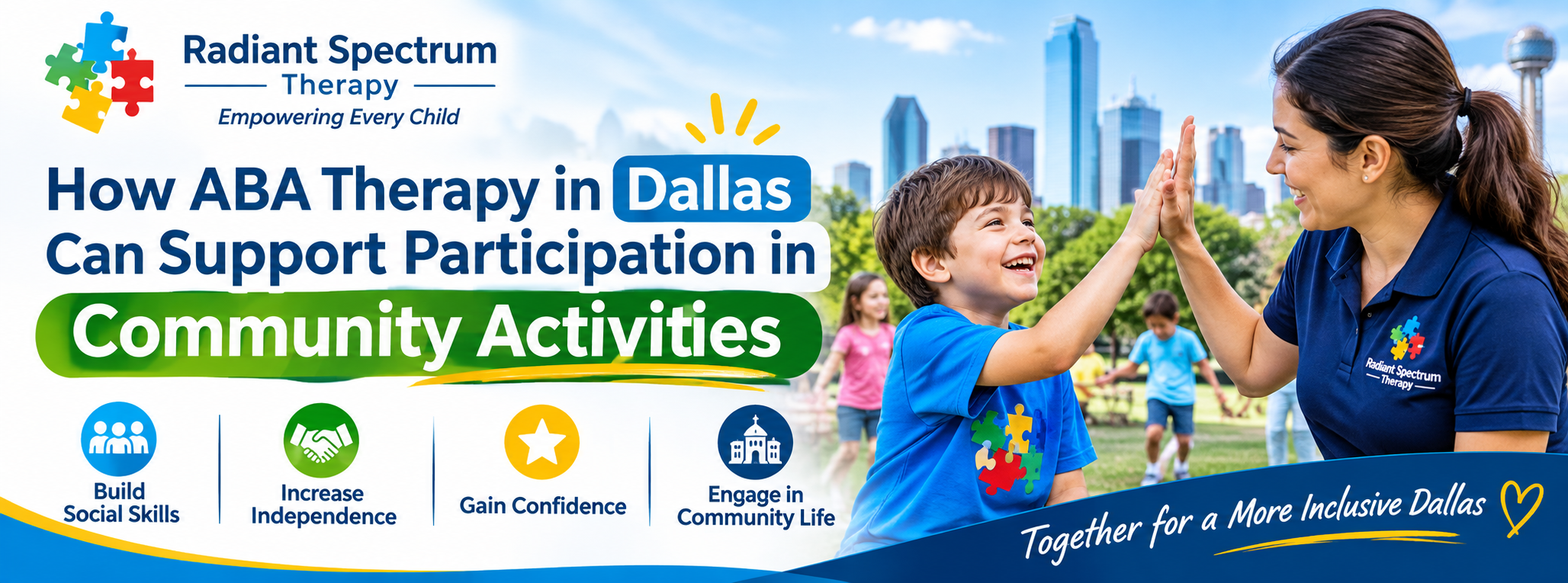
Community experiences are an important part of childhood. Visiting libraries, playing at playgrounds, attending family gatherings, and exploring local attractions give children opportunities to learn, socialize, communicate, and develop independence. However, some children with autism may find these activities challenging because of sensory sensitivities, communication differences, difficulty with transitions, or unfamiliar social expectations. With the right guidance and individualized support, these experiences can become more comfortable and meaningful. ABA Therapy in Dallas can help children develop practical skills that encourage participation in everyday community activities while supporting their individual strengths, interests, and developmental needs.
Applied Behavior Analysis (ABA) focuses on understanding behavior and teaching useful skills through structured, individualized strategies. Rather than expecting every child to respond to community environments in the same way, ABA therapy considers what makes each experience comfortable or difficult for the child. Therapists work on skills that can be practiced in familiar settings and gradually applied to different environments.
For families exploring ABA therapy Dallas, understanding how therapy can support real-world participation is an important part of choosing the right approach. Community involvement is not simply about going places. It is about helping children communicate their needs, make choices, interact with others, and experience activities in ways that work for them.
Why Community Participation Matters for Children With Autism
Community activities provide learning opportunities that cannot always be recreated in a therapy room. A library visit introduces children to shared spaces and different forms of communication. A playground creates opportunities for movement, social interaction, and play. Family outings allow children to practice routines and participate in experiences with the people they know and trust.
These everyday situations can help develop several important skills:
- Communication: Expressing wants, needs, preferences, and discomfort.
- Social interaction: Participating in shared activities and interacting with other people.
- Independence: Making choices and completing familiar routines with less assistance.
- Flexibility: Becoming more comfortable with changes in activities and environments.
- Self-advocacy: Communicating when something feels overwhelming or when a break is needed.
- Safety awareness: Learning practical skills for navigating public spaces.
For children receiving ABA therapy for autism Dallas, these skills can be addressed through individualized teaching strategies. The goal is not to make every child behave identically in public. Instead, therapy can help children participate in experiences that are meaningful to them while respecting their communication styles, preferences, and comfort levels.
Preparing for Library Visits Through ABA Therapy
Libraries are valuable community spaces where children can explore books, attend educational programs, use computers, and discover new interests. However, they may also present challenges for children who are sensitive to unfamiliar sounds, crowded areas, changes in routine, or expectations surrounding quiet behavior.
ABA strategies can help children become more familiar with library routines before visiting.
Practicing Familiar Library Routines
A therapist may introduce a simple sequence of activities that reflects what happens during a library visit. This could include entering the building, walking through different sections, selecting a book, sitting in a designated area, and returning materials when finished.
Visual schedules, pictures, and simple instructions can help children understand what to expect. Practicing these steps in advance may make the actual visit more predictable.
Children can also learn to communicate when they want to explore another section, request help finding a book, or indicate that they need a break.
Encouraging Communication and Choice-Making
Libraries offer many opportunities for children to make independent choices. They can select books based on pictures, topics, characters, or personal interests.
For children who communicate verbally, this might involve asking for a particular book or answering simple questions. Children who use alternative communication methods may use gestures, picture cards, or augmentative and alternative communication (AAC) devices.
Through ABA therapy services Dallas, therapists can help identify communication strategies that work for each child and practice using them in everyday situations.
Building Playground Confidence and Social Skills
Playgrounds provide opportunities for physical activity, exploration, and interaction with other children. They also involve unpredictable situations, shared equipment, waiting, and changes in play activities.
For some children, these situations can be difficult without preparation and appropriate support.
Developing Skills Through Play
Play-based learning can help children practice skills in ways that feel natural and engaging. Depending on their individual goals, children may work on:
- Choosing playground equipment they enjoy.
- Requesting a turn or asking for assistance.
- Communicating when they want to continue or stop playing.
- Participating in simple games with others.
- Following directions related to playground safety.
- Moving between activities comfortably.
A child who enjoys swings, for example, might practice communicating when they want another turn. Another child may prefer climbing equipment or playing independently. Both preferences can be supported while teaching useful communication and participation skills.
Understanding Shared Spaces
Playgrounds often require children to navigate shared spaces. Waiting for equipment, recognizing other people’s personal space, and understanding simple playground routines can be helpful skills.
ABA professionals may use modeling, visual supports, role-play, and positive reinforcement to teach these concepts.
Importantly, social development does not mean requiring children to interact constantly. Independent play can be meaningful, too. The focus should remain on helping children develop the skills they need to enjoy their preferred activities.
Making Family Outings More Comfortable
Family outings are opportunities for children to build memories and participate in experiences with parents, siblings, and relatives. These activities might include visiting restaurants, shopping centers, parks, museums, birthday celebrations, or local events.
Although families may look forward to these experiences, unfamiliar environments and unexpected changes can sometimes make outings stressful.
Preparing for Changes in Routine
Children who prefer predictable schedules may find unexpected changes difficult. A restaurant might be busier than expected, an event could start late, or a planned activity may become unavailable.
Preparation can help reduce uncertainty.
Parents and therapists can work together to introduce strategies such as:
- Using a visual schedule to explain the outing.
- Showing pictures of the destination before leaving home.
- Practicing what to expect during different parts of the activity.
- Introducing simple ways to communicate a need for help.
- Identifying quiet spaces or opportunities to take breaks.
- Preparing a backup activity when plans change.
These strategies can be incorporated into in-home ABA therapy Dallas, where children can practice familiar routines and communication skills before using them in community settings.
Supporting Sensory Needs
Community environments can include bright lights, loud conversations, strong smells, crowded spaces, and unfamiliar textures. These sensory experiences may affect how comfortable a child feels during an outing.
Understanding a child’s sensory preferences can help families make thoughtful adjustments. Some children may benefit from noise-reducing headphones, familiar comfort items, shorter visits, or opportunities to move away from crowded areas.
The purpose is not to force a child to tolerate every environment. It is to identify supportive accommodations that allow the child to participate without unnecessary distress.
How ABA Helps Children Generalize Skills Across Different Environments
One important concept in ABA is generalization. This refers to using a learned skill in different situations, with different people, and in different environments.
For example, a child may learn to request help during a therapy session. However, using that same skill at a library, playground, or restaurant may require additional practice.
This is where community-based learning opportunities can be valuable.
Moving Beyond the Therapy Environment
Children may initially learn skills in structured settings where distractions are limited. Once they become more familiar with a skill, therapists can help identify opportunities to practice it in natural environments when appropriate.
A child who practices asking for a break during therapy might gradually use the same communication strategy during a family outing.
Similarly, a child who learns to follow a visual schedule at home may begin using that skill when visiting a library or attending a community event.
For families considering center-based ABA therapy Dallas, it is helpful to ask how the provider supports the transfer of learned skills into everyday environments. A combination of structured learning, caregiver involvement, and appropriate real-world practice can help children use their skills beyond the therapy setting.
Working With Parents and Caregivers
Parents and caregivers play an important role in helping children practice skills throughout the week. Therapists can share strategies that families can incorporate into familiar routines.
For example, if a child is learning to communicate preferences, parents can offer opportunities to choose between two activities during an outing. If a child is practicing transitions, families can use consistent visual reminders before moving from one activity to another.
These everyday opportunities help make learning relevant to the child’s life.
Teaching Practical Safety Skills for Community Experiences
Safety is another important consideration when supporting community participation. Public environments involve unfamiliar people, moving vehicles, crowded walkways, and situations that require children to communicate when they need assistance.
ABA programs can address individualized safety goals through practical teaching and repeated opportunities to practice.
Skills That Can Support Safety
Depending on a child’s developmental level and needs, therapy may focus on:
- Responding to their name when appropriate.
- Staying near a trusted adult.
- Communicating when they feel lost or uncomfortable.
- Recognizing familiar caregivers and designated meeting places.
- Practicing safe transitions between locations.
- Learning how to request assistance.
- Understanding basic pedestrian and parking lot safety routines.
These skills should be taught through developmentally appropriate instruction and supervised practice.
Families can also discuss specific safety concerns with their child’s BCBA so that goals reflect the environments and situations the child regularly encounters.
The Role of a BCBA in Community-Based Skill Development
A Board Certified Behavior Analyst (BCBA) plays an important role in developing and overseeing individualized ABA programs. The BCBA evaluates a child’s current abilities, identifies meaningful learning goals, and helps determine which strategies may support progress.
When community participation is a priority, the BCBA can work with families to identify situations where additional support may be beneficial.
For example, one child may need support with communicating in unfamiliar settings, while another may benefit from practicing transitions or participating in shared activities.
Through BCBA services Dallas, families can receive guidance on building goals around practical everyday experiences rather than focusing exclusively on performance during therapy sessions.
Creating Goals That Reflect Each Child’s Needs
Effective goals should be individualized and meaningful.
Instead of using a general goal such as improving social skills, a BCBA may identify a more practical objective, such as helping a child communicate a preferred activity during a family outing or request assistance when needed.
Progress can be evaluated through observation, caregiver feedback, and information about how the child uses the skill across different environments.
This approach helps families understand how therapy connects with their child’s everyday experiences.
Choosing the Right ABA Program in Dallas
Every child has different developmental needs, communication preferences, interests, and learning styles. Families researching ABA therapy in Dallas TX should consider how a provider approaches individualized treatment and supports meaningful participation outside scheduled therapy sessions.
When comparing ABA clinics in Dallas, consider asking the following questions:
- How are therapy goals developed for each child?
- Does the program include communication, independence, and daily living skills?
- How are parents and caregivers involved in treatment?
- Does the provider support generalization of skills across environments?
- How does the clinical team accommodate sensory preferences?
- How is progress evaluated and shared with families?
- Are therapy strategies adjusted when a child’s needs change?
Families looking for the best ABA therapy providers Dallas should consider more than the number of services offered. A supportive provider should take time to understand the child, communicate openly with caregivers, and develop goals that reflect what matters to the family.
Cost and insurance coverage may also influence the decision. Families researching affordable ABA therapy Dallas TX or comparing ABA therapy cost Dallas can ask providers about accepted insurance plans, available payment arrangements, treatment recommendations, and what services are included.
Whether a family is exploring private ABA therapy Dallas or considering intensive ABA programs Dallas, the most important consideration is whether the proposed program is appropriate for the child’s individual needs.
Understanding the Different Areas of ABA Support
ABA therapy can address a variety of developmental and behavioral goals. Families exploring behavior therapy Dallas or autism behavior therapy Dallas may be interested in how treatment can support communication, daily routines, social participation, and independence.
For younger children, early intervention ABA Dallas may focus on foundational skills that support future learning and everyday interactions. Pediatric ABA therapy Dallas can address developmental goals based on each child’s abilities and needs.
Children who benefit from additional support during early childhood may also be considered for ABA therapy for toddlers Dallas. During this stage, therapy may emphasize communication, play, imitation, daily routines, and interaction with caregivers.
As children grow, ABA therapy for kids Dallas can address more complex goals, including participating in group activities, following familiar routines, making choices, and developing practical self-advocacy skills.
Some families may also explore developmental therapy Dallas or special needs therapy Dallas when looking for broader developmental support. Although these services may address overlapping areas, families should understand the specific goals, qualifications, and treatment approaches of each provider.
The right combination of support depends on the child’s individual circumstances and the recommendations of qualified professionals.
How Radiant Spectrum Therapy Supports Meaningful Development
At Radiant Spectrum Therapy, we believe that meaningful progress should connect with a child’s everyday life. Learning does not happen only during scheduled therapy sessions. It also happens when children explore their interests, spend time with family, communicate their preferences, and participate in activities within their communities.
Our approach to ABA is centered on understanding each child’s strengths, needs, and developmental goals. We recognize that every child has a different way of learning and communicating, and therapy should reflect those differences.
For families searching for ABA therapy near Dallas, ABA therapy near me Dallas, or Dallas autism services, finding a provider that values individualized care and family collaboration can make an important difference.
Radiant Spectrum Therapy offers in-home and center-based service options, allowing families to explore the setting that best fits their child’s needs and treatment plan. Through in-home ABA therapy Dallas and center-based support, children can work toward meaningful goals in environments that are relevant to their everyday routines.
Our team understands that parents want more than progress reports. They want to see their children develop useful skills, express themselves, explore their interests, and become more comfortable participating in everyday experiences.
Families looking to find ABA therapist Dallas can begin by learning about available services, discussing their child’s needs, and understanding how an individualized program may support their goals.
We also encourage families to ask questions, share their priorities, and remain involved throughout the therapy process. Collaboration helps ensure that treatment goals remain connected to the child’s daily experiences.
Building More Opportunities for Connection and Independence
Community participation is not measured by how many activities a child attends or how closely they follow traditional social expectations. It is about having opportunities to experience the world in ways that are comfortable, enjoyable, and meaningful.
For one child, success might mean choosing a book independently during a library visit. For another, it could involve enjoying a favorite playground activity, communicating a need for a break at a family gathering, or participating in a familiar community routine.
These experiences may seem small, but they can represent meaningful steps toward communication, confidence, and independence.
With appropriate support, Applied Behavior Analysis Dallas can help children develop practical skills that extend beyond therapy sessions. Through individualized goals, consistent caregiver involvement, and opportunities to practice in everyday environments, children can build skills that support greater participation in the activities they enjoy.
Discover How ABA Therapy in Dallas Can Support Your Child
Every child deserves opportunities to explore, learn, connect, and participate in their community. With individualized guidance and family collaboration, everyday experiences can become meaningful opportunities for development.
At Radiant Spectrum Therapy, we are committed to helping children connect, grow, and shine through compassionate, individualized ABA services. Whether your family is exploring how ABA therapy works Dallas, considering available treatment options, or looking for top-rated ABA therapists Dallas, our team is here to help you understand the next steps.
If you are searching for the best ABA therapy in Dallas, we invite you to learn more about Radiant Spectrum Therapy and how our services may support your child’s developmental journey.
Contact Radiant Spectrum Therapy today at 972–310–4991 or radiantspectrumtherapy@gmail.com to learn more about our ABA services in Dallas.
Together, we can help create more opportunities for meaningful learning, everyday connection, and participation in the community.