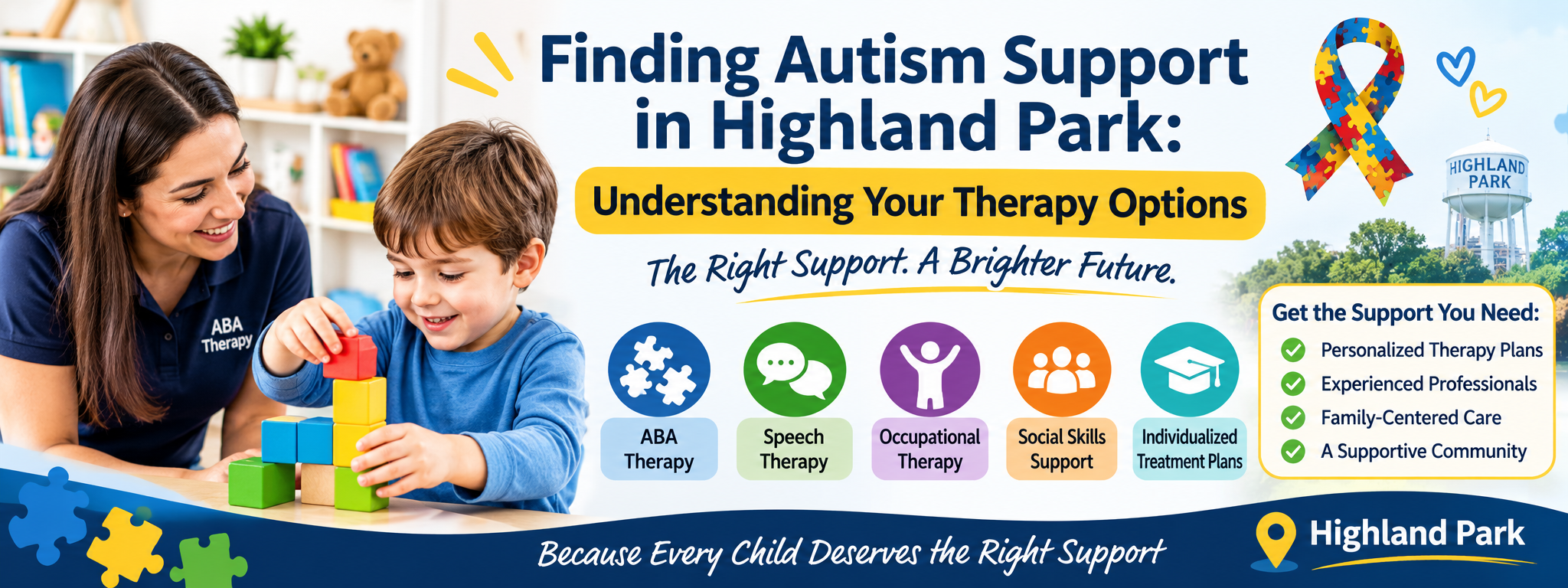


Coordinating ABA Therapy in Dallas with school-based support can make a meaningful difference in a child’s development, learning experience, and everyday routines. Children receiving Applied Behavior Analysis (ABA) therapy may also participate in educational programs where teachers, special education professionals, and school support staff help them develop academic, communication, social, and independent living skills. When these environments work together, children have more opportunities to practice what they learn and apply those skills in different situations.
For many families, understanding how therapy and school services can complement one another is an important part of building a consistent support system. ABA therapy may focus on communication, behavior, social interaction, emotional regulation, and daily living skills, while school-based support addresses educational participation, classroom expectations, and learning goals. Although these services have different responsibilities, communication between the people involved can help create a more connected experience for the child.
Families exploring ABA therapy Dallas options may wonder whether therapists can communicate with teachers, how educational goals relate to therapy goals, and what information should be shared between providers. Understanding these questions can help parents become more confident advocates for their children and make informed decisions about their support.
Understanding the Relationship Between ABA Therapy and School-Based Support
ABA therapy and school-based services can address different aspects of a child’s development. However, they often work toward related outcomes, such as helping children communicate their needs, participate in activities, build relationships, and become more independent.
What Does ABA Therapy Focus On?
Applied Behavior Analysis is an evidence-based approach that uses principles of learning and behavior to help individuals develop meaningful skills. In pediatric settings, therapy is individualized according to a child’s strengths, needs, developmental level, and family priorities.
Depending on the child’s treatment plan, ABA therapy services Dallas may address areas such as:
- Functional communication and language development.
- Social interaction and relationship-building skills.
- Following instructions and completing activities.
- Emotional regulation and coping strategies.
- Daily routines and self-care activities.
- Flexibility when transitioning between activities.
- Developing independence in familiar and new environments.
A Board Certified Behavior Analyst (BCBA) typically oversees the development and supervision of an individualized treatment plan. Registered behavior technicians or other trained professionals may implement approved interventions under appropriate supervision.
What Does School-Based Support Provide?
School-based support focuses on helping children access educational opportunities and participate in the school environment. Depending on the child’s eligibility and individual needs, support may include special education services, classroom accommodations, speech-language services, occupational therapy, behavioral strategies, or other educational resources.
Schools may also develop an Individualized Education Program (IEP) for eligible students. An IEP identifies educational goals, services, accommodations, and other supports designed around the student’s needs.
While Applied Behavior Analysis Dallas providers focus on individualized clinical treatment, educators focus on educational access and progress. These roles can complement each other without replacing one another.
Why Collaboration Between Families, Therapists, and Educators Matters
Children experience different expectations throughout the day. They may follow one set of routines at home, another during therapy, and another in the classroom. Without communication, strategies that work in one environment may not be consistently understood or supported in another.
Collaboration helps everyone involved understand what the child is learning and how to encourage progress across different settings.
Creating More Consistent Expectations
Consistency does not mean every adult must use identical activities or teaching methods. Instead, it means understanding the child’s goals and using compatible approaches whenever appropriate.
For example, a child working on requesting assistance during autism therapy Dallas TX sessions may also need opportunities to request help in the classroom. If the therapist and teacher understand the communication goal, they can recognize appropriate opportunities for the child to practice that skill.
This can make learning more meaningful because children are not limited to demonstrating a skill in only one setting.
Supporting Skill Generalization
One important consideration in ABA therapy is generalization. This refers to a child’s ability to use a learned skill with different people, materials, and environments.
A child might successfully follow a visual schedule during therapy but have difficulty using a similar schedule at school. Collaboration can help identify what makes the skill easier or more challenging in each environment.
Therapists and educators can discuss practical ways to encourage skill use across settings, provided the approaches are appropriate for the child’s individual needs.
Identifying Areas That Need Additional Attention
Communication between adults can also help identify patterns.
For instance, a child may transition comfortably between activities during therapy but experience difficulty when moving from recess to classroom instruction. Sharing this observation can help the team understand whether the transition itself, environmental demands, communication expectations, or another factor may be contributing.
The goal is not to label every challenging experience as a behavioral problem. It is to understand the child’s needs and identify supportive solutions.
The Role of Parents in Coordinating ABA Therapy and School Services
Parents are often the people who understand their child’s routines, preferences, communication style, and developmental history most thoroughly. Their observations can provide valuable context for both therapists and educators.
Families do not have to become experts in every educational or therapeutic process. However, staying involved can help ensure that important information is not overlooked.
Share Relevant Information With Both Teams
Parents can help establish communication by sharing information about current goals, successful strategies, and areas where their child may need additional assistance.
For example, families might discuss:
- Communication methods their child currently uses.
- Activities or situations that encourage participation.
- Changes in routines that may affect the child’s behavior.
- Strategies that have been helpful during transitions.
- New skills the child is beginning to demonstrate.
- Areas where the child may need additional support.
Parents should also understand that educational and clinical records have separate privacy requirements. Information should be shared through appropriate channels and with the necessary permissions.
Participate in Important Meetings
Families may have opportunities to attend IEP meetings, parent consultations, therapy progress reviews, and other planning discussions.
These meetings can help parents understand what different professionals are working toward and identify opportunities for coordination.
When discussing in-home ABA therapy Dallas, for example, parents can explain how communication or independence goals practiced at home may also be relevant to classroom routines.
Similarly, families considering center-based ABA therapy Dallas can ask how the provider approaches skill development in structured learning environments and whether collaboration with school professionals is possible.
Ask Questions When Something Is Unclear
Parents should feel comfortable asking questions about goals, strategies, progress, and responsibilities.
Some helpful questions include:
- Which skills are currently being prioritized in therapy?
- Are there similar goals being addressed at school?
- How can we support these skills at home?
- What should we do if a strategy is not working in a particular environment?
- How will progress be evaluated?
- Who should we contact when coordination is needed?
Open communication can prevent misunderstandings and help families make decisions based on accurate information.
How ABA Therapists and Educators Can Work Together
Collaboration is most effective when each professional understands their role and respects the expertise of the others.
ABA providers and school professionals do not necessarily need to share the same treatment or instructional plans. Instead, they can exchange relevant observations and identify appropriate ways to support the child’s development.
Coordinating Communication Goals
Communication is often a shared priority between families, educators, and therapy providers.
A child may be learning to request preferred items, express discomfort, answer questions, or communicate when they need assistance.
For example, a therapist may work on functional communication during individual sessions, while a teacher provides opportunities to practice those skills during classroom activities.
Children who use gestures, picture-based communication, or speech-generating devices may benefit from adults understanding how their communication systems work.
The important consideration is that communication should be respected across environments, and children should have meaningful opportunities to express their needs.
Supporting Social Interaction
Schools provide natural opportunities for children to interact with classmates, participate in group activities, and develop friendships.
Meanwhile, early intervention ABA Dallas services may introduce foundational social and communication skills for younger children who are beginning to engage with others.
Therapy and educational support can complement each other by identifying practical ways to encourage:
- Taking turns during activities.
- Responding to social invitations.
- Expressing preferences.
- Participating in shared play.
- Recognizing personal boundaries.
- Communicating during group activities.
Social goals should be individualized and should respect each child’s personality, communication preferences, and comfort level.
Making Transitions More Manageable
Transitions can be challenging when children are expected to stop one activity and begin another.
Examples include moving from home to school, changing classroom activities, ending playtime, or preparing to leave a therapy session.
When appropriate, adults can explore supportive tools such as visual schedules, transition warnings, clear instructions, and predictable routines.
These strategies should be selected according to the child’s needs rather than applied automatically to every situation.
Coordinating Support for Children at Different Developmental Stages
The type of coordination needed may change as children grow. A toddler beginning early learning experiences may need different support from a school-age child working on classroom participation or independence.
Early Childhood and Preschool
For younger children, pediatric ABA therapy Dallas may focus on foundational developmental skills, including communication, imitation, play, and participation in everyday routines.
Children attending preschool may also receive support from teachers, early childhood specialists, or other professionals.
Families exploring ABA therapy for toddlers Dallas can ask how treatment goals relate to the child’s daily activities and early learning experiences.
At this stage, collaboration can help adults recognize emerging skills and provide appropriate opportunities for children to practice them.
Elementary School Years
As children enter elementary school, expectations often become more structured.
Students may need support with classroom routines, peer interactions, following instructions, completing assignments, and communicating their needs.
Families considering ABA therapy for kids Dallas may want to understand how providers approach age-appropriate goals and coordinate with school professionals when appropriate.
The focus should remain on meaningful development rather than simply making children conform to classroom expectations.
Older Children and Increasing Independence
As children get older, support may shift toward independence, self-advocacy, organization, and practical life skills.
For example, a child may work on communicating when they need clarification, managing personal belongings, following a schedule, or requesting accommodations.
Therapy goals can evolve as a child’s interests, priorities, and everyday responsibilities change.
Understanding IEPs, School Meetings, and Therapy Goals
One common source of confusion for parents is understanding how an IEP relates to an ABA treatment plan.
Although both may include developmental or behavioral goals, they serve different purposes.
Understanding the IEP Process
An Individualized Education Program is developed for students who qualify for special education services under applicable educational requirements.
The IEP team may include parents, teachers, special education professionals, school representatives, and other individuals with relevant knowledge or expertise.
Depending on the child’s needs, the plan may address:
- Academic and functional educational goals.
- Classroom accommodations.
- Special education services.
- Related educational services.
- Progress monitoring.
- Participation in school activities.
Parents can ask questions and participate in discussions about their child’s educational needs.
Understanding the ABA Treatment Plan
An ABA treatment plan is a clinical document developed under the supervision of a qualified behavior analyst.
It generally outlines individualized goals, intervention strategies, progress measures, and recommendations based on assessment and ongoing observation.
For families seeking BCBA services Dallas, understanding the BCBA’s role is especially important. A BCBA evaluates relevant needs, develops treatment goals, supervises implementation, and monitors progress within the scope of their professional responsibilities.
The treatment plan may address skills that are also relevant at school, but it does not replace the school’s educational responsibilities or IEP process.
Keeping Goals Connected Without Duplicating Services
A child does not necessarily need identical goals in every environment.
For example, a therapist may focus on developing a child’s ability to communicate a request, while the teacher focuses on using that communication during classroom instruction.
These goals are related but serve different purposes.
When professionals communicate appropriately, they can identify opportunities to reinforce useful skills without unnecessarily duplicating services.
Common Challenges Families May Encounter
Even when everyone wants the best for a child, coordinating different services can take time and patience.
Understanding common challenges can help families prepare for productive conversations.
Different Approaches to Supporting Behavior
Therapists and educators may have different training, responsibilities, and approaches to classroom or clinical situations.
Rather than assuming one professional is incorrect, families can encourage discussions about the child’s needs, the purpose of a strategy, and whether it is appropriate in that environment.
Support should prioritize safety, dignity, communication, and meaningful participation.
Limited Communication Between Providers
Some schools may have established procedures for communicating with outside providers, while others may have scheduling or privacy limitations.
Families can ask about available communication methods and provide written consent when necessary.
Not every provider can attend every school meeting or communicate directly with school personnel. However, parents can still share relevant information and ask questions about coordination.
Changes in the Child’s Needs
Children develop and change over time. A strategy that was helpful several months ago may need to be adjusted as new skills emerge.
Regular progress reviews can help determine whether goals remain appropriate.
Families should communicate significant changes in routines, interests, or support needs so professionals can consider whether adjustments are necessary.
Choosing an ABA Provider That Values Family Collaboration
When comparing best ABA therapy providers Dallas, families may want to look beyond the list of services offered.
A provider’s willingness to listen to parents, explain treatment goals, and discuss coordination with other professionals can be an important consideration.
Look for Individualized Treatment Planning
Every child has different strengths, interests, communication preferences, and developmental needs.
A quality provider should avoid assuming that the same goals or methods will work for every child.
Families researching affordable ABA therapy Dallas TX or private ABA therapy Dallas should also ask what is included in the proposed services, how treatment is structured, and whether insurance benefits or other payment arrangements are available.
Ask About Program Options
Different service models may be appropriate for different children.
For example, intensive ABA programs Dallas may provide a more structured schedule of services when clinically appropriate and supported by the child’s individualized needs.
Families may also explore ABA clinics in Dallas when considering center-based services or look into providers offering in-home support.
The most appropriate option depends on the child’s goals, family circumstances, clinical recommendations, and available resources.
Understand the Qualifications of the Team
Parents may want to ask about BCBA supervision, staff training, treatment planning, and how progress is evaluated.
When comparing top-rated ABA therapists Dallas, families should consider professional qualifications, communication practices, and whether the provider’s approach aligns with their child’s needs.
Reviews and recommendations can provide useful perspectives, but families should also speak directly with providers before making decisions.
Finding the Right Support in Dallas
Families searching for autism support services Dallas may encounter many different programs, professionals, and treatment options.
Some children benefit from a combination of clinical therapy, educational support, speech services, occupational therapy, and family involvement.
Others may need a more focused combination depending on their individual circumstances.
When researching developmental therapy Dallas or special needs therapy Dallas, parents should consider how each service addresses their child’s specific needs rather than assuming that every available service is necessary.
It can also be helpful to compare providers offering behavior therapy Dallas, autism behavior therapy Dallas, and other developmental services to understand the differences in qualifications, treatment approaches, and areas of specialization.
Families searching for ABA therapy near Dallas, ABA therapy in Dallas TX, or ABA therapy near me Dallas should consider practical factors such as service availability, location, scheduling, insurance coverage, and communication with families.
Questions about ABA therapy cost Dallas are also important. Costs can vary depending on the provider, treatment schedule, insurance benefits, and services included. Families should request clear information about financial responsibilities before beginning treatment.
For parents wondering how ABA therapy works Dallas, an initial conversation with a qualified provider can help explain assessments, treatment planning, supervision, and ongoing progress reviews.
Taking time to find ABA therapist Dallas families feel comfortable communicating with can make the entire process easier to navigate.
How Radiant Spectrum Therapy Supports Families
At Radiant Spectrum Therapy, we understand that supporting a child’s development involves more than individual therapy sessions. Families often balance school schedules, home routines, appointments, and the different recommendations they receive from professionals.
Our approach centers on understanding each child’s individual needs while recognizing the important role parents play in the developmental journey.
We believe families should have opportunities to ask questions, understand therapy goals, and participate in decisions about their child’s care.
Whether a family is exploring in-home services or center-based support, the conversation should begin with understanding the child’s strengths, challenges, and priorities.
Radiant Spectrum Therapy offers ABA therapy support in the Dallas and Highland Park areas, with a focus on compassionate, individualized care. Families can contact our team to learn more about available services, the intake process, and whether our programs may be an appropriate fit.
We also encourage families to discuss their coordination needs during the intake process, including questions about school-related goals and communication with other professionals when appropriate and authorized.
Conclusion: Building a Connected Support System With ABA Therapy in Dallas
Coordinating ABA Therapy in Dallas with school-based support can help families create a more connected approach to their child’s development. When parents, therapists, and educators communicate effectively, they can better understand the child’s strengths, identify areas that need attention, and provide meaningful opportunities to practice important skills.
The process does not require every professional to use identical methods or pursue exactly the same goals. Instead, successful collaboration begins with shared understanding, respectful communication, individualized planning, and a commitment to the child’s well-being.
Families should feel comfortable asking questions, participating in planning discussions, and seeking clarification whenever different recommendations arise. They are an essential part of the support team.
At Radiant Spectrum Therapy, we believe every child deserves compassionate support that recognizes their individuality and celebrates meaningful progress. If your family is exploring ABA services in Dallas, we invite you to connect with our team and learn how individualized therapy may complement your child’s everyday learning experiences.
Radiant Spectrum Therapy — Compassionate ABA therapy helping kids connect, grow, and shine.
Contact us at 972–310–4991 or visit https://radiantspectrumtherapy.com/ to learn more.