
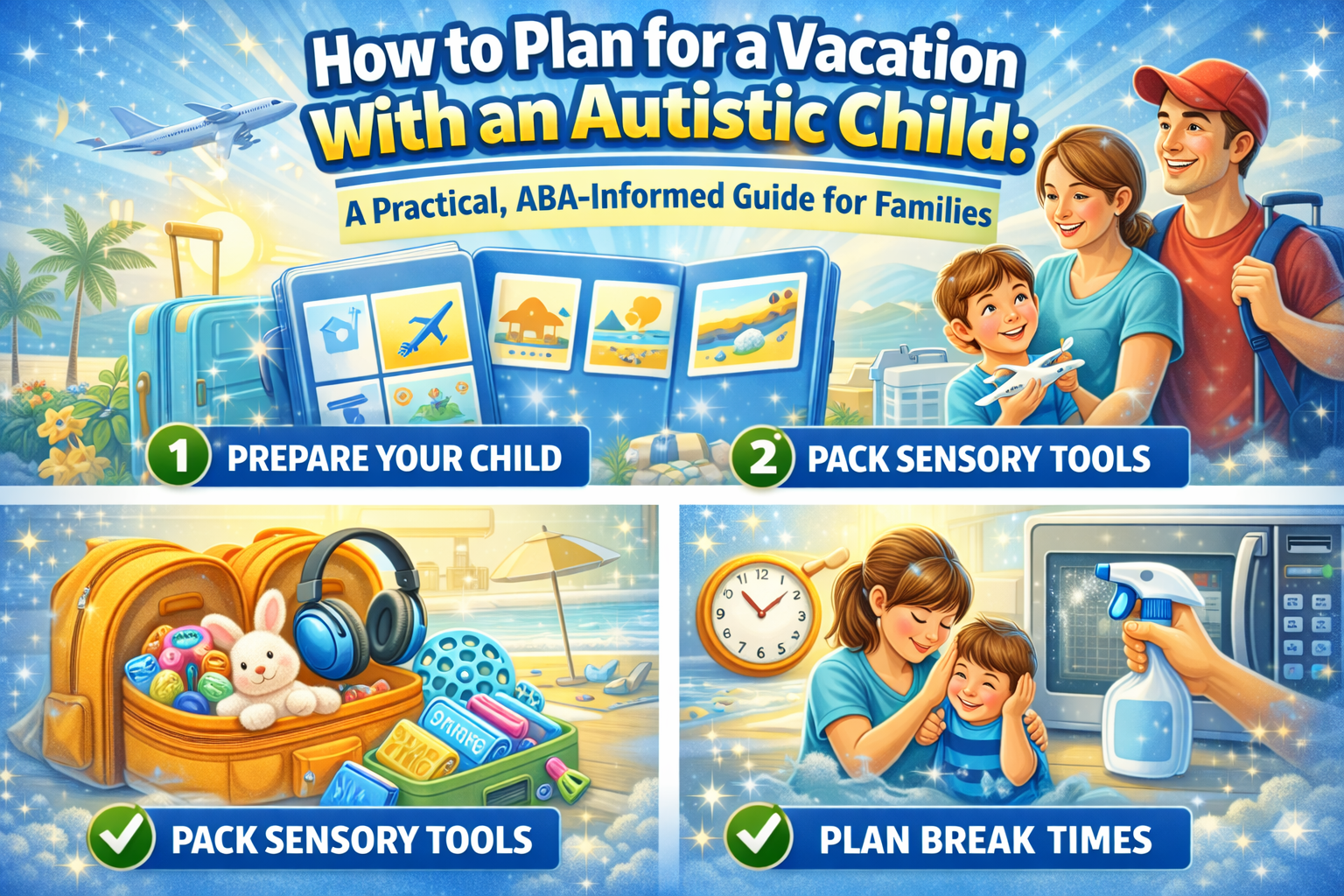
How to Plan for a Vacation With an Autistic Child: A Practical, ABA-Informed Guide for Families

ABA Clinic
A Practical, ABA-Informed Guide for Families

Planning a vacation is exciting, but for families with an autistic child, it can also feel overwhelming. New environments, disrupted routines, unfamiliar sounds, crowds, and unexpected changes can turn what’s meant to be a relaxing break into a stressful experience. The good news? With thoughtful planning, realistic expectations, and strategies rooted in Applied Behavior Analysis (ABA therapy), vacations can be enjoyable, meaningful, and even empowering for your child.

This guide walks parents step-by-step through how to plan a vacation with an autistic child while supporting emotional regulation, communication, and independence — all while keeping your family’s well-being front and center.

Why Vacations Can Be Challenging for Autistic Children

Autistic children often thrive on routine, predictability, and familiar sensory environments. Vacations disrupt all three at once. Common challenges families face include:

  • Changes to daily routines and sleep schedules
  • Sensory overload from crowds, noise, lights, or smells
  • Difficulty transitioning between activities
  • Anxiety related to unfamiliar places or people
  • Communication challenges when expressing discomfort or needs

ABA therapy focuses on teaching skills that help children adapt to new situations while reducing stress-related behaviors. When ABA principles are used proactively during vacation planning, families often experience smoother transitions and more positive moments together.

Start With Realistic Expectations (For Everyone)

One of the most important steps in planning a vacation with an autistic child is resetting expectations. This trip may not look like vacations you took before becoming a parent — and that’s okay.

Instead of focusing on packed itineraries or must-see attractions, focus on:

  • Connection over perfection
  • Comfort over comparison
  • Progress over pressure

ABA therapy emphasizes meeting the child where they are, and the same approach applies to travel. A successful vacation might mean enjoying one meaningful activity a day rather than checking off a long list.

Choose an Autism-Friendly Destination

Selecting the right destination sets the tone for the entire trip. Consider places that offer structure, flexibility, and sensory-friendly environments.

Things to look for:

  • Hotels with quiet rooms or suite-style accommodations
  • Destinations with predictable schedules (theme parks, resorts, cruises)
  • Locations offering autism-friendly certifications or accommodations
  • Access to outdoor spaces where sensory input can be controlled

Many families find success with destinations that already have built-in routines, which aligns well with skills taught in ABA therapy, such as following schedules and transitioning between tasks.

Use Visual Supports to Prepare Your Child

Preparation is key — and visual supports are a cornerstone of ABA therapy.

Helpful tools include:

  • Visual schedules showing travel days, activities, and rest times
  • Social stories explaining what will happen during the trip
  • Photos or videos of the hotel, airport, or destination
  • Countdown calendars leading up to departure

Review these supports daily in the weeks before your trip. Repetition builds familiarity and reduces anxiety. ABA therapy often uses priming — introducing information ahead of time — to help children succeed in new environments.

Practice Travel Skills Ahead of Time

Before your vacation, practice skills your child will need during travel. These may include:

  • Sitting for longer periods
  • Waiting in lines
  • Wearing headphones
  • Following instructions from unfamiliar adults
  • Communicating needs using words, AAC, or visuals

ABA therapy can help break these skills into manageable steps and reinforce progress through positive reinforcement. Even small practice sessions can make a big difference once travel day arrives.

Pack With Sensory Needs in Mind

Packing strategically can prevent many challenges before they happen.

Sensory-friendly packing list:

  • Noise-canceling headphones or ear defenders
  • Favorite comfort items (blanket, toy, hoodie)
  • Familiar snacks and drinks
  • Visual supports or communication devices
  • Fidget tools or sensory toys

Maintaining familiar sensory input helps children regulate emotions — a core goal in ABA therapy.

Plan for Flexibility and Downtime

A packed schedule can quickly lead to overwhelm. Build downtime into every day of your vacation.

This might include:

  • Quiet mornings or evenings
  • Returning to the hotel mid-day
  • Having a “no plans” day
  • Letting your child skip activities when needed

ABA therapy teaches that flexibility is a skill that develops over time — not something to force. Respecting your child’s limits creates safety and trust, which ultimately leads to more successful outings.

Use ABA Strategies During the Trip

You don’t need to be a therapist to use ABA strategies while traveling. Many techniques parents already use at home can be applied on vacation.

ABA-informed strategies include:

  • Positive reinforcement: Praise and reward flexibility, communication, and calm behavior
  • First-Then language: “First breakfast, then the pool”
  • Clear expectations: Explain what will happen and how long it will last
  • Consistent responses: Respond to behaviors calmly and predictably

If your child is currently receiving ABA therapy, talk with their therapist before the trip. They can help tailor strategies specifically for travel and unfamiliar environments.

Prepare for Meltdowns With Compassion

Even with the best planning, meltdowns may happen — and that does not mean the trip is a failure.

Meltdowns are often a response to sensory overload, fatigue, or communication challenges. ABA therapy focuses on understanding the function of behavior, not punishing it.

When a meltdown occurs:

  • Stay calm and grounded
  • Reduce sensory input when possible
  • Offer familiar comforts
  • Give your child time to regulate

Your presence and understanding matter more than any itinerary.

Involve Your Child in the Planning Process

Whenever possible, include your child in planning the vacation.

This might look like:

  • Letting them choose activities or meals
  • Showing them pictures and asking preferences
  • Giving simple choices to build independence

ABA therapy emphasizes choice-making as a way to empower children and reduce anxiety. Feeling included helps children feel more in control — which often leads to fewer behavioral challenges.

After the Trip: Reflect and Reinforce

When you return home, talk about the vacation together.

  • Look at photos
  • Talk about favorite moments
  • Reinforce skills your child used successfully

This reflection helps solidify learning and builds confidence for future travel. ABA therapy views experiences like vacations as valuable learning opportunities, not disruptions.

How ABA Therapy Supports Families Beyond the Trip

Vacations highlight both strengths and challenges — and that information is incredibly valuable. ABA therapy can help families:

  • Build tolerance for change
  • Improve communication during stressful moments
  • Develop coping strategies for sensory overload
  • Increase independence in new environments

With consistent support, families often find that each trip becomes easier than the last.

Final Thoughts

Traveling with an autistic child requires preparation, patience, and flexibility — but it can also create meaningful memories, build life skills, and strengthen family bonds. When ABA therapy principles are woven into vacation planning, families are better equipped to navigate challenges while celebrating progress along the way.

There is no “perfect” vacation. There is only your family, learning and growing together — one experience at a time.

Contact us at 972–310–4991 or visit https://radiantspectrumtherapy.com/ to learn more.

 

Share This :