Radiant Spectrum Therapy and the ABC Model in ABA: Understanding Antecedents, Behaviors, and Consequences

ABA Clinic,Therapy
Understanding Antecedents, Behaviors, and Consequences

Applied Behavior Analysis (ABA) is one of the most widely used and research-supported approaches for helping individuals on the autism spectrum develop meaningful skills and reduce challenging behaviors. At the heart of effective ABA programming is a deep understanding of why behaviors happen. This is where the ABC Model of Behavior becomes essential.

At Radiant Spectrum Therapy, the ABC model is not just a clinical framework — it is a practical, compassionate tool used every day to understand each child as an individual. By carefully observing antecedentsbehaviors, and consequences, therapists can design interventions that are ethical, effective, and tailored to real-life needs.

This blog explores how Radiant Spectrum Therapy uses the ABC model in ABA therapy, why it is so important, and how understanding these three components leads to better outcomes for children and families.

What Is Radiant Spectrum Therapy?

Radiant Spectrum Therapy provides evidence-based behavioral services designed to support individuals with autism spectrum disorder (ASD) and related developmental differences. The goal is not to “change” who a child is, but to help them gain skills that improve communication, independence, emotional regulation, and overall quality of life.

Through individualized ABA therapy, Radiant Spectrum Therapy focuses on:

  • Building functional communication skills
  • Encouraging positive social interactions
  • Reducing behaviors that interfere with learning or safety
  • Supporting families through education and collaboration

A major part of achieving these goals involves understanding behavior at a deeper level — specifically, what triggers behavior and what reinforces it. This is why the ABC model in Applied Behavior Analysis plays such a critical role.

What Is the ABC Model in ABA?

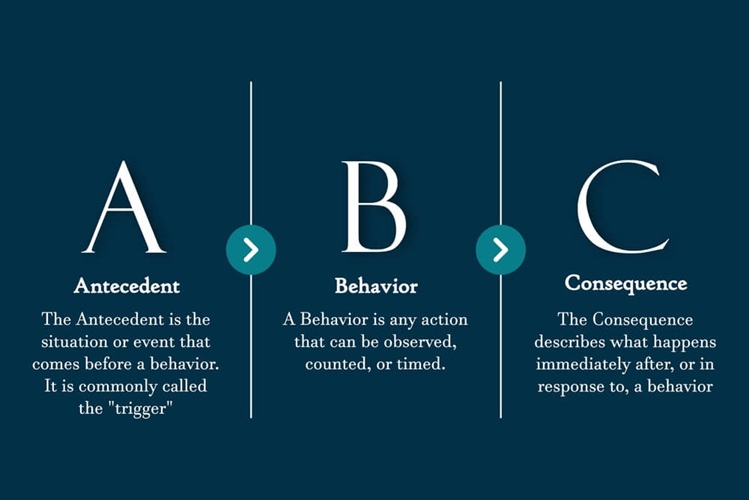
The ABC model stands for Antecedent, Behavior, and Consequence. It is a structured way of observing and analyzing behavior to determine why it occurs and what function it serves.

In ABA therapy, behavior is not viewed as random or meaningless. Every behavior communicates something — whether it is a need, a desire, an avoidance, or a response to the environment. The ABC model helps therapists break behavior down into understandable parts.

At Radiant Spectrum Therapy, the ABC model is used to:

  • Identify patterns in behavior
  • Understand environmental triggers
  • Develop effective behavior intervention plans
  • Teach appropriate replacement behaviors

Antecedent: What Happens Before the Behavior

The antecedent is anything that happens immediately before a behavior occurs. This could be an instruction, a change in environment, a demand, or even a sensory experience.

Common antecedents may include:

  • Being asked to complete a task
  • A transition from one activity to another
  • Loud noises or crowded spaces
  • Removal of a preferred item
  • Changes in routine

For example, if a child engages in challenging behavior during homework time, the antecedent may be the presentation of a difficult task.

At Radiant Spectrum Therapy, therapists pay close attention to antecedents because they often provide the clearest insight into why a behavior starts. Understanding antecedents allows therapists to make proactive changes, such as:

  • Modifying how instructions are delivered
  • Providing visual schedules
  • Offering choices
  • Preparing the child for transitions

This proactive approach aligns with best practices in ABA therapy for autism, helping reduce frustration before it escalates into challenging behavior.

Behavior: What the Individual Does

The behavior is the observable and measurable action that occurs. In ABA, behaviors are described objectively — without judgment or emotional language.

Examples of behaviors include:

  • Crying
  • Hitting
  • Running away
  • Refusing tasks
  • Using words or gestures to communicate

At Radiant Spectrum Therapy, behaviors are defined clearly so everyone involved — therapists, caregivers, and teachers — understands exactly what is being addressed. This clarity is essential when collecting data and evaluating progress.

Importantly, ABA does not focus only on reducing unwanted behaviors. It also emphasizes teaching positive, functional behaviors, such as:

  • Requesting help
  • Expressing emotions appropriately
  • Following instructions
  • Engaging in social interaction

Understanding behavior in isolation is not enough. The true value of the ABC model comes from examining behavior in context — with its antecedents and consequences.

Consequence: What Happens After the Behavior

The consequence is what happens immediately after the behavior. Consequences play a powerful role in determining whether a behavior will happen again in the future.

Consequences may include:

  • Attention from adults or peers
  • Access to a preferred item or activity
  • Escape from a task
  • Sensory stimulation

For example, if a child screams and is then removed from a difficult task, the consequence may be task avoidance. This can unintentionally reinforce the screaming behavior.

At Radiant Spectrum Therapy, understanding consequences helps therapists identify the function of behavior — what the child is gaining or avoiding. This knowledge is crucial when designing behavior intervention strategies that are ethical and effective.

Why the ABC Model Is Used in ABA Therapy

The ABC model in ABA is used because it provides a clear, evidence-based framework for understanding behavior. Rather than reacting emotionally or using punishment-based approaches, therapists can respond thoughtfully and strategically.

Key reasons the ABC model is used in Applied Behavior Analysis include:

1. Identifying the Function of Behavior

Behavior always serves a purpose. The ABC model helps determine whether behavior is maintained by attention, escape, access to items, or sensory input.

2. Creating Individualized Treatment Plans

No two children are the same. By analyzing antecedents and consequences, Radiant Spectrum Therapy ensures each treatment plan is personalized and meaningful.

3. Reducing Challenging Behaviors Ethically

Instead of suppressing behavior, ABA focuses on teaching replacement skills that meet the same need in a more appropriate way.

4. Supporting Long-Term Skill Development

When children learn why behaviors occur and are taught better alternatives, progress is more likely to generalize across environments.

5. Empowering Families and Caregivers

The ABC model is easy to understand and apply outside therapy sessions, making it a powerful tool for parent training and collaboration.

How Radiant Spectrum Therapy Applies the ABC Model

At Radiant Spectrum Therapy, the ABC model is integrated into daily therapy sessions, assessments, and ongoing data collection. Therapists observe behavior across multiple settings — home, clinic, and community — to ensure a comprehensive understanding.

By consistently using ABC data collection, therapists can:

  • Track progress over time
  • Adjust strategies based on real-world outcomes
  • Ensure therapy remains effective and respectful

This approach supports the core mission of Radiant Spectrum Therapy: helping individuals thrive while honoring their unique strengths and needs.

The Bigger Picture: Compassionate ABA Through Understanding

The ABC model is not about control — it is about understanding. When therapists understand what drives behavior, they can respond with empathy, structure, and support.

Through ABA therapy grounded in the ABC modelRadiant Spectrum Therapy helps children build communication skills, reduce frustration, and gain confidence in their daily lives. Families are not just observers in this process — they are active partners, learning tools that empower them long after therapy sessions end.

Final Thoughts

Understanding antecedentsbehaviors, and consequences is foundational to effective ABA therapy for autism. The ABC model provides clarity, consistency, and compassion — values that align perfectly with the mission of Radiant Spectrum Therapy.

When behavior is understood rather than judged, real progress becomes possible.

Contact us at 972–310–4991 or visit https://radiantspectrumtherapy.com/ to learn more.

Share This :