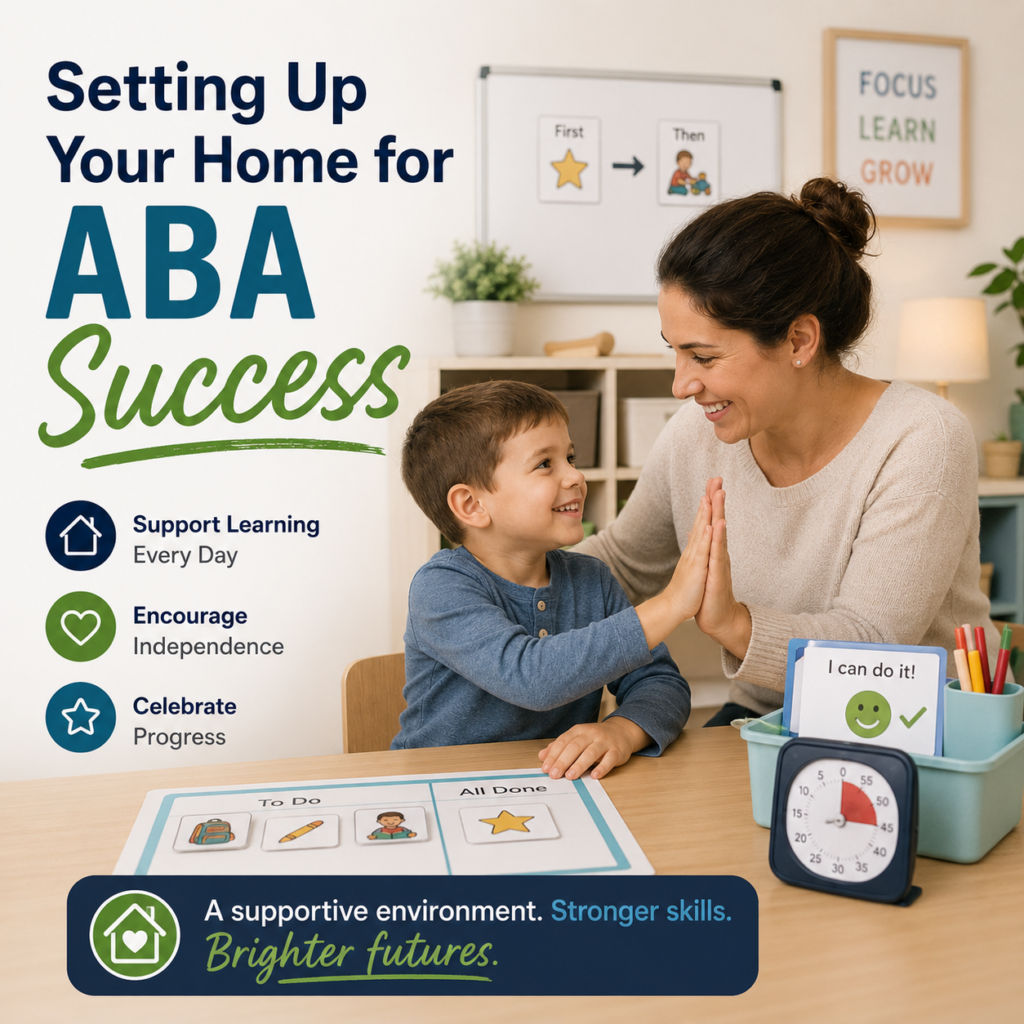
How to prepare home for ABA therapy and create an in home ABA space setup that supports learning, routines, and everyday family life.
Many families worry that ABA therapy at home requires a perfect clinical room. In reality, the goal is to work within a real household environment and use what you already have to support learning.
A home-based ABA setting does not need to be spotless, silent, or specially designed. A small corner of a living room, dining area, or bedroom can be enough to build consistency, comfort, and routine.
Use a calm corner
Keep supplies handy
Limit distractions
A small table or floor space
Basic learning supplies
A simple storage bin
A quiet backup area
Start with a practical space that fits your family’s daily life, then adjust based on your child’s needs, therapist recommendations, and available routines.
Space Planning: Choose a location with enough room for activities, materials, and easy access to support tools without needing a dedicated therapy room.
Organization: Store reinforcers, toys, visual supports, and learning materials in a labeled container so sessions can begin quickly and end cleanly.
Flexibility: A kitchen table, playroom floor, or quiet corner can all work well when the environment is predictable and the goals are clear.
Takeaways: The most important part of home ABA is consistency, not perfection. Your therapist can help you shape the space around your child’s strengths, needs, and family routines.
Families often see the best results when therapy is integrated into daily routines. Small adjustments to the home environment can make sessions smoother, more engaging, and easier to maintain over time.
| Category | Key Aspect |
| Therapy Space | Dedicated, clutter-free area |
| Essential Supplies | Reinforcers, data sheets |
| Distraction Reduction | Minimize noise, clear visuals |
A thoughtful setup can support focus, learning, and follow-through without turning your home into a clinic. The goal is to make therapy doable, functional, and sustainable for real family life.
Home ABA works best when the space feels natural and manageable. You do not need a dedicated therapy room to start building progress at home.
ABA home setup tips
Parent-friendly therapy routines
Sensory-friendly learning spaces
Home-based intervention strategies
📞 972-310-4991
🌐 radiantspectrumtherapy.com