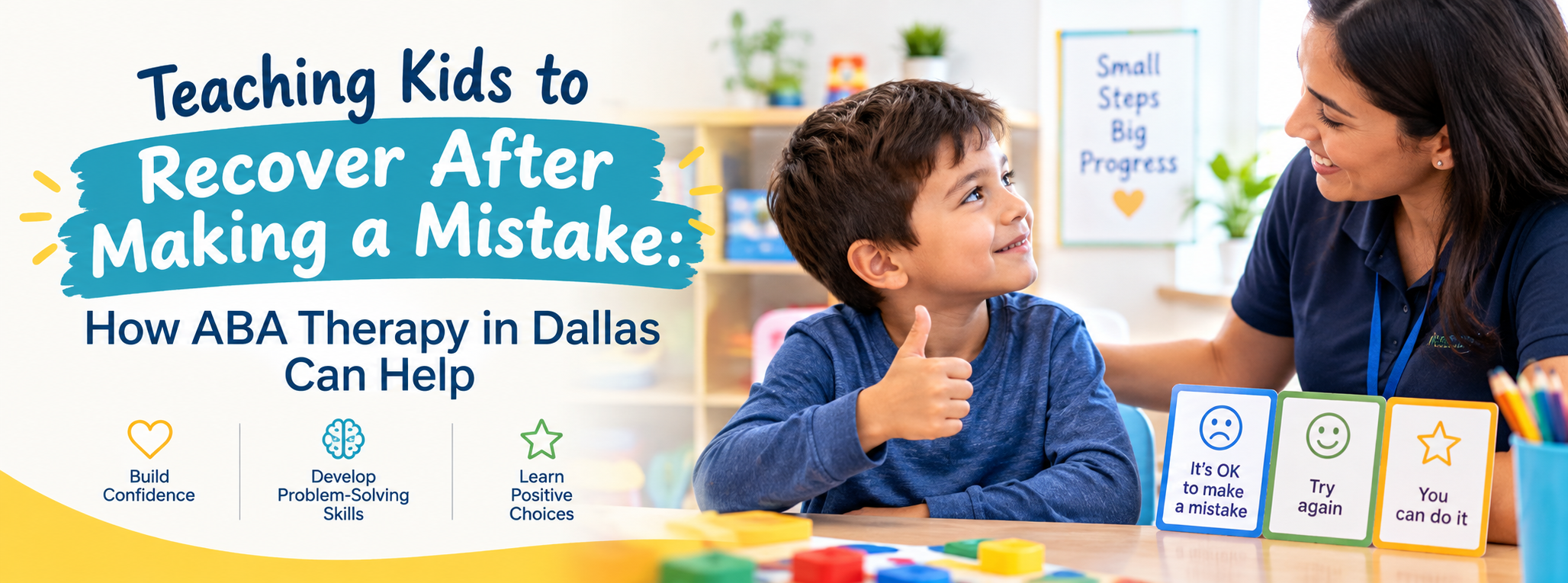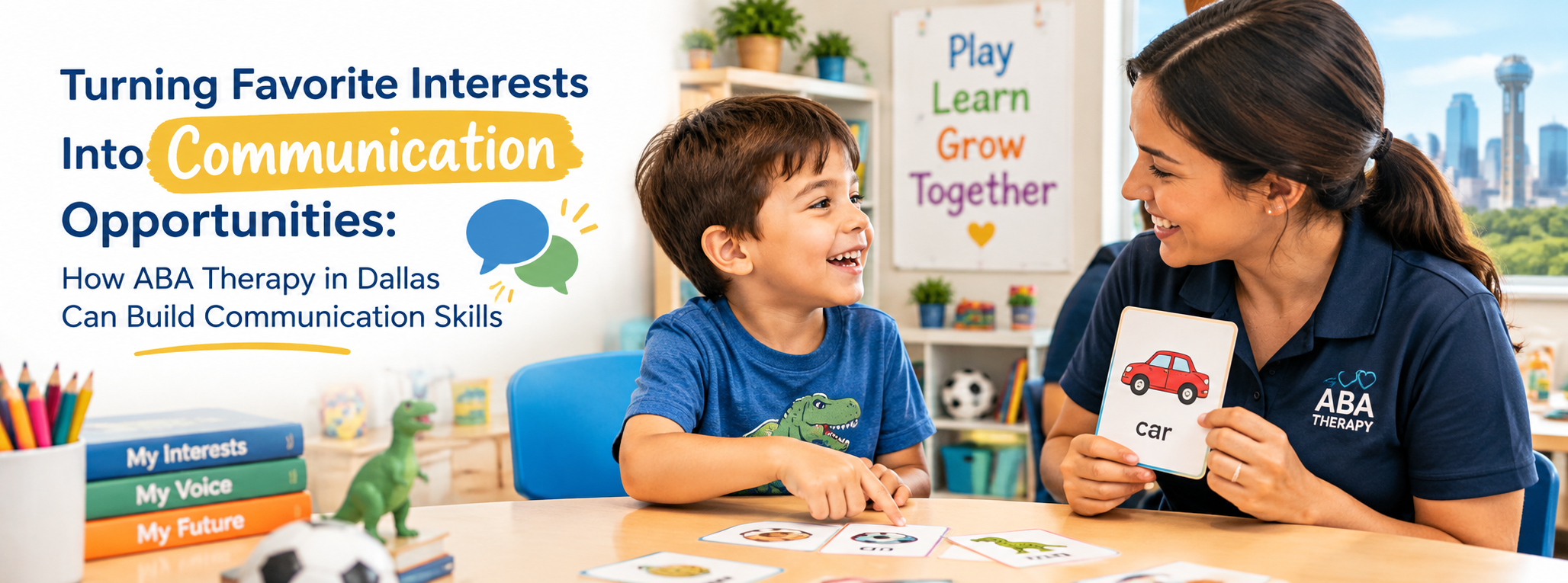

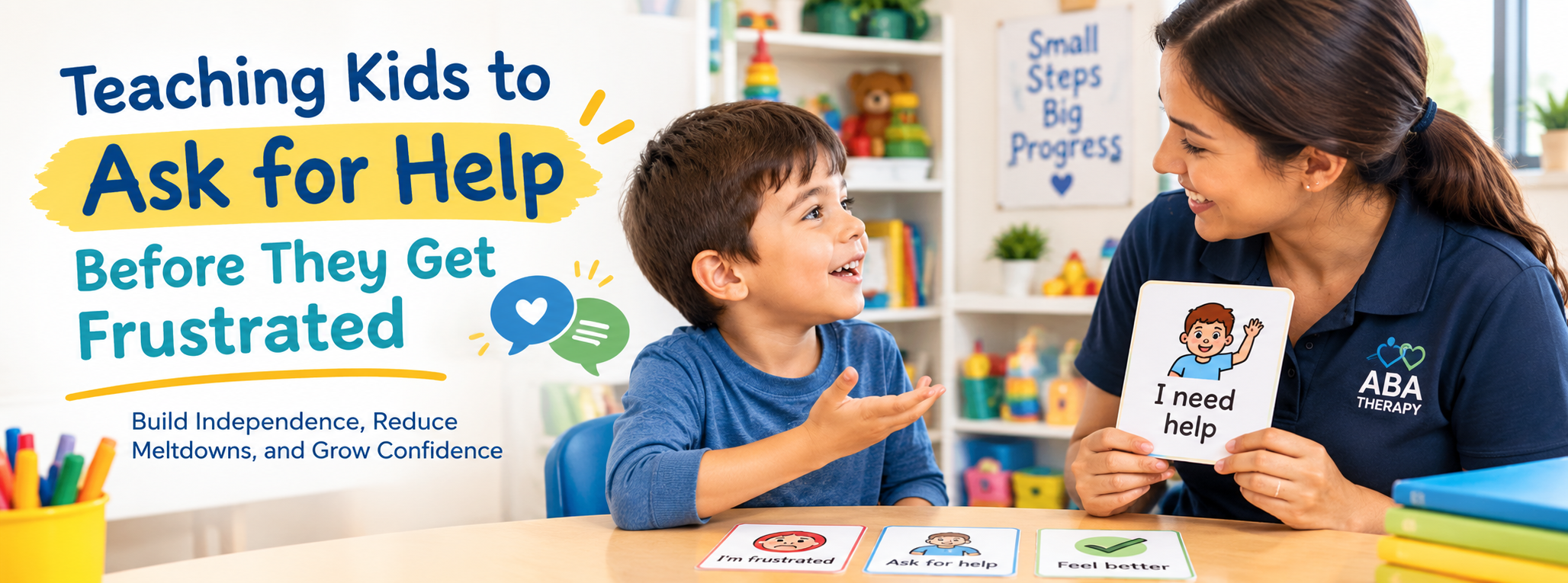
For many children, asking for help does not always come naturally. A child may become frustrated, cry, walk away, throw an item, or refuse to continue when a task feels too difficult. For families exploring Autism Treatment Highland Park, teaching a child to communicate the need for assistance can be an important part of building independence and reducing frustration. With consistent support, children can learn that asking for help is an effective way to communicate what they need before a difficult situation becomes overwhelming.
Asking for help is more than simply teaching a phrase such as “help me.” It is a functional communication skill that can be practiced during everyday routines, play, learning activities, and challenging situations. Whether a child uses spoken language, gestures, signs, pictures, or an AAC device, the goal is to give them a reliable way to communicate when they cannot complete something independently.
Why Asking for Help Can Be Difficult
Some children recognize that they are struggling but do not yet know how to communicate that feeling. Others may understand the words they need but have difficulty using them when they are already upset.
A child might know how to say “help” during a calm practice session but have trouble remembering the skill when a toy will not work, a zipper is stuck, or an activity becomes difficult.
Several factors can contribute to this difficulty:
- Limited functional communication skills
- Difficulty identifying or communicating emotions
- Challenges with problem-solving
- Frustration with unfamiliar tasks
- Difficulty waiting for assistance
- Sensory or environmental distractions
- Previous experiences in which frustration was the primary way to get attention or assistance
- Difficulty understanding when a task is appropriate to complete independently versus when help is available
This is why simply telling a child to “ask for help” may not be enough. The skill often needs to be explicitly taught, practiced, and reinforced.
The Connection Between Frustration and Communication
Frustration is a normal human response when something feels difficult or does not go as expected. For children with communication or developmental differences, frustration may sometimes appear through behavior rather than words.
For example, imagine a child trying to open a container. After several unsuccessful attempts, the child may push it away or begin crying. An adult might immediately open the container.
While helping is appropriate, there is also an opportunity to teach a more useful communication response.
The adult could model:
“You need help. Say ‘help,’ or show me.”
Once the child communicates the request in an appropriate way, the adult can provide assistance.
Over repeated opportunities, the child begins learning an important connection:
“When something is difficult, I can communicate that I need help.”
This gives the child another option besides becoming increasingly frustrated.
Start With Simple, Functional Communication
Children do not need to begin with a complicated sentence.
A simple request such as “help” may be a perfectly appropriate starting point. Depending on the child’s communication abilities, the response could include:
- Saying “help”
- Signing “help”
- Pointing to a help card
- Selecting “help” on an AAC device
- Handing an item to an adult
- Using a gesture
- Using a short phrase such as “help please”
- Saying “I can’t” or “I need help”
The specific form of communication should match the child’s current skills.
The important part is that the child has a dependable way to communicate the message.
Teach the Skill Before the Child Is Frustrated
One of the most important strategies is practicing help-seeking when the child is calm.
Trying to teach a new communication skill in the middle of a major frustration can be difficult. The child may already be overwhelmed and have less ability to process instructions.
Instead, families and professionals can create small practice opportunities throughout the day.
For example, an adult might give the child a container that is slightly difficult to open. Rather than immediately completing the task, the adult can pause and provide an opportunity for the child to request assistance.
The goal is not to deliberately make the child upset. It is to create manageable situations where asking for help has a clear purpose.
Practice During Everyday Activities
Help-seeking can be practiced during ordinary routines, including:
- Opening food packages
- Putting on shoes
- Zipping a jacket
- Completing a puzzle
- Building with blocks
- Opening a toy
- Reaching an item
- Starting a difficult activity
- Completing homework
- Cleaning up toys
- Using a new piece of equipment
Everyday routines provide natural opportunities because the child has a real reason to communicate.
Model the Words You Want the Child to Use
Children often learn communication by observing the people around them.
Parents, caregivers, teachers, and therapists can model help-seeking language during their own activities.
For example:
“I can’t open this. I need help.”
Or:
“This is hard. Can you help me?”
The adult can then use similar language when supporting the child.
For younger children or children who use fewer words, the model can be much simpler:
“Help.”
“Need help.”
“Help please.”
Repeated modeling makes the language predictable and easier to understand.
Use Prompts Without Taking Over
Prompting can help a child learn a new communication response, but the goal should eventually be independent communication.
Suppose a child is struggling with a puzzle. An adult might first wait briefly to see whether the child asks for assistance independently.
If the child does not, the adult could provide a prompt:
“You can say, ‘help.’”
If needed, the adult may use a visual card, gesture, verbal model, or another prompt appropriate for the child.
After the child communicates the request, the adult responds by helping.
Over time, prompts can be gradually reduced so the child has more opportunities to initiate the request independently.
This type of individualized teaching is one area that may be addressed through BCBA services Highland Park and other forms of behavioral intervention.
Reinforce Asking for Help
When a child appropriately asks for assistance, the request should have meaning.
That means responding to the communication whenever reasonably possible.
If a child says “help” while struggling to open a container, the adult can acknowledge the request:
“You asked for help. I’ll help you.”
Then provide the appropriate assistance.
This teaches the child that communication works.
Reinforcement does not always need to involve a tangible reward. The natural consequence of asking for help is often the assistance itself.
The child learns:
I asked for help → someone understood me → I received assistance.
That connection can make the communication response more useful and motivating.
Teach Children to Recognize When They Need Help
Asking for help also involves recognizing that assistance is needed.
A child may need support learning to identify situations such as:
- “I tried, but I can’t do it.”
- “I don’t understand.”
- “I don’t know what to do next.”
- “This is too difficult right now.”
- “I need someone to show me.”
- “I need a break before I continue.”
These are different situations, so the communication response may also be different.
For some children, it may be useful to teach separate requests for help, break, more information, or finished.
This gives the child more precise ways to communicate instead of relying on one response for every difficult situation.
Teach “Help” and “Break” as Different Requests
Sometimes a child does not need someone to complete the task for them. They may simply need a short break.
For example, during a challenging activity, a child might become overwhelmed. Teaching the child to request “break” gives them a functional alternative to dropping materials, leaving the area, or engaging in another challenging behavior.
Similarly, “help” can communicate:
“I want to continue, but I need assistance.”
While “break” can communicate:
“I need a temporary pause.”
Teaching the difference can make communication more meaningful.
Use Visual Supports When Helpful
Visual communication can be particularly useful for children who have difficulty consistently expressing requests through speech.
A small visual card might include the word HELP along with a simple picture. The child can hand the card to an adult when assistance is needed.
Other children may use a communication board or AAC system.
Visual supports can be especially helpful during routines where the same types of problems occur repeatedly.
For example, a child learning to dress independently might have access to a simple visual sequence showing:
- Try independently.
- Ask for help.
- Receive assistance.
- Continue the activity.
The specific support should be individualized to the child’s abilities and communication system.
Avoid Waiting for a Crisis
One common mistake is waiting until a child is already highly frustrated before encouraging communication.
At that point, the child may have difficulty processing language or using a newly learned skill.
Instead, adults can watch for early signs of difficulty.
A child might:
- Pause repeatedly
- Look toward an adult
- Push materials away
- Make frustrated sounds
- Attempt the same action several times
- Stop participating
- Begin pacing or moving away
- Show changes in facial expression or body language
These early signs can be opportunities to prompt functional communication before frustration escalates.
The goal is not to eliminate every moment of frustration. Instead, it is to help the child develop a more effective response when frustration begins.
Give Children Enough Time to Respond
Adults sometimes move too quickly when helping children.
A child struggles with a task, and an adult immediately steps in.
While this may solve the immediate problem, it can remove the opportunity for the child to communicate independently.
After presenting a manageable challenge, give the child a reasonable amount of time to respond.
A brief pause can create space for the child to think:
“This is difficult. What can I do?”
If the child does not respond, the adult can then provide an appropriate prompt.
This balance between allowing independence and providing support can be important when developing communication skills.
Celebrate Communication, Not Just Perfect Words
A child’s communication attempt does not need to sound perfect to be meaningful.
A child who reaches toward a help card, gestures toward an adult, or says an approximation of “help” may be communicating an important need.
Adults can acknowledge the attempt and model a more complete response.
For example:
Child: “Heh.”
Adult: “Help! You need help.”
Then provide assistance.
This approach recognizes the child’s communication while continuing to build the skill.
Practice Across Different People and Places
A child may learn to ask one therapist for help but have difficulty using the same skill with a parent, teacher, sibling, or unfamiliar adult.
Generalization can help make the skill more useful.
Practice can gradually occur with different people and in different environments:
- At home
- During therapy
- At school
- During playdates
- In the community
- During family activities
- During structured learning
- During daily routines
The goal is for the child to understand that help-seeking is useful across situations, not just during one specific activity.
This is one reason individualized behavioral intervention Highland Park TX may include opportunities to practice communication across multiple settings.
How ABA Therapy Can Support Help-Seeking
For families considering ABA therapy in Highland Park, functional communication can be one area addressed through individualized treatment.
ABA therapy does not have to focus solely on reducing challenging behavior. It can also teach practical skills that help children communicate their needs, participate in routines, and become more independent.
A qualified behavior professional may assess:
- How the child currently communicates
- When frustration typically occurs
- What situations trigger difficulty
- Whether the child understands help-seeking language
- Which communication method is most effective
- What prompts are appropriate
- How to reinforce independent communication
- How to practice the skill across environments
Based on that information, the child’s treatment team can develop goals appropriate to their individual needs.
For some children, this may involve spoken language. For others, it may involve gestures, visual supports, sign language, or AAC.
The goal is not to force every child to communicate in the same way. The goal is to provide a functional communication system that the child can use successfully.
Building Independence Through Help-Seeking
It may seem like asking for help makes a child less independent, but functional help-seeking can actually support independence.
A child who knows how to request assistance does not have to rely on frustration to communicate that something is wrong.
Over time, the child may learn a simple problem-solving sequence:
Try → recognize difficulty → ask for help → receive support → continue.
That is a valuable life skill.
As children grow, the situations will change. A young child might ask for help opening a snack. An older child might ask a teacher to explain an assignment. Eventually, the same communication skill can support independence at home, school, work, and in the community.
Simple Ways Parents Can Practice at Home
Families do not need complicated activities to practice help-seeking.
Try building small opportunities into routines that already happen every day.
During Meals
Give the child a container that requires some assistance to open.
Pause before opening it yourself and give the child an opportunity to request help.
During Play
Choose toys or activities that sometimes require assistance.
If a child cannot complete the next step, provide a chance to ask for help before stepping in.
During Dressing
Allow the child to attempt a difficult zipper, button, or shoe before offering assistance.
If needed, model the request:
“Need help.”
During Homework
When the child encounters a difficult question, encourage them to communicate whether they need help understanding the problem or simply need a short break.
During Household Routines
Use everyday activities such as opening cabinets, reaching items, preparing snacks, or putting away belongings as natural opportunities to practice communication.
Small moments can create meaningful learning opportunities.
When Professional Support May Be Helpful
Some children may need more structured support to develop functional communication.
If frustration frequently interferes with daily routines, learning, play, or participation, families may consider discussing their concerns with a qualified professional.
Autism therapy Highland Park TX may include individualized strategies for communication, behavior, social skills, and daily living skills depending on the child’s needs.
Families exploring autism support services Highland Park can ask providers how they approach functional communication and whether treatment goals are individualized around the child’s current abilities and family priorities.
It can also be helpful to ask how caregivers are included in the process. Skills are more useful when children have opportunities to practice them beyond therapy sessions.
Helping Children Find Their Voice Before Frustration Takes Over
Teaching a child to ask for help is not about preventing every difficult moment. Frustration is part of learning, and children will naturally encounter situations that challenge them.
The goal is to give children a practical way to respond when something becomes difficult.
With consistent modeling, appropriate prompting, meaningful reinforcement, and repeated practice, children can learn that they have a way to communicate their needs.
For families exploring Autism Treatment Highland Park, functional communication can be an important part of an individualized approach to supporting independence. Whether a child says “help,” uses a gesture, points to a visual, or communicates through AAC, every successful request is an opportunity to build confidence and participation.
When children learn that they can communicate “I need help” before frustration takes over, they gain more than a single phrase. They gain a practical strategy for navigating challenges, connecting with others, and becoming more independent.
Contact us at 972–310–4991 or visit https://radiantspectrumtherapy.com/ to learn more.