
Parents often assume that the toys with the most buttons, flashing lights, and electronic sounds offer the greatest learning opportunities. In reality, many of the best tools for communication and social growth are often the simplest ones sitting quietly on a shelf.
A thoughtfully organized toy box can create countless opportunities for children to communicate, share experiences, solve problems, and engage in meaningful play. Whether your child enjoys building, pretending, or exploring sensory experiences, choosing toys with purpose can make free time an extension of everyday learning without making it feel like work.
Families participating in ABA Therapy in Dallas often discover that changing the toy environment leads to more interaction, more spontaneous communication, and more enjoyable play sessions for everyone involved.
Why a Toy Box Audit Matters
Children spend a significant portion of their day engaged in independent or family play. The toys available during those moments shape how they interact with others and the world around them.
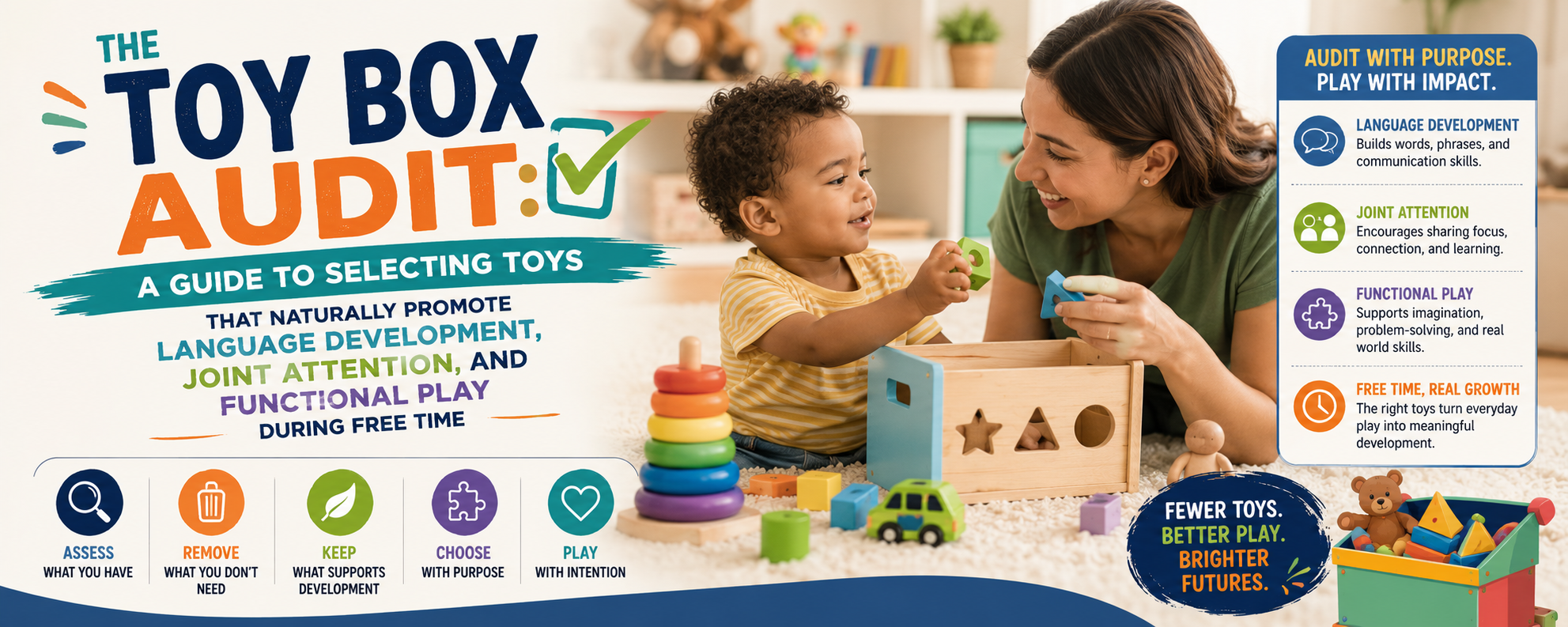
A toy box audit simply means reviewing what your child already has and asking a few important questions:
- Does this toy encourage interaction?
- Does it inspire creativity?
- Can multiple people play together?
- Does it create opportunities for requesting, commenting, or sharing?
- Can it be used in different ways instead of only one?
If the answer is yes, that toy is likely supporting important developmental skills.
What Makes a Great Language-Building Toy?
The best language-building toys are often open-ended. Instead of doing all the work for the child, they encourage imagination and communication.
Examples include:
- Building blocks
- Toy animals
- Dollhouses
- Play kitchens
- Cars and roads
- Wooden trains
- Dress-up clothes
- Play food
- Farm sets
- Simple puzzles
These toys naturally create opportunities for children to:
- Request items
- Label objects
- Answer questions
- Describe actions
- Practice turn-taking
- Tell stories
Many professionals providing ABA therapy Dallas encourage families to prioritize toys that leave room for creativity instead of passive entertainment.
The Importance of Joint Attention
Joint attention occurs when two people focus on the same object or activity while sharing the experience together. It is one of the building blocks of communication and social development.
For example:
A parent rolls a ball.
The child watches.
The parent smiles and says, “Your turn!”
The child rolls it back.
That simple exchange involves shared attention, anticipation, and interaction.
Certain toys naturally promote joint attention better than others.
Great choices include:
Ball Ramps
Children watch the ball travel while anticipating what happens next.
Bubble Sets
Children often look between the bubbles and another person, creating repeated opportunities for eye contact and communication.
Toy Garages
Cars can race, park, crash, and take turns moving through ramps together.
Animal Figures
Parents and children can create sounds, pretend stories, and simple games that encourage shared experiences.
These activities are commonly incorporated into Center-Based ABA programs because they provide countless opportunities for natural social engagement.
Functional Play Starts with Simple Toys
Functional play means using objects the way they are intended.
Examples include:
- Driving a toy car
- Feeding a doll
- Brushing a stuffed animal
- Stirring pretend soup
- Building a tower
These actions may seem ordinary, but they help children develop:
- Sequencing skills
- Problem-solving abilities
- Communication
- Social understanding
- Daily living concepts
Many families involved in Home-Based ABA Therapy discover that everyday household items can be just as valuable as expensive toys.
A cardboard box becomes a spaceship.
Plastic bowls become drums.
Blankets become forts.
Simple materials often inspire the richest interactions.
Toys That Encourage Requests
Communication develops naturally when children need assistance or want something.
Consider toys with multiple pieces that require another person to participate:
- Wind-up toys
- Building blocks stored in containers
- Toy food for pretend restaurants
- Mr. Potato Head pieces
- Marble runs
- Magnetic tiles
Instead of handing everything over at once, keep some pieces nearby.
This creates natural opportunities for children to:
- Ask for help
- Point
- Gesture
- Use words
- Make choices
These everyday strategies are frequently discussed during ABA Parent Training because they fit naturally into family routines without requiring structured lessons.
Reducing Electronic Toys
Electronic toys often entertain children but provide fewer opportunities for interaction.
If pressing one button causes lights, music, and movement automatically, there is less motivation to:
- Ask questions
- Take turns
- Pretend
- Create stories
- Problem solve
This doesn’t mean electronic toys must disappear completely.
Instead, aim for a healthy balance.
Many specialists providing autism services Dallas TX recommend filling most of a toy collection with toys that encourage active participation rather than passive observation.
Organizing Toys for Better Play
Too many choices can become overwhelming.
Rather than placing every toy in one giant bin, organize them into smaller categories.
For example:
Building Bin
- Blocks
- Magnetic tiles
- Wooden pieces
Pretend Play Bin
- Toy food
- Kitchen utensils
- Dolls
- Stuffed animals
Vehicles Bin
- Cars
- Trucks
- Trains
- Roads
Sensory Bin
- Kinetic sand
- Scoops
- Containers
- Safe manipulatives
Rotating these bins every week keeps toys exciting while reducing clutter and distraction.
Professionals providing behavioral therapy North Texas often encourage simple environments that allow children to focus on interaction instead of constantly shifting attention.
Choosing Toys That Grow with Your Child
Some toys remain valuable for years because they adapt as skills develop.
Blocks are a perfect example.
A toddler may stack them.
A preschooler builds houses.
An older child creates cities and tells elaborate stories.
The same toy supports different developmental stages without losing its appeal.
Other versatile options include:
- Play scarves
- Dolls
- Toy animals
- Wooden people
- Play kitchens
- Construction sets
These flexible materials encourage creativity while supporting communication and social learning.
Making Free Time More Interactive
Parents sometimes feel pressure to direct every minute of play.
In reality, following a child’s interests often leads to richer communication.
Instead of introducing a new activity every few minutes:
- Sit nearby.
- Observe what captures attention.
- Join the activity naturally.
- Add simple comments.
- Wait for responses.
- Expand on what the child is already doing.
This approach helps children stay engaged while creating meaningful opportunities for language development.
Families using in-home ABA therapy Dallas often practice these strategies in familiar environments where children feel comfortable and confident.
Everyday Objects Count Too
The best toy box may include items that were never designed as toys.
Consider:
- Measuring cups
- Empty containers
- Scarves
- Pillows
- Plastic bowls
- Cardboard tubes
- Laundry baskets
- Wooden spoons
These objects invite exploration, pretend play, and conversation while encouraging children to think creatively.
Many Dallas ABA centers incorporate ordinary materials into therapy because they reflect real-life situations children encounter every day.
Involving the Whole Family
Toy selection isn’t just about what a child enjoys independently. The best toys encourage family participation.
Simple activities like:
- Building together
- Playing pretend restaurant
- Racing cars
- Feeding stuffed animals
- Creating obstacle courses
become opportunities for conversation, turn-taking, problem-solving, and shared laughter.
These moments also reinforce many of the skills discussed during autism parent training Dallas, helping families build confidence while supporting communication in natural settings.
Quality Over Quantity
A toy box filled with dozens of unused gadgets may provide fewer learning opportunities than a small collection of thoughtfully selected materials.
When evaluating each toy, ask:
- Does it encourage imagination?
- Can multiple people use it together?
- Does it inspire conversation?
- Can it be used in different ways?
- Will my child still enjoy it six months from now?
If the answer is yes, it deserves a place in the toy box.
Supporting Development Through Intentional Play
Every block stacked, pretend meal served, and toy car raced across the living room creates opportunities for communication and connection. A carefully chosen collection of toys helps transform everyday free time into meaningful experiences that support language development, social interaction, and functional play without sacrificing fun.
Families exploring ABA therapy providers 75201, pediatric behavioral therapy Dallas, Dallas autism specialists, or DFW ABA therapy often discover that some of the most effective learning opportunities happen not in structured sessions, but during ordinary moments spent playing together on the living room floor.
A simple toy box filled with open-ended, engaging materials can become one of the most valuable tools for encouraging communication, strengthening relationships, and supporting lifelong learning through play.
Contact us at 972–310–4991 or visit https://radiantspectrumtherapy.com/ to learn more.