
Functional Communication Training: Helping Children Build Meaningful Communication Skills

ABA Clinic,Therapy
Paper card with abbreviation ABA (Applied behavior analysis) and blocks on white table, space for text

Communication is one of the most important parts of daily life. For many children with autism, however, expressing wants, needs, and emotions can feel overwhelming. This is where Functional Communication Training (FCT) becomes one of the most powerful and effective tools in the world of behavior support. At Radiant Spectrum Therapy, we use FCT across our programs — including our ABA Therapy, occupational therapy and tutoring for kids, and services offered in our ABA clinic and Autism clinic — to help children replace challenging behaviors with meaningful, functional communication skills.

Whether your family is searching for an ABA clinic in Dallas, an Autism Clinic in Dallas, or high-quality ABA in Dallas, FCT is often one of the very first interventions we introduce. It helps children communicate clearly, confidently, and independently, and it plays a vital role in long-term social and emotional development.

Functional Communication Training is a teaching method that focuses on helping a child communicate in ways that are more effective than challenging behaviors. For example:

  • If a child screams because they want attention, FCT teaches them to tap someone’s shoulder or say “Look at me, please.”
  • If a child throws objects when they are frustrated, FCT teaches them to ask for help.
  • If a child grabs snacks off the counter because they cannot ask, FCT helps them request food in a clear, appropriate way.

Instead of treating difficult behaviors in isolation, FCT focuses on understanding why the behavior is happening. The behavior has a purpose — children communicate with their actions when they cannot do so with words. FCT replaces those behaviors with safer, more effective communication options.

This approach is deeply supported in modern ABA Therapy, and it is one of the techniques we use daily in our Autism clinic and ABA clinic. The results often come quickly because FCT is tailored to each child’s unique strengths, preferences, and communication abilities.

Why Communication Challenges Occur

Children with autism often struggle with communication for several reasons:

  • Difficulty understanding or using spoken language
  • Trouble processing sensory information
  • Anxiety, overstimulation, or frustration
  • Limited expressive vocabulary
  • Difficulty interpreting social cues

Because of these challenges, communication can feel like a puzzle with missing pieces. When children cannot express what they need, they may rely on behaviors instead — crying, hitting, running away, refusing tasks, or shutting down.

That is why FCT is so important. It builds the missing communication pieces in a way that feels natural, rewarding, and achievable.

How Functional Communication Training Works in ABA Therapy

FCT is individualized. Your child’s team analyzes the behavior, identifies the communication goal, and creates a plan that fits the child’s learning style.

The steps typically include:

1. Identify the purpose of the behavior

Every behavior communicates something — attention, escape, sensory input, or a tangible item. We observe why the behavior is happening and what the child is trying to say through their actions.

2. Choose a communication method that fits the child’s abilities

This may include:

  • Words or phrases
  • Picture exchange
  • Sign language
  • Gestures
  • Communication devices
  • Simple pointing or tapping

With FCT, the communication method always starts at the child’s current level and gradually grows over time.

3. Teach the new communication skill

Therapists model the skill, practice with the child, and reinforce every successful attempt. The goal is to make communication easier and more rewarding than the challenging behavior.

4. Reduce the need for the challenging behavior

As the child begins using new communication skills, the difficult behaviors naturally decrease because the child now has a better, clearer way to express themselves.

This process is a core part of how we support children in our Aba clinic in Dallas, and it is one of the foundational strategies taught in ABA Therapy across Dallas.

Why FCT Works So Well for Kids With Autism

Functional Communication Training is backed by years of research and remains one of the most effective interventions for reducing challenging behaviors.

Here’s what makes it powerful:

✔ It focuses on empowering the child — not disciplining them

Instead of punishing behavior, FCT teaches a new skill that makes life easier for the child.

✔ It promotes independence

When children learn to communicate clearly, they participate more fully in school, home life, and social activities.

✔ It reduces stress for families

As communication improves, daily routines become smoother and conflicts decrease.

✔ It works across all ages and abilities

From toddlers to teens — and even adults — FCT is adaptable, compassionate, and practical.

How Our Clinic Uses FCT to Support Families

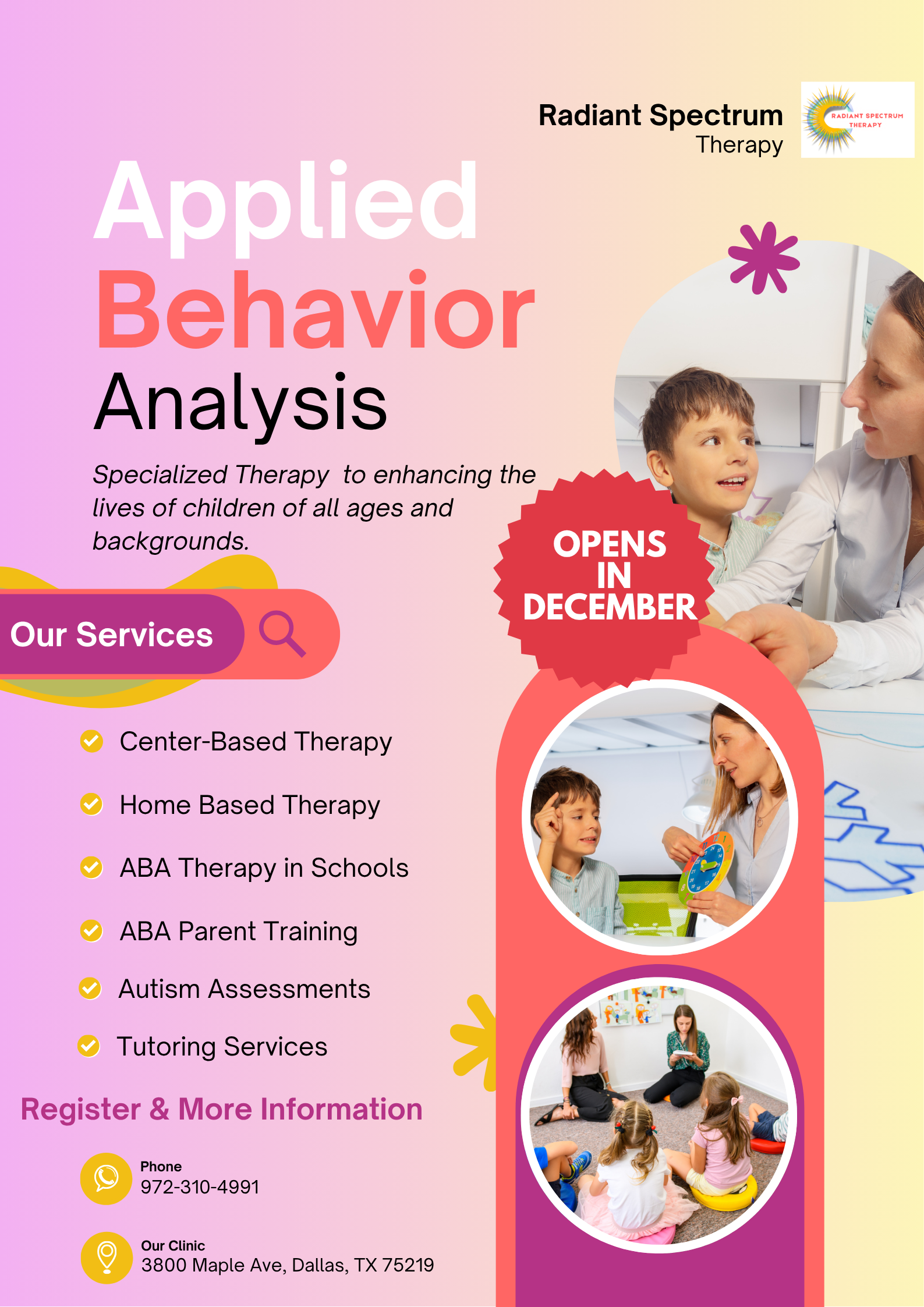
At Radiant Spectrum Therapy, FCT is woven into many of our programs, including:

Our team is trained to teach communication in a fun, natural, and engaging way. Children learn through games, routines, play, and structured activities that make communication feel rewarding, not intimidating.

Families searching for an Autism Clinic in Dallas, ABA in Dallas, or an ABA clinic often choose Radiant Spectrum Therapy because of our focus on evidence-based, compassionate communication support that grows with your child’s needs.

The Importance of Autism Assessments in Supporting Communication

Communication challenges are often identified through early evaluations. Many families visiting us ask about:

These assessments help clarify each individual’s strengths, communication style, sensory needs, and social development. For adults, assessments can finally provide answers to lifelong communication struggles. For children, early evaluation leads to earlier support, which is where FCT becomes incredibly important.

Whether the assessment is for a child or an adult, the results guide our therapy plans and help us choose communication strategies that fit each person best.

How Parents Can Support FCT at Home

Parents and caregivers play a huge role in helping communication skills grow. Here are some gentle, effective ways to support FCT at home:

1. Reinforce communication immediately

If your child signs “help,” says a word, or hands you a picture, respond right away with what they requested. Fast reinforcement helps the skill become solid.

2. Keep communication simple

Use short, clear language. For example:
“Help, please.”
“Snack, please.”
“All done.”

3. Celebrate small wins

Even close attempts count — eye contact, gesture, a vocal sound. Praise every effort.

4. Model communication throughout the day

Show your child how to ask, gesture, or label items in natural settings like mealtime, playtime, and bedtime routines.

5. Stay consistent with your therapy team

Our team will guide you through each step so that home and clinic strategies stay aligned.

Final Thoughts: FCT Gives Children a Voice

Functional Communication Training is more than a strategy — it is a bridge between frustration and confidence. When children can finally communicate what they feel, what they need, and how they see the world, everything changes. Stress decreases, relationships grow stronger, and children gain a sense of independence that impacts every area of life.

Whether your family is exploring ABA Therapy, searching for an ABA clinic in Dallas, or looking for an Autism Clinic in Dallas, Radiant Spectrum Therapy is here to help your child find their voice through compassionate, research-based support.

If you ever need guidance on communication, autism assessments, or therapy options, our team is always ready to help you take the next step.

Contact us at 972–310–4991 or visit https://radiantspectrumtherapy.com/ to learn more.

Share This :