
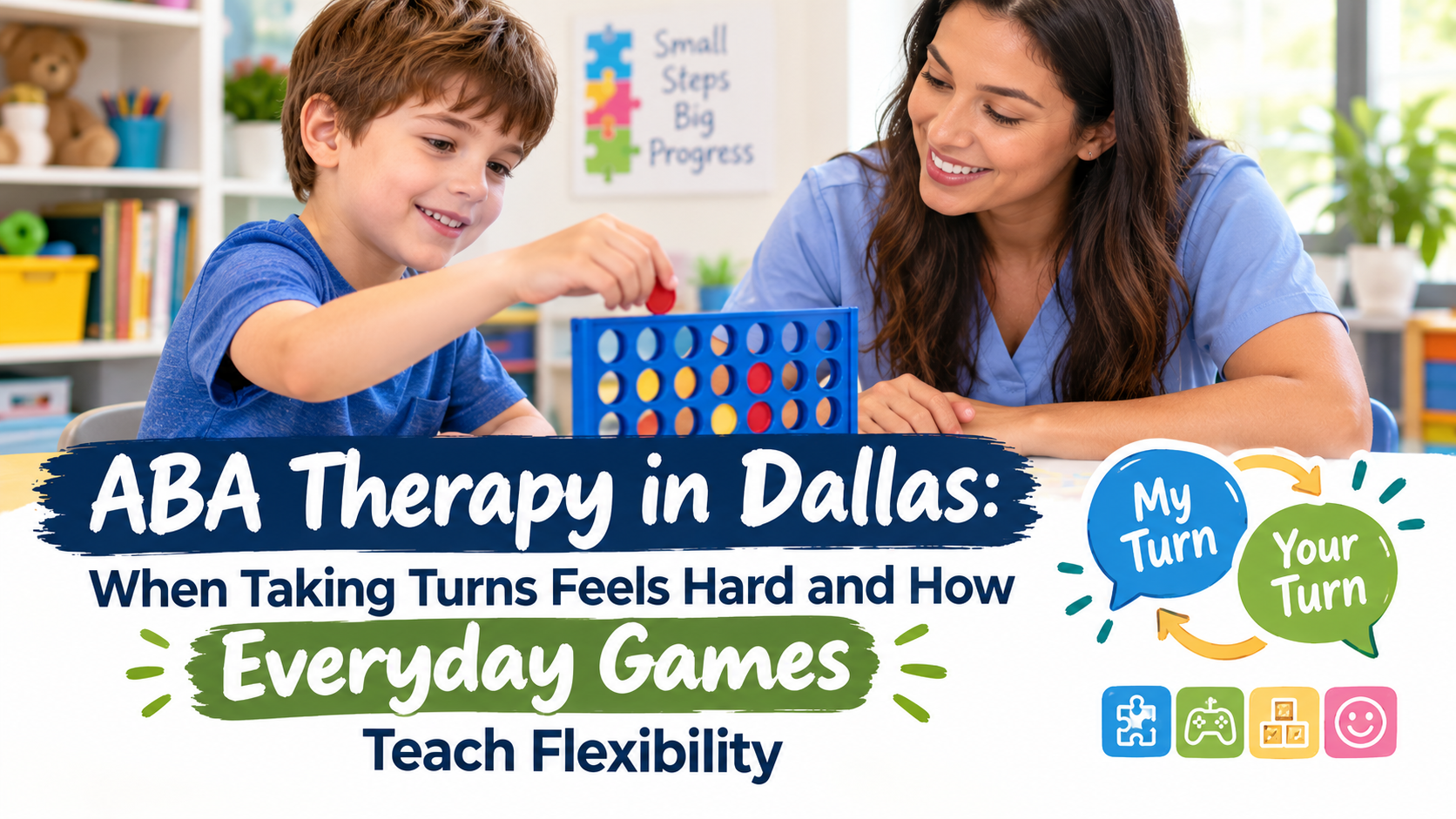
ABA Therapy in Dallas: When Taking Turns Feels Hard and How Everyday Games Teach Flexibility
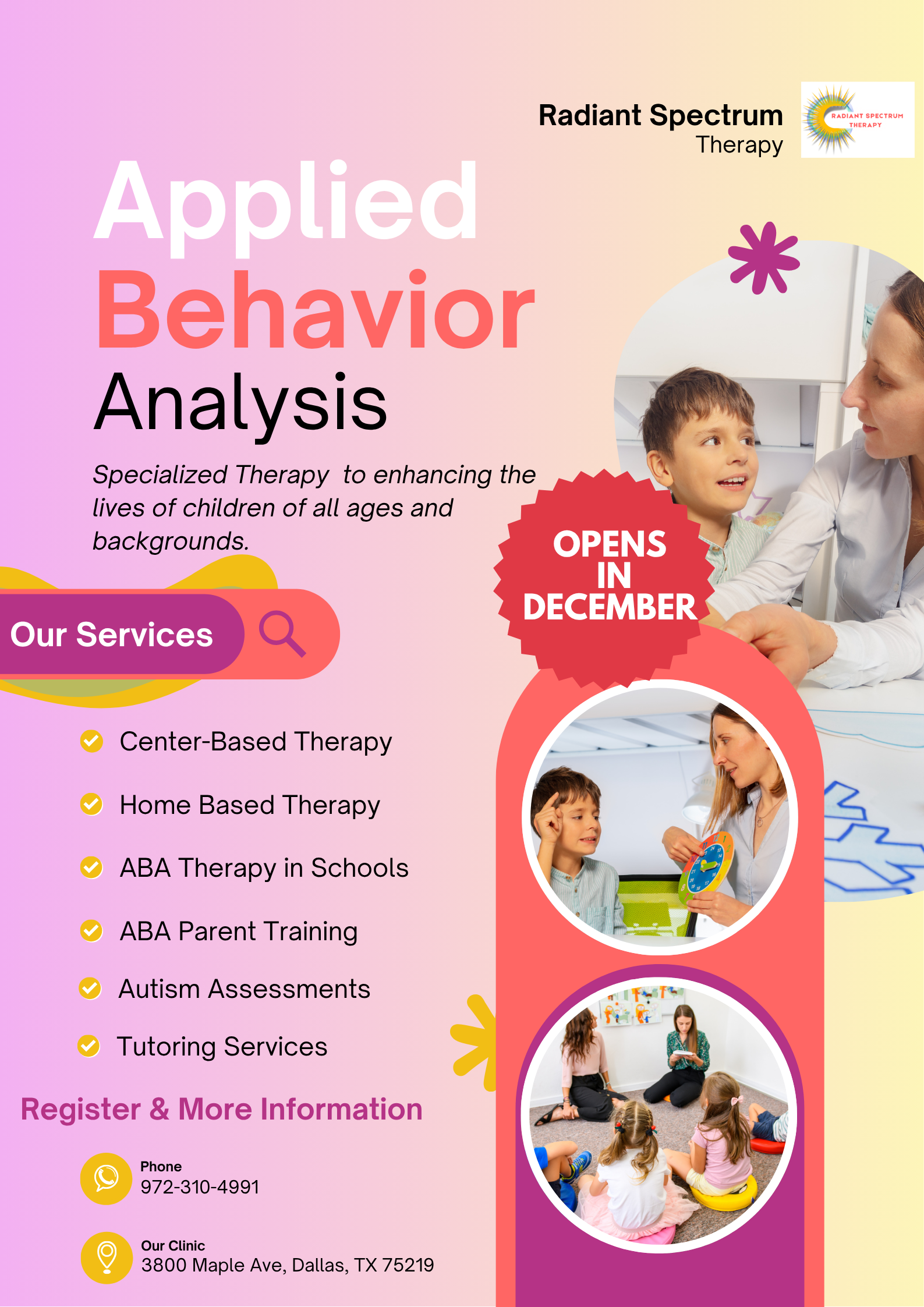

When parents first begin exploring Applied Behavior Analysis (ABA) therapy, one of the biggest decisions they face is choosing between in-home ABA therapy and center-based ABA therapy. Both approaches are highly effective, but the best option depends on your child’s individual needs, family routine, learning style, and therapy goals.
For families searching for ABA Therapy in Dallas, understanding the differences between these two environments can make the decision much easier. Whether you live in Dallas, Highland Park, or the surrounding communities, knowing how each setting supports your child’s development will help you choose the program that provides the greatest opportunity for long-term success.
At Radiant Spectrum Therapy, we understand that every child is unique. That’s why we offer personalized treatment recommendations based on comprehensive assessments and ongoing collaboration with families.
Applied Behavior Analysis (ABA) is an evidence-based approach that helps children develop meaningful skills while reducing behaviors that interfere with learning and daily life.
Children receiving ABA therapy often work on:
Every treatment plan is individualized and supervised by a Board Certified Behavior Analyst (BCBA), ensuring therapy is tailored to each child’s strengths and challenges.
As the name suggests, in-home ABA therapy takes place inside your child’s home. A Registered Behavior Technician (RBT) works directly with your child while a BCBA supervises programming and progress.
Because therapy happens in the child’s natural environment, many skills can be taught exactly where they are needed.
Examples include:
This approach allows therapists to teach functional skills that children immediately use throughout their day.
Children often learn best in environments where they already feel comfortable.
Instead of practicing a skill in a clinic and hoping it transfers home later, children practice the skill where they actually need it.
For example:
A therapist can teach:
This type of real-life learning often improves skill generalization.
One of the biggest advantages of home-based therapy is increased parent involvement.
Parents can:
Strong parent involvement often leads to faster progress because strategies continue even after therapy sessions end.
This is why ABA Parent Training remains one of the most valuable parts of any treatment program.
Families throughout Dallas know traffic can be unpredictable.
Choosing Home-Based ABA Therapy means:
This can be especially helpful for families with multiple children or busy work schedules.
Many behaviors occur only at home.
Examples include:
Therapists can observe these situations directly and create interventions that work within your family’s daily routine.
Although in-home therapy offers many advantages, it may not be the ideal fit for every child.
Some potential challenges include:
For some children, these challenges make center-based services a stronger option.
Center-based ABA therapy takes place in a dedicated clinic specifically designed for learning.
Therapy rooms include structured teaching spaces, play areas, sensory materials, and opportunities to practice social skills with other children.
A clinic setting allows therapists to create consistent learning environments with fewer distractions.
Some children thrive with routines.
A center provides:
This structure helps many children stay engaged throughout therapy.
One major advantage of clinic-based therapy is exposure to peers.
Children practice:
These experiences prepare children for preschool, daycare, and elementary school.
Many families searching for Center-Based ABA specifically want their child to gain more peer interaction before entering school.
ABA clinics often include:
These resources allow therapists to create engaging activities that support many developmental goals.
In a clinic, therapists work closely together throughout the day.
This collaboration allows:
Children often benefit from multiple professionals working together toward the same goals.
Center-based programs may not work for every family.
Possible considerations include:
Some children also need extra support transferring newly learned skills from the clinic to everyday life.
Home-Based ABA Therapy
Center-Based ABA
Both environments teach valuable skills but emphasize different learning opportunities.
Parents typically participate more during in-home sessions because therapy occurs within the family environment.
Center-based programs still encourage family collaboration through meetings, progress reviews, and ABA Parent Training, but parents are generally not present during every therapy session.
Center-based therapy naturally provides more opportunities for children to interact with peers.
Children learn:
Children receiving home services can still develop social skills through community outings, playdates, and structured activities, although these opportunities may require more planning.
Families often appreciate the scheduling flexibility offered by Home-Based ABA Therapy.
Therapy sessions can sometimes be coordinated around:
Center-based programs may have more fixed operating hours but provide a highly consistent daily structure.
In-home services may be ideal for children who:
Many families looking for in-home ABA therapy Dallas appreciate how therapy fits into everyday family life while targeting meaningful real-world skills
Center-based services may be the best option for children who:
Families interested in ABA Therapy in Dallas often choose clinic-based services when social development is a primary goal.
Absolutely.
Many children benefit from a hybrid approach that combines both environments.
For example:
This combination allows children to practice skills across multiple settings, improving generalization and long-term success.
At Radiant Spectrum Therapy, we recognize that there is no one-size-fits-all solution.
Our team begins with a comprehensive assessment to understand your child’s:
From there, our BCBAs develop an individualized treatment plan designed around your child’s unique needs.
Whether your child benefits most from Home-Based ABA Therapy, Center-Based ABA, or a combination of both, our goal is to provide compassionate, evidence-based care that supports meaningful progress.
Families throughout Dallas and Highland Park trust our team because we believe therapy should fit the child — not the other way around.
As you compare providers, consider asking:
These questions can help you find a provider that aligns with your family’s goals and values.
As you build your child’s therapy plan, you may also want to learn more about:
These related topics make excellent opportunities for internal linking during website optimization.
Choosing between Home-Based ABA Therapy and Center-Based ABA is an important decision, but it doesn’t have to be overwhelming. Both approaches provide proven, evidence-based support that helps children build communication, independence, and lifelong skills.
The right environment depends on your child’s unique strengths, developmental goals, and family needs. Some children thrive in the familiarity of home, while others benefit from the structure and peer interaction of a clinic. Many experience the greatest success through a combination of both.
If you’re looking for ABA Therapy in Dallas or exploring autism services in Highland Park, Radiant Spectrum Therapy is here to help. Our experienced team works closely with families to create individualized treatment plans that promote lasting progress in the settings where children learn best. Whether you’re interested in Home-Based ABA Therapy, Center-Based ABA, or guidance on which option is right for your child, we’re committed to supporting your family every step of the way.
Contact us at 972–310–4991 or visit https://radiantspectrumtherapy.com/ to learn more.