
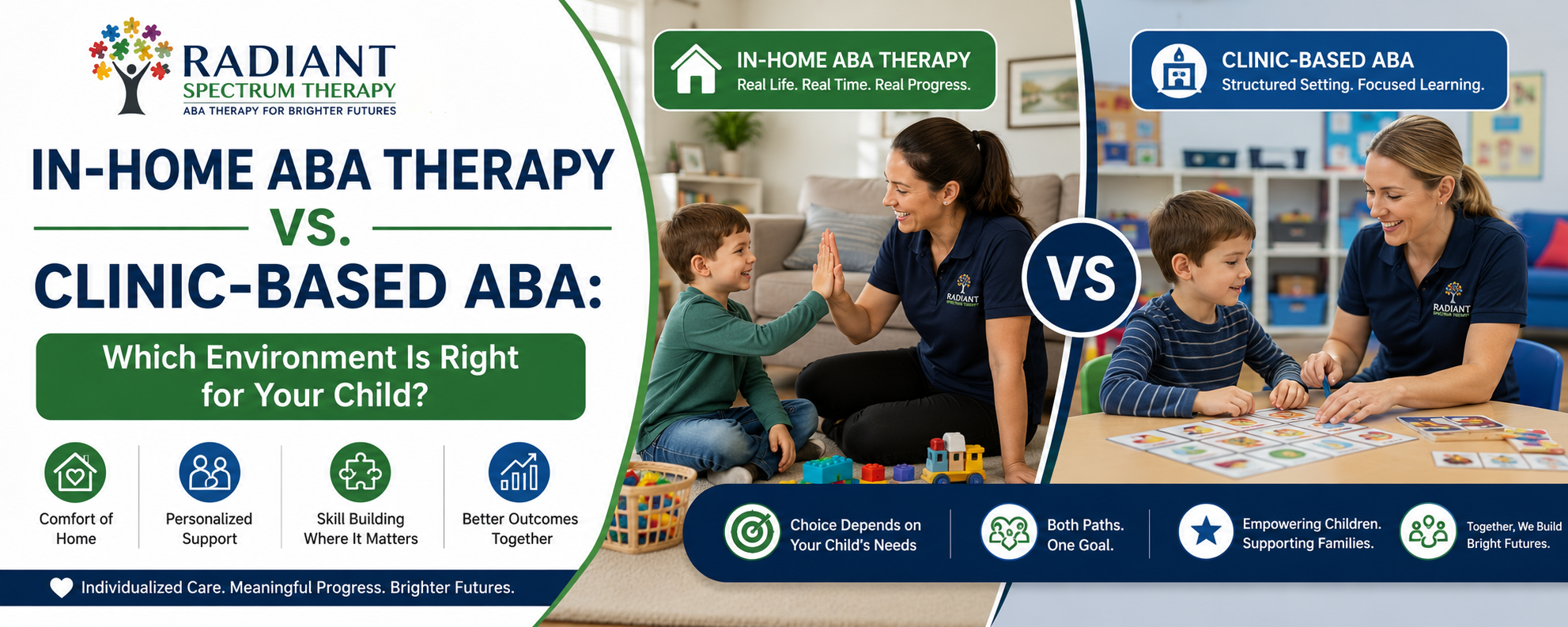
When parents first begin exploring Applied Behavior Analysis (ABA), one of the biggest questions they ask is: Should my child receive therapy at home or in a clinic? The answer isn’t always straightforward because every child has different strengths, challenges, and learning styles.
Understanding In home ABA therapy vs clinic services can help you make a confident, informed decision based on your child’s needs and your family’s lifestyle. While both approaches use evidence-based ABA principles and are supervised by a Board Certified Behavior Analyst (BCBA), they differ in where therapy takes place, how skills are practiced, and how families participate in the learning process.
At Radiant Spectrum Therapy, we believe there isn’t a one-size-fits-all solution. Some children thrive in a structured clinic environment, while others make remarkable progress through autism therapy at home, where learning naturally becomes part of everyday life. In many cases, a combination of both environments provides the greatest opportunity for success.
This guide explains the differences between both service models, highlights the benefits of in home ABA, and helps parents determine which environment may be the best fit.
What Is In-Home ABA Therapy?
In-home ABA therapy brings evidence-based behavioral therapy directly into your home. Instead of traveling to a clinic, a Registered Behavior Technician (RBT), supervised by a BCBA, works with your child in the environment where they spend most of their time.
This allows therapy to become part of real-life routines rather than isolated practice sessions.
Examples include:
- Morning routines
- Mealtimes
- Homework
- Bedtime routines
- Playing with siblings
- Household chores
- Community outings
- Family activities
Rather than teaching skills only in a therapy room, autism therapy at home helps children practice them where they naturally occur.
For example, if a child struggles with brushing their teeth, the therapist teaches the skill in the child’s own bathroom using their own toothbrush — not with a pretend setup.
What Is Clinic-Based ABA Therapy?
Clinic-based ABA takes place inside a specialized therapy center designed specifically for learning.
Children work with therapists in structured therapy rooms filled with educational materials, sensory equipment, communication tools, and play areas.
Sessions often include:
- One-on-one instruction
- Group learning opportunities
- Social skills activities
- Peer interaction
- Structured play
- Communication training
- Daily living skills
- Behavior reduction programs
Many clinics also provide opportunities for children to practice social interaction with peers under therapist supervision.
In Home ABA Therapy vs Clinic: Understanding the Two Approaches
When comparing In home ABA therapy vs clinic, it’s important to understand that both approaches are rooted in the same evidence-based principles of Applied Behavior Analysis (ABA). The therapy techniques, individualized treatment plans, and BCBA supervision remain consistent regardless of the setting. The primary difference is the environment in which learning takes place.
With autism therapy at home, therapists teach and reinforce skills during your child’s everyday routines. Whether it’s practicing communication during mealtimes, learning independence while getting dressed, or improving social interactions with siblings, therapy is naturally woven into daily life. This approach allows children to immediately apply what they’re learning in situations they encounter every day.
Clinic-based ABA therapy offers a more structured environment designed specifically for teaching and skill development. Children work in dedicated therapy spaces with access to specialized materials, sensory equipment, and opportunities for supervised peer interaction. The consistent routine and focused setting can be especially beneficial for introducing new concepts and reducing environmental distractions.
Both settings provide high-quality, individualized ABA services, and neither is universally better than the other. Some children thrive in the predictable structure and social opportunities available in a clinic, while others benefit most from learning in the comfort of their own home. In many cases, families may even combine home-based and clinic-based services to help children build skills in multiple environments and encourage greater success across everyday situations.
Benefits of In-Home ABA Therapy
Many families choose home-based services because of the numerous benefits of in home ABA, especially when the goal is helping children apply skills in everyday situations.
Learning Happens During Real Life
Children often learn best when skills are taught exactly where they will be used.
Instead of practicing requesting food with picture cards alone, your child can learn to ask for a snack in the kitchen.
Instead of role-playing bedtime routines, they actually complete them every evening.
This practical approach increases the likelihood that skills become lasting habits.
Better Generalization of Skills
One challenge in autism therapy is something called “generalization.”
A child may successfully perform a skill during therapy but struggle to use it elsewhere.
For example:
- Greeting a therapist but not grandparents
- Following instructions in a clinic but not at home
- Asking for help during therapy but not at school
With autism therapy at home, children immediately practice skills in the environments where they naturally occur.
This makes it easier for learning to transfer into daily life.
Direct Parent Coaching
One of the greatest benefits of in home ABA is ongoing parent involvement.
Parents don’t simply receive updates after therapy — they observe strategies firsthand.
Therapists can demonstrate:
- Managing challenging behaviors
- Teaching communication skills
- Encouraging independence
- Reinforcing positive behavior
- Building consistent routines
Parents become active members of the therapy team rather than observers.
Therapy Fits Into Family Life
Because therapy occurs during normal routines, learning feels natural.
Examples include:
Mealtimes
Children practice:
- Requesting food
- Sitting appropriately
- Trying new foods
- Following directions
- Using utensils
Morning Routines
Therapists may work on:
- Getting dressed
- Brushing teeth
- Packing backpacks
- Following schedules
- Transitioning between activities
Bedtime
Evening routines provide opportunities to teach:
- Self-care
- Independence
- Following bedtime schedules
- Calming strategies
- Communication
Sibling Interaction
Many important social skills develop naturally between siblings.
Therapists can help children practice:
- Sharing
- Taking turns
- Cooperative play
- Conflict resolution
- Appropriate communication
Personalized Goals
Every home is different.
Some families prioritize:
- Toilet training
- Communication
- Independent dressing
- Reducing tantrums
- Homework routines
- Community outings
Home therapy focuses on the goals that matter most to your family.
No Commute
Busy families often appreciate eliminating travel time.
- More flexibility
- Less stress
- More family time
- Easier scheduling
- Fewer disruptions
This convenience often improves attendance and consistency, both of which are important for long-term progress.
Benefits of Clinic-Based ABA Therapy
Clinic-based services also offer unique advantages.
Highly Structured Learning
Clinics are designed specifically for teaching.
There are fewer household distractions, allowing children to focus on learning new skills.
Many children benefit from predictable routines and organized learning spaces.
Opportunities for Social Interaction
One major advantage of clinic-based ABA is peer interaction.
Children may practice:
- Waiting in line
- Sharing toys
- Playing games
- Starting conversations
- Cooperative learning
- Group activities
These opportunities are difficult to replicate in many home settings.
Access to Specialized Resources
Therapy clinics often include:
- Sensory rooms
- Gross motor equipment
- Communication devices
- Educational materials
- Structured play environments
These resources can enhance learning opportunities for many children.
Consistent Teaching Environment
Clinics maintain routines with fewer interruptions.
Unlike a home, therapists generally don’t need to work around:
- Visitors
- Household chores
- Pets
- Deliveries
- Television
- Unexpected distractions
This consistency can support children who thrive on structure.
Which Children Benefit Most from In-Home ABA?
Many children are excellent candidates for autism therapy at home, especially if they need help applying skills in everyday life.
Home-based ABA may be ideal for children who:
- Learn best in familiar environments
- Experience anxiety in new places
- Need help with daily living skills
- Benefit from parent involvement
- Need support during routines
- Have difficulty generalizing skills
- Require behavior support during specific parts of the day
For these children, practicing skills where they naturally occur often leads to meaningful progress.
Which Children May Thrive in a Clinic?
Clinic-based ABA may be especially beneficial for children who:
- Need intensive structured instruction
- Enjoy learning with peers
- Benefit from fewer distractions
- Need opportunities to build social skills
- Respond well to consistent routines
- Require specialized equipment
Every child’s needs are unique, and recommendations should always be individualized.
Can Families Combine Both?
Absolutely.
Many providers offer hybrid programming that combines home-based and clinic-based services.
For example:
- Clinic sessions may focus on communication, academic readiness, and peer interaction.
- Home sessions reinforce those same skills during meals, family activities, bedtime, and community outings.
This combination allows children to learn skills in structured settings while also practicing them in everyday life.
Questions Parents Should Ask Before Choosing
Before deciding between In home ABA therapy vs clinic, consider asking:
- Where does my child learn best?
- What are our family’s biggest daily challenges?
- Does my child need more opportunities for peer interaction?
- How important is parent coaching?
- Are transportation and scheduling concerns?
- Which goals are our highest priority?
- Would a combination of both settings be beneficial?
Discussing these questions with your BCBA can help determine the most appropriate treatment plan.
How Radiant Spectrum Therapy Supports Families
At Radiant Spectrum Therapy, we understand that every child and every family is different. That’s why we take an individualized approach to treatment planning.
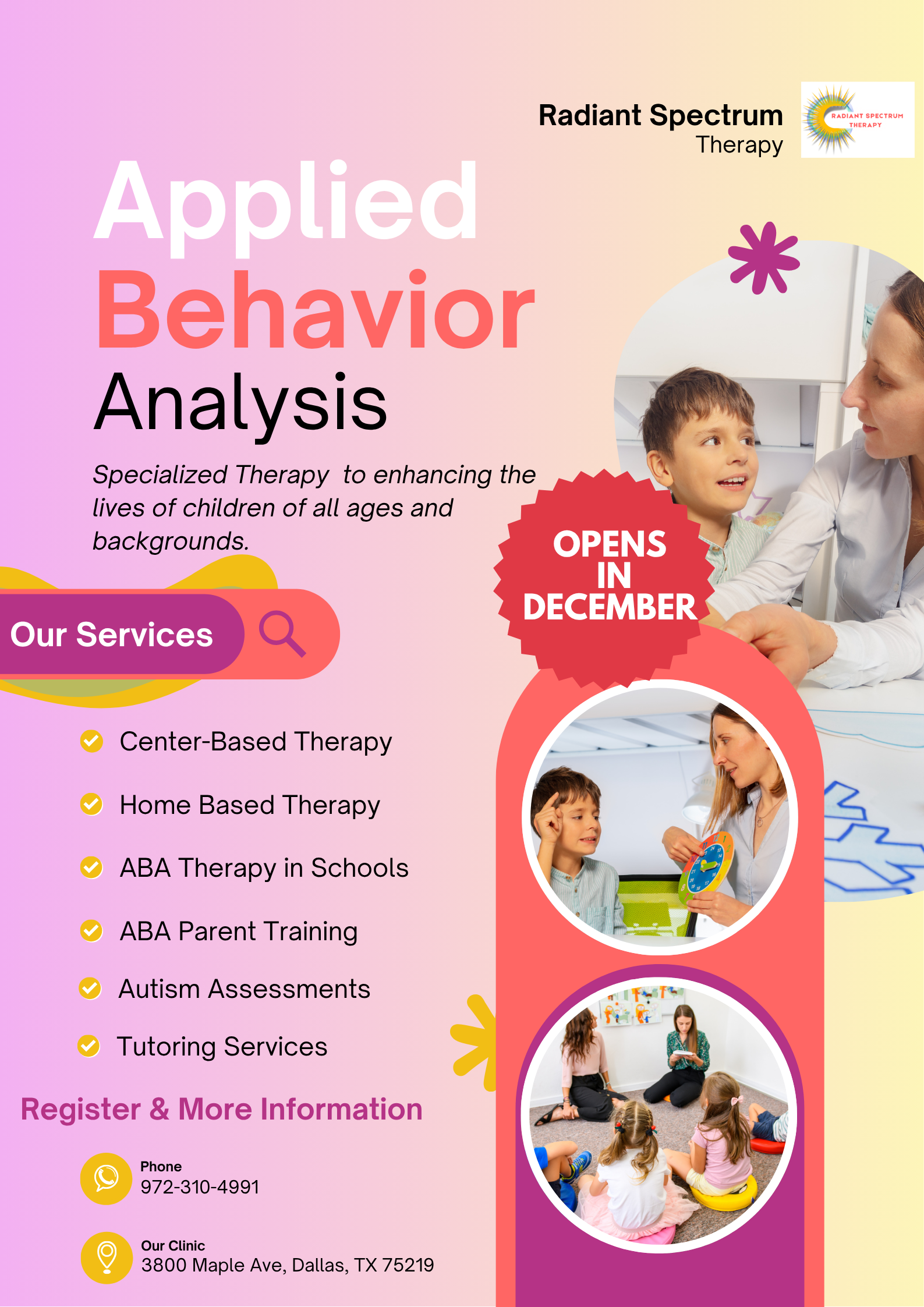
Our experienced team develops personalized ABA programs based on comprehensive assessments, family priorities, and each child’s developmental goals. Whether services are provided in the home, in a center, or through a combination of both, our focus remains the same: helping children build meaningful skills that improve their quality of life.
Our services emphasize:
- Individualized treatment plans
- BCBA supervision
- Evidence-based ABA strategies
- Family-centered care
- Parent coaching and education
- Functional communication
- Social skills development
- Daily living skills
- Positive behavior support
By partnering closely with families, we help ensure that progress made during therapy continues long after each session ends.
Frequently Asked Questions
Is in-home ABA therapy as effective as clinic-based ABA?
Yes. Both models are evidence-based and can be highly effective. The best choice depends on your child’s goals, learning style, and family circumstances.
Does home-based ABA include parent training?
Yes. One of the greatest benefits of in home ABA is that parents can observe sessions, learn strategies directly from therapists, and practice techniques throughout the day.
Can my child switch from one setting to another?
Absolutely. As children grow and their needs change, many families transition between home-based and clinic-based services or use a combination of both.
Does insurance cover both types of ABA therapy?
Many insurance plans cover medically necessary ABA services in both home and clinic settings. Coverage varies by provider and policy, so it’s important to verify your specific benefits.
Which environment is better for teaching daily living skills?
For goals such as dressing, mealtime routines, toileting, bedtime, and household responsibilities, autism therapy at home often provides the most natural learning opportunities because skills are practiced in the exact environment where they are needed.
Final Thoughts
Choosing between In home ABA therapy vs clinic isn’t about finding one option that’s universally better — it’s about selecting the environment that best supports your child’s unique needs and your family’s goals. While clinic-based services provide structure, peer interaction, and specialized resources, the benefits of in home ABA include learning during everyday routines, stronger skill generalization, direct parent coaching, and the convenience of receiving autism therapy at home without the added stress of travel.
At Radiant Spectrum Therapy, we’re committed to helping families make informed decisions and creating personalized ABA programs that promote meaningful, lasting progress. Whether your child benefits most from home-based services, clinic-based therapy, or a combination of both, our team is here to partner with you every step of the way, empowering your child to build confidence, independence, and skills that carry over into everyday life.
Contact us at 972–310–4991 or visit https://radiantspectrumtherapy.com/ to learn more.