
Some specific benefits include:
- Reduced stress and anxiety — When children are not overwhelmed by environmental stimuli, they are more likely to respond positively to therapeutic instruction.
- Improved attention and focus — Calm lighting and sensory cues help children concentrate, which is crucial for learning new behaviors and skills in ABA Therapy.
- Enhanced emotional regulation — Children can practice coping skills and self-regulation in a space that feels safe and predictable.
By pairing radiant spectrum therapy with ABA Therapy, parents can provide their children with a dual approach: structured behavioral interventions in a supportive sensory environment.
Practical Tips for Parents
Parents looking to integrate radiant spectrum therapy into their child’s routine don’t need to make major changes at home. There are simple, practical steps that can help extend the benefits of therapy beyond the session:
- Create calm zones at home — Use soft lighting, dimmers, and calming colors in areas where your child spends time. This mimics the therapeutic environment and provides consistency.
- Incorporate sensory breaks — Short, structured breaks that include gentle light exposure or calming visual elements can help children self-regulate during challenging activities.
- Collaborate with therapists — Communicate with your child’s ABA Therapy team about sensory sensitivities. They can suggest specific light or color strategies to reinforce skills learned in therapy.
- Observe and adjust — Every child responds differently. Pay attention to which lighting and sensory setups help your child relax and focus, and adjust the environment accordingly.
These small, actionable strategies empower parents to make everyday environments more supportive, which can have a lasting impact on learning and emotional regulation.
Choosing a Radiant Spectrum Therapy Center
Not all therapy centers are created equal. When selecting a center, parents should look for:
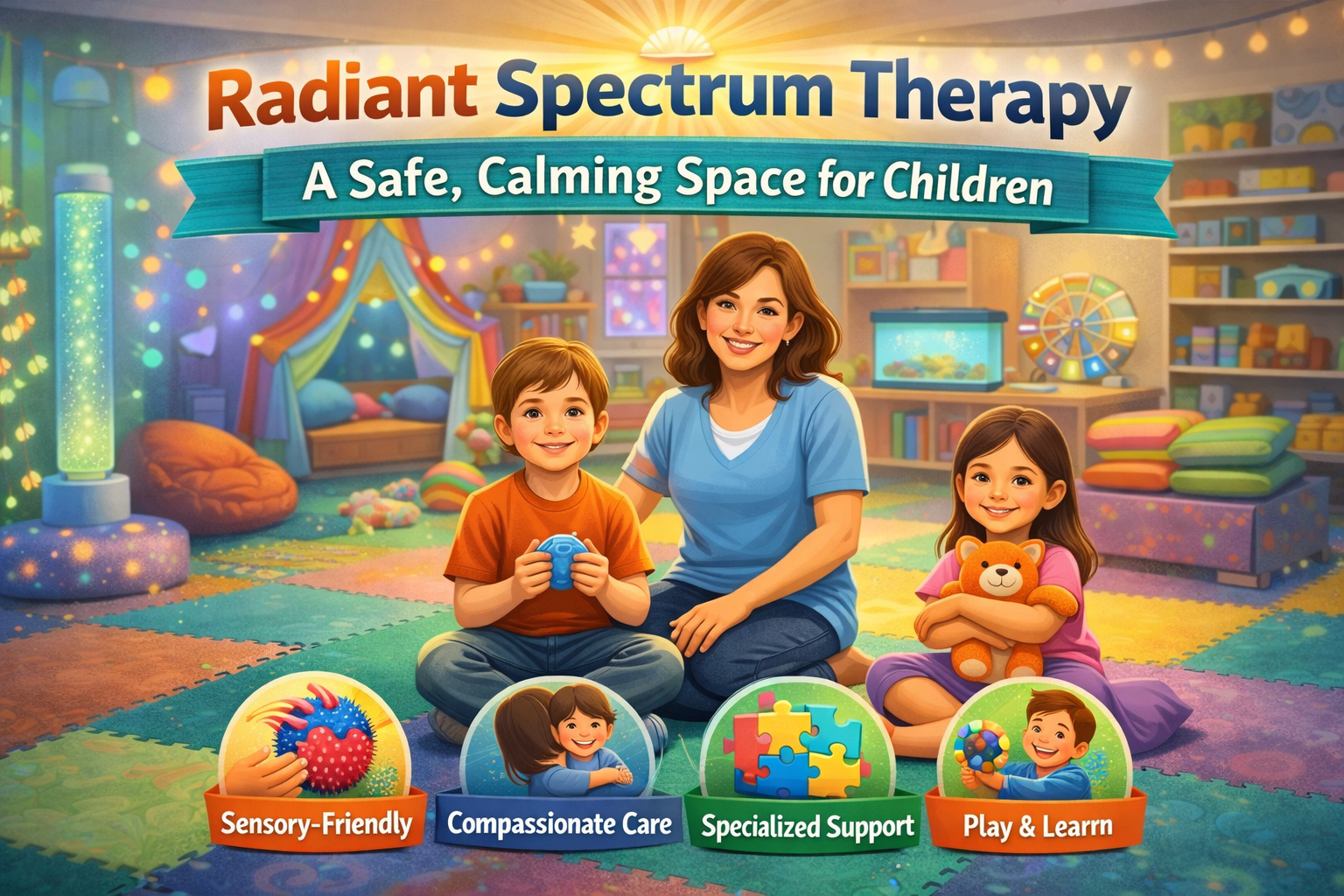
- Sensory-friendly design — Quiet rooms, soft lighting, and minimal visual clutter are essential for children who are sensitive to sensory input.
- Trained therapists — Professionals who understand sensory integration and ABA Therapy principles can adapt therapy to meet each child’s needs.
- Individualized plans — Centers should offer personalized therapy programs that account for the child’s unique sensory profile, learning style, and behavioral goals.
- Family involvement — Opportunities for parents to learn strategies for supporting therapy at home can reinforce progress.
Visiting the center and observing how children interact with the environment is often the best way to determine if it is a good fit. Children should feel comfortable, curious, and engaged rather than stressed or overstimulated.
Real-Life Impact
Parents often report noticeable improvements in their child’s mood, focus, and willingness to participate in therapy after incorporating radiant spectrum therapy. One parent shared:
“Before we tried radiant spectrum therapy, my child would become overwhelmed within minutes of entering a typical therapy room. Now, with soft lighting and a calm, structured environment, they are more relaxed, engaged, and even excited to participate in ABA Therapy sessions.”
Stories like this highlight the practical benefits of combining supportive sensory environments with evidence-based behavioral interventions. Children feel safe, parents feel supported, and therapy becomes a positive, productive experience.
Conclusion
Radiant spectrum therapy offers a practical, actionable solution for parents seeking a safe, calming environment for their children. By reducing sensory overload and providing a predictable, visually supportive space, it complements ABA Therapy and helps children reach their full potential.
For parents navigating the challenges of sensory sensitivities, this therapy can transform not only therapy sessions but everyday life, making learning, growth, and emotional regulation more attainable for children.
Whether you’re seeking a supportive environment for ABA Therapy or looking for ways to reduce your child’s stress in daily routines, radiant spectrum therapy offers a proven, child-centered approach that addresses real problems parents face every day.
Contact us at 972–310–4991 or visit https://radiantspectrumtherapy.com/ to book your service.