

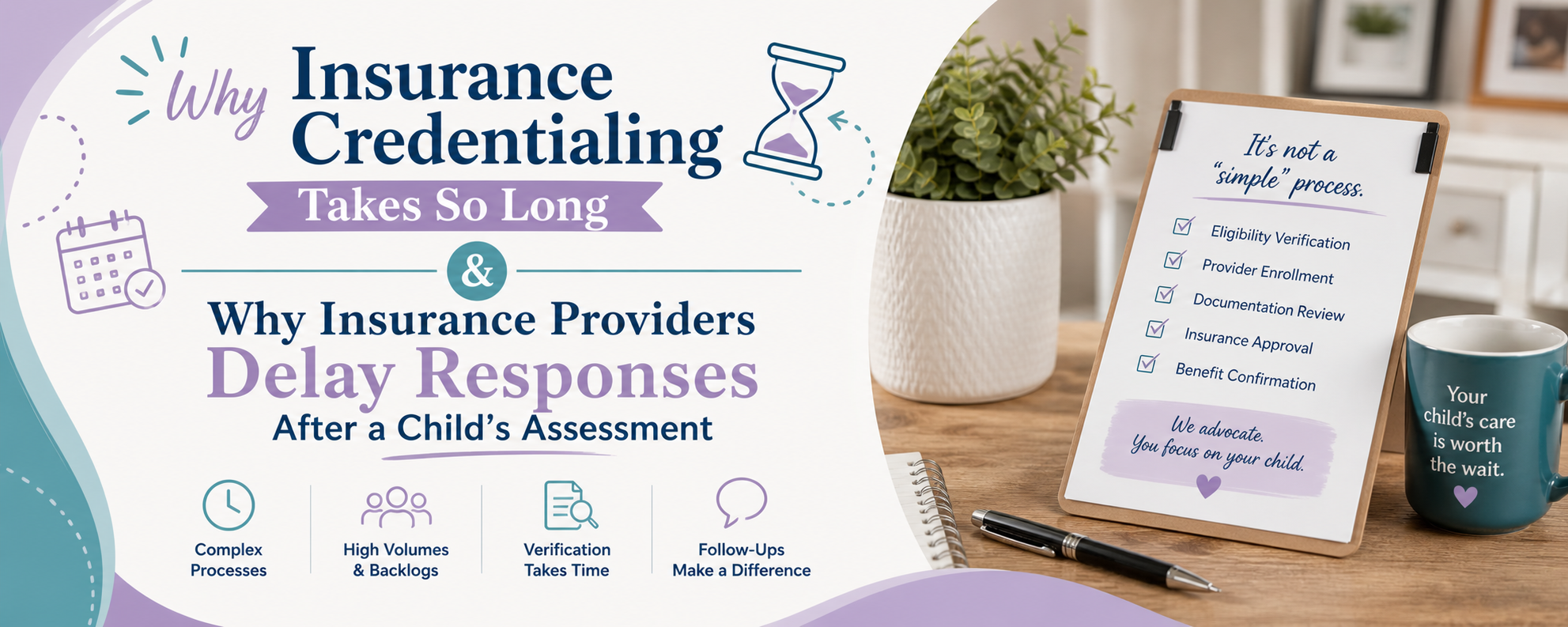
Families seeking autism support often run into two frustrating delays that feel out of their control: the long insurance credentialing process and the slow response time after an assessment has already been completed. When a child needs support, every week matters, and waiting can feel overwhelming and confusing.
This blog breaks down what is really happening behind the scenes, why these delays occur, and what families can realistically expect when pursuing services like ABA Therapy in Dallas and related care options.
Understanding the Gap Between Diagnosis, Assessment, and Treatment Approval
Before diving into delays, it helps to understand the basic pathway most families experience:
- Initial concern or referral
- Clinical assessment for autism or behavioral needs
- Insurance verification and authorization
- Provider credentialing and approval
- Start of therapy services
Even though it looks simple on paper, each step involves multiple systems working independently — schools, clinics, insurance companies, and therapy providers. When those systems don’t move in sync, delays happen.
This is especially common in autism services Dallas TX, where demand is high and provider networks are constantly growing.
Why Insurance Credentialing Takes So Long
Credentialing is one of the most misunderstood steps in the entire process. Families often assume it’s just paperwork, but it’s actually a detailed verification process that can take weeks or even months.
Here’s why it takes time:
1. Verification of Clinical Qualifications
Insurance companies must confirm that every clinician meets strict requirements. This includes education, licensing, supervision history, and background checks. For providers offering behavioral therapy North Texas, this process is even more detailed due to state and insurance regulations.
2. Multiple Insurance Panels
A single provider may need to be credentialed with several insurance companies before they can serve families. Each panel has its own system, rules, and processing time.
This is especially true for clinics offering DFW ABA therapy, where families often have different insurance plans across the metroplex.
3. High Demand for Autism Services
The demand for services like ABA therapy Dallas continues to grow. With more families seeking support, insurance networks are overwhelmed with credentialing applications.
This backlog directly affects access to care in Dallas ABA centers and surrounding communities.
4. Administrative Review Cycles
Even after documents are submitted, they go through multiple review cycles. Missing signatures, outdated licenses, or small inconsistencies can restart the process entirely.
For clinics providing pediatric behavioral therapy Dallas, this administrative step is one of the biggest bottlenecks.
5. Provider Network Alignment
Insurance companies must decide where each provider fits within their network. This affects reimbursement rates, service coverage, and eligibility for families.
Until this is complete, even experienced clinicians offering Dallas autism specialists services may not be able to begin seeing clients under insurance.
Why Insurance Providers Take So Long After an Assessment
After a child completes an evaluation, families often expect immediate approval for therapy. Unfortunately, that’s rarely how insurance systems operate.
Here’s why delays happen at this stage:
1. Clinical Review Teams Take Time
Once an assessment is submitted, it goes to a review team that determines medical necessity. These teams handle large volumes of cases daily, especially in areas with high demand for autism services Dallas TX.
2. Documentation Must Be Thorough
Insurance providers require detailed reports, behavioral observations, standardized test results, and treatment recommendations. If anything is unclear or incomplete, the case is delayed.
3. Authorization Limits and Budget Controls
Insurance companies often release services in blocks (for example, a set number of hours for a few months). Each request must be individually reviewed and approved.
This affects families seeking in-home ABA therapy Dallas or clinic-based services alike.
4. Communication Between Multiple Parties
The assessment report may need to be reviewed by:
- Insurance clinicians
- Case managers
- Supervisors
- Medical directors
Each layer adds time before approval is finalized.
5. High Volume of Pediatric Cases
In regions like Dallas, there is a significant increase in children needing behavioral support. Clinics providing pediatric behavioral therapy Dallas often submit large numbers of cases at once, contributing to system-wide delays.
How These Delays Affect Families
While administrative processes are necessary, they can feel discouraging for families who are ready to begin care.
For many parents, this waiting period is especially difficult when they are seeking:
- ABA Therapy in Dallas
- Immediate support after diagnosis
- Early intervention services
- Structured behavior programs
The emotional impact is often underestimated. Parents may feel stuck between receiving a diagnosis and actually starting therapy.
Types of ABA Services Commonly Affected by Delays
Once approval is finally granted, families can access different types of services depending on their child’s needs.
Center-Based ABA
Programs like Center-Based ABA provide structured environments where children work on communication, social skills, and behavior goals with trained professionals.
These programs are often part of larger Dallas ABA centers, where consistency and routine are key.
Home-Based ABA Therapy
Many families prefer Home-Based ABA Therapy because it allows therapy to happen in the child’s natural environment. This approach can help generalize skills more quickly into daily routines.
However, coordination with insurance can take longer due to staffing and scheduling requirements.
ABA Parent Training
Support doesn’t stop with the child. ABA Parent Training and autism parent training Dallas programs help families understand behavior strategies, reinforcement techniques, and communication tools.
This is often one of the most valuable parts of long-term progress.
The Role of Local Providers in the Dallas Area
In regions like Dallas, access to care depends heavily on provider availability and insurance partnerships.
Families often search for:
- ABA therapy providers 75201
- Dallas autism specialists
- Clinics offering structured behavioral support
Each provider must navigate both clinical demands and insurance requirements simultaneously, which can slow down onboarding for new families.
Why Coordination in North Texas Can Feel Slow
Because the region is growing quickly, demand for services has outpaced administrative capacity. Providers offering behavioral therapy North Texas must balance:
- Intake assessments
- Insurance paperwork
- Staffing shortages
- High caseloads
This combination naturally slows down the system, even when everyone involved is working as quickly as possible.
What Families Can Expect Moving Forward
Although delays are frustrating, understanding the process helps set realistic expectations. Once approval is complete, services tend to move more smoothly.
Families entering DFW ABA therapy programs can expect:
- Scheduled therapy sessions based on availability
- Individualized treatment plans
- Parent involvement sessions
- Regular progress monitoring
The first few weeks after approval are often the most structured, especially for families beginning ABA therapy Dallas programs for the first time.
Final Thoughts
Insurance credentialing and authorization delays are not usually caused by one issue — they are the result of multiple systems working through high demand, strict regulations, and detailed clinical requirements.
While waiting is difficult, especially for families seeking autism services Dallas TX, understanding the process can reduce confusion and help set realistic expectations.
Behind every delay is a system designed to ensure safety, accuracy, and proper care. Once these steps are completed, children can begin receiving consistent support through services like in-home ABA therapy Dallas, clinic-based programs, and parent training that make a meaningful difference over time.
Contact us at 972–310–4991 or visit https://radiantspectrumtherapy.com/ to learn more