
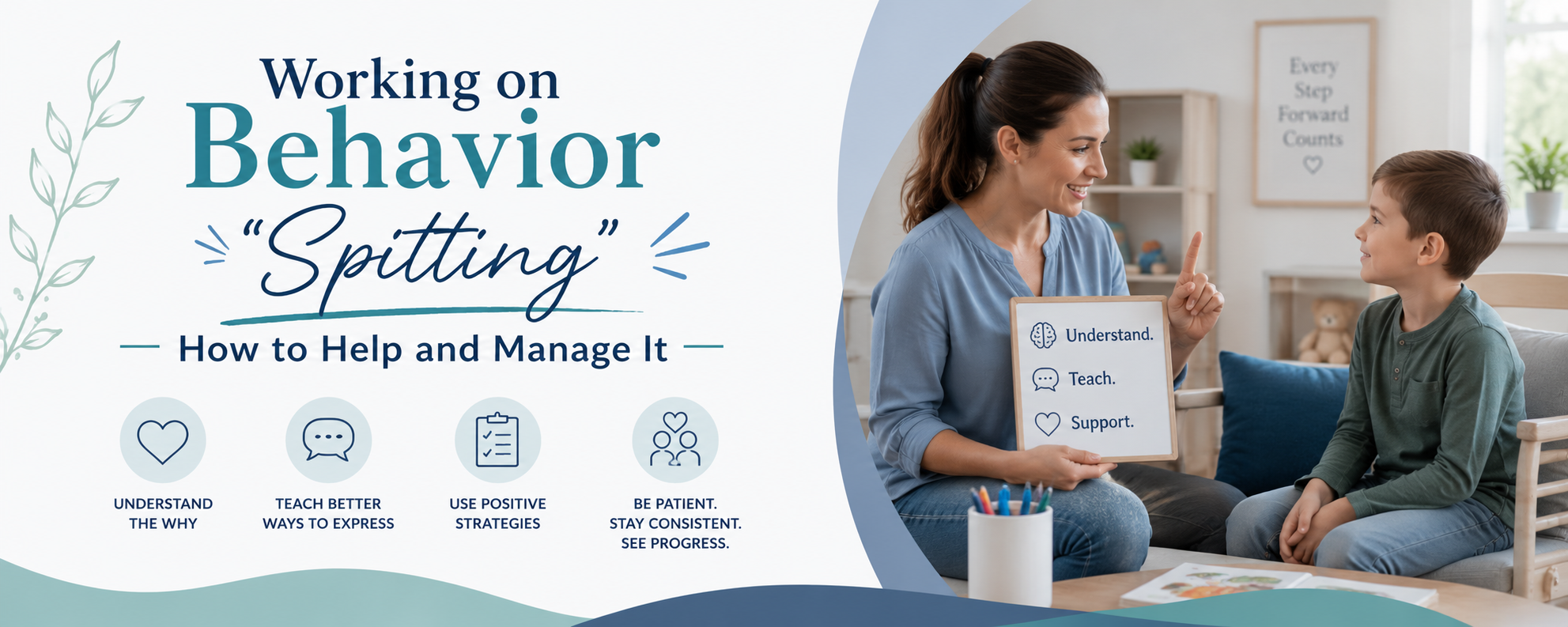
Spitting is one of those behaviors that can catch families off guard. It can feel frustrating, embarrassing in public, and honestly confusing — especially when you’re not sure why it’s happening. For many children, particularly those receiving ABA therapy Highland Park, TX, spitting isn’t random or intentional misbehavior in the way people often assume. It’s communication. And once you start looking at it that way, everything changes.
This blog will walk you through what spitting behavior might mean, why it happens, and how families and professionals — through approaches like Center-Based ABA, Home-Based ABA Therapy, and ABA Parent Training — can work together to reduce it effectively and compassionately.
Understanding the “Why” Behind Spitting
Before jumping into solutions, it’s important to pause and ask one key question: What is the purpose of the behavior?
In behavioral therapy Park Cities, professionals always start here. Every behavior serves a function, and spitting is no different. Some common reasons include:
- Attention-seeking — The child may spit to get a reaction, even if it’s negative.
- Escape or avoidance — Spitting might help them get out of a task they don’t want to do.
- Sensory input — Some children enjoy the physical sensation of spitting.
- Communication challenges — When words are hard, behavior fills the gap.
Without identifying the function, it’s easy to respond in ways that accidentally reinforce the behavior. That’s why working with ABA providers 75205 or a local ABA clinic Texas can make a big difference — they help pinpoint the “why” before building a plan.
Why Spitting Can Escalate
One of the most common patterns families notice is that spitting doesn’t just stay the same — it grows. Maybe it starts occasionally, then becomes frequent, then happens in more settings.
Here’s why that happens:
- It works — If a child spits and gets what they want (attention, escape, or sensory input), the behavior is reinforced.
- Inconsistent responses — Different reactions from different people can confuse the child and strengthen the behavior.
- Lack of alternative skills — If there’s no replacement behavior taught, spitting remains the easiest option.
This is where structured support like center-based autism services or in-home ABA therapy Dallas becomes incredibly valuable. Consistency and skill-building are key.
Step 1: Stay Neutral (Even When It’s Hard)
Let’s be honest — getting spit on is not pleasant. The instinct is to react immediately, often with frustration or strong emotion. But big reactions can actually fuel the behavior, especially if the child is seeking attention.
In Autism Treatment Highland Park, therapists often coach families to:
- Keep facial expressions calm
- Use minimal verbal response
- Avoid long lectures or emotional reactions
This doesn’t mean ignoring the behavior completely — it means responding in a way that doesn’t unintentionally reward it.
Step 2: Teach a Replacement Behavior
This is one of the most important parts of reducing spitting. You’re not just stopping a behavior — you’re replacing it.
For example:
- If the child spits to escape a task → teach them to say or signal “break”
- If it’s for attention → teach appropriate ways to get attention
- If it’s sensory → provide acceptable alternatives like water play or oral sensory tools
Through ABA Parent Training, families learn exactly how to teach and reinforce these alternatives at home, making progress faster and more consistent.
Step 3: Reinforce the Right Behaviors
Children repeat what works. So when they use the replacement behavior — even in a small way — it’s important to respond immediately and positively.
This might look like:
- Giving attention when they ask appropriately
- Allowing a short break when requested the right way
- Praising calm behavior during situations where spitting used to happen
Professionals in pediatric behavioral health Highland Park often emphasize that reinforcement should be specific and meaningful to the child.
Step 4: Be Consistent Across Environments
One of the biggest challenges is consistency. A child might respond well during therapy sessions but struggle at home or in public.
That’s why combining Center-Based ABA with Home-Based ABA Therapy can be so effective. Skills are practiced in structured settings and then generalized into real-life environments.
For families using in-home ABA therapy Dallas, therapists can work directly within daily routines — mealtimes, playtime, outings — where spitting might occur most often.
Step 5: Reduce Triggers When Possible
While teaching new skills is critical, it also helps to look at patterns:
- Does spitting happen during certain tasks?
- At specific times of day?
- Around certain people or environments?
Identifying triggers allows you to:
- Prepare the child in advance
- Modify tasks to be more manageable
- Build in breaks before frustration builds
Many ABA providers 75205 use data tracking to identify these patterns clearly, which takes the guesswork out of the process.
Step 6: Practice Prevention Strategies
Sometimes the best way to manage behavior is to prevent it before it starts.
Helpful strategies include:
- Clear expectations — Let the child know what’s coming next
- Visual supports — Schedules or simple cues can reduce anxiety
- Frequent reinforcement — Reward positive behavior before problems arise
- Engagement — Keep the child actively involved to reduce idle time
These approaches are commonly used in center-based autism services, where structured routines help children feel more secure and less likely to engage in challenging behaviors.
Step 7: Know When to Get Support
If spitting is frequent, intense, or not improving with basic strategies, it’s time to bring in professional guidance.
Working with a local ABA clinic Texas provides access to trained professionals who can:
- Conduct a functional behavior assessment
- Develop a personalized behavior plan
- Train caregivers through parent training for autism
- Monitor progress and adjust strategies as needed
Families in Autism Treatment Highland Park settings often see faster progress because interventions are tailored and consistent.
What Progress Really Looks Like
It’s important to set realistic expectations. Behavior change doesn’t happen overnight, and progress isn’t always linear.
You might see:
- A decrease in frequency before the behavior disappears
- Occasional setbacks during transitions or stress
- Gradual improvement as new skills are reinforced
What matters is consistency and patience. With the right support — whether through ABA therapy Highland Park, TX, Home-Based ABA Therapy, or Center-Based ABA — change does happen.
Final Thoughts
Spitting can feel overwhelming, but it’s not a dead-end behavior. It’s a signal — a form of communication that can be understood and reshaped with the right approach.
By focusing on:
- Understanding the function
- Teaching replacement behaviors
- Reinforcing positive actions
- Staying consistent across environments
Families can move from frustration to confidence.
And you don’t have to do it alone. With support from ABA providers 75205, guidance through ABA Parent Training, and structured care from center-based autism services or in-home ABA therapy Dallas, meaningful progress is absolutely within reach.
Contact us at 972–310–4991 or visit https://radiantspectrumtherapy.com/ to learn more.