

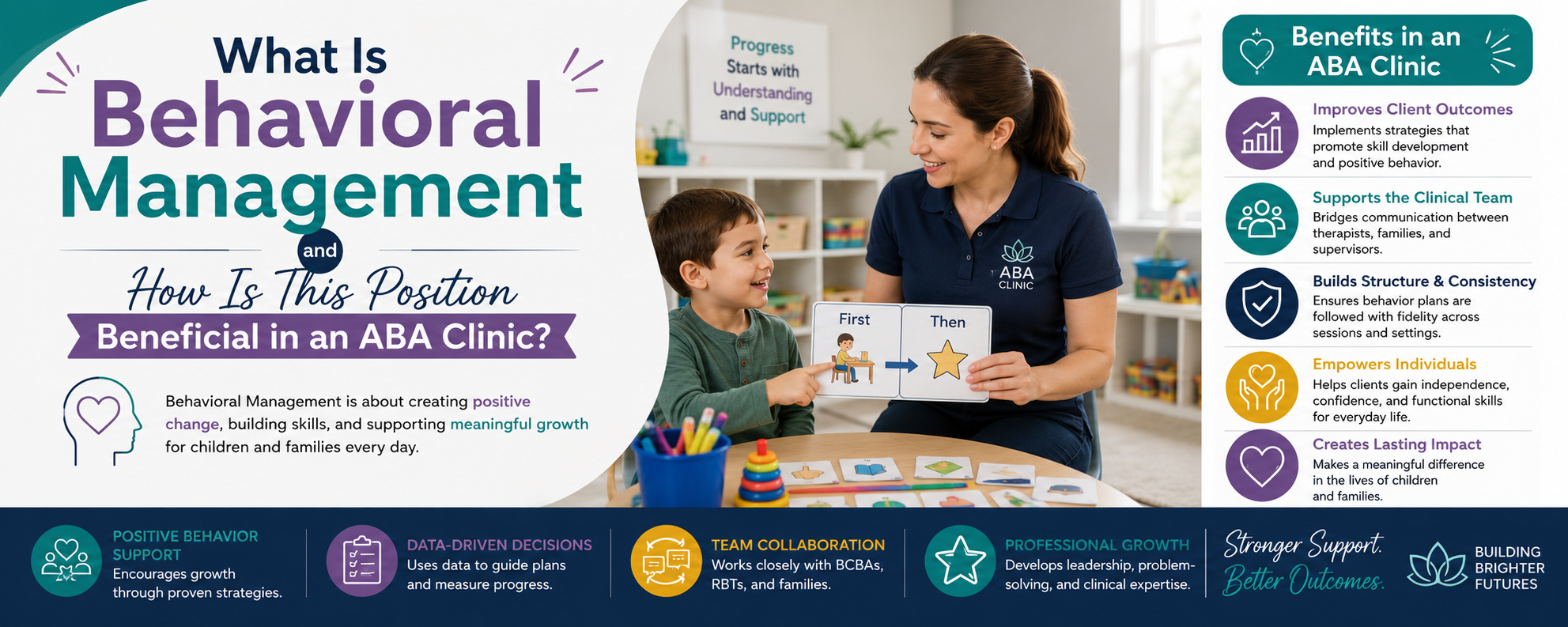
Families searching for support for children with autism often hear about therapists, behavior technicians, and Board Certified Behavior Analysts, but one role that deserves more attention is behavioral management. In a busy ABA clinic, behavioral management professionals help create structure, consistency, and progress for both clients and staff. Their work directly impacts treatment quality, communication, scheduling, and the overall success of therapy programs.
For parents exploring ABA Therapy in Dallas, understanding how behavioral management works inside a clinic can provide reassurance that their child’s care is organized, individualized, and focused on long-term growth. Behavioral management is not simply administrative oversight. It is a key part of how quality therapy programs operate effectively while supporting therapists, children, and families.
As more families seek autism services Dallas TX, ABA clinics continue expanding their teams to provide better care, more individualized treatment plans, and improved coordination between professionals. Behavioral management positions help make all of that possible.
Understanding Behavioral Management in an ABA Clinic
Behavioral management refers to the process of overseeing behavioral treatment programs, staff support, communication systems, therapy consistency, and client progress within an ABA setting. In many clinics, this role is handled by clinical supervisors, operations managers, or experienced ABA professionals who coordinate the daily structure of therapy services.
A behavioral management professional helps ensure that treatment plans are implemented correctly, therapists follow behavior intervention strategies consistently, and families receive the guidance they need throughout therapy. In many Dallas ABA centers, behavioral management teams also help organize staff schedules, support training efforts, monitor data collection, and assist with problem-solving when behavioral challenges arise.
Children receiving therapy often thrive best when routines remain predictable and communication among caregivers stays consistent. Behavioral management creates that structure. Without it, even highly skilled therapists may struggle to maintain treatment continuity.
For families participating in Center-Based ABA programs, behavioral management helps maintain an organized clinic environment where children can focus on learning, social interaction, communication, and behavior development.
Why Behavioral Management Matters in ABA Therapy
ABA therapy depends heavily on consistency. Children learning new communication skills, social behaviors, emotional regulation, or adaptive routines require structured reinforcement and carefully monitored progress. Behavioral management helps maintain that consistency across all therapy sessions.
When families begin ABA therapy Dallas services, they may interact with several professionals over time. Behavioral managers help ensure everyone involved follows the same treatment goals and behavioral strategies. This coordination reduces confusion and improves outcomes for children receiving services.
Behavioral management also supports therapists directly. Registered Behavior Technicians and other staff members often work in fast-paced environments where behaviors can change quickly throughout the day. Having leadership and guidance available helps therapists feel supported and confident during challenging situations.
In pediatric behavioral therapy Dallas programs, behavioral management professionals often help identify areas where treatment plans may need adjustments. They review progress data, monitor behavior trends, and communicate with supervising clinicians to ensure therapy remains effective.
This level of organization benefits not only the child but also the family. Parents gain confidence knowing the clinic has systems in place to monitor progress carefully and address concerns promptly.
The Connection Between Behavioral Management and Parent Support
Families play a major role in successful ABA therapy. Children typically make stronger progress when behavioral strategies are reinforced both in therapy sessions and at home. Behavioral management positions often help bridge communication between clinical teams and parents.
Many clinics offering ABA Parent Training rely on behavioral management staff to coordinate meetings, share updates, and help families understand treatment goals. Parents may learn strategies for managing challenging behaviors, improving routines, and encouraging communication skills at home.
For families participating in autism parent training Dallas programs, strong behavioral management creates a smoother experience. Parents receive clearer communication, more consistent updates, and better coordination between therapists and caregivers.
Behavioral managers may also help parents navigate scheduling concerns, therapy transitions, insurance communication, and changes in treatment recommendations. This support reduces stress for families already managing the demands of raising a child with autism.
The relationship between clinics and families becomes much stronger when communication remains organized and proactive.
Benefits of Behavioral Management in Center-Based ABA Programs
Children enrolled in Center-Based ABA programs often participate in structured daily routines involving one-on-one therapy, group learning opportunities, social activities, and behavior intervention sessions. Behavioral management helps coordinate these moving parts efficiently.
A well-managed clinic environment creates several important benefits:
Improved Consistency
Consistency is one of the most important components of behavioral therapy. Behavioral management helps ensure all therapists follow the same reinforcement systems, prompting methods, and intervention plans.
Better Communication
Strong communication between therapists, supervisors, and families improves therapy outcomes. Behavioral management professionals help maintain organized communication systems that keep everyone informed.
Stronger Staff Support
Therapists perform better when they receive guidance, encouragement, and ongoing support. Behavioral managers help train new staff, answer questions, and maintain clinic expectations.
Enhanced Client Progress Monitoring
Monitoring progress data helps clinics determine whether treatment strategies are effective. Behavioral management teams often assist with reviewing behavioral trends and identifying areas needing improvement.
Smoother Daily Operations
Children benefit from predictable routines and calm environments. Behavioral management helps clinics maintain organized schedules and reduce unnecessary disruptions.
Families exploring DFW ABA therapy programs often prioritize clinics that demonstrate strong organization and professionalism. Effective behavioral management contributes significantly to that positive experience.
Behavioral Management in Home-Based ABA Therapy
Behavioral management is equally valuable in Home-Based ABA Therapy settings. While therapy occurs inside the family’s home, coordination still plays a major role in treatment success.
Behavioral managers may help oversee therapist scheduling, communication with families, progress tracking, and treatment implementation. Since therapists often work independently in home environments, strong support systems remain essential.
Families receiving in-home ABA therapy Dallas services frequently appreciate having a reliable point of contact who can answer questions, coordinate services, and assist with treatment concerns.
Home-based therapy also requires flexibility because family routines, school schedules, and environmental factors vary from household to household. Behavioral management professionals help maintain consistency while adapting to each family’s unique needs.
This balance between structure and flexibility is important in helping children continue progressing across different settings.
Supporting Clinical Excellence in ABA Clinics
Behavioral management positions contribute significantly to the clinical quality of ABA services. Strong leadership helps maintain ethical treatment standards, staff accountability, and individualized care.
In many behavioral therapy North Texas clinics, behavioral managers work closely with supervising clinicians to ensure therapy plans remain evidence-based and appropriate for each child’s developmental needs.
They may assist with:
- Staff performance monitoring
- Treatment implementation support
- Data collection oversight
- Client scheduling coordination
- Parent communication
- Therapy environment organization
- Crisis prevention planning
- Team collaboration
These responsibilities directly influence how smoothly a clinic operates on a daily basis.
Families seeking Dallas autism specialists often value clinics that emphasize communication, organization, and professional collaboration. Behavioral management helps create that strong foundation.
The Importance of Team Collaboration
ABA therapy is rarely successful through the efforts of one person alone. Effective treatment requires collaboration between therapists, supervisors, parents, and support staff. Behavioral management positions help coordinate this teamwork.
When communication breaks down inside a clinic, children may experience inconsistent therapy approaches or slower progress. Behavioral managers help prevent these issues by ensuring everyone stays aligned with treatment goals.
This collaborative approach becomes especially important for families using multiple services, including speech therapy, occupational therapy, or school-based support programs alongside ABA therapy.
Behavioral management professionals often help organize interdisciplinary communication so treatment strategies remain coordinated across environments.
Families looking for ABA therapy providers 75201 frequently ask about clinic communication systems and staff collaboration because these factors can significantly affect the overall therapy experience.
Creating a Positive Environment for Children
Children receiving ABA therapy benefit from calm, structured, and supportive environments. Behavioral management plays a major role in creating that atmosphere.
A well-organized clinic helps reduce stress for both therapists and children. Predictable routines, clear expectations, and consistent reinforcement strategies contribute to a more positive learning experience.
In many ABA clinics, behavioral managers also help address environmental concerns such as room organization, transitions between activities, and scheduling adjustments that support individual client needs.
Children participating in autism services Dallas TX programs often spend many hours each week in therapy. Maintaining a positive environment can improve engagement, comfort, and motivation throughout treatment sessions.
Behavioral management helps ensure therapy environments remain focused on growth, learning, and emotional support.
Why Families Should Care About Behavioral Management
When parents search for ABA services, they often focus on therapist qualifications and treatment methods. While those factors are important, behavioral management behind the scenes also matters greatly.
A clinic with strong behavioral management systems typically provides:
- Better communication
- More organized scheduling
- Stronger therapist support
- Improved consistency in treatment
- Faster problem-solving
- Enhanced parent involvement
- More reliable progress monitoring
These operational strengths can significantly improve the overall therapy experience for families.
Whether families choose Center-Based ABA or Home-Based ABA Therapy, behavioral management helps ensure services remain coordinated and effective.
For parents exploring ABA Therapy in Dallas, asking about clinic structure, communication systems, and staff support can provide valuable insight into the quality of care a clinic offers.
Final Thoughts
Behavioral management is one of the most important yet often overlooked parts of a successful ABA clinic. This role supports children, families, therapists, and clinical teams by creating consistency, organization, communication, and accountability throughout the therapy process.
As more families seek ABA therapy Dallas services, clinics with strong behavioral management systems will continue providing more effective and supportive care experiences. From coordinating Center-Based ABA programs to supporting in-home ABA therapy Dallas services, behavioral management helps therapy programs run smoothly while keeping children’s progress at the center of every decision.
Families searching for DFW ABA therapy programs should recognize the value of strong behavioral leadership within a clinic. A well-managed environment can improve treatment consistency, strengthen parent communication, and create a more positive experience for everyone involved.
For children receiving care from Dallas autism specialists, behavioral management helps build the stable foundation necessary for meaningful progress, improved confidence, and long-term success.
Contact us at 972–310–4991 or visit https://radiantspectrumtherapy.com/ to learn more.