
Every home should be a place where children feel safe, comfortable, and supported. For families raising children with autism, the home environment often plays an even greater role in daily routines, emotional regulation, and learning. While therapy sessions are incredibly valuable, many of the skills children develop are practiced and reinforced at home.
A thoughtfully organized space can reduce stress, encourage independence, and make everyday routines more predictable. That’s why many families receiving Home-Based ABA Therapy and Center-Based ABA also focus on creating living spaces that minimize distractions and support positive behaviors.
Whether your child receives ABA therapy Highland Park, TX, participates in center-based autism services, or works with ABA providers 75205, simple changes throughout the home can make daily life more manageable for the entire family.
Why the Home Environment Matters
Children thrive when expectations are clear and routines remain consistent. A home that feels chaotic, cluttered, or overstimulating can make transitions more difficult and increase frustration.
Behavioral therapists often encourage families to look beyond behavior itself and consider environmental factors that may contribute to stress. The layout of a room, background noise, lighting, scents, and even how toys are stored can influence how a child responds throughout the day.
Families participating in ABA Parent Training frequently discover that small adjustments to the home environment help reinforce many of the strategies introduced during therapy.
Reduce Visual Clutter
Too many items competing for attention can make it difficult for children to focus.
Instead of filling every shelf or leaving toys spread throughout the room, consider simplifying each area by keeping only a few activities visible at a time.
Some helpful ideas include:
- Store extra toys out of sight.
- Rotate activities weekly.
- Keep countertops as clear as possible.
- Designate specific places for frequently used items.
A less cluttered room often feels calmer and makes it easier for children to understand where activities begin and end.
Families receiving behavioral therapy Park Cities often find that reducing visual distractions supports smoother daily routines.
Use Clear Storage with Picture Labels
Organization doesn’t have to be complicated.
Many therapists recommend using clear storage bins because children can easily see what’s inside without opening every container.
Adding picture labels instead of relying only on written words can encourage independence while reducing frustration.
Examples include:
- Blocks
- Cars
- Art supplies
- Sensory toys
- Books
- Dress-up clothes
Visual organization is commonly incorporated into Home-Based ABA Therapy, allowing children to practice cleaning up and locating materials independently.
Create Predictable Spaces
Children often feel more secure when every activity has a designated location.
Instead of using one room for everything, try creating simple zones.
For example:
Reading Corner
A quiet area with books, soft seating, and minimal distractions.
Learning Space
A small table used for homework, crafts, or structured activities.
Sensory Area
A calming space with preferred sensory tools, weighted items, or comfortable seating.
Toy Zone
An area dedicated to play where expectations remain consistent.
These clearly defined spaces help children understand what activities belong in each area.
Families involved in center-based autism services frequently continue these structured environments at home for greater consistency.
Choose Gentle Cleaning Products
Strong chemical odors can be overwhelming for children with sensory sensitivities.
When cleaning your home, consider:
- Unscented cleaning products
- Low-odor disinfectants
- Fragrance-free laundry detergents
- Gentle floor cleaners
- Eco-friendly alternatives whenever possible
Reducing overpowering smells creates a more comfortable environment while still maintaining cleanliness.
A fresh home doesn’t have to smell heavily perfumed to feel clean.
Keep Daily Cleaning Predictable
Consistency matters.
Instead of waiting until the house becomes overwhelming, break cleaning into manageable daily routines.
For example:
Morning:
- Make beds
- Put pajamas away
- Clear breakfast dishes
Afternoon:
- Return toys to labeled bins
- Wipe kitchen counters
- Sweep high-traffic areas
Evening:
- Prepare clothing for tomorrow
- Organize backpacks
- Reset common spaces
These routines can also become valuable learning opportunities during Home-Based ABA Therapy, allowing therapists and parents to practice following multi-step directions together.
Turn Cleaning into Learning Opportunities
Cleaning isn’t only about keeping the home tidy.
It also provides countless opportunities to teach important life skills.
Examples include:
Sorting laundry by color.
Matching socks.
Following simple directions.
Putting items back where they belong.
Identifying household objects.
Practicing requesting help.
Waiting for turns.
Completing one task before beginning another.
These activities naturally encourage independence while reinforcing many of the goals addressed during Autism Treatment Highland Park.
Minimize Sensory Overload
Every child experiences sensory input differently.
Some children may become overwhelmed by:
- Loud vacuum cleaners
- Bright overhead lighting
- Strong fragrances
- Excessive decorations
- Constant television noise
Small adjustments can make a meaningful difference.
Try:
Using natural light whenever possible.
Cleaning during times when the child is less sensitive to noise.
Turning off unnecessary electronics.
Choosing softer lighting in calming spaces.
Keeping decorations simple rather than crowded.
Families participating in pediatric behavioral health Highland Park often discuss how environmental changes can support emotional regulation alongside therapeutic interventions.
Make Cleaning Part of the Routine
Children often respond well when expectations remain consistent.
Instead of asking children to clean only when the room becomes messy, make organization part of everyday life.
Examples include:
Putting one toy away before choosing another.
Returning books after reading.
Cleaning the table after snack time.
Placing dirty clothes directly into the hamper.
These small habits reduce overwhelming cleanup sessions while encouraging responsibility.
Parents enrolled in parent training for autism frequently learn how to introduce these routines gradually using positive reinforcement.
Keep Calming Areas Clutter-Free
Many families create designated calming spaces where children can take breaks when feeling overwhelmed.
These areas work best when they remain clean and simple.
Consider including:
- Comfortable seating
- Soft blankets
- Favorite sensory items
- Noise-reducing headphones
- A few preferred books
- Minimal decorations
Avoid storing unrelated household items in these spaces.
A calming corner should remain predictable and peaceful.
Children receiving ABA therapy Highland Park, TX often benefit from having a consistent location where they can practice self-regulation strategies introduced during therapy sessions.
Encourage Independence Through Organization
Organization isn’t about perfection.
It’s about making daily tasks easier.
Children are more likely to complete routines independently when materials are easy to find and easy to return.
Simple examples include:
Hooks for backpacks.
Low shelves for frequently used toys.
Clearly labeled drawers.
Accessible hampers.
Step stools for handwashing.
These practical changes reduce the number of prompts children need throughout the day while encouraging confidence.
Families working with local ABA clinic Texas professionals often discover that environmental modifications complement behavioral strategies remarkably well.
Support Therapy Goals at Home
One of the greatest benefits of maintaining an organized home is that it naturally reinforces skills learned during therapy.
For example:
Following routines.
Completing multi-step tasks.
Transitioning between activities.
Making choices independently.
Requesting assistance appropriately.
Practicing responsibility.
Generalizing learned skills into everyday situations.
These daily experiences help children practice important life skills outside structured therapy sessions.
Whether your child participates in Center-Based ABA or receives in-home ABA therapy Dallas, maintaining consistency between therapy and home can support long-term success.
A Calm Home Supports the Whole Family
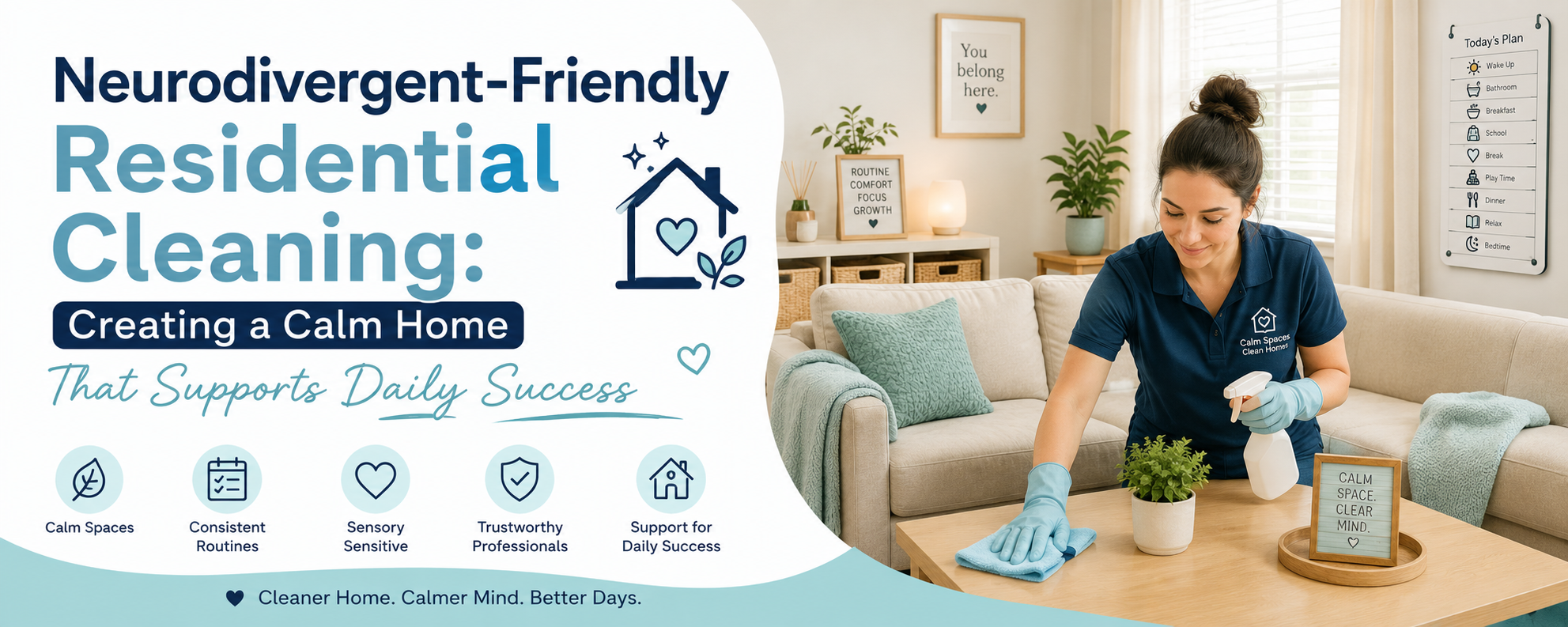
Creating a neurodivergent-friendly home isn’t about achieving a picture-perfect house. Instead, it’s about designing an environment that reduces stress, supports independence, and makes daily routines more predictable.
Simple organizational systems, gentle cleaning products, reduced clutter, and clearly defined spaces can all contribute to a calmer atmosphere where children feel more comfortable learning and growing.
Families pursuing Autism Treatment Highland Park often find that these practical home strategies complement the work being done through therapy. Combined with guidance from experienced professionals offering behavioral therapy Park Cities, ABA Parent Training, center-based autism services, and Home-Based ABA Therapy, a thoughtfully organized home can become an important extension of the therapeutic process.
Every family’s needs are unique, but one thing remains consistent: a clean, organized, low-stimulation environment can help create opportunities for confidence, independence, and everyday success for both children and parents.
Contact us at 972–310–4991 or visit https://radiantspectrumtherapy.com/ to learn more.