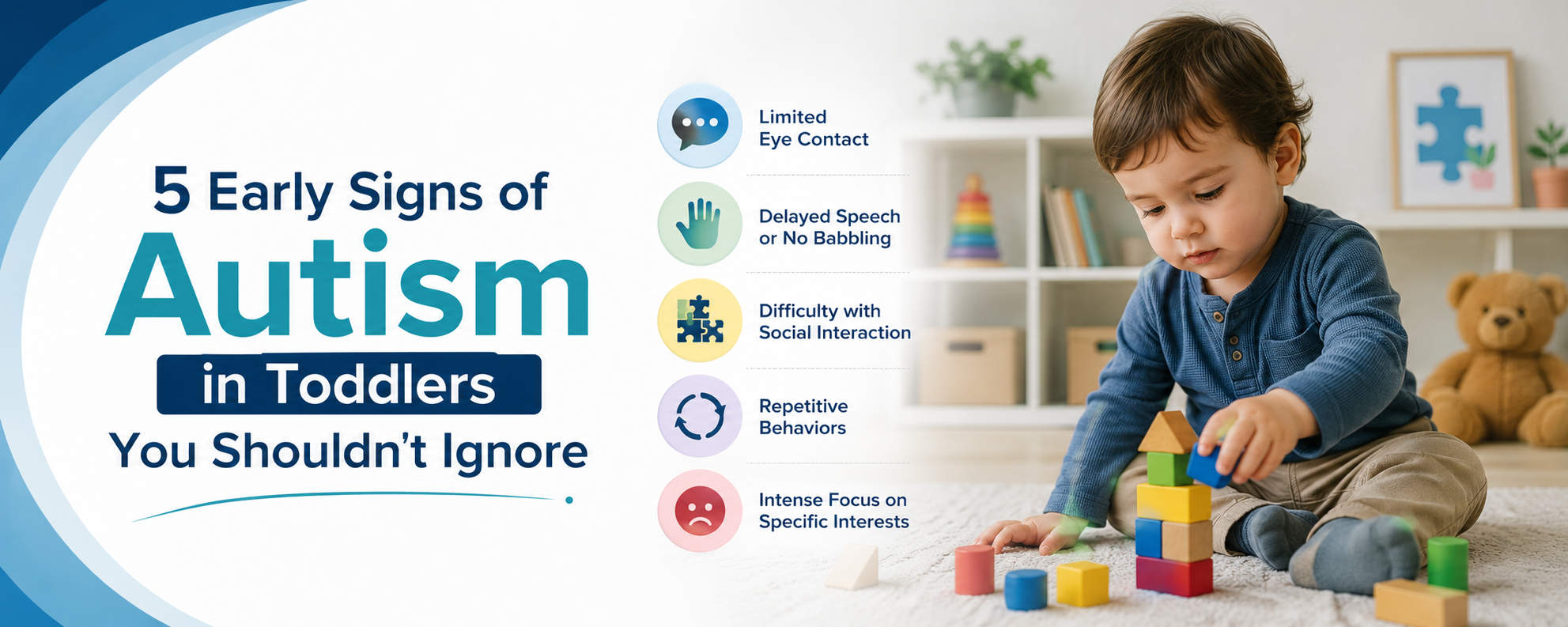
As a parent, you know your child better than anyone else. You notice every smile, every new word, and every milestone. While children develop at different rates, some behaviors may indicate that a child could benefit from further evaluation and support. Recognizing the early signs of autism can make a significant difference in a child’s long-term development, especially when paired with early intervention ABA Highland Park services and other evidence-based therapies.
Autism Spectrum Disorder (ASD) affects how children communicate, interact socially, and process the world around them. Identifying concerns early allows families to access resources such as ABA therapy Highland Park, developmental evaluations, and individualized treatment plans that help children build essential life skills.
In this guide, we’ll discuss five early signs of autism in toddlers that parents should not ignore, why early intervention matters, and how families can find support through ABA therapy in Highland Park TX and the Dallas area.
Why Early Autism Detection Matters
Research consistently shows that children who receive support during their earliest developmental years often experience better outcomes in communication, social skills, behavior, and independence. The brain develops rapidly during the first few years of life, making this an ideal time for intervention.
Services such as Applied Behavior Analysis Highland Park, speech therapy, occupational therapy, and developmental support can help children learn skills that may otherwise become more difficult to develop later.
Parents often wonder if they’re overreacting when they notice developmental differences. However, seeking an evaluation does not mean a child will automatically receive an autism diagnosis. It simply provides valuable information and access to support when needed.
Sign #1: Delayed Speech and Communication Skills
One of the earliest and most noticeable signs of autism is delayed communication development.
What Parents May Notice
A toddler may:
- Not respond consistently to their name
- Have limited babbling by 12 months
- Use very few words by 16 months
- Struggle to combine words into simple phrases by age two
- Have difficulty expressing wants and needs
- Lose previously acquired language skills
Some children with autism may develop speech later than expected, while others may speak but struggle with functional communication.
For example, a child might know the alphabet or memorize songs but have difficulty asking for a snack or telling a parent what they need.
How ABA Therapy Helps
Programs offering ABA therapy for toddlers Highland Park often focus on communication development through individualized teaching strategies. Therapists use evidence-based methods to help children learn language, requesting skills, conversation skills, and social communication.
Many families seek BCBA services Highland Park to create customized treatment plans that target communication goals specific to their child’s needs.
Sign #2: Limited Eye Contact and Social Interaction
Social engagement begins long before children can speak. Toddlers naturally seek interaction with parents, caregivers, and peers through eye contact, facial expressions, and shared experiences.
Social Differences to Watch For
A child may:
- Avoid eye contact
- Rarely smile back at others
- Show little interest in social games like peek-a-boo
- Not point to share interests
- Prefer playing alone most of the time
- Seem unaware when others are upset or excited
Many parents first notice that their child appears “in their own world” or does not seek social interaction the way other children their age do.
Understanding Social Communication Challenges
Children with autism often process social information differently. This doesn’t mean they don’t enjoy relationships; rather, they may need additional support learning how to engage with others.
Services such as autism therapy Highland Park TX and behavior therapy Highland Park frequently include structured social skills training designed to help children connect with family members, classmates, and peers.
The Role of Early Intervention
Through early intervention ABA Highland Park, children can learn foundational social behaviors such as:
- Making eye contact
- Taking turns
- Sharing attention
- Responding to social cues
- Building meaningful interactions
These skills often become the building blocks for future friendships and classroom success.
Sign #3: Repetitive Behaviors and Restricted Interests
Repetitive behaviors are another common characteristic associated with autism.
Examples of Repetitive Behaviors
A toddler may:
- Repeatedly flap their hands
- Spin objects for long periods
- Line up toys in specific patterns
- Rock back and forth
- Repeat the same actions over and over
- Become highly focused on a specific object or topic
While many toddlers enjoy repetition, children with autism often engage in these behaviors more frequently or intensely.
Difficulty With Changes in Routine
Parents may also notice significant distress when routines change.
Examples include:
- Taking a different route home
- Changing bedtime routines
- Rearranging furniture
- Serving food differently than expected
For some children, predictability provides comfort and security.
Support Through Behavioral Intervention
Professionals providing behavioral intervention Highland Park TX help identify the purpose behind repetitive behaviors and teach flexible coping strategies.
Using autism behavior therapy Highland Park, therapists work with families to reduce behaviors that interfere with learning while respecting each child’s unique needs and preferences.
Sign #4: Sensory Sensitivities
Many children with autism experience sensory processing differences.
Signs of Sensory Challenges
A child may:
- Cover their ears at everyday sounds
- Become overwhelmed in crowded environments
- Avoid certain clothing textures
- Refuse specific foods due to texture
- Seek excessive movement or sensory input
- Stare at lights or spinning objects
Sensory sensitivities can significantly affect daily life, including eating, sleeping, learning, and participating in family activities.
Real-Life Examples
A toddler may have a meltdown in a grocery store because of fluorescent lighting or loud noises. Another child may refuse to wear certain clothing because the fabric feels uncomfortable.
These reactions are not simply behavioral issues. They may reflect genuine sensory challenges that affect how the child experiences their environment.
Treatment Approaches
Many families utilize special needs therapy Highland Park and developmental therapy Highland Park alongside ABA services to address sensory concerns.
Both center-based ABA therapy Highland Park and in-home ABA therapy Highland Park programs can incorporate strategies that help children tolerate sensory experiences more comfortably while developing self-regulation skills.
Sign #5: Delays in Play Skills and Imitation
Play is an essential part of childhood development. Through play, children learn language, social interaction, creativity, and problem-solving.
Signs Parents May Observe
Children with autism may:
- Use toys in unusual ways
- Focus on parts of toys rather than the whole toy
- Show limited pretend play
- Have difficulty copying actions
- Struggle to imitate sounds or gestures
- Prefer repetitive play patterns
For example, instead of pretending to drive a toy car, a child may spend extended periods spinning the wheels.
Why Imitation Matters
Imitation is one of the primary ways children learn new skills. Toddlers naturally copy facial expressions, gestures, sounds, and actions they observe in others.
When imitation skills are delayed, learning opportunities may become limited.
Building Play Skills Through ABA
Programs offering ABA therapy for kids Highland Park often target play and imitation skills through structured and naturalistic teaching methods.
Therapists create engaging learning opportunities that help children:
- Participate in pretend play
- Learn from observation
- Engage with peers
- Expand creativity
- Improve social interactions
These foundational skills support future academic and social success.
When Should Parents Seek an Evaluation?
Parents should consider speaking with a pediatrician or developmental specialist if they notice multiple signs listed above.
You do not need to wait for a formal diagnosis before seeking support.
Many families begin with:
- Developmental screenings
- Autism evaluations
- Parent consultations
- Behavioral assessments
- Early intervention services
Professionals providing ABA therapy services Highland Park can help families understand available options and determine the most appropriate next steps.
How ABA Therapy Supports Children with Autism
Parents frequently ask about how ABA therapy works Highland Park programs.
Applied Behavior Analysis is a science-based approach that focuses on teaching meaningful skills and reducing behaviors that interfere with learning and independence.
Common Areas Addressed in ABA Therapy
- Communication skills
- Social interaction
- Daily living skills
- Emotional regulation
- School readiness
- Safety skills
- Adaptive functioning
Many families explore ABA therapy for autism Highland Park because treatment plans are highly individualized and tailored to each child’s strengths and challenges.
In-Home vs. Center-Based Services
Depending on the child’s needs, families may choose:
In-Home Services
In-home ABA therapy Highland Park allows therapists to work directly within the child’s natural environment. This can be especially beneficial for teaching daily routines and family-centered goals.
Center-Based Services
Center-based ABA therapy Highland Park provides a structured learning environment where children can practice social skills, peer interaction, and classroom readiness.
Many providers offer a combination of both approaches.
Finding the Right ABA Provider
Choosing the right therapy provider is an important decision for families.
When researching best ABA therapy providers Highland Park, consider:
- BCBA supervision and credentials
- Individualized treatment planning
- Parent training opportunities
- Communication with families
- Progress monitoring
- Availability of social skills programs
- Flexible scheduling options
Families searching for ABA therapy near Highland Park often benefit from scheduling consultations with multiple providers before making a decision.
You may also want to ask about:
- Insurance acceptance
- Waitlist times
- Therapy settings
- Parent involvement expectations
- Clinical outcomes
Those searching online for find ABA therapist Highland Park, best ABA therapy in Highland Park, or top-rated ABA therapists Highland Park should prioritize providers that emphasize personalized care and evidence-based treatment.
Understanding ABA Therapy Costs
One common concern among parents is ABA therapy cost Highland Park.
Costs vary depending on factors such as:
- Number of therapy hours
- Insurance coverage
- Service setting
- Clinical recommendations
- Provider qualifications
Many clinics work with insurance providers to help families access services. Parents interested in affordable ABA therapy Highland Park TX or private ABA therapy Highland Park should contact providers directly to discuss available options and benefits verification.
Some children may also qualify for more comprehensive treatment plans, including intensive ABA programs Highland Park, when clinically appropriate.
Supporting Your Child Beyond Therapy
Professional treatment is valuable, but parents remain the most important people in a child’s development.
Ways to support your child include:
- Following through with therapy recommendations
- Creating consistent routines
- Encouraging communication opportunities
- Celebrating small successes
- Participating in parent training
- Building a supportive community
Many families also benefit from connecting with local Highland Park autism services and autism support services Highland Park organizations that provide education, advocacy, and community resources.
Conclusion
Recognizing autism early can open the door to meaningful support during one of the most important periods of a child’s development. Delayed communication, limited social interaction, repetitive behaviors, sensory sensitivities, and challenges with play skills are all signs that deserve attention.
If you notice these behaviors in your toddler, trust your instincts and seek professional guidance. Early evaluation and intervention can make a significant difference in helping children reach their full potential.
Families looking for ABA therapy Highland Park, ABA clinics in Highland Park, or ABA therapy near me Highland Park have access to a growing range of services designed to support children and their families. Whether through Applied Behavior Analysis Highland Park, pediatric ABA therapy Highland Park, behavior therapy Highland Park, or comprehensive developmental programs, early support can help children build communication, social, and life skills that last a lifetime.
Contact us at 972–310–4991 or visit https://radiantspectrumtherapy.com/ to learn more.