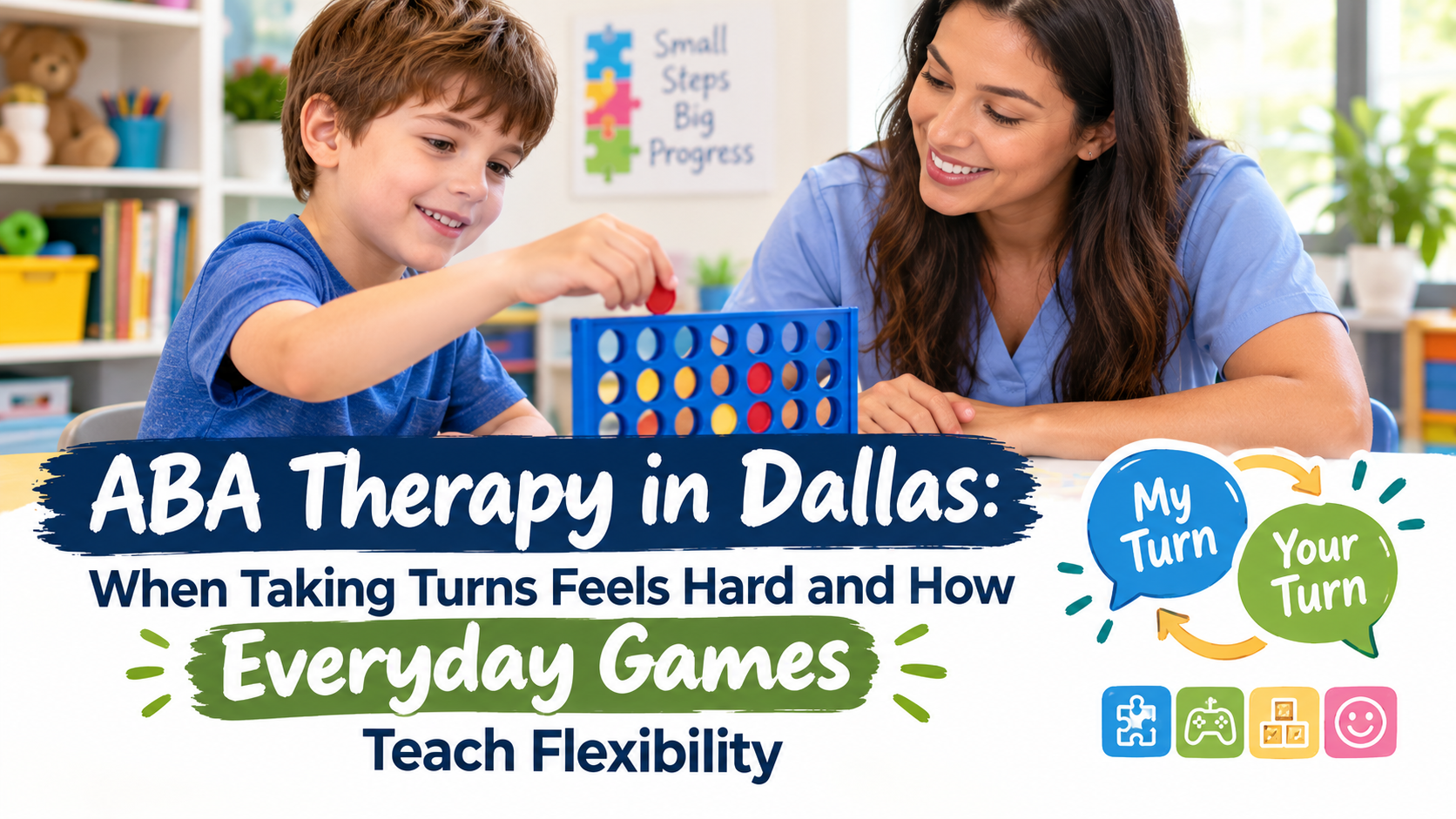

For many families, board game night is about spending time together, laughing, and making memories. But for children receiving ABA Therapy in Dallas, board games can become something even more valuable: a natural way to practice important social and emotional skills without feeling like they’re doing “therapy.”
At Radiant Spectrum Therapy, we encourage parents to look for everyday opportunities to build communication, patience, flexibility, and emotional regulation. A simple game at the kitchen table can help children practice waiting for their turn, sharing materials, following rules, and handling disappointment in a supportive environment.
The best part? You don’t need expensive therapy equipment to reinforce these skills. Many classic board games naturally create opportunities to practice behaviors that are important both at home and at school.
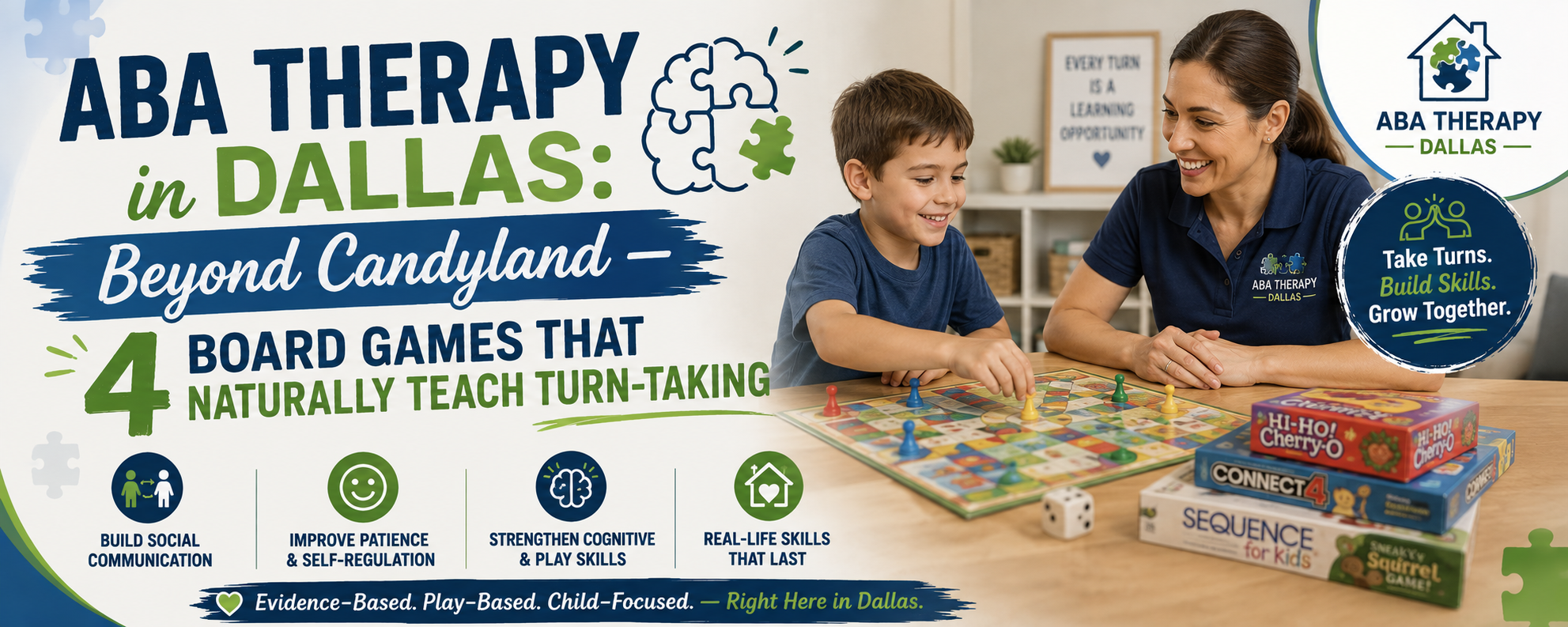
In this guide, we’ll share four family-friendly board games that encourage turn-taking and emotional growth, along with practical ABA-inspired strategies parents can use while playing. These activities work especially well for families in Dallas and Highland Park who want fun ways to support learning between therapy sessions.
Why Board Games Matter in ABA Therapy Dallas
One of the strengths of Applied Behavior Analysis Dallas programs is teaching skills in real-life settings. Children often learn a new skill during therapy sessions, but they become truly successful when they can use that skill during everyday activities.
Board games naturally encourage:
- Waiting appropriately
- Following multi-step directions
- Taking turns
- Sharing materials
- Asking for help
- Celebrating others’ success
- Managing frustration
- Transitioning between activities
Whether your child receives center-based ABA therapy Dallas, in-home ABA therapy Dallas, or both, family game time can reinforce these same skills in a relaxed environment.
What Makes a Good Board Game for Social Learning?
Not every game works equally well for skill-building.
The best games for children receiving ABA therapy for autism Dallas usually have:
- Simple rules
- Predictable turns
- Clear visual supports
- Short play sessions
- Opportunities for communication
- Low-pressure competition
Instead of focusing on winning, these games help children experience success through participation and cooperation.
Game #1: Sneaky Snacky Squirrel — Waiting Becomes the Fun Part
If you’re looking for one of the best beginner games for ABA therapy for toddlers Dallas, Sneaky Snacky Squirrel is an excellent choice.
Skills Practiced
- Waiting for a turn
- Following one-step directions
- Color identification
- Fine motor coordination
- Handling unexpected changes
How ABA Principles Fit In
The spinner creates built-in waiting time.
Instead of rushing through turns, parents can reinforce waiting by praising behaviors like:
- “Nice waiting.”
- “Your hands stayed in your lap.”
- “Now it’s your turn.”
When the spinner causes a child to lose an acorn, it’s also an opportunity to practice flexibility.
Rather than immediately fixing the disappointment, parents can model calm reactions.
For example:
“Oh no — we lost one! That’s okay. Let’s spin again next turn.”
This supports emotional regulation, an important goal in many behavior therapy Dallas programs.
Make It Easier
For younger children:
- Use fewer acorns.
- Play shorter rounds.
- Give visual reminders about whose turn comes next.
Game #2: Pop the Pig — Taking Turns with High Motivation
Some children stay engaged longer when the game includes a surprising payoff.
Pop the Pig delivers exactly that.
Skills Practiced
- Turn-taking
- Counting
- Requesting
- Waiting
- Managing excitement
Because everyone contributes toward making the pig pop, children learn that good things happen even while someone else takes a turn.
ABA-Friendly Tips
Before each turn:
- Point to whose turn it is.
- Use simple language.
- Encourage requesting.
Examples include:
- “My turn.”
- “Your turn.”
- “Can I spin?”
These communication opportunities align well with autism behavior therapy Dallas goals.
Handling the Big Moment
When the pig finally pops, excitement can become overwhelming.
Practice:
- Clapping for others.
- Taking deep breaths.
- Saying “Good game.”
These small moments help children learn appropriate social responses after exciting events.
Game #3: Hi Ho! Cherry-O — Practicing Flexibility When Luck Changes
Hi Ho! Cherry-O is a classic game that creates natural opportunities to practice handling wins and setbacks.
Skills Practiced
- Waiting
- Counting
- Coping with losing pieces
- Following rules
- Finishing an activity
Why It Works
Children experience both success and disappointment throughout the game.
One spin may help.
The next may remove several cherries.
This back-and-forth helps teach flexibility.
Many children participating in ABA therapy for kids Dallas benefit from practicing these emotional shifts in low-pressure situations.
Try This Parent Script
Instead of saying:
“Don’t be upset.”
Try:
“I can see you’re disappointed.”
Then model coping skills:
- Take a breath.
- Keep playing.
- Focus on the next turn.
These moments mirror emotional regulation strategies used during BCBA services Dallas.
Game #4: Hoot Owl Hoot — A Cooperative Game That Changes the Goal
Sometimes the best way to teach social skills is to remove competition altogether.
Hoot Owl Hoot is a cooperative game where everyone works together.
Instead of asking:
“Who wins?”
The question becomes:
“Can we help the owls get home?”
Skills Practiced
- Teamwork
- Sharing ideas
- Waiting
- Problem-solving
- Encouraging others
For children receiving developmental therapy Dallas, cooperative games often reduce anxiety while increasing participation.
ABA Connection
Cooperative games naturally encourage:
- Joint attention
- Communication
- Flexible thinking
- Helping behaviors
Parents can reinforce phrases like:
- “Your idea.”
- “Let’s help.”
- “We did it together.”
These social interactions become valuable practice for classrooms and playdates.
How Parents Can Use ABA Strategies During Game Night
The game itself is only part of the learning.
The way adults respond during play makes an even bigger difference.
Give Specific Praise
Instead of saying:
“Good job.”
Try:
- “Great waiting.”
- “I like how you shared.”
- “You stayed calm when the spinner changed.”
Specific praise helps children understand exactly what behavior earned encouragement.
Use Visual Turn Supports
Many children benefit from seeing whose turn comes next.
Simple ideas include:
- Turn cards
- A “My Turn” token
- Pointing around the table
These visual supports are commonly used in ABA therapy services Dallas because they reduce confusion and increase independence.
Keep Sessions Short
Long games can become overwhelming.
Instead:
- Play for 10–15 minutes.
- End while everyone is still having fun.
- Celebrate participation.
Short, successful experiences build confidence.
Teaching “Losing Gracefully” Without Forcing Positivity
One common misconception is that children should always smile after losing.
Real emotional regulation looks different.
Instead of forcing happiness, teach children that they can feel disappointed while still using appropriate coping skills.
Practice phrases like:
- “Maybe next time.”
- “Good game.”
- “Can we play again?”
These responses help children navigate real-life situations they’ll encounter at school and during community activities.
This approach is often incorporated into behavioral intervention Dallas TX plans because it builds resilience rather than perfection.
Adjusting Games for Different Ages
Toddlers (Ages 2–4)
Children receiving early intervention ABA Dallas often benefit from:
- Short rounds
- Simple choices
- Extra modeling
- Frequent praise
Focus on participation instead of completing every rule.
Preschool and Early Elementary
Children in pediatric ABA therapy Dallas may be ready for:
- Full game rules
- Taking turns independently
- Waiting longer
- Practicing flexible thinking
Older Children
Older children can work on:
- Sportsmanship
- Helping younger siblings
- Explaining rules
- Problem-solving together
These advanced social skills continue supporting success beyond therapy sessions.
Bringing These Skills Into Everyday Life
The real goal isn’t becoming better at board games.
It’s helping children use these same skills in everyday situations.
After practicing at home, look for opportunities during:
- Family dinners
- Waiting in line
- Classroom activities
- Playdates
- Community events in Dallas
- Library programs in Highland Park
- Park outings
Children often transfer skills more successfully when they’ve practiced them repeatedly in enjoyable environments.
Families receiving private ABA therapy Dallas or intensive ABA programs Dallas can also ask their BCBA how to connect game-based learning with their child’s individualized goals.
How Board Games Complement Professional ABA Therapy
Board games are wonderful learning tools, but they’re most effective when they complement individualized therapy.
Professional ABA therapy in Dallas TX helps identify each child’s unique strengths and challenges while creating personalized goals that fit their developmental needs.
At Radiant Spectrum Therapy, our team uses evidence-based strategies to build communication, social interaction, emotional regulation, and daily living skills through engaging, meaningful activities.
Whether your family is exploring in-home ABA therapy Dallas, center-based ABA therapy Dallas, or looking for best ABA therapy providers Dallas, incorporating simple routines like family game night can reinforce the progress children make during therapy sessions.
Why Families in Dallas and Highland Park Choose ABA Therapy
Families throughout Dallas and Highland Park often look for therapy that extends beyond structured sessions and into everyday routines. That is one reason ABA Therapy in Dallas focuses on teaching practical skills that children can use at home, school, and in the community.
When parents practice turn-taking during a board game, they are reinforcing many of the same foundational skills targeted during professional therapy sessions. These moments can make transitions easier, improve peer interactions, and help children feel more confident in group settings.
Every child learns differently, which is why individualized treatment plans remain essential. A BCBA can help identify which social skills to target first and suggest games or activities that match a child’s interests and developmental level.
Frequently Asked Questions
What board game is best for children new to ABA therapy?
Sneaky Snacky Squirrel is often a great starting point because it has simple rules, colorful visuals, and short turns that keep children engaged while practicing waiting.
Can board games help with emotional regulation?
Yes. Many games naturally create opportunities to practice disappointment, excitement, patience, and flexibility in a safe environment, supporting goals commonly addressed through autism therapy Dallas TX.
How long should game sessions last?
For younger children, 10–15 minutes is often enough. The goal is ending on a positive note rather than finishing every game.
Do these games replace ABA therapy?
No. Board games work best as a way to reinforce skills learned through professional ABA therapy Dallas services and individualized treatment plans.
How can I find ABA therapy near Dallas?
Families looking for ABA therapy near Dallas, Dallas autism services, or find ABA therapist Dallas options can connect with providers who offer personalized assessments, parent coaching, and evidence-based support for children across different ages and developmental needs.
How much does ABA therapy cost in Dallas?
The ABA therapy cost Dallas families pay depends on factors such as insurance coverage, recommended therapy hours, and whether services are provided at home or in a clinic. Many providers work with insurance plans to help families access care.
How does ABA therapy work?
If you’re wondering how ABA therapy works Dallas providers typically begin with a comprehensive assessment by a BCBA. From there, therapists create individualized goals that focus on communication, social skills, emotional regulation, and daily living skills while tracking progress over time.
Final Thoughts
The most meaningful moments of learning don’t always happen in a therapy room.
Sometimes they’re found around a kitchen table, waiting for a spinner to stop, cheering for a sibling’s turn, or taking a deep breath after losing a piece.
Board games create countless opportunities to practice patience, flexibility, communication, and emotional regulation — skills that support success at home, in school, and throughout the community.
For families exploring ABA Therapy in Dallas, combining professional support with everyday learning opportunities helps children build confidence in natural settings. Whether your child is participating in center-based ABA therapy Dallas, in-home ABA therapy Dallas, or other autism support services Dallas, simple activities like family game night can reinforce important social skills in ways that feel joyful, encouraging, and connected.
At Radiant Spectrum Therapy, we believe meaningful progress happens when therapy and everyday life work together — one turn at a time.
Contact us at 972–310–4991 or visit https://radiantspectrumtherapy.com/ to learn more.