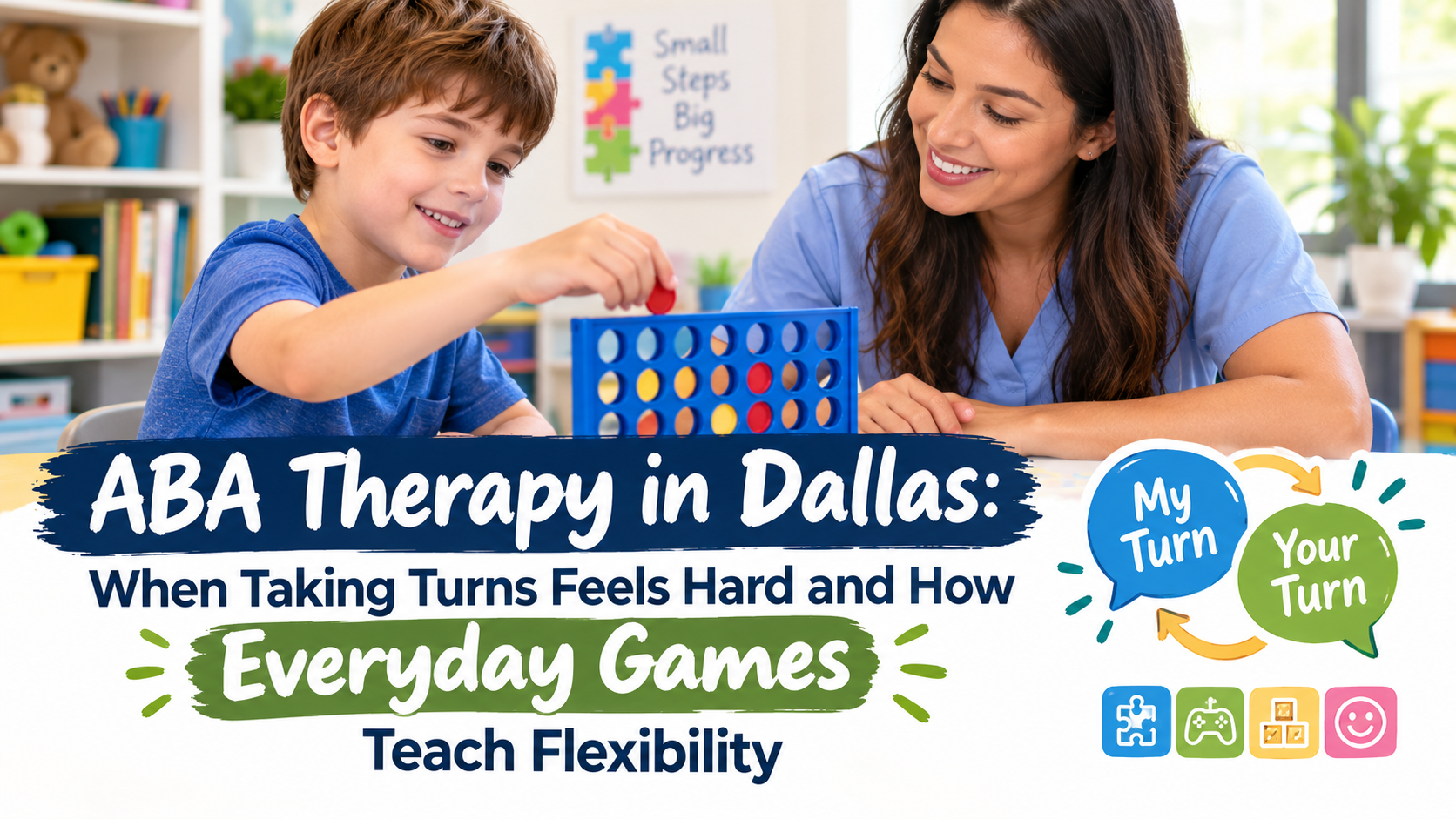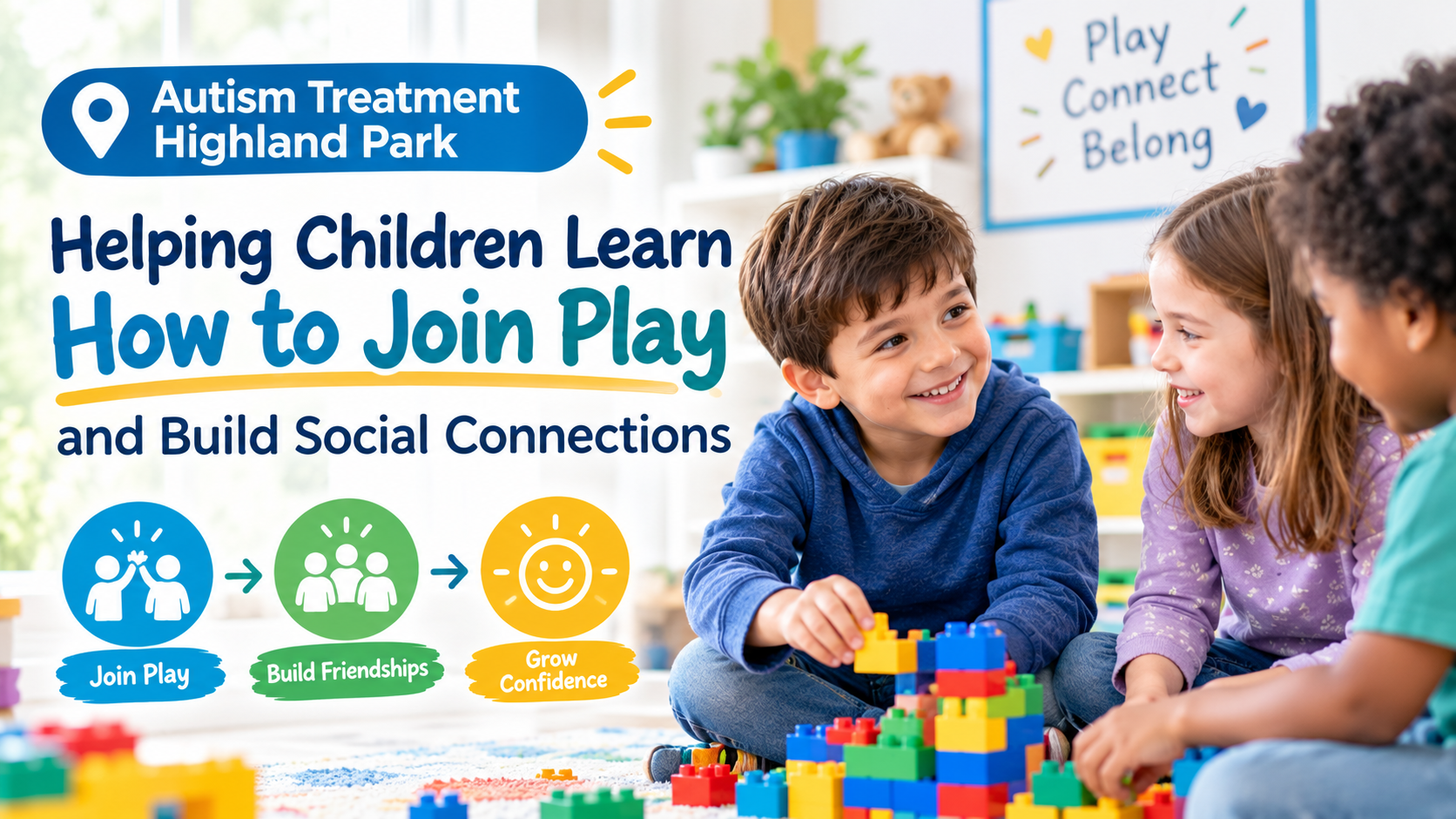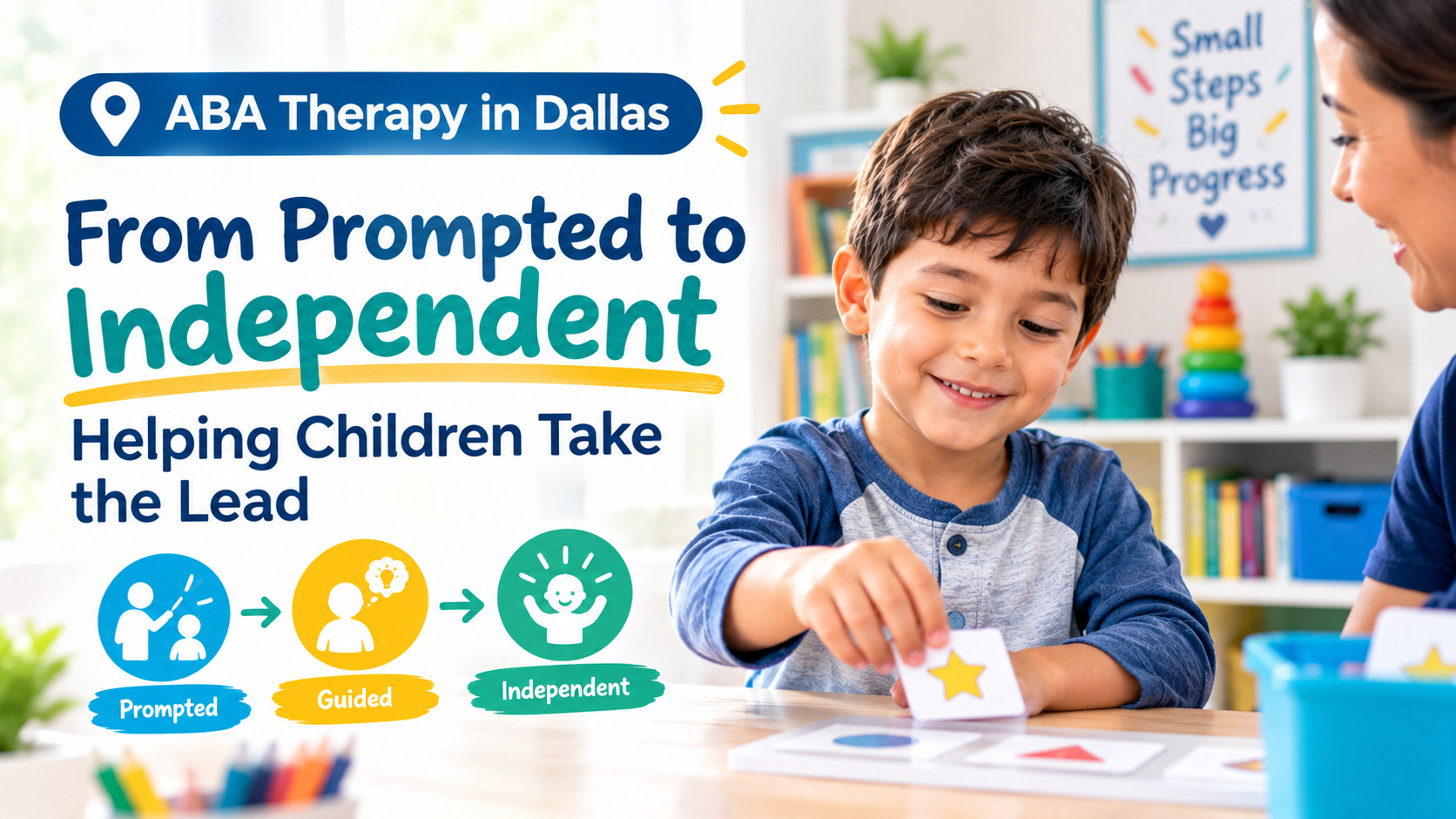


When parents explore Autism Treatment Highland Park, they often want to understand how everyday interactions can help their child communicate, learn, and build meaningful relationships. One powerful starting point is something that already captures a child’s attention. Whether a child loves lining up toy cars, watching water move, building towers, flipping through picture books, or repeating the same pretend-play routine, these interests can create valuable opportunities for connection. Instead of immediately redirecting the child toward an adult-selected task, joining the child’s preferred activity can help establish trust, encourage participation, and create natural opportunities for learning.
Children do not always connect with others in the same way or at the same pace. Some communicate through words, while others use gestures, facial expressions, movements, pictures, or communication devices. Some eagerly invite adults into their activities, while others prefer to observe before allowing someone to participate. Recognizing these differences helps adults approach play with patience and curiosity rather than assuming that every interaction must follow a predetermined plan.
For families exploring ABA therapy Highland Park, this approach highlights an important principle: meaningful learning can begin with what motivates a child. When adults take the time to understand a child’s interests, they can create interactions that feel engaging, respectful, and relevant to the child’s everyday life.
Why Following a Child’s Curiosity Matters
Children naturally gravitate toward activities that interest them. A particular toy, movement, sound, character, or routine may capture their attention because it provides enjoyment, comfort, predictability, or an opportunity to explore.
For autistic children, preferred activities can be especially useful starting points for interaction. An activity that already feels rewarding may make it easier for a child to notice another person, tolerate shared play, communicate a preference, or explore something new.
This does not mean adults should never introduce new experiences. Instead, it means that connection can come before redirection. By entering a child’s existing activity, adults can discover what the child enjoys and use that information to support gradual learning.
Consider a child who spends several minutes arranging toy animals in a particular order. An adult might initially feel tempted to change the arrangement and suggest a different game. However, joining the activity by placing another animal nearby or commenting on the animals can create a shared moment without interrupting the child’s plan.
That small interaction may open the door to communication, turn-taking, imitation, or a longer period of shared attention.
Families seeking ABA therapy services Highland Park can benefit from understanding how these everyday moments may complement individualized therapeutic goals.
Interests Can Provide a Starting Point for Communication
Communication is not limited to answering questions or naming objects. Children communicate in many ways, including reaching, pointing, looking toward an item, moving closer, giving something to another person, or using an established communication system.
When adults join an activity a child already enjoys, they create opportunities to notice and respond to these communication attempts.
For example, a child who enjoys rolling a ball down a ramp may pause and look toward an adult when the ball stops. The adult can respond by returning the ball, waiting briefly, or offering another turn.
The interaction does not require the child to say a particular word before the activity continues. Instead, the adult recognizes the child’s existing communication and creates opportunities for the child to communicate again.
This approach can be incorporated into Applied Behavior Analysis Highland Park when it aligns with the child’s individualized goals and the family’s priorities.
Preferred Activities Can Support Shared Attention
Shared attention occurs when a child and another person become engaged with the same activity or event. It does not always involve direct eye contact, and it should not be measured solely by whether a child looks at someone’s face.
A child might show shared attention by bringing an object closer, noticing an adult’s contribution, continuing a game with another person, or communicating that they want the activity to continue.
For instance, a child fascinated by spinning wheels may allow a parent to sit nearby and observe. Over time, the child might accept the parent rolling another vehicle alongside the first one.
These small moments can provide meaningful opportunities for connection without requiring the child to abandon an enjoyable activity.
How Adults Can Join Without Taking Over
Following a child’s interests does not mean adults must remain passive. It means introducing interaction in ways that respect the child’s activity, preferences, and comfort.
The goal is to become a welcome participant rather than someone who immediately changes the rules.
Observe Before Joining
Before entering an activity, take a moment to notice what the child is doing.
Ask yourself:
- What seems to capture the child’s attention?
- Is the child repeating a movement, exploring an object, or following a particular sequence?
- Does the child appear comfortable with someone nearby?
- Is there an opportunity to participate without interrupting?
- What might the child be communicating through their actions?
Observation helps adults understand the activity before deciding how to participate.
A child stacking blocks might enjoy watching them fall, arranging them by color, or building the tallest possible tower. Although these activities involve the same materials, each child may have a different goal.
Following the child’s lead begins with recognizing that difference.
Start Small and Match the Activity
Adults do not need to introduce an elaborate game. Often, the simplest contribution is the most effective.
If a child rolls toy cars back and forth, an adult might roll another car nearby. If the child enjoys placing puzzle pieces in a row, the adult might sit beside them and explore a similar set of pieces.
The adult can gradually add comments, gestures, or small variations while remaining attentive to the child’s response.
This is particularly relevant for families considering ABA therapy for autism Highland Park, where individualized support can help identify ways to build on existing motivations rather than relying exclusively on activities chosen by adults.
Follow the Child’s Comfort Level
Some children welcome another person immediately. Others need more time or prefer an adult to remain nearby without touching their materials.
Both responses deserve respect.
If a child moves an object away, turns their body, leaves the activity, or signals that they want space, the adult can pause and adjust. Joining an activity should not become a demand for interaction.
For children who communicate through gestures, pictures, or assistive communication devices, adults should remain attentive to those communication methods as well.
Respecting boundaries can help children experience interactions as predictable and safe.
Turning Everyday Interests Into Learning Opportunities
Once an adult establishes a comfortable connection, the activity may naturally create opportunities to practice new skills. These opportunities do not need to interrupt the child’s enjoyment or turn every moment into a formal lesson.
Building Communication Through Play
Imagine a child who enjoys playing with toy trains. The adult joins the activity, places a train nearby, and waits to see how the child responds.
The child might reach for another train, gesture toward the tracks, or use a communication device to request a particular item. The adult can respond meaningfully and continue the interaction.
Depending on the child’s goals, this activity may create opportunities to practice requesting, commenting, choosing, rejecting, or sharing information.
For families exploring autism therapy Highland Park TX, it is helpful to recognize that communication can develop through many meaningful activities, not just structured question-and-answer exercises.
Introducing Turn-Taking Naturally
Turn-taking can be introduced without changing an activity into a competitive game.
A child who enjoys dropping balls into a container might be comfortable taking turns dropping one ball while an adult drops another. A child who loves building towers might enjoy adding a block after the adult places one.
The adult can keep the interaction simple, use predictable language, and allow the child time to respond.
If the child is not ready to take turns, the adult can continue playing alongside them and revisit shared participation later.
The purpose is to make interaction accessible, not to force a particular response.
Expanding Play Without Dismissing Existing Interests
Some parents worry that following a child’s preferred activities will prevent them from exploring new experiences. However, familiar interests can provide a bridge toward new possibilities.
Suppose a child loves toy dinosaurs. An adult might introduce a small bridge, a container of pretend water, or a simple matching game involving the dinosaurs. Each addition connects to something the child already enjoys.
The child can accept the variation, ignore it, or return to the original activity. Their response provides useful information about what feels engaging.
When appropriate, in-home ABA therapy Highland Park can help families explore strategies for introducing new experiences within familiar routines. Similarly, center-based ABA therapy Highland Park may offer opportunities to practice play and social participation in a structured environment, depending on the child’s needs and the provider’s services.
Neither setting should assume that every child needs the same approach.
Why Immediate Redirection Can Miss an Opportunity
Adults often redirect children because they want to encourage flexibility, teach a new skill, or help them complete an expected task. Those goals can be worthwhile. However, redirecting too quickly may mean missing an opportunity to understand the child’s motivation.
When a child is deeply engaged in an activity, an abrupt change may make participation more difficult. The child may not yet understand why the activity must stop, or the new task may not offer the same level of interest.
Instead of immediately saying, “Put that away and do this,” an adult might first acknowledge the child’s activity and introduce a transition gradually.
For example, if a child enjoys arranging blocks and it is time to practice a different activity, the adult could give a clear transition cue, offer a choice about what happens next, or incorporate the blocks into the upcoming task when appropriate.
Following curiosity does not eliminate boundaries, routines, or expectations. It helps adults introduce them in ways that account for the child’s interests and communication needs.
What Parents Can Try at Home
Parents do not need specialized equipment or hours of preparation to create opportunities for connection. Ordinary household activities and familiar toys can provide a starting point.
Try a Simple Follow-the-Lead Routine
Choose a time when your child is comfortable and has access to an activity they enjoy.
- Observe: Watch what your child chooses to do without immediately changing the activity.
- Join: Sit nearby and participate in a way that fits the child’s play.
- Pause: Give your child time to notice your contribution or communicate what they want.
- Respond: Acknowledge gestures, words, movements, or other communication attempts.
- Expand gently: If the child appears comfortable, introduce a small variation
- Adjust: Return to the familiar activity or give space if the child shows that they are no longer interested.
The routine is flexible. Some days, the child may welcome several variations. On other days, simply sharing the same space may be enough.
Use Everyday Routines as Opportunities
A child’s interests can also be incorporated into daily activities.
A child who enjoys vehicles might explore toy cars before getting dressed. A child fascinated by water might help pour water into a container during a supervised household activity. A child who loves music might participate in a familiar song during a transition.
These moments can provide opportunities to practice choices, communication, sequencing, and participation in daily routines.
Families exploring pediatric ABA therapy Highland Park or ABA therapy for toddlers Highland Park can ask providers how developmentally appropriate play and everyday routines may support their child’s specific goals.
The important consideration is whether the activity is meaningful and accessible to the child, rather than whether it looks like a traditional lesson.
Understanding Repetition, Special Interests, and Comfort
A child may want to repeat the same activity many times. They might line up objects, watch the same sequence, repeat a familiar movement, or focus on one topic for an extended period.
Repetition can serve different purposes. It may be enjoyable, predictable, regulating, or connected to how the child explores information.
Adults should avoid assuming that every repeated behavior needs to be stopped simply because it differs from typical play.
When an activity is safe and does not significantly interfere with the child’s well-being or daily participation, adults can often use it as a starting point for connection.
However, if a behavior creates a safety concern, causes injury, or interferes with essential activities, it may be appropriate to seek individualized guidance from a qualified professional.
The goal is not to eliminate harmless differences. It is to understand the child’s needs while supporting safety, communication, comfort, and meaningful participation.
Families looking into behavior therapy Highland Park or autism behavior therapy Highland Park can discuss how providers distinguish between harmless preferences and behaviors that may require additional support.
How ABA Therapy Can Build on a Child’s Interests
Applied Behavior Analysis, commonly known as ABA, is an approach used to teach and support skills through individualized strategies. When thoughtfully implemented, it can incorporate a child’s interests to make learning more relevant and motivating.
For example, a provider might use a child’s interest in bubbles to create opportunities for requesting, choosing, waiting, or communicating that they want more. Another child might practice daily living skills through familiar routines connected to favorite toys or activities.
The specific goals and strategies should be based on the individual child rather than applied uniformly.
Individualized Goals Matter
A child’s interests are only one part of a comprehensive understanding of their needs. Providers should also consider communication, sensory preferences, developmental abilities, daily routines, family priorities, and the child’s comfort.
A qualified Board Certified Behavior Analyst (BCBA) can help assess current skills and develop individualized goals when appropriate.
Families seeking BCBA services Highland Park or behavioral intervention Highland Park TX should ask how a provider identifies meaningful goals, incorporates the child’s preferences, and measures progress in practical ways.
It is also reasonable to ask how parents participate in planning and how strategies can be adapted when a child communicates discomfort or shows that an approach is not working.
Choosing a Setting That Fits the Child
Different families may benefit from different service arrangements.
- In-home services may provide opportunities to practice skills within familiar routines, play activities, and everyday family interactions.
- Center-based services may provide structured opportunities to practice individualized goals and participate in activities with other people, when appropriate.
- Early intervention services may focus on developmentally appropriate skills for younger children, depending on eligibility and clinical recommendations.
Families researching private ABA therapy Highland Park, intensive ABA programs Highland Park, or developmental therapy Highland Park should ask about treatment intensity, individualized planning, provider qualifications, family involvement, and how progress is evaluated.
A higher number of therapy hours is not automatically better for every child. Recommendations should reflect the child’s individual needs, circumstances, and goals.
Families can also explore special needs therapy Highland Park and other available support services when considering what combination of resources may be appropriate.
Questions to Ask When Exploring Autism Services in Highland Park
Finding a provider involves more than comparing locations or appointment availability. Families should understand how a service approaches learning, respects children’s preferences, and collaborates with caregivers.
If you are researching ABA therapy near Highland Park, ABA therapy in Highland Park TX, or Highland Park autism services, consider asking the following questions:
- How do you identify a child’s interests and use them to support learning?
- How do you respond when a child prefers to observe rather than participate?
- How do you support communication across spoken language, gestures, pictures, and communication devices?
- How are goals selected and adjusted to reflect a child’s progress?
- How do parents participate in planning and implementing strategies?
- How do you respect a child’s boundaries and recognize signs of discomfort?
- What options are available for children who benefit from in-home or center-based support?
These questions can help families evaluate ABA clinics in Highland Park and compare providers according to their approach, qualifications, communication practices, and fit with the child’s needs.
When searching for ABA therapy near me Highland Park, remember that search results may include providers serving nearby communities rather than facilities located directly within Highland Park. Confirm service areas and available settings before making a decision.
Understanding Costs and Finding the Right Provider
Cost is another important consideration for families researching services.
The price of therapy can depend on several factors, including the recommended number of hours, provider qualifications, treatment setting, insurance coverage, and the services included in a care plan.
If you are researching ABA therapy cost Highland Park or affordable ABA therapy Highland Park TX, ask providers to explain their fees, insurance participation, authorization requirements, potential out-of-pocket expenses, and payment options.
Families looking for the best ABA therapy providers Highland Park, best ABA therapy in Highland Park, or top-rated ABA therapists Highland Park should consider more than online ratings. Provider credentials, individualized treatment, transparency, family communication, and respect for the child’s needs are also important.
There is no single provider that is automatically the best fit for every family. A useful decision involves understanding the available services and determining whether the provider’s approach aligns with the child’s goals and the family’s priorities.
If you are ready to find ABA therapist Highland Park, begin by identifying your child’s needs, asking about provider qualifications, and arranging a conversation about how services are planned and delivered.
How ABA Therapy Works When Learning Begins With Curiosity
Parents sometimes wonder how ABA therapy works Highland Park when a child is not immediately interested in an adult-directed task.
A thoughtful approach begins by identifying what the child finds meaningful, observing how the child communicates, and selecting strategies that support individualized goals.
A therapist may join an activity, respond to an attempt to communicate, and gradually introduce opportunities to practice a new skill. The therapist can then observe the child’s response and adjust the approach accordingly.
This process does not mean that every session must be entirely child-directed. Structured teaching, daily living skills, transitions, and other individualized goals may also be important. Rather, the child’s interests can provide a useful foundation for making learning more engaging and responsive.
Families seeking autism support services Highland Park can ask prospective providers how they balance child-led opportunities with structured teaching and how they determine whether a strategy is helping.
Progress may appear in small ways: a child allowing another person to join an activity, initiating an interaction, making a choice, tolerating a new play variation, or communicating a preference more clearly.
These changes should be understood within the context of the child’s individual goals. They do not need to look identical across children to be meaningful.
Following Curiosity Can Create More Meaningful Connections
A child’s favorite activity can be much more than a way to pass the time. It can provide insight into what captures the child’s attention, what feels comfortable, and what motivates exploration.
When adults observe before redirecting, join without taking over, and respond respectfully to communication, they create opportunities for shared experiences. These moments can support trust, engagement, and learning while allowing children to maintain a sense of agency in their play.
For parents exploring Autism Treatment Highland Park, the central idea is simple: connection does not always begin by asking a child to enter an adult’s world. Sometimes it begins when an adult takes the time to enter the child’s world.
At Radiant Spectrum Therapy, families can explore individualized support that recognizes each child’s strengths, interests, communication, and developmental needs. Whether families are considering ABA therapy Highland Park, in-home support, or center-based services, the goal is to find an approach that respects the child while supporting meaningful progress.
Curiosity can be the beginning of connection, and connection can create opportunities for learning. By following a child’s interests with patience and intention, adults can make everyday moments more engaging and build a foundation for continued growth.
Contact us at 972–310–4991 or visit https://radiantspectrumtherapy.com/ to learn more.