
In Autism Treatment Highland Park, one important skill families and therapists often work on is learning how to handle changes when things do not go according to plan. For some children, a change can feel much bigger than simply switching from one activity to another. A favorite toy may be unavailable, a planned outing may be canceled, a preferred snack may be gone, or an activity may suddenly need to happen differently.
Adults often describe this as needing to “be flexible.” But for a child, the experience may feel more like losing something they were expecting.
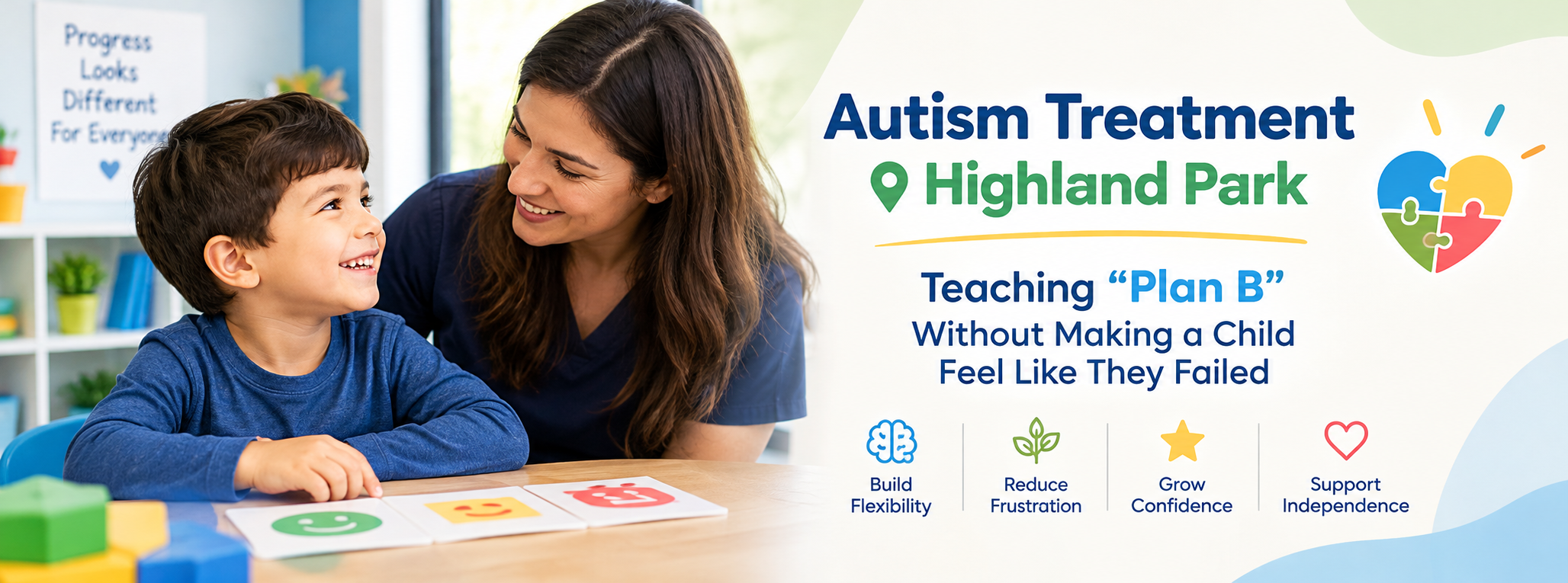
Teaching a child to use a “Plan B” can help make these moments easier. The goal, however, should not be to teach a child that their original plan was wrong or that they failed because something changed. Instead, Plan B can become a positive problem-solving skill: When Plan A does not work, we can find another way forward.
With thoughtful support, ABA therapy Highland Park can help children practice this skill gradually, respectfully, and in ways that build confidence rather than frustration.
Why “Plan B” Can Be Difficult for Some Children
Unexpected changes can be challenging for many children, but some autistic children may experience changes particularly strongly.
A child may have carefully imagined what an activity will look like. They may know what happens first, what comes next, and what they expect to happen afterward. When something changes, the difficulty may not simply be about disappointment.
The child may suddenly have to process:
- What changed?
- Why did it change?
- What happens now?
- Is the new plan safe?
- Will the original plan happen later?
- What am I supposed to do instead?
This can create frustration or uncertainty.
For example, imagine a child is excited to visit a playground after school. When the family arrives, the playground is closed for maintenance.
An adult might think, “We can just go somewhere else.”
The child may experience something very different: “This isn’t what I expected to happen.”
That difference matters.
Rather than immediately expecting the child to accept the change, adults can teach a concrete response to unexpected situations.
That response can be:
Plan A changed. Let’s find Plan B.
Plan B Is a Skill, Not a Test
One of the most important ideas when teaching flexibility is that Plan B should not feel like a test the child can pass or fail.
If a child struggles when the original plan changes, saying things like “You need to be flexible” or “You’re not handling this correctly” may add another layer of pressure.
Instead, adults can frame flexibility as something everyone practices.
Plans change for adults, too.
A restaurant can be unexpectedly closed. A meeting can move. A favorite product can be out of stock. A car can have a flat tire.
Adults often have years of experience finding alternatives. Children are still learning how to do this.
This is where Applied Behavior Analysis Highland Park can be particularly helpful. ABA strategies can break a complicated skill like flexibility into smaller, teachable steps.
The child does not need to immediately become comfortable with every unexpected change.
They can first learn:
Something changed → I can pause → I can learn what happens next → I can choose another option.
Why “You Failed” Is the Wrong Message
When a child’s original plan cannot happen, it is easy for adults to unintentionally communicate that the child’s expectation was a mistake.
For example:
“You can’t always get what you want.”
“It’s not a big deal.”
“You need to learn to deal with it.”
“That’s not how we planned it.”
These statements may be intended to teach resilience, but they do not necessarily teach the child what to do next.
A better approach is to acknowledge the original plan while introducing the alternative.
For example:
“You really wanted the playground. The playground is closed today. That’s disappointing. Let’s make a Plan B.”
This communicates two important things:
- The child’s original expectation was understandable.
- A different option is available.
That distinction can make flexibility feel less like surrender and more like problem-solving.
Start With Small, Low-Stakes Changes
Children do not need to begin practicing flexibility during the most difficult situations.
In fact, small changes can provide better opportunities for learning.
A therapist or parent might intentionally create simple situations where two acceptable options are available.
For example:
- Choosing between two different cups
- Switching the order of two familiar activities
- Using a different color crayon
- Changing which chair someone sits in
- Playing with a slightly different version of a familiar game
- Offering a different snack when the preferred option is unavailable
The goal is not to constantly surprise the child.
The goal is to create manageable opportunities to practice the idea that different does not automatically mean bad.
As the child becomes more comfortable, the situations can gradually become more challenging.
This gradual approach is often an important part of behavior therapy Highland Park because skills can be practiced at a level that is appropriate for the individual child.
Give Plan B a Concrete Structure
“Be flexible” is an abstract instruction.
“Plan B” can be much more concrete.
Families can create a simple routine for unexpected changes.
Step 1: Name the Change
Start by calmly identifying what happened.
“The pool is closed today.”
“The blue marker is missing.”
“Grandma can’t come today.”
“The movie is not available.”
This gives the child clear information without adding unnecessary emotion.
Step 2: Acknowledge the Original Plan
The child may need reassurance that the original plan was understood.
“You wanted to swim.”
“You wanted the blue marker.”
“You were expecting Grandma to visit.”
This can help the child feel heard.
Step 3: Introduce Plan B
Then present the alternative.
“Let’s find our Plan B.”
“We can choose the green marker.”
“Grandma can’t come today, so let’s call her instead.”
“We can watch another movie.”
Step 4: Celebrate Problem-Solving
The emphasis should be on the skill, not simply compliance.
“You found another way.”
“You tried Plan B.”
“You figured out what we can do next.”
This helps connect flexibility with competence.
Make Plan B Visual When Helpful
Some children benefit from seeing the change rather than only hearing about it.
A simple visual schedule can show:
Plan A → Change → Plan B
For example:
Plan A: Playground
Change: Playground closed
Plan B: Library
A visual can reduce the amount of language the child has to process during an unexpected situation.
This can be especially useful in early intervention ABA Highland Park, where children may still be developing communication, emotional regulation, and problem-solving skills.
Visual supports can also help children understand that a change does not mean the entire day has become unpredictable.
There is still a plan.
It is simply a different plan.
Teach That Disappointment Is Allowed
Teaching Plan B does not mean teaching a child that they cannot be upset.
A child can be disappointed and still learn flexibility.
Those two things can exist together.
An adult might say:
“You’re disappointed because you wanted the playground. It’s okay to feel disappointed. We still need to decide what we will do next.”
This approach separates the emotion from the problem-solving process.
The child does not have to stop feeling disappointed before they can begin learning what happens next.
Over time, they may become better at moving through that disappointment.
That is a much more useful skill than simply learning to hide their reaction.
Offer Choices Within Plan B
Whenever possible, give the child some control over the alternative.
Instead of saying:
“The playground is closed. We’re going to the library.”
Try:
“The playground is closed. For Plan B, would you like the library or to go home and play with your train set?”
This can make the alternative feel less like something being imposed on the child.
Choices also create another opportunity to practice decision-making.
The child learns:
Something changed, but I still have some control over what happens next.
That can make unexpected situations feel more manageable.
Don’t Make Every Change a Teaching Opportunity
Flexibility practice should have limits.
If a child is already overwhelmed, adding another unexpected change simply to “teach flexibility” may not be helpful.
There is a difference between intentionally practicing a skill and repeatedly placing a child in situations that exceed their current ability to cope.
Effective ABA therapy for autism Highland Park should consider the child’s individual needs, communication abilities, preferences, and current skill level.
Sometimes the most appropriate response is to reduce demands, provide support, and help the child regulate before working on problem-solving.
Teaching flexibility works best when the child has enough support to actually learn from the experience.
Use Neutral Language Around Mistakes
The language adults use can influence how children think about unexpected outcomes.
Instead of:
“You did it wrong.”
Try:
“That didn’t work. Let’s try another way.”
Instead of:
“You missed it.”
Try:
“Let’s figure out what we can do now.”
Instead of:
“You failed.”
Try:
“Plan A didn’t work, so we’re going to try Plan B.”
This teaches an important message:
A changed plan is not the same thing as failure.
The child is learning how to respond to an outcome — not being judged for the outcome itself.
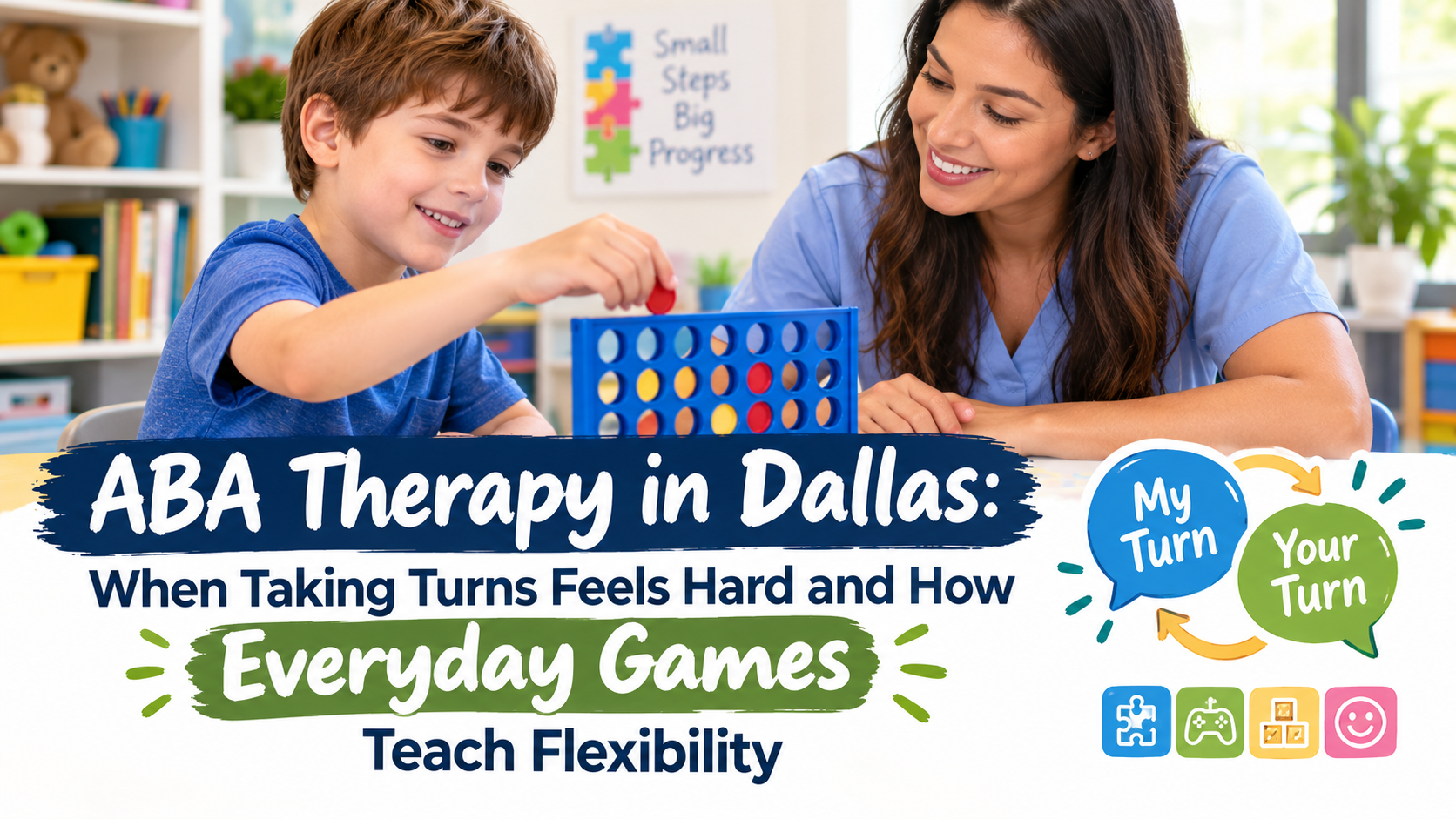
Practice Plan B During Play
Play provides a natural environment for teaching flexibility.
A therapist might intentionally introduce small changes into familiar games.
For example:
- Change the color of a game piece.
- Move the starting position.
- Change one simple rule.
- Use a different toy.
- Let the child choose between two endings.
- Pause a familiar activity and explain what happens next.
These situations can be kept playful and predictable enough that the child has opportunities to experiment with flexibility without the pressure of a real-world disappointment.
For children receiving ABA therapy services Highland Park, these skills can be incorporated into individualized treatment goals when appropriate.
Teach a Simple “What Now?” Response
Some children become stuck because they do not know what to do after the expected plan disappears.
Teaching a simple phrase can help.
Examples include:
“What now?”
“What’s my Plan B?”
“What can I do instead?”
“Can you help me choose?”
The exact phrase will depend on the child’s communication level.
For some children, this may be spoken language. For others, it may involve pointing to a visual, using a communication device, or selecting between pictures.
The important part is giving the child a functional way to request help with the change.
This can be especially valuable within pediatric ABA therapy Highland Park, where communication and independence may be addressed together.
Reinforce the Process, Not Just the Outcome
Suppose a child accepts a substitute activity after their preferred activity becomes unavailable.
Instead of focusing only on whether the child completed the substitute activity, recognize the steps they took.
“You were disappointed, and then you chose another activity.”
“You asked what we could do next.”
“You tried something different.”
“You used your Plan B.”
This reinforces the underlying skill.
The long-term goal is not for a child to automatically say yes to every change.
The goal is for the child to develop a growing ability to navigate changes while communicating their needs and maintaining a sense of security.
Plan B Can Build Independence
Flexibility and independence are closely connected.
A child who can identify an alternative may eventually need less adult assistance when something unexpected happens.
For example, instead of immediately becoming stuck when a preferred item is unavailable, the child may learn to:
- Notice the problem.
- Communicate what happened.
- Identify available choices.
- Select an alternative.
- Continue with the activity.
That is a meaningful life skill.
It can apply at home, school, community activities, appointments, vacations, and eventually work environments.
This is one reason individualized behavioral intervention Highland Park TX can focus on practical skills that extend beyond therapy sessions.
What Parents Can Say in the Moment
When Plan A changes, short and calm language can be more helpful than a long explanation.
Try phrases such as:
- “Plan A changed.”
- “I know you were expecting that.”
- “It’s okay to be disappointed.”
- “Let’s find Plan B.”
- “Here are two choices.”
- “You can ask me for help.”
- “We can figure this out together.”
- “Plan B is different, but we can try it.”
The goal is to communicate confidence without dismissing the child’s feelings.
Building Flexibility Takes Time
Every child develops flexibility differently.
One child may quickly accept a change after being shown two choices. Another may need repeated practice with very small changes before they are ready for larger ones.
That is okay.
Progress may look like:
- Recovering from a change more quickly
- Asking what happens next
- Accepting a small substitution
- Choosing between alternatives
- Requesting help instead of becoming stuck
- Returning to an activity after disappointment
- Eventually suggesting their own Plan B
These are meaningful steps.
Families looking for autism support services Highland Park may benefit from working with professionals who can help identify which flexibility skills are most appropriate to target and how to practice them in everyday routines.
How ABA Can Individualize Plan B Skills
There is no single Plan B strategy that works for every child.
A BCBA may look at what happens before a difficult situation, how the child communicates during the change, what support helps, and what happens afterward.
From there, the team can develop individualized strategies.
For some children, the focus may be communication.
For another child, it may be tolerating small changes.
For another, it may involve emotional regulation or choosing alternatives.
This individualized approach is one of the reasons families may explore BCBA services Highland Park when they want support with flexibility, communication, independence, and other daily-life skills.
Whether services take place through in-home ABA therapy Highland Park or a center-based ABA therapy Highland Park program, the goal should be to help skills transfer into real situations.
Plan B Should Feel Like a New Path, Not a Punishment
The most important message behind Plan B is simple:
The original plan changing does not mean the child did something wrong.
Sometimes circumstances change.
Sometimes things do not work.
Sometimes another option becomes necessary.
Children can learn that these moments are manageable.
With patience and appropriate support, Plan B can become a tool for problem-solving rather than a symbol of failure.
For families exploring Autism Treatment Highland Park, this kind of skill-building can be an important part of helping children become more confident navigating everyday changes. ABA therapy Highland Park can provide individualized opportunities to practice flexibility, communication, coping, and decision-making in ways that respect each child’s developmental needs.
The goal is not to make children accept every change without emotion. The goal is to help them understand that when Plan A does not work, there can still be a way forward.
Helping Children Learn That “Different” Can Still Be Okay
A child does not need to love every unexpected change.
They do not need to stop feeling disappointed.
They do not need to immediately move on whenever something goes differently than expected.
They can feel disappointed and still learn.
They can need help and still build independence.
They can prefer Plan A and still discover that Plan B works.
That is what makes flexibility a meaningful skill rather than a demand for compliance.
With compassionate teaching, Autism Treatment Highland Park can help children build the confidence to approach unexpected situations with curiosity, communication, and problem-solving skills. Through individualized ABA therapy for kids Highland Park, children can gradually learn that a changed plan does not mean they failed. Sometimes, it simply means it is time to find another way forward.
Contact us at 972–310–4991 or visit https://radiantspectrumtherapy.com/our-locations-highland-park/ to learn more.