
Receiving an autism diagnosis often brings many questions for parents. One of the most common is whether therapy should take place in a clinic or at home. While both options offer valuable support, many families discover that receiving therapy in a familiar environment provides unique advantages for their child’s learning and daily routines.
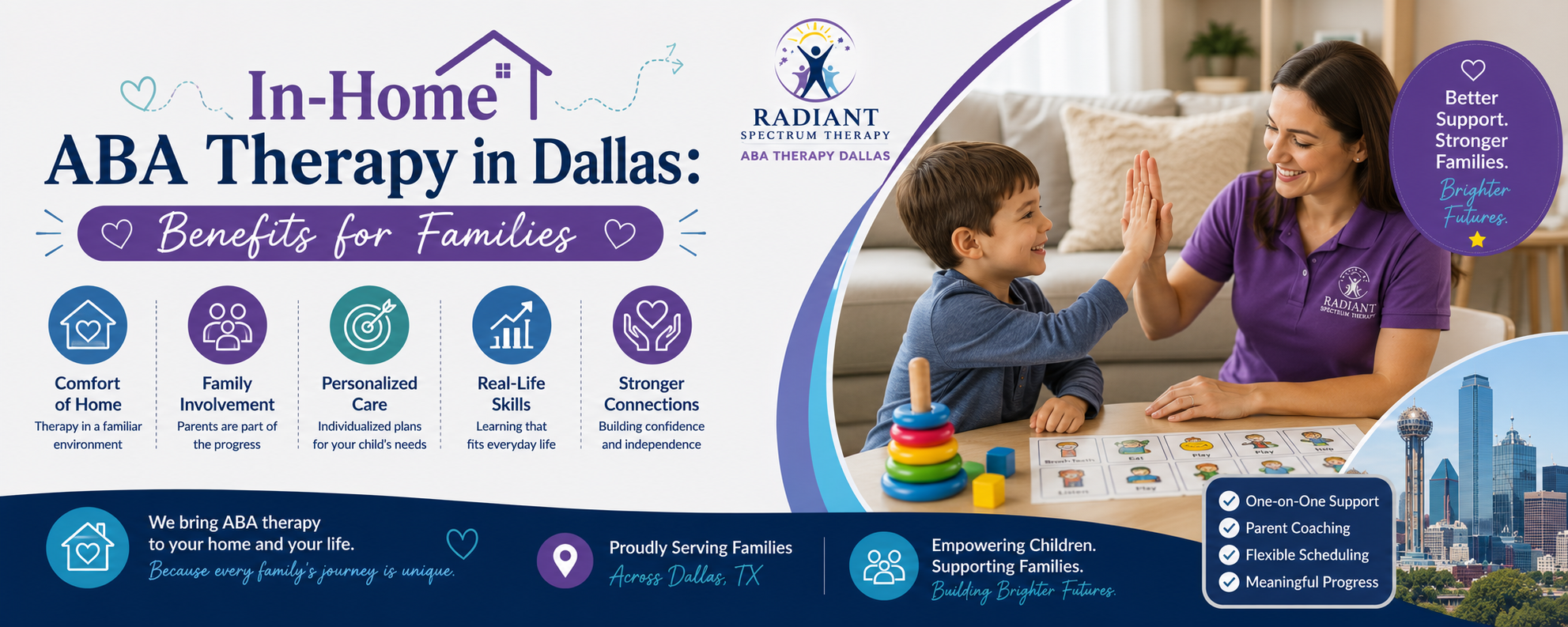
For families searching for ABA Therapy in Dallas, Home-Based ABA Therapy offers individualized support where children feel most comfortable — right in their own homes. Therapists work alongside parents and caregivers to teach practical skills during everyday routines, helping children generalize what they learn into real-life situations.
Whether your child is learning to communicate, become more independent, or improve social interactions, in-home ABA therapy Dallas can provide personalized, family-centered care that creates lasting progress.
What Is Home-Based ABA Therapy?
Home-Based ABA Therapy is a form of Applied Behavior Analysis delivered in the child’s natural environment rather than in a clinic.
Instead of practicing skills only in a therapy room, children learn where they naturally spend most of their time.
Sessions may include activities such as:
- Morning routines
- Mealtime skills
- Playtime
- Homework
- Bedtime routines
- Household responsibilities
- Community preparation
Like all quality ABA Therapy in Dallas, treatment is individualized based on each child’s strengths, developmental level, and family goals.
How Does In-Home ABA Therapy Work?
Before therapy begins, a Board Certified Behavior Analyst (BCBA) completes a comprehensive assessment.
The assessment helps identify:
- Communication skills
- Social abilities
- Daily living skills
- Challenging behaviors
- Learning strengths
- Family priorities
Based on the evaluation, the BCBA creates a personalized treatment plan.
Registered Behavior Technicians (RBTs) then provide therapy under BCBA supervision while regularly collecting data and adjusting goals as progress occurs.
Why Families Choose Home-Based ABA Therapy
Many families appreciate that therapy happens in a comfortable, familiar setting where children naturally interact with parents and siblings.
Instead of practicing skills only during therapy sessions, children immediately apply them during everyday activities.
This makes learning more meaningful and sustainable.
Benefit #1: Learning Happens in Real-Life Situations
Children often learn best when practicing skills where they will actually use them.
For example, instead of pretending to wash hands in a clinic, children practice washing their own hands in their own bathroom.
Therapists can work on:
- Getting dressed
- Brushing teeth
- Cleaning up toys
- Eating meals
- Following bedtime routines
- Asking for help
These practical experiences help children develop independence that transfers naturally into everyday life.
Many families seeking in-home ABA therapy Dallas value this real-world approach to learning.
Benefit #2: Familiar Environments Reduce Anxiety
Some children become overwhelmed in unfamiliar settings.
Home provides:
- Familiar surroundings
- Favorite toys
- Comfortable routines
- Reduced sensory overload
- Greater emotional security
When children feel comfortable, they may be more willing to participate in therapy activities and practice new skills.
Benefit #3: Parents Become Active Participants
One of the greatest advantages of Home-Based ABA Therapy is family involvement.
Parents don’t simply observe therapy — they become part of it.
Comprehensive ABA Parent Training allows caregivers to learn strategies they can use throughout the day.
Parents gain practical skills for:
- Encouraging communication
- Managing behaviors
- Supporting independence
- Reinforcing positive behaviors
- Creating consistent routines
- Helping children generalize new skills
Strong autism parent training Dallas programs empower families long after therapy sessions end.
Benefit #4: Individualized Daily Living Skills
Every family has unique routines.
Home-based therapy allows goals to match each family’s lifestyle.
Examples include:
Morning Routines
- Getting dressed
- Brushing teeth
- Packing backpacks
Mealtime Skills
- Sitting appropriately
- Using utensils
- Requesting food
- Trying new foods
Household Responsibilities
- Cleaning up toys
- Making the bed
- Following chore routines
Bedtime Preparation
- Bathing
- Changing clothes
- Following bedtime schedules
These personalized goals help children become more independent within their own homes.
Benefit #5: Improved Communication
Communication is often one of the primary goals of ABA therapy.
Therapists teach children to:
- Request preferred items
- Ask questions
- Express emotions
- Follow directions
- Respond to conversations
- Reduce frustration through functional communication
Because these interactions occur naturally throughout the day, children have frequent opportunities to practice meaningful communication.
Benefit #6: Better Behavior Support
Many challenging behaviors occur at home.
Examples include:
- Tantrums during meals
- Difficulty transitioning to bedtime
- Refusing daily routines
- Aggression toward siblings
- Property destruction
- Running away from caregivers
Rather than addressing these situations hypothetically, therapists observe them directly and teach practical replacement skills.
This individualized approach makes behavioral therapy North Texas especially effective for many families.
Benefit #7: Flexible Scheduling
Busy families often appreciate the flexibility of home-based services.
Instead of traveling to appointments, therapy comes to you.
This may reduce:
- Transportation stress
- Missed appointments
- Scheduling conflicts
- Time away from work
For many families in Dallas and Highland Park, convenience makes it easier to maintain consistent therapy schedules.
Benefit #8: Stronger Skill Generalization
One of the biggest goals of ABA is helping children use newly learned skills everywhere — not just during therapy.
Generalization means children can:
- Communicate at home and school
- Follow directions in different settings
- Interact with family members
- Participate in community activities
- Adapt to new situations
Because therapy occurs in everyday environments, children naturally practice skills where they matter most.
Is Home-Based ABA Better Than Center-Based ABA?
There isn’t one correct answer.
Many families benefit from one setting, while others choose a combination of both.
Benefits of Center-Based ABA
A clinic setting provides:
- Peer interaction
- Structured classrooms
- Social opportunities
- School readiness
- Group learning
- Controlled teaching environments
Many Dallas ABA centers combine individual and group instruction to strengthen communication and social development.
Benefits of Home-Based ABA
Home-based services provide:
- Familiar environments
- Personalized routines
- Family participation
- Real-life skill practice
- Flexible scheduling
- Immediate application of skills
The best option depends on your child’s individual needs and family goals.
The Importance of Individualized Treatment
No two children experience autism in the same way.
Quality ABA therapy Dallas providers create customized treatment plans based on:
- Developmental assessments
- Parent concerns
- Communication abilities
- Behavioral needs
- Daily routines
- Long-term goals
Therapy should evolve as children develop new skills and achieve milestones.
How Parent Training Supports Long-Term Success
Parents spend more time with their children than anyone else.
That’s why ABA Parent Training is essential.
Families learn how to:
- Reinforce positive behaviors
- Respond consistently
- Encourage communication
- Reduce frustration
- Build independence
- Support learning throughout the day
When parents confidently apply ABA strategies between therapy sessions, children often experience faster and more lasting progress.
Additional Services That Complement ABA
Many children also benefit from additional therapies such as:
- Speech therapy
- Occupational therapy
- Feeding therapy
- School consultation
- Social skills instruction
Many autism services Dallas TX providers coordinate with other professionals to create a comprehensive treatment plan tailored to each child.
Why Families Across Dallas Trust Personalized ABA Care
Parents want more than behavior management — they want their children to communicate, learn, build friendships, and become increasingly independent.
Whether therapy focuses on communication, daily living skills, emotional regulation, or school readiness, personalized care helps children reach meaningful milestones.
Experienced Dallas autism specialists understand that successful therapy begins by building trusting relationships with both children and their families.
Why Choose Radiant Spectrum Therapy?
At Radiant Spectrum Therapy, we believe every child deserves compassionate, individualized care that fits their unique needs and family lifestyle.
We proudly provide Home-Based ABA Therapy, Center-Based ABA, and comprehensive ABA Parent Training to families throughout Dallas and Highland Park. Our experienced team partners closely with parents to develop personalized treatment plans that help children build communication, independence, social skills, and confidence in the environments where they learn best.
Our goal is not only to help children succeed during therapy sessions but to empower families with the tools they need for lifelong success.
Frequently Asked Questions
What is the difference between home-based and center-based ABA therapy?
Home-Based ABA Therapy takes place in the child’s home, allowing therapists to teach skills during everyday routines. Center-Based ABA occurs in a structured clinic setting that offers peer interaction and school-readiness activities.
Is in-home ABA therapy effective?
Yes. Many children benefit from learning communication, daily living, and behavioral skills in their natural environment, where those skills are used every day.
Can parents participate during therapy sessions?
Absolutely. Parent involvement is encouraged through ABA Parent Training, helping caregivers reinforce therapy goals and build consistency across daily routines.
Who provides home-based ABA therapy?
Registered Behavior Technicians (RBTs) deliver therapy under the supervision of Board Certified Behavior Analysts (BCBAs), who assess progress, update treatment plans, and provide clinical oversight.
Is home-based ABA right for every child?
Not necessarily. Some children benefit most from home-based services, while others thrive in clinic settings or a combination of both. A comprehensive assessment helps determine the most appropriate therapy plan for each child’s unique needs.
Contact us at 972–310–4991 or visit https://radiantspectrumtherapy.com/ to learn more.