
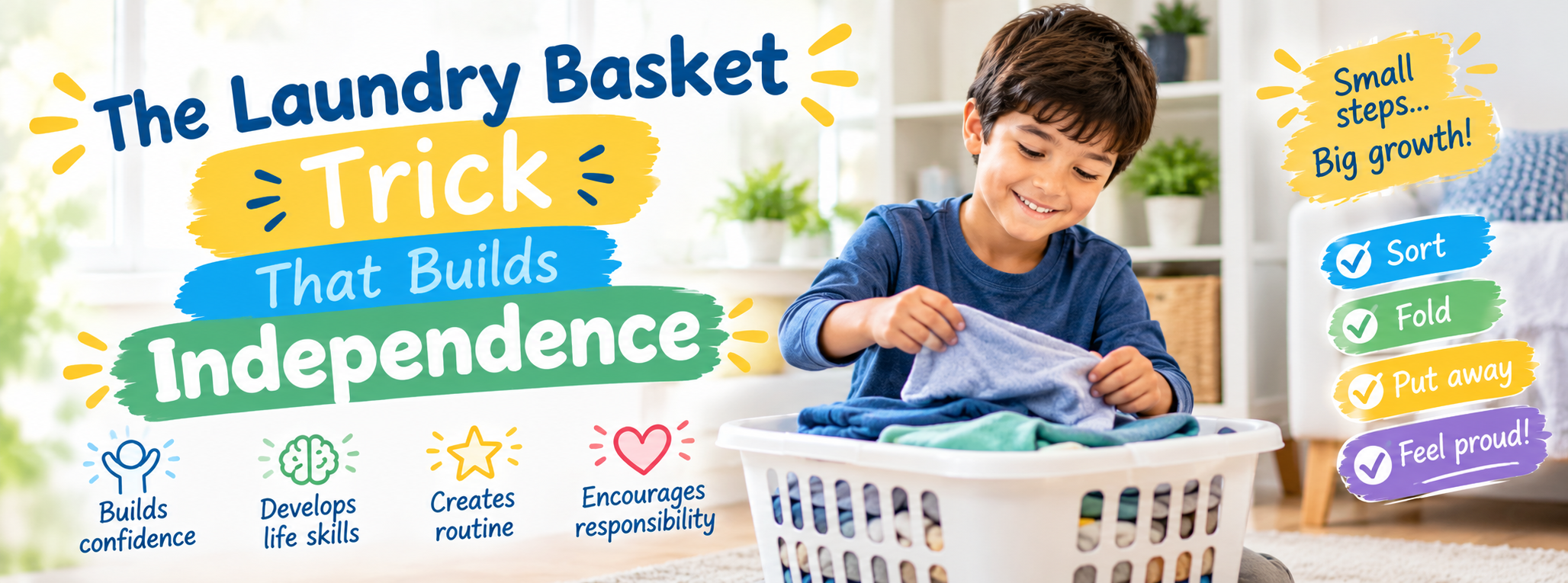
Learning to do everyday tasks independently is an important part of growing up, and small household routines can create meaningful opportunities to practice those skills. For families exploring ABA Therapy in Dallas, something as simple as using a laundry basket can become a practical way to teach following directions, organizing belongings, making choices, and completing a task from beginning to end.
Laundry may seem like an ordinary household chore, but for a child who is learning independence, it contains many small steps. Pick up the clothes. Put them in the basket. Carry the basket to the right place. Sort the clothes. Put them away.
Instead of treating the entire chore as one big expectation, parents and therapists can break it into manageable steps and gradually help the child take ownership of more of the routine.
This is one of the ways ABA therapy Dallas families may use everyday activities to create opportunities for skill development. The goal isn’t simply to get the laundry done. It’s to help a child understand a routine, participate in it, and eventually complete more of it independently.
Why Laundry Is a Great Independence-Building Activity
Independence doesn’t usually develop all at once.
A child may be able to complete one part of a routine independently while still needing support with another part. Household activities provide natural opportunities to practice these skills repeatedly without making every learning opportunity feel like a formal lesson.
Laundry can involve several important skills, including:
- Following simple directions
- Completing tasks in sequence
- Identifying and gathering belongings
- Sorting objects
- Making choices
- Carrying and placing items
- Staying with a task
- Asking for help
- Understanding where things belong
- Completing a routine with fewer reminders
For children receiving ABA therapy services Dallas, these everyday skills can be incorporated into individualized goals when appropriate.
The laundry basket simply becomes the tool that connects the steps.
The Laundry Basket Trick: Start With One Simple Job
The trick isn’t really about the basket itself.
It’s about making the task visible and predictable.
Instead of saying, “Go clean your room and do your laundry,” start with one specific action.
For example:
“Put your dirty clothes in the basket.”
That’s it.
Once that step becomes familiar, another step can be added.
“Put your socks in the basket.”
Then:
“Carry the basket to the laundry room.”
Breaking a larger task into smaller pieces can make the routine easier to understand and gives the child more opportunities to experience success.
This approach fits naturally with the principles used in Applied Behavior Analysis Dallas providers may use when teaching functional skills. A therapist may analyze the individual steps of a routine and determine what level of support a child needs at each point.
Why One Step Matters
Imagine being asked to clean an unfamiliar room without knowing exactly where to begin.
For some children, a broad instruction can feel overwhelming.
A single, concrete instruction gives the child a clear starting point.
Once the first step is successful, the next step becomes easier to introduce.
Over time, those individual steps can connect into a complete routine.
Turn the Laundry Basket Into a Visual Cue
Children often benefit from knowing what is expected before a routine begins.
A laundry basket can become a consistent visual cue.
When the basket is placed in a predictable location, the child can begin associating it with the routine:
Dirty clothes → basket → laundry area
You can also create a simple visual sequence:
- Find dirty clothes.
- Put clothes in basket.
- Carry basket.
- Sort clothes.
- Put clothes in the laundry area.
- Finish the routine.
The visual doesn’t need to be complicated.
For some children, pictures may be helpful. For others, written words or a short checklist may work better.
The important part is making the sequence understandable for the individual child.
Teach the Routine One Piece at a Time
One of the biggest mistakes parents can make with household chores is expecting a child to learn the entire routine immediately.
Instead, consider teaching one part at a time.
Step 1: Find the Clothes
Begin with something simple.
Ask the child to identify clothes that belong in the laundry basket.
You might say:
“Find your dirty shirt.”
Once the child understands that expectation, gradually introduce other clothing items.
Step 2: Put Them in the Basket
Next, teach the child to place the clothes inside the basket.
This sounds obvious, but it teaches an important connection:
Identify → pick up → place
If the child drops clothes beside the basket, calmly redirect them.
The goal is to teach the action rather than turn the mistake into a major event.
Step 3: Carry the Basket
Once gathering clothes is familiar, the child can practice moving the basket to its designated location.
Depending on the child’s age, size, and abilities, the basket may need to be lightweight or only partially filled.
This step can also teach following a direction such as:
“Take the basket to the laundry room.”
Step 4: Sort the Laundry
Sorting introduces another useful skill.
You might start with two simple categories, such as:
- Towels
- Clothes
Or:
- Socks
- Everything else
The categories can become more complex as the child’s skills develop.
There’s no need to begin with an elaborate sorting system.
Step 5: Complete the Final Step
The last part might involve placing clothes in the hamper, handing them to an adult, or putting folded clothing into a drawer.
The appropriate goal depends on the child’s developmental level and abilities.
The important idea is that the child gets to experience the beginning, middle, and end of a routine.
Don’t Rush to Help
Parents naturally want to help when a child gets stuck.
Sometimes that is exactly what the child needs.
But when appropriate, giving the child a moment to figure out the next step can create an opportunity for independent problem-solving.
For example, imagine a child is standing beside the basket holding a shirt.
Instead of immediately saying, “Put it in the basket,” you might pause briefly.
The child may recognize what comes next.
That small moment can matter.
Independence often grows through repeated opportunities to attempt a task rather than having every step completed for the child.
Use the Least Support Necessary
Support can take different forms.
A child might need:
- A verbal reminder
- A gesture
- A visual cue
- A demonstration
- Physical assistance
The level of support can be adjusted depending on the child and the task.
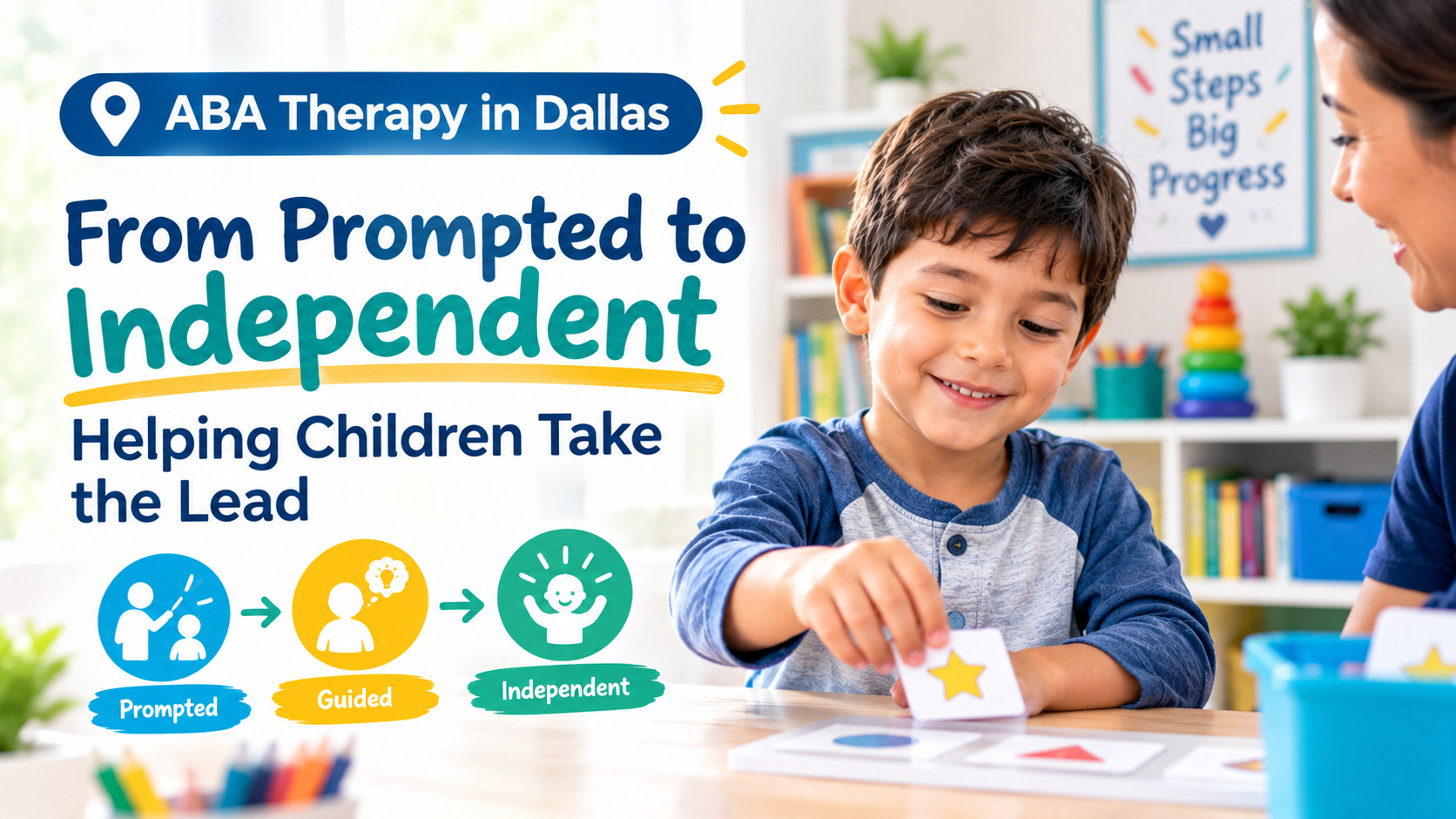
A child who initially needs several prompts may eventually need only one reminder.
Over time, the goal can be to reduce unnecessary prompts so the child can initiate and complete the routine more independently.
This concept can be particularly useful in behavior therapy Dallas families are using to support functional daily living skills.
Make Independence More Important Than Perfection
A child doesn’t need to fold every shirt perfectly to benefit from participating in laundry.
The first goal might simply be:
“I can put my clothes in the basket.”
Later:
“I can carry my basket.”
Eventually:
“I can complete most of my laundry routine with little help.”
Progress can look different for every child.
Parents may sometimes focus so heavily on whether a task was completed correctly that they overlook how much independence the child demonstrated.
If a child completed three steps today that they couldn’t complete last month, that’s meaningful progress.
Let the Child Make Choices
Laundry can also provide opportunities for appropriate decision-making.
For example, you could ask:
“Do you want to carry the basket or sort the socks?”
Or:
“Do you want to put your pajamas away first or your shirts?”
Offering controlled choices can help children practice making decisions while still keeping the routine moving.
Choices can also make participation more motivating.
Instead of removing all flexibility from a chore, look for small places where the child can have control.
Use the Same Routine Consistently
Consistency can make a new routine easier to learn.
If dirty clothes go into a basket in the bedroom one day, onto the floor the next day, and into a different container the following day, the expectation may be less predictable.
A consistent routine might look like:
Dirty clothes → bedroom basket → laundry room → sorting → washing → folding → putting away
The exact routine doesn’t matter as much as having one that makes sense for your family and is understandable for your child.
Once the routine becomes familiar, you can gradually introduce changes.
That flexibility can become another skill to practice.
What If Your Child Refuses?
Resistance doesn’t necessarily mean the child can’t learn the skill.
The task may be too difficult, too long, unclear, or simply not motivating.
Instead of turning laundry into a battle, look at the task itself.
Ask:
- Is there too much expected at once?
- Is the instruction clear?
- Does the child understand what happens next?
- Is the basket easy to access?
- Is the routine too long?
- Does the child need a visual?
- Is the child being asked to complete a step they haven’t learned yet?
Sometimes reducing the task can make a significant difference.
Instead of:
“Clean up all your clothes.”
Try:
“Put these two shirts in the basket.”
After success, you can gradually increase the expectation.
Reinforce the Effort
Positive feedback can help children understand which behaviors are worth repeating.
That doesn’t mean every completed chore needs a reward.
Sometimes a simple statement is enough:
“You put your clothes in the basket all by yourself!”
You can also acknowledge specific actions:
“You remembered where the socks go.”
Specific feedback tells the child exactly what they did successfully.
For children working with BCBA services Dallas families may access, reinforcement strategies can be individualized based on the child’s goals, preferences, and needs.
Turn One Chore Into Many Learning Opportunities
The laundry basket doesn’t have to be limited to laundry.
The same idea can be applied to other household routines.
A basket can be used for:
Toy Cleanup
Have the child place toys into the basket one at a time.
This can teach gathering, sorting, following directions, and completing a cleanup routine.
Bedroom Organization
A basket can collect items that belong in another room.
The child can then practice identifying where each item belongs.
Grocery Unpacking
A child can place specific items into designated locations.
For example:
“Put the cereal in the pantry.”
Then:
“Put the yogurt in the refrigerator.”
School Backpack Routine
A basket or designated area can become part of an after-school routine:
Backpack → lunchbox → homework → shoes → belongings away
The same principles apply: clear steps, predictable expectations, and gradual independence.
Independence Should Be Individualized
Every child develops skills at a different pace.
A task that seems easy for one child may require considerable practice for another.
That’s why ABA therapy for autism Dallas families pursue should be individualized rather than based on a one-size-fits-all checklist.
A therapist may look at what the child can already do, where the child needs support, what motivates them, and which skills are most meaningful for daily life.
For one child, the goal might be putting clothes in a basket.
For another, it could be completing the entire laundry routine.
Neither goal is inherently better.
The meaningful question is:
What skill will help this child become more independent?
When Everyday Routines Become Therapy Opportunities
One of the advantages of working on functional skills in natural environments is that the child can practice them where they actually matter.
In-home ABA therapy Dallas families use can provide opportunities to work on routines within the child’s familiar environment.
A therapist might observe how the child approaches a household task, identify barriers to independence, and help break the task into achievable steps.
Skills learned during a routine can also potentially carry over into other areas of daily life.
The objective isn’t to make every household chore a therapy session.
It’s to recognize that ordinary moments can provide opportunities for learning.
Celebrate Small Wins
Independence is built from small steps.
A child who once needed help finding their clothes may eventually learn to gather them independently.
A child who needed reminders to use the basket may eventually remember without being asked.
A child who needed help carrying the basket may eventually complete that part of the routine alone.
Those changes may seem small when viewed individually.
Together, they represent an important shift: the child is becoming more involved in managing their own daily life.
That’s the real power of the laundry basket trick.
It’s not about laundry.
It’s about creating a predictable opportunity for a child to practice “I can do this.”
Making Independence Part of Everyday Life
Parents don’t need elaborate equipment or complicated activities to encourage independence.
Sometimes the best opportunities are already happening at home.
Getting dressed.
Putting away toys.
Packing a backpack.
Setting the table.
Cleaning up after a snack.
Putting dirty clothes into a laundry basket.
Each routine can be broken into manageable steps and adjusted to match a child’s current abilities.
For families exploring ABA Therapy in Dallas, these everyday routines can also provide helpful insight into the types of functional skills a child may be ready to develop next.
The goal isn’t perfection.
The goal is progress toward greater participation, confidence, communication, and independence.
Final Thoughts
The laundry basket trick is simple: give a child a clear place for their dirty clothes, break the routine into manageable steps, and gradually give them more responsibility as their skills develop.
With consistent practice, a basic household chore can become an opportunity to build organization, following directions, decision-making, problem-solving, and independence.
For families considering ABA Therapy in Dallas, everyday activities like laundry can be part of a broader approach to teaching practical skills that support greater independence at home and beyond. With individualized support, patience, and plenty of opportunities to practice, small routines can become meaningful steps toward bigger goals.
Contact us at 972–310–4991 or visit https://radiantspectrumtherapy.com/ to learn more.