
Welcoming behavioral technicians into your home is an important step in helping your child receive consistent support and build meaningful skills. Families participating in Home-Based ABA Therapy often focus on preparing learning materials, creating a quiet workspace, and establishing routines before sessions begin. However, one area that is frequently overlooked is pet preparation.
Pets are beloved members of the family, and their presence can bring comfort, companionship, and joy. At the same time, they can unintentionally create distractions during therapy sessions if expectations and boundaries are not established beforehand. Whether you have a playful dog, a curious cat, or multiple household pets, taking a few simple steps before each visit can help create a safe and productive environment for everyone involved.
For families receiving ABA Therapy in Dallas, preparing pets ahead of time can improve session quality, reduce unnecessary interruptions, and help behavioral technicians focus on supporting your child’s goals. This guide provides a practical checklist to ensure your pets, your child, and your therapy team are all set up for success.
Why Pet Preparation Matters
Behavioral technicians work closely with children in their natural home environment. During in-home ABA therapy Dallas programs, therapists may conduct skill-building activities in living rooms, kitchens, playrooms, bedrooms, or outdoor areas.
While many pets are friendly and well-behaved, they often react differently when visitors enter the home. Some may become excited and seek attention. Others may bark, jump, follow technicians around, or become protective of family members.
Even minor interruptions can affect a child’s concentration and learning opportunities. By preparing pets before sessions begin, families can help create an environment that supports consistency and minimizes distractions.
Many professionals involved in behavioral therapy North Texas services encourage families to develop routines that address household variables, including pets, noise levels, and visitor interactions.
Understanding How Pets Can Impact Therapy Sessions
Pets influence therapy sessions in different ways depending on their personality and behavior.
Common challenges include:
- Barking when the therapist arrives
- Jumping on visitors
- Seeking attention during activities
- Interrupting structured learning opportunities
- Triggering excitement or distraction in children
- Protecting food, toys, or favorite spaces
- Creating safety concerns around doors and entrances
Although these situations are common, they are usually manageable with a little planning.
Families working with Dallas autism specialists often find that establishing clear pet routines contributes to smoother sessions and fewer disruptions over time.
Pre-Session Pet Preparation Checklist
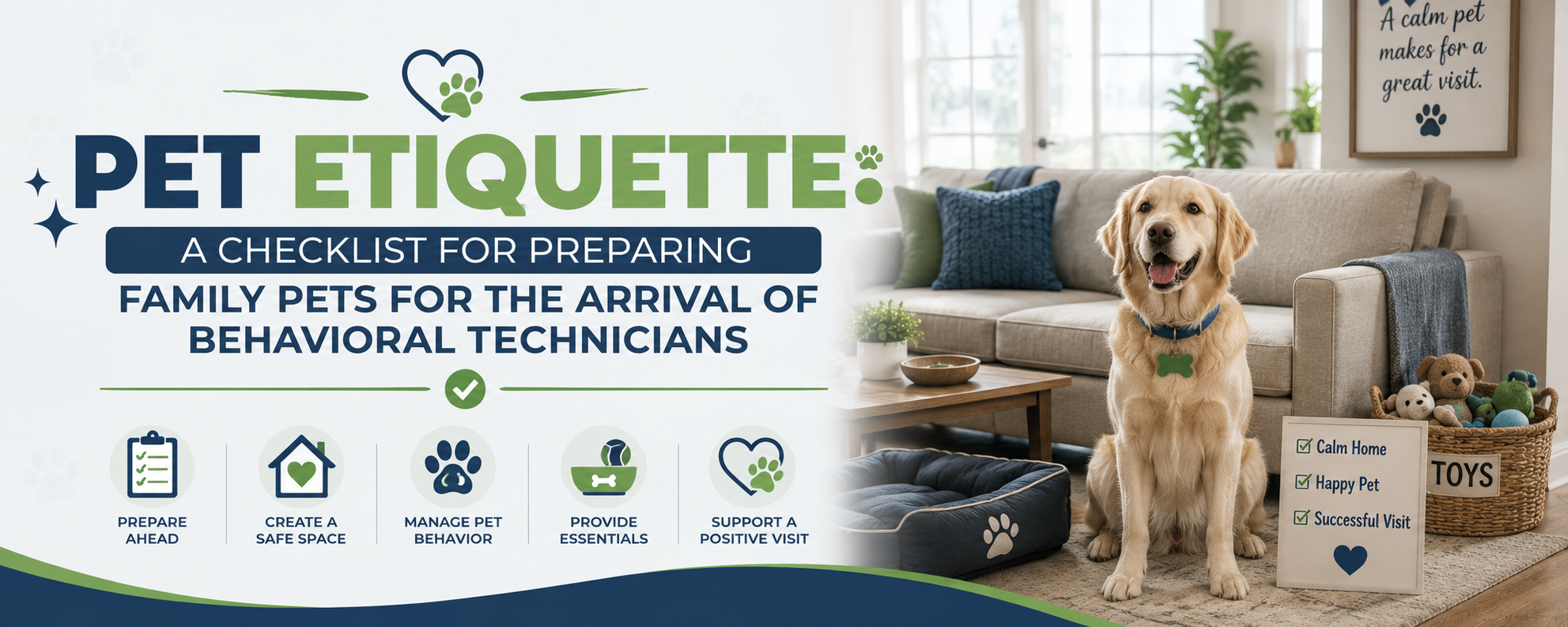
The following checklist can help families prepare before behavioral technicians arrive.
1. Exercise Pets Before the Session
A pet with excess energy is more likely to seek attention during therapy.
Consider:
- Taking dogs for a walk
- Allowing outdoor playtime
- Providing interactive toys
- Scheduling exercise before the technician arrives
A tired pet is generally calmer and more relaxed, which can help reduce interruptions throughout the session.
This simple step is especially helpful during Home-Based ABA Therapy, where sessions may last several hours.
2. Establish a Designated Pet Area
Creating a specific location for pets during therapy sessions can help maintain consistency.
Possible options include:
- A crate
- A separate room
- A gated section of the home
- A fenced backyard (weather permitting)
The goal is not to isolate pets unnecessarily but to create a predictable environment where they feel comfortable while therapy takes place.
Many families receiving ABA therapy Dallas services discover that pets adapt quickly when the same routine is followed each visit.
3. Secure Food and Water Bowls
Food bowls can become distractions for both children and pets.
Before sessions begin:
- Move feeding stations away from therapy areas
- Pick up food bowls if appropriate
- Ensure pets have access to water in a separate location
This helps reduce interruptions and prevents accidental spills during activities.
4. Remove Favorite Toys From Therapy Spaces
Some pets become possessive of toys or become excited when visitors interact with them.
Before the technician arrives:
- Store favorite pet toys
- Remove chew items from common areas
- Keep interactive pet equipment in designated spaces
This can help eliminate unnecessary distractions and maintain focus during therapy activities.
Introducing Pets to Behavioral Technicians
When starting services with new providers, introductions should be handled thoughtfully.
Families receiving support through autism services Dallas TX programs can make first meetings smoother by helping technicians understand their pet’s personality and behavior patterns.
Share information such as:
- Whether the pet is friendly with strangers
- Any history of anxiety or fearfulness
- Commands the pet responds to
- Areas of the home the pet should avoid
- Potential triggers that may cause barking or excitement
Clear communication helps everyone feel more comfortable from the start.
Safety Considerations for Dogs
Dogs are among the most common household pets and often require the most preparation before therapy sessions.
Watch for Excitement Behaviors
Friendly dogs may:
- Jump on visitors
- Bring toys repeatedly
- Follow technicians throughout the home
- Bark when doors open
While these behaviors are usually harmless, they can disrupt therapy activities.
Use Leashes or Gates When Needed
If your dog becomes overly excited around visitors, temporary management tools may help.
Options include:
- Baby gates
- Indoor leash use
- Crates
- Designated rooms
These tools can create structure while helping dogs learn the expected routine.
Families participating in DFW ABA therapy services often find that consistency is the key to reducing these behaviors over time.
Safety Considerations for Cats
Cats generally require less direct management than dogs, but they can still create challenges.
Common issues include:
- Walking across workspaces
- Jumping onto tables
- Interrupting activities
- Seeking attention from therapists
Consider creating quiet spaces where cats can relax away from the primary therapy area.
Providing elevated resting locations, scratching posts, and comfortable bedding can help keep cats occupied during sessions.
Helping Children Understand Pet Boundaries
Many children have strong emotional bonds with their pets. During therapy sessions, they may want to interact with animals instead of focusing on activities.
Parents can support success by discussing expectations before sessions begin.
Helpful reminders include:
- Therapy time comes first
- Pets will still be available afterward
- The pet has its own place during sessions
- Break times may include pet interaction if appropriate
Families engaged in ABA Parent Training often learn strategies for creating consistent expectations that support learning and reduce distractions.
Preparing for the Technician’s Arrival
The first few minutes of a session often set the tone for the day.
Before arrival:
- Ensure pets are secured if necessary
- Have leashes ready
- Confirm gates are closed
- Prepare designated pet areas
- Review expectations with children
Taking these steps ahead of time can prevent rushed decisions and unnecessary stress.
Many families working with ABA therapy providers 75201 report smoother transitions when pet routines become part of the overall therapy preparation process.
Managing Unexpected Situations
Even with preparation, surprises happen.
A dog may bark unexpectedly.
A cat may wander into the room.
A child may become distracted by a pet.
The key is remaining calm and consistent.
Behavioral technicians understand that homes are dynamic environments. Brief interruptions are normal and can often be addressed quickly when families have established routines in place.
Professionals working in pediatric behavioral therapy Dallas settings frequently emphasize that flexibility and preparation work together to create positive outcomes.
When Pets Can Be Helpful
Although pets sometimes create distractions, they can also offer meaningful opportunities.
Depending on a child’s goals, pets may support:
- Social interaction
- Communication practice
- Responsibility skills
- Following directions
- Emotional regulation
Behavioral technicians may occasionally incorporate appropriate pet-related activities when they align with treatment goals and family preferences.
Families connected with Dallas ABA centers and home-based programs often appreciate the unique learning opportunities that naturally occur in everyday environments.
Creating Long-Term Success
The most successful pet routines are simple, predictable, and consistent.
Over time, pets often learn:
- When technicians are arriving
- Where they should go during sessions
- What behaviors are expected
- How to remain calm around visitors
Likewise, children learn how to balance therapy participation with pet interactions.
For families receiving support through ABA Therapy in Dallas, maintaining consistent household routines can contribute to a more productive therapy experience while helping everyone feel comfortable and secure.
Final Thoughts
Pets are an important part of many families, and with proper preparation, they can coexist successfully alongside therapy services. A little planning before each session can minimize distractions, improve safety, and create a comfortable environment for your child, your pet, and the behavioral technician.
Whether your family is participating in Center-Based ABA services or receiving Home-Based ABA Therapy, establishing clear pet etiquette can help sessions run more smoothly and support meaningful progress. Families seeking autism parent training Dallas, autism services Dallas TX, and other forms of behavioral therapy North Texas support often find that attention to small details — including pet preparation — can make a significant difference in the overall therapy experience.
By following a simple checklist, communicating openly with your therapy team, and maintaining consistent routines, families can ensure that both children and pets thrive while benefiting from high-quality DFW ABA therapy services.
Contact us at 972–310–4991 or visit https://radiantspectrumtherapy.com/ to learn more.