
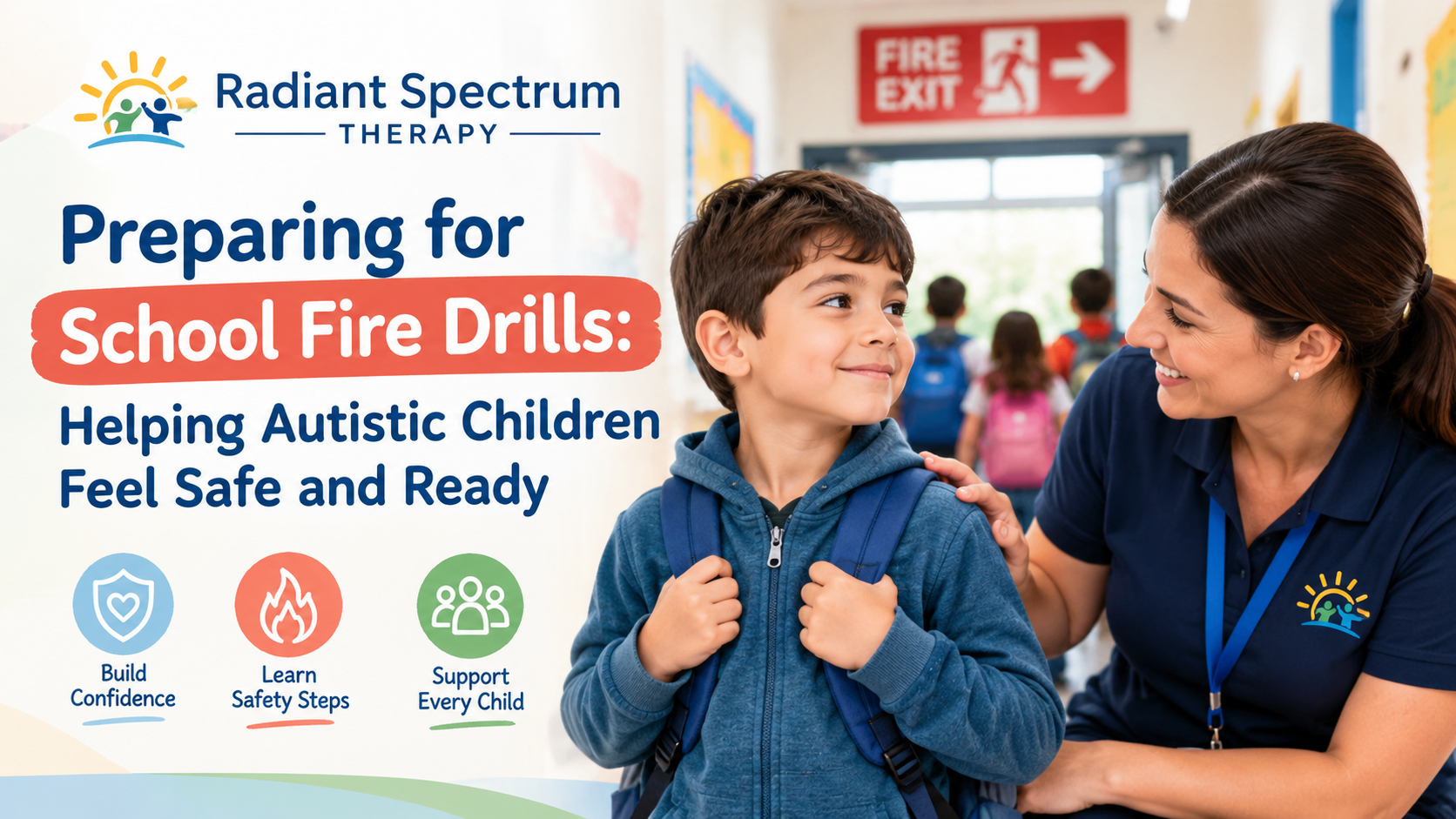
For many children, a school fire drill is simply an unexpected interruption to the school day. For a child with autism, however, the combination of a loud alarm, sudden instructions, crowded hallways, unfamiliar sensations, and a rapid change in routine can feel overwhelming. Preparing ahead of time can make these situations more predictable and manageable. Families seeking Autism Treatment Highland Park may also find that fire-drill preparation is an important part of helping children build practical coping and safety skills.
Fire drills are designed to keep students safe, but they can be challenging for children who have sensory sensitivities, difficulty with transitions, communication differences, or anxiety surrounding unexpected events. The goal is not to eliminate every uncomfortable feeling. Instead, preparation can help a child understand what is happening, know what comes next, and practice how to respond safely.
With support from parents, teachers, school staff, and, when appropriate, an ABA professional, children can gradually become more comfortable with the steps involved in a school emergency drill.
Why Fire Drills Can Be Difficult for Autistic Children
A fire drill involves several changes happening at once.
An alarm may suddenly interrupt an activity. The child may have to stop what they are doing, stand up, leave the classroom, walk through a busy hallway, and wait outside with many other students.
For some children, that is a lot of information to process in a short period.
Sensory Overload
Fire alarms are intentionally loud. A child with auditory sensitivity may experience the sound as painful or frightening rather than simply noticeable.
Other sensory challenges may also appear:
- Bright emergency lights
- Crowded hallways
- Students talking or yelling
- Unexpected physical contact
- Changes in temperature when going outside
- Standing close to unfamiliar people
- Strong smells or outdoor sensations
A child who becomes overwhelmed by these sensations may cover their ears, cry, freeze, attempt to escape, or have difficulty following directions.
These reactions do not necessarily mean the child is being oppositional. They may be signs that the environment has become too intense.
Unexpected Changes in Routine
Many autistic children benefit from knowing what is going to happen next.
A fire drill can suddenly change the schedule without much warning. A child who was expecting math, lunch, recess, or another familiar activity may suddenly be told to leave the classroom.
Even when the child understands that fire drills happen at school, the unexpected interruption can still be difficult.
Communication Challenges
During an emergency drill, teachers may give short and direct instructions.
A child who has difficulty processing spoken language quickly may need additional time to understand instructions such as “line up,” “follow me,” or “stay with the class.”
Children who communicate nonverbally or use alternative communication systems may also need a specific plan for communicating during an emergency.
Start Preparing Before the First Drill
One of the most helpful things adults can do is practice before the situation becomes stressful.
Preparation does not need to be complicated. The objective is to make the sequence familiar.
Parents can explain the basic process using simple, concrete language:
The alarm sounds → we stop → we leave the classroom → we walk with the class → we go outside → we wait with the teacher → we return when the teacher says it is safe.
Repeating the same sequence can help turn an unfamiliar event into something more predictable.
For children who understand visual information more easily than verbal explanations, a visual sequence may be particularly helpful.
Create a Simple Fire Drill Social Story
A social story can walk a child through what will happen before, during, and after a drill.
Keep the language simple and focus on what the child can expect.
For example:
Before the Alarm
“I am at school. Sometimes the school practices what to do if there is a fire.”
When the Alarm Sounds
“The alarm may be very loud. I may not like the sound. The alarm is helping everyone know it is time to leave.”
Leaving the Classroom
“My teacher will tell me to line up. I will walk with my class.”
Outside
“We will go to our meeting place. I will stay with my teacher and classmates.”
When the Drill Ends
“My teacher will tell me when it is time to go back inside.”
The story can be reviewed periodically rather than only immediately before a scheduled drill.
Practice the Sequence Without the Alarm
It may be tempting to recreate a full fire drill at home, but that is not always necessary.
Instead, practice individual steps.
For example, a parent might say:
“Let’s practice going from your room to the front door.”
Then practice:
- Stopping an activity.
- Standing up.
- Walking toward the exit.
- Following an adult.
- Going to a designated safe location.
- Waiting calmly.
Once the sequence becomes familiar, additional elements can be introduced.
This gradual approach can be especially useful for children who become distressed when too many new experiences are introduced at once.
Work With the School Before the Drill
Parents should communicate with the child’s teacher or school team about potential challenges before a fire drill occurs.
A useful conversation can include questions such as:
- How often are fire drills conducted?
- Is the alarm especially loud in the child’s classroom?
- Where does the class go during a drill?
- Who will stay with the child?
- What happens if the child becomes overwhelmed?
- Can the child be positioned near a familiar adult?
- Does the school have an emergency plan for children who need additional support?
- How will communication needs be addressed?
The purpose is not to create unnecessary exceptions. It is to make sure the child can participate safely.
Schools may already have emergency procedures that can be adapted to accommodate individual needs.
Consider Sensory Support
If sound is a major concern, ask the school whether hearing protection can be used safely during drills.
Depending on the school’s emergency procedures and the child’s needs, options might include appropriately fitted ear protection or another sensory strategy already used by the child.
However, safety instructions still need to be heard or communicated.
Any sensory accommodation should therefore be discussed with the school team rather than introduced independently during an emergency.
The goal is to reduce unnecessary distress while preserving the child’s ability to respond to important directions.
Teach What the Alarm Means
Some children may interpret a loud alarm as an indication that something terrible is happening immediately.
It can help to explain the difference between a practice and a real emergency.
For example:
“A fire drill is practice. We practice so we know what to do if there is ever a real fire.”
Keep the explanation honest and age-appropriate.
Avoid making promises such as “Nothing scary will ever happen,” because adults cannot guarantee that. Instead, emphasize the actions the child can take to stay safe.
When I hear the alarm, I know what to do. I stay with my teacher and follow the safety plan.
Teach a Specific Response to the Alarm
Rather than simply telling a child to “stay calm,” teach a concrete response.
For example:
Alarm → hands ready → stand up → line up → follow teacher.
A child who has difficulty processing multiple verbal instructions may benefit from one consistent phrase.
A teacher might use:
“Alarm. Line up.”
The child can then practice responding to that cue.
The more consistent the wording and sequence, the less mental effort may be required during the drill.
Practice Stopping a Preferred Activity
One of the overlooked challenges of fire drills is stopping something enjoyable.
Imagine a child is watching a favorite video, playing with a preferred toy, drawing, or working on an activity they enjoy. Suddenly, they have to stop.
The difficulty may not be the fire drill itself. It may be the abrupt transition away from the preferred activity.
Parents and teachers can practice smaller transitions throughout the day.
For example:
“Two more minutes, then we clean up.”
Then:
“Time to clean up.”
Praise the child for transitioning successfully.
These everyday transition skills can become useful during emergency drills.
Use Reinforcement for Successful Practice
Children may respond positively when adults acknowledge successful participation.
After practicing, reinforcement might include:
- Specific verbal praise
- A sticker
- A preferred activity
- Positive attention
- A small reward already included in the child’s routine
Instead of simply saying, “Good job,” be specific.
Try:
“You heard the alarm and walked with me. You stayed with the group.”
This tells the child exactly what behavior was successful.
In an ABA setting, reinforcement can be incorporated into an individualized plan based on the child’s preferences and goals.
Preparing With ABA Therapy
Families exploring Autism Treatment Highland Park may wonder how ABA can support emergency-preparedness skills.
Applied Behavior Analysis can be used to teach practical behaviors by breaking larger skills into smaller, teachable steps.
For a fire drill, a BCBA might assess the child’s current abilities and identify where support is needed.
For example, one child may already know how to leave the classroom but struggle with the alarm sound. Another may tolerate the alarm but have difficulty following the group outside.
The teaching approach can therefore be individualized.
Task Analysis
A fire drill can be broken into smaller steps:
- Hear the alarm.
- Stop the current activity.
- Respond to the teacher.
- Stand up.
- Move toward the door.
- Walk with the group.
- Go to the designated location.
- Stay with the group.
- Wait for the next instruction.
Instead of expecting a child to master the entire sequence immediately, adults can work on individual components.
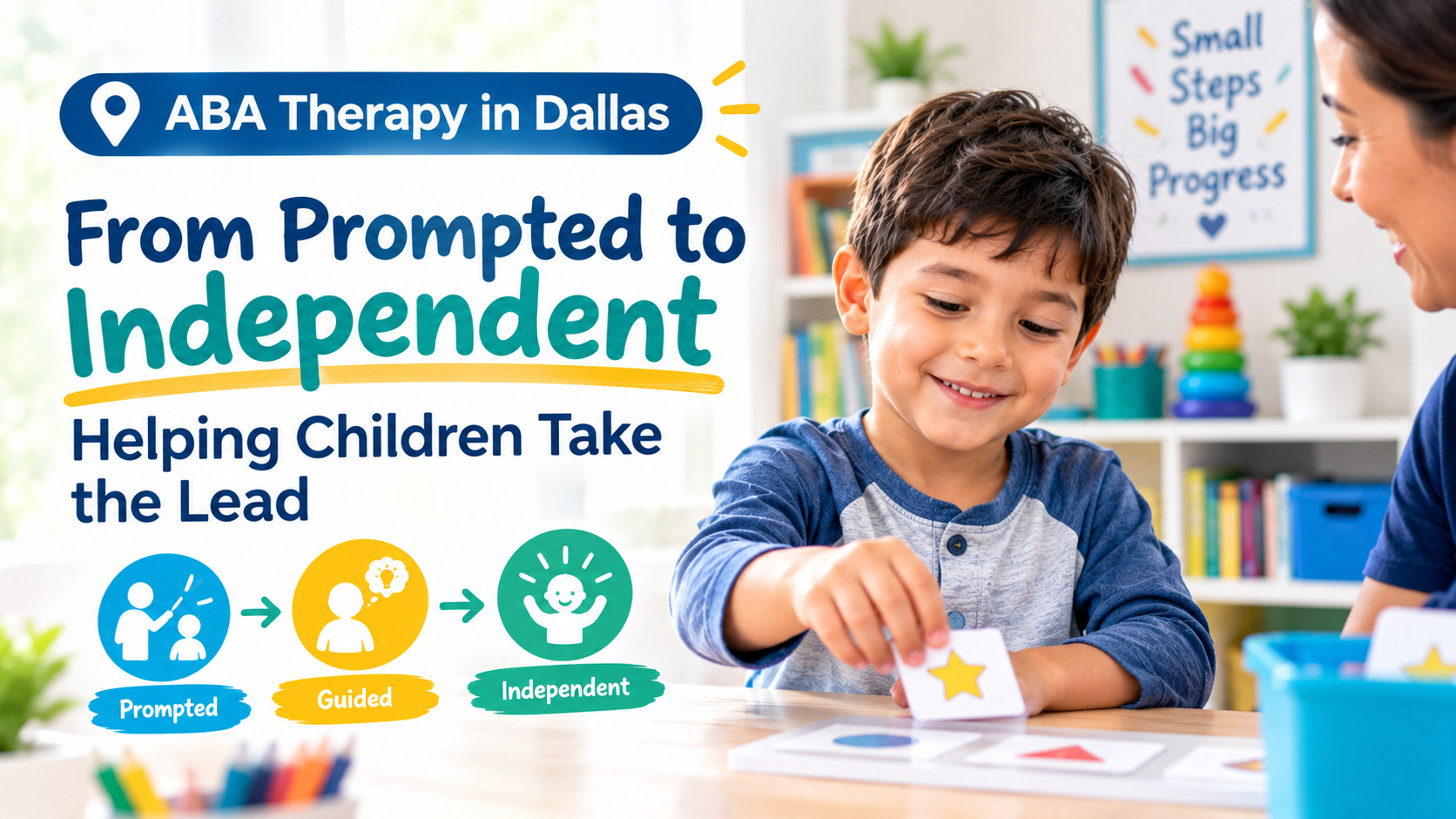
Prompting and Fading
A child may initially need prompts to complete certain steps.
For example, an adult might verbally remind the child:
“Line up.”
Over time, the prompt can be reduced as the child becomes more independent.
The goal is not to make the child dependent on adult instructions. The goal is to gradually build independent responding.
Generalization
A skill learned in one environment may not automatically appear in another.
A child might successfully practice leaving a classroom with their therapist but struggle when the school alarm sounds.
That is why practicing skills across realistic environments and with different adults can be helpful when appropriate.
ABA therapy Highland Park and other individualized behavioral supports may address generalization as part of teaching functional safety skills.
What If a Child Freezes During the Drill?
Not every child will run, cry, or become visibly upset.
Some children may simply freeze.
They may stop moving, stare, cover their ears, or appear unable to respond to instructions.
Adults should avoid assuming that the child is deliberately refusing to participate.
A freeze response can indicate that the child is overwhelmed and needs support.
Teachers can use the child’s established support plan and provide clear, concise instructions.
If physical assistance is part of the school’s emergency procedures and is appropriate for the child’s needs, staff should follow those established procedures.
What If the Child Tries to Run Away?
Elopement or attempts to escape can create a serious safety concern during an emergency.
This is one reason emergency planning should happen before a drill occurs.
The school team should know if a child has a history of running when overwhelmed and should establish appropriate supervision and safety procedures.
Parents can also work with qualified professionals on teaching safer replacement behaviors.
For example, a child may learn to:
- Stay beside a designated adult
- Hold a walking rope if the school uses one
- Respond to a specific safety cue
- Move toward a designated location
- Request a break appropriately when possible
The specific strategy should be individualized to the child’s developmental level and communication abilities.
Don’t Wait Until Fire Drill Day
One of the biggest mistakes adults can make is preparing for a fire drill only after the child has already experienced a difficult one.
Preparation works best when it happens gradually.
Start with simple conversations. Introduce visual supports. Practice transitions. Walk the evacuation route when possible. Coordinate with the school. Reinforce successful responses.
Then continue practicing periodically.
The goal is to make the safety routine familiar enough that the child has something predictable to rely on when the environment becomes stressful.
Helping Children Build Confidence, Not Just Compliance
The purpose of fire-drill preparation should extend beyond getting a child to follow instructions.
It is also an opportunity to build independence.
A child who learns what the alarm means, where to go, who to follow, and what happens next has more information available during an unexpected situation.
That knowledge can reduce uncertainty.
For children receiving Autism Treatment Highland Park, safety preparation can be one part of a broader focus on functional communication, independence, transitions, adaptive behavior, and coping skills.
Every child will have different strengths and needs. Some may need extensive preparation, while others may only need a quick visual reminder.
The right approach is the one that meets the child where they are.
A Simple Fire Drill Preparation Checklist
Parents can use this checklist when communicating with the school:
- Know the school’s evacuation procedure.
- Identify the child’s designated adult.
- Practice the basic evacuation sequence.
- Use visual supports if helpful.
- Prepare for sensory challenges.
- Practice stopping preferred activities.
- Teach a consistent response to the alarm.
- Discuss communication needs.
- Plan for potential freezing or escape behaviors.
- Reinforce successful practice.
- Review the plan periodically.
Final Thoughts
A school fire drill can be stressful for an autistic child, but preparation can make the experience much more predictable. The combination of visual supports, practice, consistent language, sensory accommodations, school collaboration, and individualized behavioral strategies can help children develop safer and more confident responses.
Families looking into Autism Treatment Highland Park can also consider how everyday safety skills fit into their child’s broader developmental goals. Learning to respond to an alarm, transition away from an activity, follow an adult, communicate needs, and remain with a group are practical skills that can support greater independence well beyond a fire drill.
The goal isn’t to expect a child to handle every emergency perfectly. It’s to give them the tools, practice, and support they need to respond as safely and independently as possible when something unexpected happens.
Contact us at 972–310–4991 or visit https://radiantspectrumtherapy.com/ to learn more.