
As a parent, it’s natural to wonder whether your child’s development is following a typical path. Every child grows at their own pace, but persistent challenges with communication, social interaction, learning, or behavior may indicate that additional support could help. For many families, Applied Behavior Analysis (ABA) therapy provides structured, individualized strategies that help children build essential life skills while increasing confidence and independence.
If you’re considering ABA Therapy in Dallas, understanding the early signs that your child may benefit from intervention can help you seek support sooner. Early identification and personalized treatment often lead to stronger outcomes, giving children the tools they need to thrive at home, in school, and within their communities.
Families throughout Dallas and Highland Park have access to high-quality autism resources, and knowing what to look for is the first step toward finding the right care.
What Is ABA Therapy?
Applied Behavior Analysis (ABA) is a scientifically supported approach that helps children develop meaningful skills while reducing behaviors that interfere with learning and everyday life.
ABA focuses on teaching skills in areas such as:
- Communication
- Social interaction
- Daily living skills
- Emotional regulation
- Play
- School readiness
- Independence
Every treatment plan is personalized after a thorough assessment, ensuring therapy targets the child’s unique strengths, needs, and family goals.
Whether services are delivered through Center-Based ABA or Home-Based ABA Therapy, the goal is always to help children reach their fullest potential.
Why Early Intervention Matters
Many parents hesitate because they hope their child will “grow out of” certain behaviors.
While every child develops differently, addressing developmental concerns early often results in better long-term progress.
Early intervention can help children:
- Develop communication skills
- Build social confidence
- Reduce frustration
- Improve learning readiness
- Strengthen independence
- Prepare for school success
Many families seeking ABA therapy Dallas discover that beginning services sooner allows children to learn foundational skills before challenges become more significant.
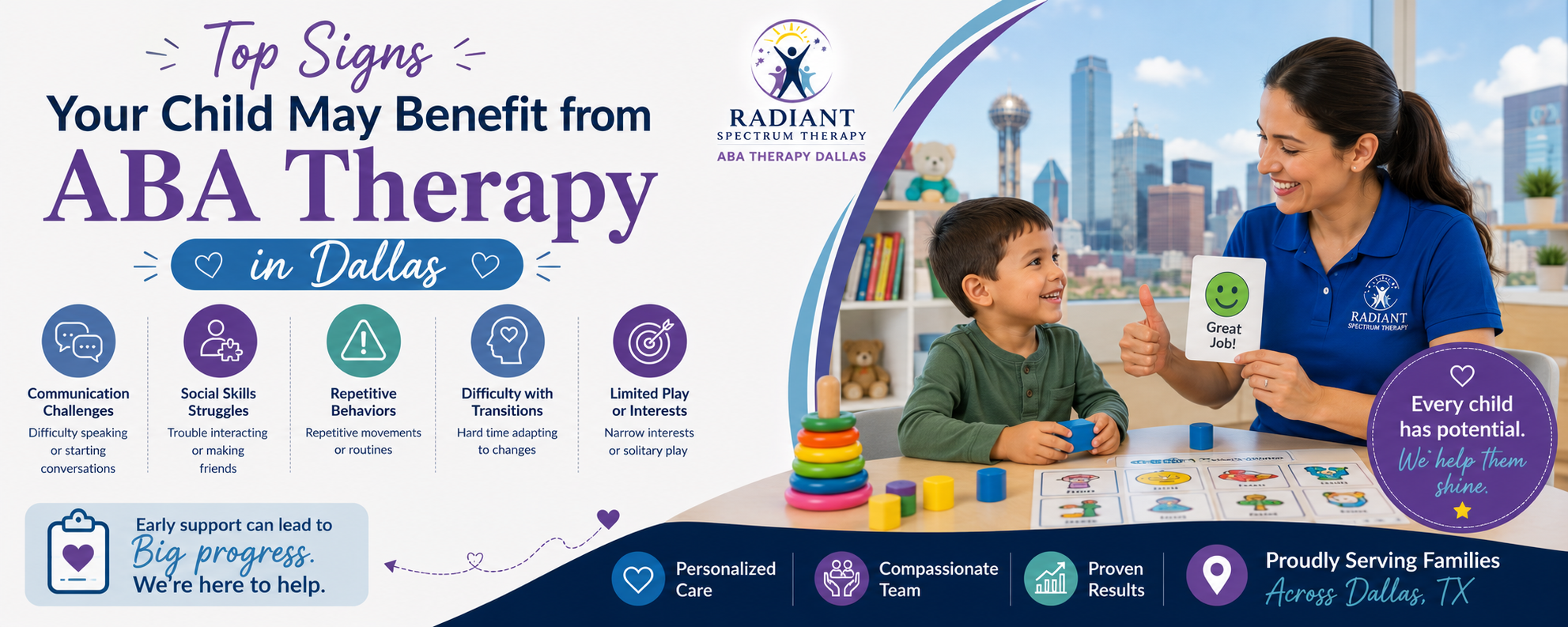
Sign #1: Difficulty Communicating Needs
One of the earliest indicators that a child may benefit from ABA therapy is difficulty communicating.
Your child may:
- Use very few words
- Struggle to ask for help
- Repeat phrases without understanding them
- Have trouble answering simple questions
- Become frustrated when trying to communicate
Children who cannot effectively express their wants and needs may display challenging behaviors simply because they lack another way to communicate.
ABA therapy teaches functional communication skills that reduce frustration while improving independence.
Sign #2: Limited Eye Contact or Social Interaction
Social development looks different for every child, but consistently avoiding interaction may warrant further evaluation.
Possible signs include:
- Limited eye contact
- Rarely responding to their name
- Preferring to play alone
- Difficulty engaging with peers
- Limited interest in shared activities
- Not pointing to show interest
Many Dallas autism specialists use ABA strategies to gradually build comfortable and meaningful social interactions.
Sign #3: Frequent Tantrums or Challenging Behaviors
All children experience meltdowns occasionally.
However, frequent behaviors that interfere with learning or family life may indicate that your child needs additional support.
Examples include:
- Aggression
- Self-injurious behaviors
- Property destruction
- Throwing objects
- Screaming
- Running away (elopement)
Rather than simply stopping behaviors, ABA focuses on identifying why they occur and teaching safer, more effective alternatives.
This evidence-based approach is a key component of behavioral therapy North Texas programs.
Sign #4: Difficulty Following Directions
Children naturally test boundaries, but consistently struggling with simple instructions may affect success at home and school.
Examples include:
- Ignoring directions
- Difficulty transitioning between activities
- Trouble completing simple routines
- Becoming upset when schedules change
ABA therapy breaks complex tasks into manageable steps while reinforcing success through positive encouragement.
Sign #5: Delayed Daily Living Skills
Independence develops gradually.
If your child struggles with age-appropriate self-care tasks, ABA therapy may help.
Common goals include:
- Dressing
- Brushing teeth
- Washing hands
- Using the toilet
- Feeding independently
- Cleaning up toys
Developing these everyday skills builds confidence while reducing dependence on caregivers.
Sign #6: Repetitive Behaviors
Many children with autism engage in repetitive movements or routines.
Examples include:
- Hand flapping
- Rocking
- Spinning objects
- Repeating phrases
- Lining up toys
- Strong preference for routines
ABA therapists evaluate whether these behaviors interfere with learning or daily functioning and teach flexible alternatives when appropriate.
Sign #7: Difficulty Playing with Other Children
Play is an important way children learn communication, cooperation, and problem-solving.
Your child may benefit from ABA if they:
- Avoid group activities
- Struggle with sharing
- Have difficulty taking turns
- Prefer repetitive play
- Become upset during peer interactions
Many Dallas ABA centers provide structured opportunities to practice social skills with peers in a supportive environment.
Sign #8: Trouble Adjusting to New Environments
Changes in routine can be overwhelming for some children.
Signs may include:
- Anxiety in unfamiliar places
- Difficulty entering new environments
- Resistance to transitions
- Becoming overwhelmed in busy settings
Therapists gradually teach coping strategies that help children feel more comfortable in different situations.
Sign #9: Difficulty in School
Teachers are often the first to notice developmental concerns.
Your child may struggle with:
- Paying attention
- Following classroom routines
- Sitting during instruction
- Completing tasks
- Participating in group activities
ABA therapy helps children develop school-readiness skills that support classroom success.
Many providers offering pediatric behavioral therapy Dallas collaborate with families and educators to promote consistency across settings.
Sign #10: Parents Feel Overwhelmed
Sometimes the biggest sign isn’t something your child does — it’s how challenging daily routines have become for the family.
Parents may feel overwhelmed by:
- Constant meltdowns
- Sleep difficulties
- Mealtime struggles
- Communication barriers
- Public outings
- Daily routines
Support extends beyond the child.
Comprehensive ABA Parent Training equips caregivers with practical strategies that improve everyday life at home.
The Role of Parent Training
Parents play an essential role in every successful ABA program.
Through autism parent training Dallas, families learn how to:
- Reinforce positive behaviors
- Improve communication
- Manage transitions
- Encourage independence
- Support emotional regulation
- Generalize therapy skills into daily life
When therapy continues beyond the clinic, children often make faster and more meaningful progress.
Choosing Between Center-Based and Home-Based Services
Many providers offer multiple therapy settings.
Benefits of Center-Based ABA
A structured clinic environment allows children to:
- Learn with peers
- Practice classroom routines
- Participate in social activities
- Build independence
- Work with multiple professionals
Benefits of Home-Based ABA Therapy
Some children benefit most from learning in familiar surroundings.
Home-Based ABA Therapy can address:
- Morning routines
- Mealtime behaviors
- Toilet training
- Family communication
- Household expectations
Families interested in in-home ABA therapy Dallas often appreciate how therapy naturally fits into everyday life.
What Makes a Great ABA Provider?
When searching for ABA Therapy in Dallas, consider providers that offer:
- Individualized treatment plans
- Experienced Board Certified Behavior Analysts (BCBAs)
- Well-trained Registered Behavior Technicians (RBTs)
- Family collaboration
- Regular progress reviews
- Data-driven treatment
- Compassionate care
Quality providers view parents as partners throughout the therapy journey.
Additional Services That Support ABA
Many children benefit from coordinated care alongside ABA therapy.
These services may include:
- Speech therapy
- Occupational therapy
- Feeding therapy
- Social skills groups
- School consultation
- Family education
Many autism services Dallas TX providers work collaboratively with other professionals to ensure children receive comprehensive support.
Why Personalized Care Matters
No two children learn the same way.
Effective ABA programs avoid generic treatment plans and instead focus on individualized goals that reflect each child’s unique strengths, interests, and developmental needs.
Whether improving communication, reducing challenging behaviors, or increasing independence, personalized therapy creates meaningful progress that families can see in everyday life.
Many families throughout Dallas, Highland Park, and surrounding communities rely on experienced DFW ABA therapy providers to help their children build skills that last a lifetime.
Why Families Choose Radiant Spectrum Therapy
At Radiant Spectrum Therapy, we believe every child deserves compassionate, individualized care designed around their unique strengths and goals.
Our experienced team provides personalized treatment through Center-Based ABA, Home-Based ABA Therapy, and comprehensive ABA Parent Training. We partner closely with families to ensure skills learned during therapy carry over into everyday life, helping children become more confident, independent, and successful.
Whether you’re just beginning your autism journey or looking for a new provider, our team is committed to supporting your family every step of the way.
Conclusion
Recognizing the early signs that your child may benefit from ABA Therapy in Dallas can make a lasting difference in their future. Difficulties with communication, social interaction, daily living skills, or behavior don’t define your child — they simply indicate areas where individualized support may help them thrive.
Frequently Asked Questions
What age should a child start ABA therapy?
Children can begin ABA therapy as early as toddlerhood after receiving an evaluation. Early intervention often leads to stronger developmental outcomes, but children and teens can also benefit from ABA services.
Does every child with autism need ABA therapy?
Every child has unique needs. A comprehensive assessment helps determine whether ABA therapy is appropriate and identifies the skills that would benefit most from intervention.
Can parents participate in therapy?
Absolutely. Parent involvement is encouraged through ABA Parent Training, giving families practical strategies to reinforce learning and manage everyday challenges at home.
What’s the difference between center-based and home-based ABA?
Center-Based ABA provides structured learning and peer interaction in a clinical setting, while Home-Based ABA Therapy focuses on teaching skills within the child’s everyday environment.
How do I get started with ABA therapy in Dallas?
The first step is scheduling an evaluation with a qualified ABA provider. After the assessment, the clinical team develops a personalized treatment plan based on your child’s strengths, goals, and family priorities.
Contact us at 972–310–4991 or visit https://radiantspectrumtherapy.com/ to learn more.