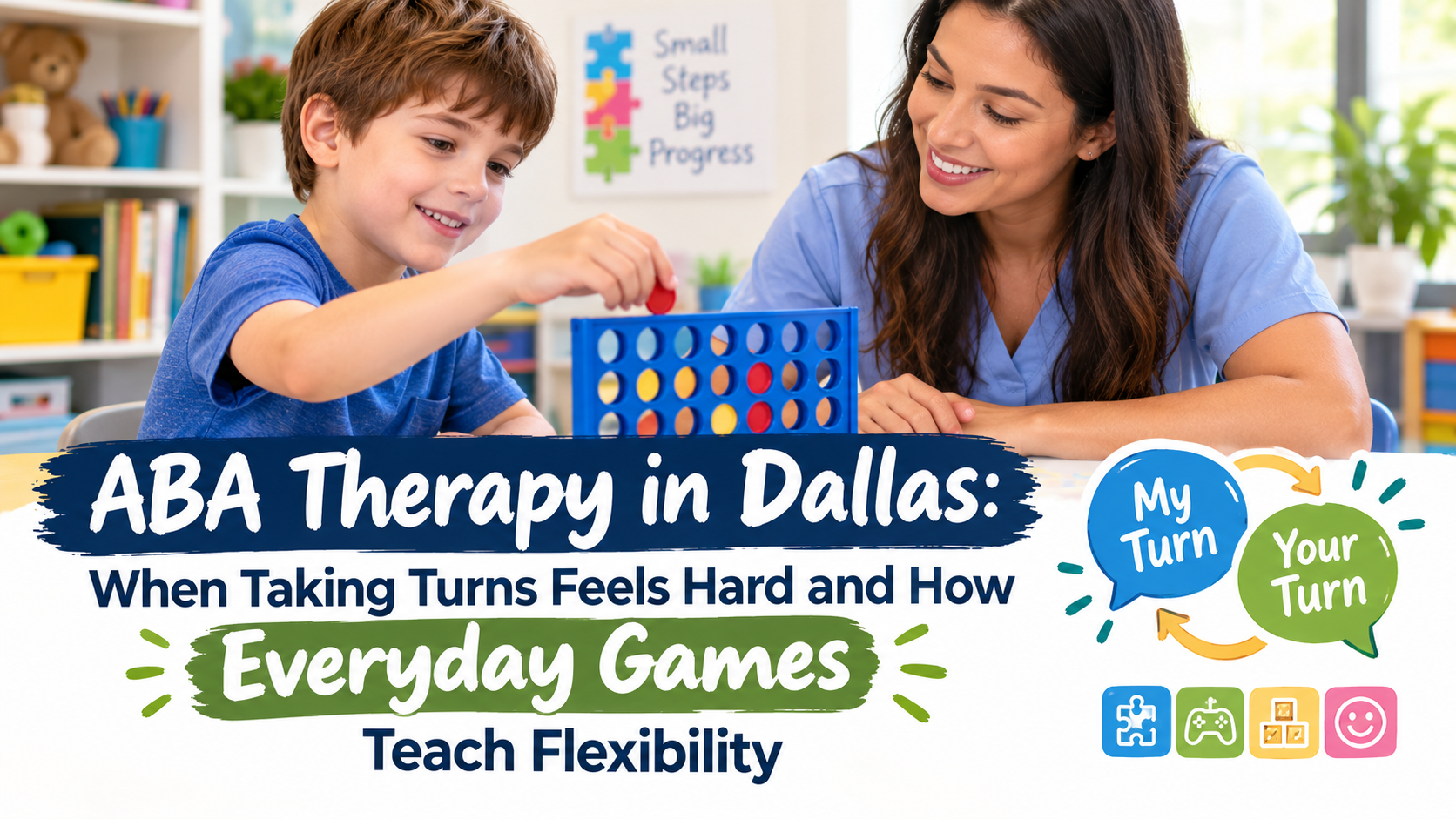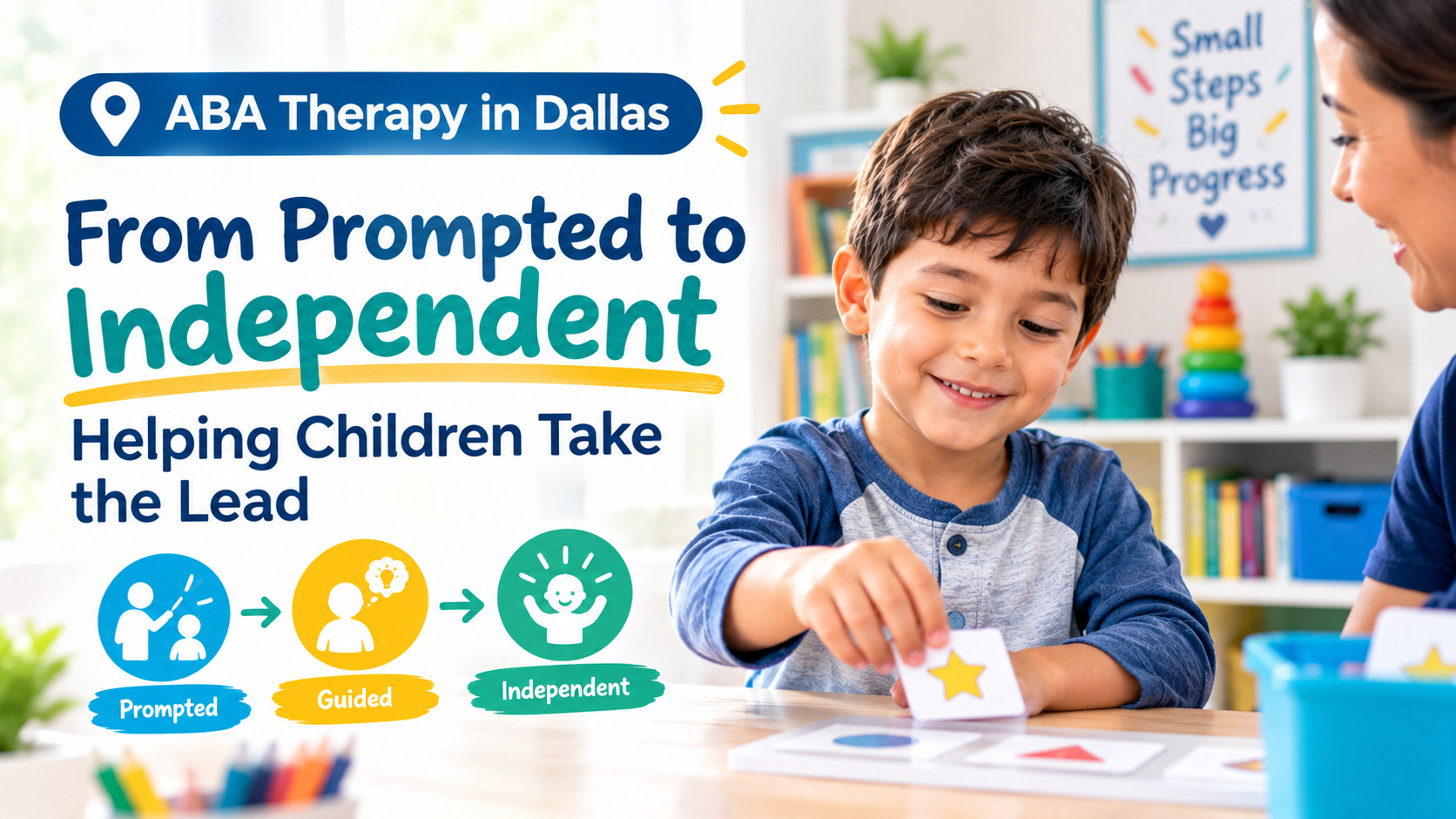


Children are often expected to adapt quickly when plans change, but flexibility is not something every child learns automatically. For children who benefit from additional behavioral support, learning how to change their mind, adjust a plan, or accept an unexpected change can take practice. ABA Therapy in Dallas can help children build these skills gradually by teaching flexibility in ways that are supportive, predictable, and individualized.
Flexibility is much more than getting a child to “go with the flow.” It can involve accepting a different snack, trying a new activity, taking a different route to school, sharing a preferred toy, changing the order of a routine, or responding calmly when something does not happen as expected.
For some children, especially children with autism, unexpected changes can feel overwhelming. A familiar routine may provide a sense of predictability and security. When that routine suddenly changes, the child may not yet have the communication, coping, or problem-solving skills needed to respond comfortably.
The goal is not to eliminate routines or force children to tolerate every change immediately. Instead, ABA therapy Dallas families choose can provide opportunities to practice flexibility gradually, helping children develop confidence in handling small changes before they encounter larger ones.
Why Flexibility Is an Important Life Skill
Life rarely follows an exact script.
Schedules change. Favorite foods run out. Teachers substitute different activities. Friends want to play something else. A family member may be late. A planned outing may be canceled because of weather.
Adults often adjust to these situations without thinking about it. Children are still learning how to process them.
Flexibility can help children:
- Adapt when routines change
- Transition between activities
- Try unfamiliar experiences
- Accept alternative choices
- Solve everyday problems
- Communicate frustration appropriately
- Participate more successfully in social situations
- Recover when something does not go according to plan
- Become more independent
These skills can become especially important as children grow. A child who learns that there can be more than one acceptable way to complete an activity may have an easier time navigating new environments, school expectations, friendships, and eventually greater independence.
Applied Behavior Analysis Dallas services may address flexibility as part of a broader individualized treatment plan, depending on the child’s needs and goals.
Why Changing Plans Can Be Difficult
When adults say, “It’s not a big deal,” they are looking at the situation from an adult perspective.
For a child, the change may feel much bigger.
A predictable routine allows a child to know what is coming next. When that expectation changes, the child may need to process several things at once: What happened? Why did it change? What am I supposed to do now? What happens next?
A child may also have difficulty communicating that they are disappointed or confused.
Instead of saying, “I was expecting the blue cup and I don’t know what to do now,” they may cry, refuse, yell, leave the area, or engage in another challenging behavior.
This does not necessarily mean the child is simply being difficult. It may indicate that the child needs additional support with communication, coping, transitions, or problem-solving.
This is one reason ABA therapy for autism Dallas families seek out may focus not only on reducing challenging behaviors but also on teaching practical replacement skills.
Flexibility Does Not Mean Eliminating Routines
There is an important difference between teaching flexibility and removing structure.
Predictable routines can be extremely useful. They can help children understand expectations and move through their day with greater confidence.
The objective is not to make every part of a child’s day unpredictable.
Instead, parents and BCBA services Dallas professionals may work together to identify appropriate opportunities for small, manageable changes.
For example, a child who always eats a snack at the same table may eventually practice eating at a different table.
A child who always chooses one color may practice selecting between two colors.
A child who expects one particular bedtime book may learn that there are several acceptable books to choose from.
These small experiences can communicate an important message:
“A change happened, and I can handle it.”
Start With Small Changes
One of the most helpful ways to teach flexibility is to avoid starting with the biggest challenge.
Instead, begin with changes that are minor and manageable.
Change One Small Thing
If a child’s routine is highly predictable, changing several parts of it at once can create unnecessary frustration.
Instead, change one element.
For example:
- Use a different cup.
- Sit in a different chair.
- Change the order of two familiar activities.
- Offer a different but familiar snack.
- Take a slightly different route.
- Move an activity to another room.
Once the child becomes more comfortable with small changes, additional challenges can be introduced gradually.
This approach allows the child to practice flexibility without feeling as though everything familiar has suddenly disappeared.
Give Choices Within the Change
Flexibility does not mean children should have no control.
Providing appropriate choices can make changes easier to understand and accept.
Instead of saying:
“Everything is different today.”
Try:
“We’re eating in a different room today. Do you want to sit at the table or on the chair?”
The change remains, but the child still has a meaningful choice.
Choices can also support communication and independence. A child may learn that even when one option is unavailable, there may still be another acceptable option.
This type of skill can be incorporated into behavioral intervention Dallas TX programs when appropriate to the child’s individualized goals.
Teach the Language of Flexibility
Sometimes children need more than exposure to change. They need language that helps them understand what is happening.
Parents can introduce simple phrases such as:
- “Plans changed.”
- “That’s okay.”
- “Let’s try another way.”
- “We can choose something else.”
- “First this, then that.”
- “Something different happened.”
- “We can make a new plan.”
The language should be simple enough for the child to understand and use.
Over time, these phrases can become tools the child uses independently when faced with an unexpected situation.
For children who have difficulty expressing themselves verbally, individualized autism support services Dallas may also incorporate alternative communication strategies when appropriate.
Use Visual Supports When Helpful
A visual schedule can be useful for children who rely heavily on predictable routines.
But visual supports do not have to communicate that everything will always happen exactly as planned.
They can also show that changes are possible.
For example, a visual schedule might show:
Breakfast → Play → Change → Outside
A symbol or card can indicate that the original plan has changed.
This can help a child learn that a schedule can be adjusted without the entire day becoming unpredictable.
Visual supports may be particularly useful in home, school, clinic, and community settings, depending on the child’s needs.
Practice Flexibility During Calm Moments
It is much easier to teach a new skill when a child is calm.
Trying to teach flexibility in the middle of a major meltdown can be difficult for both the child and the adult.
Instead, practice when the child is already comfortable.
For example, parents might intentionally make a small change during a favorite game.
If a child normally builds a tower in one specific way, a parent could introduce another way and say:
“Let’s try something different.”
The goal is not to create frustration. The goal is to create a safe opportunity to practice responding to change.
When the child successfully handles the change, that success can be reinforced.
Reinforce Flexible Behavior
Children need to know when they are doing something successfully.
If a child accepts a change that would previously have been difficult, recognize the effort.
You might say:
“You wanted the red cup, but you used the blue cup. You handled that change!”
The reinforcement does not always need to be a tangible reward. Positive attention, praise, access to a preferred activity, or another meaningful consequence may be appropriate depending on the child and the treatment plan.
Individualized ABA therapy services Dallas can help determine how reinforcement may be used to support specific goals.
Avoid Turning Flexibility Into a Power Struggle
One of the biggest mistakes adults can make is treating flexibility as a battle of wills.
Statements such as “You have to learn that you can’t always get your way” may increase frustration without actually teaching the skill.
Instead, think about what the child needs to learn.
Do they need:
- Better communication?
- A way to request an alternative?
- Help understanding the change?
- More transition practice?
- A coping strategy?
- More opportunities to experience small changes?
- A predictable way to respond when something is unavailable?
The question changes from “How do I make my child accept this?” to “What skill can help my child handle this situation?”
That shift can make flexibility training more constructive.
Teaching “Plan B”
An especially useful flexibility skill is learning that there can be another option.
If the playground is closed, what is Plan B?
If the favorite cereal is gone, what is Plan B?
If the preferred activity is unavailable, what is Plan B?
Parents can make this language part of everyday life.
“That’s our Plan A. It didn’t work today. Let’s think of Plan B.”
This teaches problem-solving while also showing the child that an unexpected change does not mean there is no solution.
As children become more comfortable with this concept, they may begin generating their own alternatives.
That is an important step toward independence.
Flexibility and Social Development
Flexibility also plays a major role in social interactions.
Friendships require compromise.
One child may want to play with cars while another wants to build blocks. A game may not go exactly as expected. Someone else may choose the rules. A peer may suggest a completely different activity.
Children who have opportunities to practice flexibility may develop skills that help them participate in these situations.
This does not mean a child should always give up their preferences. Healthy social interaction involves both flexibility and self-advocacy.
Children can learn to say:
“I want to play cars first, then we can play blocks.”
or:
“I don’t want that game. Can we choose another one?”
Flexibility is not about teaching children to say “yes” to everything. It is about helping them understand that different outcomes, choices, and perspectives can exist.
Flexibility Should Be Individualized
Every child is different.
A strategy that works beautifully for one child may not work for another. Some children may need visual supports. Others may respond better to verbal explanations, modeling, choices, reinforcement, or gradual exposure.
This is where individualized pediatric ABA therapy Dallas services can be valuable.
A qualified professional can look at the specific situation surrounding a child’s difficulty with change and help identify the underlying skills that need to be developed.
For younger children, early intervention ABA Dallas services may focus on foundational communication, play, transitions, and daily living skills. For older children, goals may include greater independence, social flexibility, community participation, and problem-solving.
Flexibility at Home
Parents do not need to create complicated exercises to practice flexibility.
Everyday life naturally provides opportunities.
You might:
- Offer two acceptable breakfast choices.
- Change the order of a familiar routine occasionally.
- Try a new route during a familiar outing.
- Play a familiar game in a slightly different way.
- Practice choosing a backup when a preferred item is unavailable.
- Introduce “Plan B” language.
- Practice waiting when a preferred activity is temporarily unavailable.
The key is to keep the practice realistic and appropriate for the child.
Small, successful experiences can add up.
What Progress Can Look Like
Flexibility does not necessarily mean a child will never become upset by change.
Progress may look much more gradual.
A child might initially need significant support but eventually:
- Accept a change with a reminder.
- Ask what the new plan is.
- Choose an alternative.
- Transition more quickly.
- Recover from disappointment more easily.
- Use a coping strategy independently.
- Suggest a Plan B.
- Communicate frustration instead of engaging in challenging behavior.
These are meaningful steps.
The goal is not perfection. The goal is increased ability to navigate everyday changes successfully.
Supporting Flexibility Without Pressure
Teaching flexibility works best when children are given opportunities to practice rather than constantly being pushed into situations that overwhelm them.
Parents can support this process by remaining calm, using clear language, offering reasonable choices, and recognizing progress.
Professionals providing behavior therapy Dallas may also work with families to develop strategies that fit naturally into daily routines.
For families exploring ABA clinics in Dallas, it can be helpful to ask how a provider approaches flexibility, communication, transitions, reinforcement, and individualized treatment goals.
Parents may also have practical questions about how ABA therapy works Dallas, including what services look like, whether therapy can take place at home or in a center, and how goals are selected for an individual child.
Building a Child’s Confidence to Handle Change
Ultimately, flexibility is about more than accepting a different cup or changing the order of a schedule.
It is about building a child’s confidence that unexpected situations can be managed.
A child does not need to know exactly what will happen every minute of every day to feel successful. With appropriate support and practice, children can learn that when something changes, they can pause, communicate, choose an alternative, ask for help, and try again.
For families considering ABA Therapy in Dallas, flexibility can be one part of a broader individualized approach to helping children build communication, independence, coping, social, and daily living skills.
Changing your mind, changing your plan, or trying another way is a skill. And like many skills, it can be taught gradually — with patience, practice, and support rather than pressure.
Contact us at 972–310–4991 or visit https://radiantspectrumtherapy.com/ to learn more.