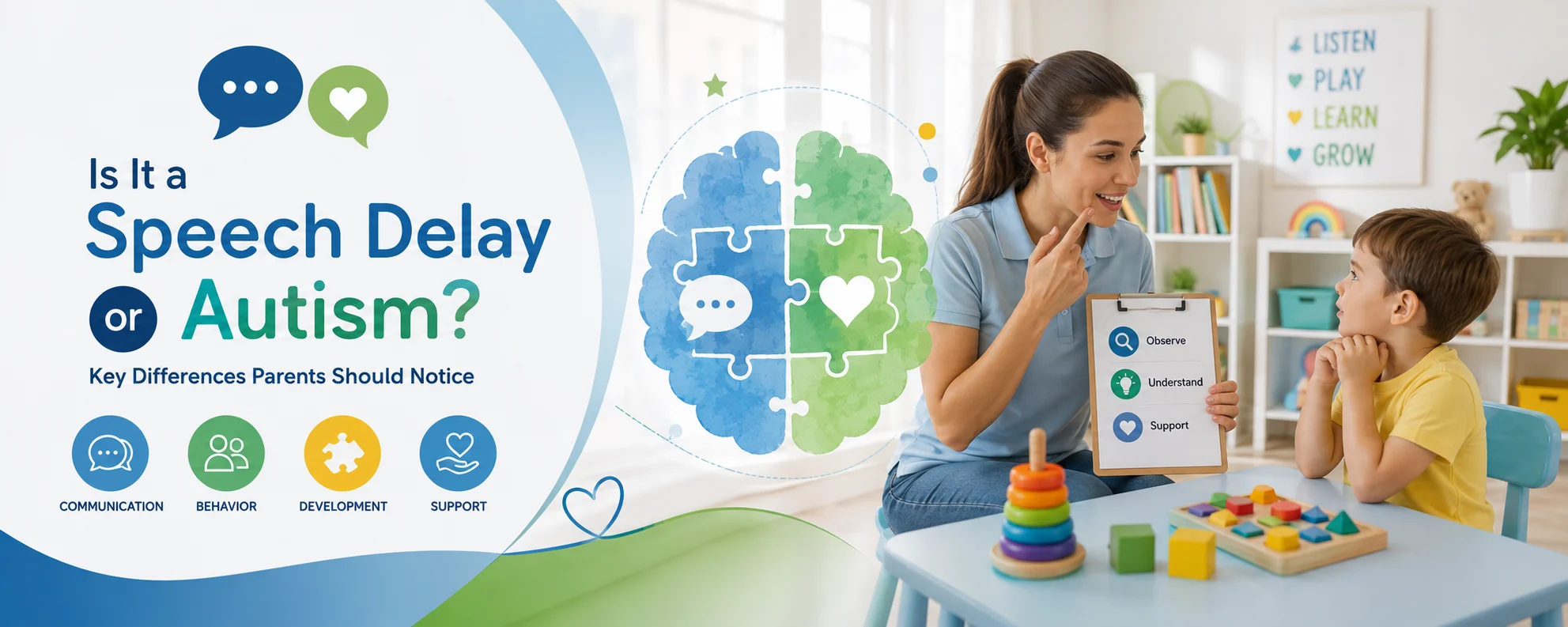
When a toddler is not talking as much as other children, it is natural for parents to wonder whether they are seeing a speech delay or autism. A child may use fewer words, struggle to communicate wants and needs, or seem quieter in social situations. While speech and language delays can be an early sign of autism, they can also occur for many other reasons. Understanding the differences can help parents know when to monitor development, when to seek an evaluation, and when Autism Treatment Highland Park or other early support may be appropriate.
For families in Dallas and Highland Park, getting answers early can make the next steps feel much less overwhelming. A child does not need to have a diagnosis before parents can ask questions about development or explore available services. Early evaluation can provide a clearer picture of a child’s communication, social, and behavioral strengths and areas where additional support may help.
Speech Delay and Autism Are Not the Same Thing
A speech delay generally means that a child is developing spoken language more slowly than expected. Some children have difficulty producing words, while others understand language but have trouble expressing themselves.
Autism, on the other hand, involves differences in social communication, social interaction, and patterns of behavior or interests. A child with autism may have delayed speech, but speech delay alone does not mean a child has autism.
This distinction is important because parents sometimes focus primarily on how many words their child can say. Vocabulary is only one part of communication.
A developmental evaluation may also look at:
- How a child responds when their name is called
- Whether they use gestures such as pointing or waving
- Whether they share interests with other people
- How they use eye contact
- Whether they imitate others
- How they participate in back-and-forth interaction
- Whether they engage in pretend or social play
- Whether they notice and respond to other people’s emotions
- Whether repetitive behaviors or restricted interests are present
Understanding these areas can help families decide whether a child may benefit from ABA therapy Highland Park, speech-language services, developmental support, or another type of evaluation.
The Importance of Non-Verbal Communication
One of the clearest areas parents can observe is non-verbal communication.
A child with a speech delay may have limited spoken language but still communicate effectively through gestures, facial expressions, eye contact, body language, and other social behaviors.
For example, a toddler with a speech delay might:
- Point to a toy they want
- Bring an object to a parent
- Look at a parent and then look toward something interesting
- Wave goodbye
- Use facial expressions to show excitement or frustration
- Try to get someone’s attention
- Follow another person’s point or gaze
A child with autism may have differences in several of these areas. They may not consistently point to share an interest, may not look toward a parent to share an experience, or may use gestures less frequently.
This does not mean every autistic child behaves the same way. Autism is a spectrum, and children can have very different communication profiles.
Parents should look at the overall pattern rather than one behavior in isolation.
What Is Joint Attention?
Joint attention is another important concept when comparing speech delay and autism.
Joint attention occurs when two people intentionally share attention toward the same object, activity, or event. Imagine a toddler sees an airplane in the sky, points toward it, looks at their parent, and then looks back at the airplane. The child is not simply asking for something. They are sharing an experience.
This type of social communication can develop before a child has many spoken words.
A child with a speech delay may have limited vocabulary but still demonstrate joint attention. They may point at a dog, look toward their parent, and become excited when the parent notices the dog too.
Some autistic children may have difficulty initiating or responding to joint attention. They may focus strongly on an object without attempting to share the experience with another person.
Because joint attention is connected to social communication, it can be an important area for professionals to observe during a developmental evaluation.
Social Engagement Can Provide Important Clues
Another difference parents may notice involves social engagement.
A child with an isolated speech delay may still want to interact with people. They may enjoy being around parents and siblings, seek attention, imitate adults, participate in games, and show affection even though they are not speaking as much as expected.
A child with autism may show a different pattern of social interaction.
For example, parents might notice that their child:
- Does not consistently respond to their name
- Seems more interested in objects than people
- Does not frequently attempt to share experiences
- Has difficulty participating in back-and-forth play
- Rarely imitates others
- Has limited use of gestures
- Appears socially disconnected in certain situations
Again, these behaviors do not automatically indicate autism. Hearing differences, developmental delays, temperament, and other factors can influence communication and social behavior.
That is why professional assessment is so important.
Receptive Language Matters, Too
Parents often concentrate on expressive language: what a child can say.
Receptive language refers to what a child understands.
A toddler might not be saying many words but may understand simple instructions, recognize familiar people, follow routines, and understand what others are communicating.
For some children with speech delays, receptive language is stronger than expressive language.
Professionals may also consider whether a child has difficulty understanding language in social situations. For example, a child may understand a direct instruction but have more difficulty following a conversation, interpreting gestures, or responding to another person’s attempt to interact.
Looking at both expressive and receptive communication provides a more complete picture.
Repetitive Behaviors and Restricted Interests
Speech delay by itself does not typically explain repetitive behaviors or highly restricted interests.
Autism may involve repetitive movements, repetitive use of language, strong preferences for routines, or unusually intense interests.
Parents may notice behaviors such as:
- Repeatedly lining up toys
- Repeating certain sounds or phrases
- Repetitive hand or body movements
- Becoming very distressed when routines change
- Focusing intensely on a particular subject or object
- Playing with toys in the same way repeatedly
These behaviors vary significantly between children.
A child may have repetitive behaviors without being autistic, and an autistic child may have behaviors that are subtle or difficult to recognize. The presence, frequency, intensity, and impact of these behaviors are all important considerations.
When Should Parents Consider an Evaluation?
Parents do not have to wait until a child is significantly behind before asking for help.
Consider discussing your concerns with a pediatrician or developmental professional if your child:
- Has very few or no spoken words
- Loses language or social skills they previously had
- Rarely responds to their name
- Does not point to share interests
- Has limited eye contact or social engagement
- Does not imitate actions or sounds
- Has difficulty engaging in back-and-forth interaction
- Shows repetitive behaviors
- Becomes extremely distressed by changes in routine
- Seems unusually focused on specific objects or activities
Regression deserves particular attention. If a child previously used words, gestures, or social behaviors and then stops using them, parents should contact their child’s healthcare provider promptly.
Seeking an evaluation does not mean a parent is assuming the child has autism. It simply means they want to understand what their child needs.
How Early Intervention Can Help
Early intervention can be valuable because young children are continuously developing communication, play, learning, and social skills.
If an evaluation identifies autism-related developmental needs, families may explore services such as early intervention ABA Highland Park, pediatric ABA therapy Highland Park, speech therapy, occupational therapy, or other developmental supports.
ABA, or Applied Behavior Analysis, focuses on understanding how behaviors develop and how skills can be taught and strengthened. Individualized programs may address communication, social interaction, daily living skills, play, learning readiness, and other goals.
What Happens During ABA Therapy?
Parents who are unfamiliar with ABA may wonder how ABA therapy works Highland Park programs and what a typical session looks like.
ABA programs are individualized. A BCBA may assess the child’s current skills, identify meaningful goals, develop a treatment plan, and monitor progress over time. RBTs may work directly with the child while following the treatment plan and receiving clinical oversight.
Depending on the child’s needs, therapy may focus on:
- Functional communication
- Following instructions
- Requesting preferred items or activities
- Social interaction
- Play skills
- Daily living skills
- Learning readiness
- Reducing behaviors that interfere with learning
- Developing independence
Some children may receive center-based ABA therapy Highland Park, while others may benefit from in-home ABA therapy Highland Park. The right setting depends on the child’s goals, family circumstances, and treatment recommendations.
Finding the Right Support in Highland Park and Dallas
Families searching for ABA therapy near Highland Park, ABA therapy in Highland Park TX, or ABA therapy near me Highland Park may find many options. Comparing programs carefully can help parents choose services that fit their child’s needs.
When researching ABA clinics in Highland Park, parents may want to ask:
- Who will oversee the child’s treatment?
- Is a BCBA involved in developing and monitoring the treatment plan?
- How are goals selected?
- How is progress measured?
- How are parents included in treatment?
- Is communication and social development included in the child’s goals?
- Are services available in a clinic, home, or other appropriate setting?
- What does the program do when a child is struggling with a particular skill?
- What should parents expect regarding scheduling and treatment intensity?
Families should also ask about BCBA services Highland Park and how frequently clinical supervision occurs.
Cost can be another practical consideration. Parents researching ABA therapy cost Highland Park should ask what is included in the quoted cost and whether insurance benefits may apply. Families looking for affordable ABA therapy Highland Park TX should also compare services rather than choosing solely based on price.
The goal is to find appropriate, high-quality support for the child.
Speech Therapy and ABA Can Work Together
A child does not necessarily need to choose between speech therapy and ABA.
Speech-language professionals specialize in communication and language development. ABA professionals may address communication within a broader behavioral and developmental treatment plan.
For a child with autism and communication challenges, collaboration between professionals can be particularly helpful.
For example, a child may work with a speech-language pathologist on producing sounds or using an augmentative communication system while an ABA team helps the child use those communication skills consistently during daily activities.
Parents considering autism support services Highland Park should ask providers how they coordinate with other professionals involved in their child’s care.
Common Misunderstandings About Speech Delay and Autism
“My child talks, so they cannot have autism.”
Not necessarily.
Autistic children can speak in full sentences. The concern may be less about the number of words and more about how language is used socially.
For example, a child may have an advanced vocabulary but struggle with back-and-forth conversation, sharing interests, understanding social cues, or adapting communication to different situations.
“My child is not talking, so they must have autism.”
Not necessarily.
Speech delay has many possible causes. Some children experience isolated language delays and develop communication skills with appropriate support.
An evaluation is needed to understand the reason for a child’s developmental differences.
“If my child makes eye contact, autism is impossible.”
Eye contact is only one part of social communication.
Some autistic children make eye contact, while others do not. A child’s overall communication and social interaction pattern is much more meaningful than one behavior.
Choosing an ABA Provider
Parents looking for the best ABA therapy providers Highland Park, best ABA therapy in Highland Park, or top-rated ABA therapists Highland Park should look beyond online ratings.
A strong provider should be willing to explain its approach, answer questions clearly, involve parents, and create individualized goals.
Parents may also encounter terms such as private ABA therapy Highland Park, intensive ABA programs Highland Park, behavior therapy Highland Park, autism behavior therapy Highland Park, and behavioral intervention Highland Park TX when researching options.
The terminology can feel confusing. Asking providers to explain exactly what services they offer can make comparisons easier.
The most important question is not simply, “Is this provider highly rated?” It is, “Does this provider offer the type of individualized support my child needs?”
Support for Toddlers and Young Children
Early childhood is an important period for communication and social development. Parents who are searching for ABA therapy for toddlers Highland Park may be doing so because they have noticed differences in language, play, behavior, or social interaction.
Starting a conversation with a qualified professional can help parents understand whether their child needs additional evaluation or support.
For families seeking ABA therapy for kids Highland Park, treatment goals should be based on the child’s age, current skills, strengths, challenges, and family priorities.
Early services should support meaningful development rather than simply focusing on making a child appear more typical.
What Parents Can Do Today
If you are concerned about your child’s communication, you do not need to diagnose the problem yourself.
Start by writing down specific behaviors you have noticed. Include examples of what your child does when you call their name, how they request things, how they play, how they interact with siblings or parents, and whether they use gestures.
You can also keep track of developmental changes over time.
Then discuss your concerns with your pediatrician or an appropriate developmental professional. If autism is suspected or diagnosed, families can explore autism therapy Highland Park TX, developmental therapy Highland Park, special needs therapy Highland Park, or Highland Park autism services based on the child’s individual needs.
For families considering find ABA therapist Highland Park, an initial consultation can also be an opportunity to ask questions about assessment, treatment planning, parent involvement, and available services.
Final Thoughts: Look at the Whole Child
The difference between a speech delay and autism is not simply whether a child is talking.
Parents should look at the bigger picture: communication, gestures, joint attention, social engagement, play, imitation, receptive language, repetitive behaviors, and how the child connects with other people.
If you are concerned about your child’s development, seeking information early is a positive step. An evaluation can replace uncertainty with a clearer understanding of your child’s strengths and areas where support may be helpful.
For families in Dallas and the surrounding Highland Park area, individualized services such as Autism Treatment Highland Park, ABA therapy Highland Park, ABA therapy for autism Highland Park, and early intervention ABA Highland Park may be part of a broader support plan when appropriate.
The goal is not simply to put a label on a child. The goal is to understand that child better, identify meaningful needs, and provide support that helps them communicate, learn, connect, and become more independent.
Frequently Asked Questions
Is a speech delay a sign of autism?
A speech delay can be an early sign of autism, but it does not automatically mean a child is autistic. Professionals look at social communication, interaction, behavior, and developmental history in addition to speech.
What is the difference between speech delay and autism?
Children with a speech delay may have difficulty using spoken language while still showing strong social interest, gestures, joint attention, and non-verbal communication. Autism involves broader differences in social communication and may also include repetitive behaviors or restricted interests.
Can a child have a speech delay and autism?
Yes. Many autistic children experience speech and language delays. Some autistic children, however, develop substantial spoken language and may have challenges that are more apparent in social communication.
When should I seek an autism evaluation?
Parents can seek professional guidance whenever they have concerns about their child’s development. Concerns involving loss of skills, limited response to name, reduced joint attention, limited social engagement, or repetitive behaviors are especially important to discuss with a qualified professional.
Can ABA therapy help with communication?
ABA may be used to teach and strengthen functional communication, social interaction, learning, and other developmental skills. A child’s goals should be individualized based on their assessment and needs.
Is ABA therapy available in-home or in a center?
Depending on the provider and child’s treatment plan, services may be available in different settings. Families researching in-home ABA therapy Highland Park and center-based ABA therapy Highland Park can ask providers which setting is appropriate for their child’s goals.
How do I find ABA therapy near Highland Park?
Parents can search for ABA therapy near Highland Park, compare local providers, ask about BCBA involvement, and schedule consultations to learn more about each program. A provider should be able to clearly explain its assessment process, treatment approach, parent involvement, and progress monitoring.
How much does ABA therapy cost in Highland Park?
ABA therapy cost Highland Park can vary depending on the provider, treatment intensity, setting, insurance coverage, and the child’s individualized plan. Families should request a detailed explanation of costs and ask whether their insurance benefits may cover eligible services.
What should I look for in an ABA provider?
Look for qualified professionals, individualized treatment plans, meaningful goals, regular progress monitoring, parent involvement, and clear communication. Families can also ask about BCBA services Highland Park, staff training, treatment settings, and how the provider coordinates with other professionals.
If you are beginning the process, remember that you do not have to have every answer before asking for help. Your observations as a parent are valuable, and early questions can lead to earlier understanding and appropriate support.
Contact us at 972–310–4991 or visit https://radiantspectrumtherapy.com/ to learn more.