For many years, one of the most common criticisms of ABA therapy was the belief that it focused on stopping autistic children from engaging in self-stimulatory behaviors, commonly known as “stimming.” Parents today are often surprised when they hear that many modern ABA providers actually encourage certain forms of stimming rather than trying to eliminate them.
At Radiant Spectrum Therapy, our approach to ABA therapy Highland Park is rooted in respect, dignity, and evidence-based practices. We understand that stimming often serves an important purpose for autistic individuals. Instead of automatically viewing these behaviors as something that needs to be “fixed,” we look at why the behavior is happening and whether it is helping or harming the individual.
If you are exploring Autism Treatment Highland Park options for your child, understanding the role of stimming can help you make informed decisions about therapy and what modern, neurodiversity-affirming care truly looks like.
What Is Stimming?
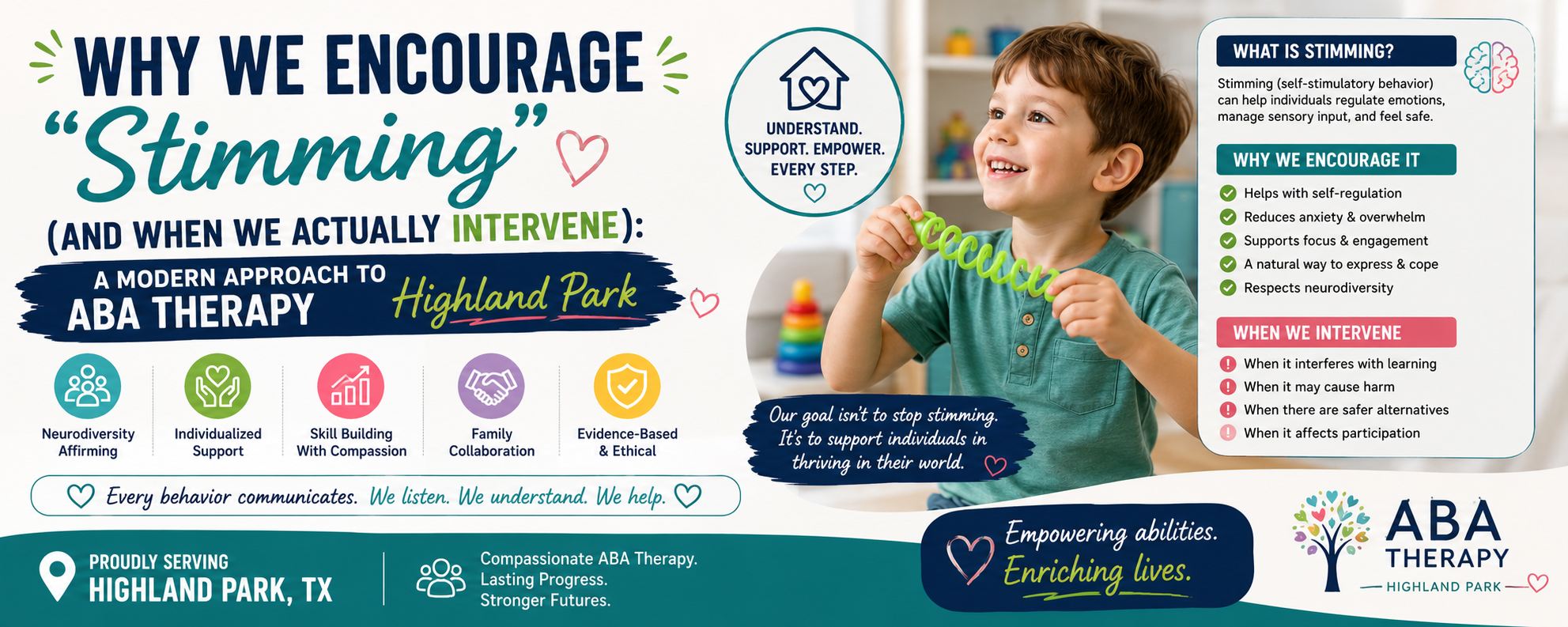
Stimming is short for “self-stimulatory behavior.” It refers to repetitive movements, sounds, or actions that help an individual regulate emotions, sensory input, attention, or stress.
Common examples of stimming include:
- Hand flapping
- Rocking back and forth
- Humming or vocal sounds
- Finger tapping
- Repeating words or phrases
- Twirling objects
- Jumping repeatedly
- Hair twirling
- Pacing
- Fidgeting
Many people stim, including neurotypical individuals. Tapping a pencil during a meeting, bouncing a leg while concentrating, or humming a favorite song are all forms of self-regulation.
For autistic children, stimming may simply be more noticeable or occur more frequently.
Families seeking autism therapy Highland Park TX are often relieved to learn that modern therapy providers focus on understanding these behaviors rather than automatically suppressing them.
Why Do Autistic Children Stim?
One of the biggest misconceptions about stimming is that it is meaningless. In reality, stimming often serves a valuable purpose.
Sensory Regulation
Some children experience sensory information more intensely than others. Stimming can help them manage overwhelming environments.
For example:
- A child may rock to calm their nervous system.
- Hand flapping may help release excitement.
- Humming may reduce sensory overload.
Many children receiving ABA therapy for autism Highland Park use stimming as a natural coping mechanism.
Emotional Regulation
Children often stim when experiencing strong emotions.
This can include:
- Excitement
- Happiness
- Anxiety
- Frustration
- Anticipation
Rather than viewing these behaviors as problematic, modern therapists ask what emotional need the child may be communicating.
Improving Focus
Some children actually concentrate better while engaging in certain repetitive movements.
Examples include:
- Squeezing a sensory toy while listening
- Tapping fingers during instruction
- Walking while thinking
At our ABA clinics in Highland Park, we often find that allowing appropriate stimming can improve engagement rather than decrease it.
Communication
Some forms of stimming can also communicate feelings when a child lacks the language to express them.
For example:
- Increased pacing may signal anxiety.
- Excited hand movements may indicate joy.
- Repetitive vocalizations may show stress or uncertainty.
Understanding these signals is an important part of effective behavior therapy Highland Park.
The Old View of Stimming
Historically, some ABA programs focused heavily on making autistic children appear more “typical.”
This often meant reducing visible autistic traits, including stimming behaviors.
The reasoning was usually based on:
- Improving social acceptance
- Increasing classroom participation
- Reducing distractions
While these goals may have been well-intentioned, many autistic adults have since shared that suppressing harmless stimming was exhausting and emotionally harmful.
As a result, the field of Applied Behavior Analysis Highland Park has evolved significantly.
Today, many providers prioritize quality of life, self-advocacy, communication, and emotional well-being rather than focusing on appearance or conformity.
The Modern ABA Perspective on Stimming
At Radiant Spectrum Therapy, we ask a simple question:
Is the behavior helping the child, harming the child, or preventing meaningful participation?
If a stim is safe and helping the child regulate, we often encourage it.
This reflects current best practices in ABA therapy services Highland Park and aligns with neurodiversity-affirming care principles.
Examples of Stimming We Typically Support
We commonly support behaviors such as:
- Hand flapping
- Rocking
- Fidgeting
- Repetitive movement during play
- Vocal stims that do not interfere with communication
- Sensory toy use
- Pacing in appropriate settings
When these behaviors help a child feel comfortable, focused, and regulated, there is often little reason to intervene.
Families looking for best ABA therapy providers Highland Park are increasingly seeking programs that respect these differences rather than trying to eliminate them.
Why Encouraging Safe Stimming Matters
It Supports Emotional Well-Being
Imagine being told you could no longer bite your nails, tap your foot, stretch, or take deep breaths when stressed.
For many autistic individuals, stimming serves a similar purpose.
Allowing safe stimming can:
- Reduce anxiety
- Improve comfort
- Increase confidence
- Support emotional regulation
These outcomes are often central goals in autism behavior therapy programs.
It Reduces Masking
Masking occurs when autistic individuals suppress natural behaviors in order to fit social expectations.
Research and lived experiences suggest that excessive masking can contribute to:
- Anxiety
- Burnout
- Stress
- Low self-esteem
Modern ABA therapy in Highland Park TX focuses on helping children thrive as themselves rather than forcing them to appear neurotypical.
It Promotes Self-Advocacy
When children learn that their needs are respected, they become more comfortable communicating those needs.
For example:
- Asking for sensory breaks
- Requesting headphones
- Using fidget tools
- Identifying overwhelming situations
These skills support long-term independence and success.
When Do We Actually Intervene?
While we support many forms of stimming, there are situations where intervention may be appropriate.
The goal is not to eliminate stimming.
The goal is to ensure safety and improve quality of life.
When the Behavior Causes Physical Harm
This is one of the clearest reasons to intervene.
- Head banging
- Self-hitting
- Skin picking that causes injury
- Biting oneself
In these situations, our BCBA services Highland Park team works to identify why the behavior is occurring and teach safer alternatives.
When the Behavior Harms Others
Intervention may also be needed when a behavior creates a safety concern for others.
Examples include:
- Hitting peers
- Throwing objects
- Aggressive physical contact
Through individualized behavioral intervention Highland Park TX, we help children develop safer methods for communication and regulation.
When It Significantly Interferes With Learning
Some stimming behaviors can become so intense that they prevent participation in important activities.
For example:
- A child may be unable to engage in instruction.
- A child may miss opportunities for communication.
- A child may struggle to participate in daily routines.
In these cases, intervention focuses on increasing flexibility and teaching additional regulation strategies — not eliminating self-expression.
When It Prevents Essential Daily Activities
Occasionally, a behavior may interfere with:
- Eating
- Sleeping
- Personal hygiene
- Safety skills
- Community participation
When this occurs, therapists develop individualized goals through pediatric ABA therapy Highland Park to help the child access important life experiences.
What Does Intervention Actually Look Like?
Another misconception is that intervention means forcing a child to stop a behavior.
Modern ABA looks very different.
Step 1: Understand the Function
Before making any recommendations, we determine why the behavior occurs.
Questions we ask include:
- What sensory need is being met?
- When does the behavior happen?
- What environments trigger it?
- What purpose does it serve?
This process is fundamental to how ABA therapy works Highland Park.
Step 2: Respect the Need
The goal is not to remove the need.
The goal is to address it appropriately.
If a child needs sensory input, we may provide:
- Sensory toys
- Movement breaks
- Alternative activities
- Environmental modifications
Step 3: Teach Additional Skills
Children benefit from having multiple regulation tools available.
We may teach:
- Communication skills
- Self-advocacy
- Emotional awareness
- Coping strategies
- Functional replacement behaviors
These approaches are commonly used in both center-based ABA therapy Highland Park and in-home ABA therapy Highland Park programs.
What Parents Should Look For in an ABA Provider
If you are trying to find ABA therapist Highland Park options, it is important to ask questions about how providers approach stimming.
Consider asking:
- Do you automatically target stimming behaviors?
- How do you determine whether intervention is necessary?
- Do you support sensory regulation strategies?
- How do you incorporate child preferences?
- How do you respect autistic identity?
The answers can reveal a great deal about a provider’s philosophy.
Many families searching for best ABA therapy in Highland Park specifically seek providers who prioritize respect, collaboration, and individualized care.
How Parent Training Supports This Approach
Parent involvement is one of the most valuable components of successful therapy.
During parent training sessions, we help families:
- Understand sensory needs
- Recognize the purpose of stimming
- Differentiate harmful versus harmless behaviors
- Support emotional regulation at home
- Advocate for their child in school and community settings
These supports are a key part of our broader autism support services Highland Park.
Early Intervention and Stimming
Families pursuing early intervention ABA Highland Park often worry that encouraging stimming will somehow limit progress.
In reality, children often learn best when they feel safe, regulated, and understood.
When therapy respects sensory needs:
- Learning opportunities increase
- Communication improves
- Frustration decreases
- Relationships strengthen
This is especially important for children receiving ABA therapy for toddlers Highland Park and ABA therapy for kids Highland Park, who are still developing foundational emotional and communication skills.
Individualized Care Matters
No two autistic children are exactly alike.
A behavior that is helpful for one child may be problematic for another.
That is why individualized assessment is so important.
Whether a child participates in private ABA therapy Highland Park, intensive ABA programs Highland Park, or a comprehensive treatment plan involving multiple services, therapy goals should always be based on the child’s unique needs rather than assumptions.
Some children may benefit from additional sensory supports.
Others may need communication training.
Some may not require any intervention related to stimming at all.
The best treatment plans reflect the individual — not a checklist.
Building a More Inclusive Future
The conversation around autism has changed dramatically over the last decade.
Parents, autistic adults, clinicians, and researchers are increasingly recognizing that supporting autistic individuals means understanding their needs rather than simply changing their behaviors.
Modern Highland Park autism services should focus on:
- Communication
- Independence
- Emotional well-being
- Safety
- Self-advocacy
- Meaningful quality of life
When viewed through this lens, stimming is often not a problem to solve — it is valuable information about what a child needs.
Conclusion: A Different Approach to ABA Therapy Highland Park
At Radiant Spectrum Therapy, we believe that therapy should empower children, not erase who they are. That is why our approach to ABA therapy Highland Park recognizes that stimming often serves an important purpose. Safe, functional stimming can help children regulate emotions, manage sensory experiences, communicate needs, and participate more successfully in daily life.
When intervention is necessary, our goal is never to eliminate harmless self-expression. Instead, we focus on safety, communication, and improving quality of life through compassionate, individualized care.
Whether your family is exploring Autism Treatment Highland Park, ABA therapy near Highland Park, developmental therapy Highland Park, or learning more about ABA therapy cost Highland Park, choosing a provider who understands and respects neurodiversity can make a meaningful difference.
At Radiant Spectrum Therapy, we are committed to providing evidence-based, child-centered care that helps every child build skills while honoring their individuality. Through our ABA therapy services Highland Park, families receive support that is collaborative, respectful, and focused on long-term success.
Contact us at 972–310–4991 or visit https://radiantspectrumtherapy.com/ to learn more.