
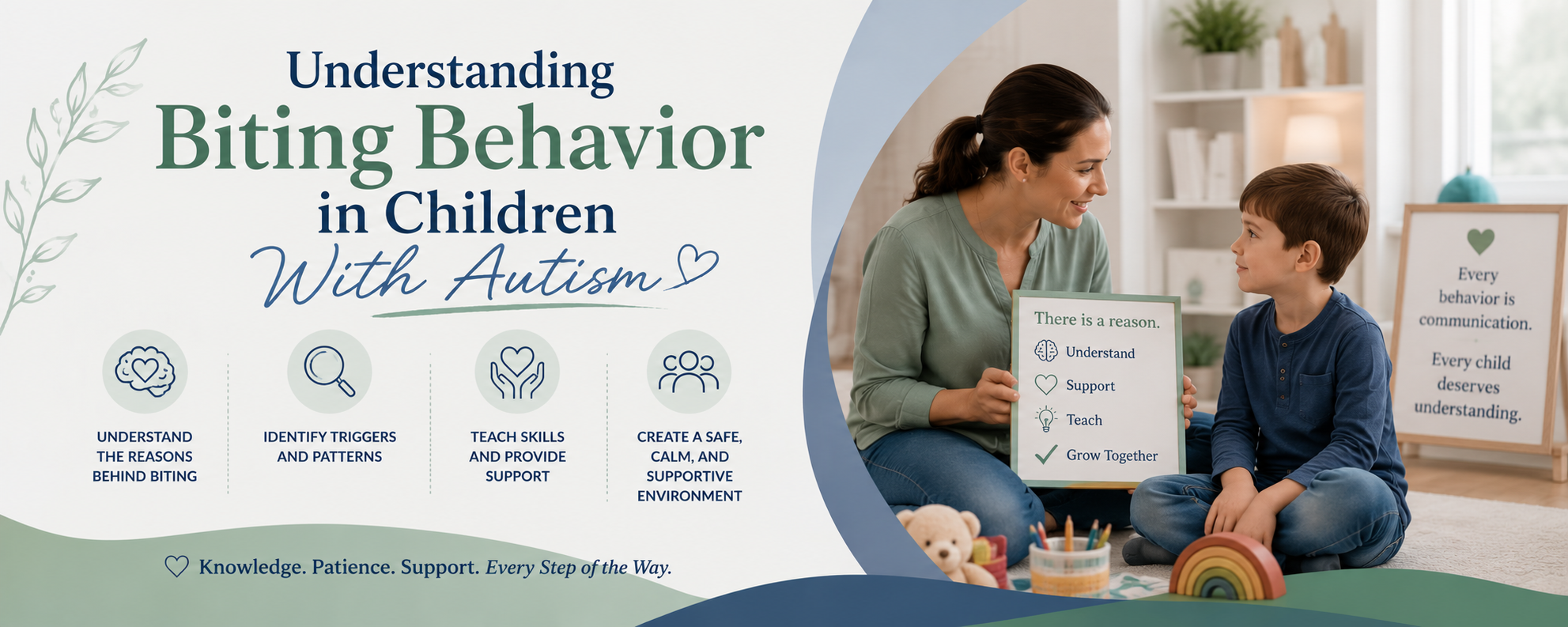
Biting is one of the more difficult behaviors families and caregivers may face when supporting a child with autism. It can happen suddenly, without warning, and often leaves parents feeling overwhelmed, embarrassed, or unsure about what to do next. While biting may look aggressive on the surface, there is usually a deeper reason behind the behavior.
Children communicate in many different ways, and for some children with autism, behaviors like biting become a form of communication when words, emotional regulation, or coping skills are still developing. Understanding the “why” behind biting is one of the most important steps in helping a child learn safer and more appropriate ways to express their needs.
At Radiant Spectrum Therapy, families are often surprised to learn that biting is more common than they thought, especially in younger children or children who struggle with communication, sensory regulation, or transitions. The good news is that with consistency, patience, and evidence-based support, biting behaviors can improve significantly over time.
Families searching for Autism Treatment Highland Park often want answers that feel practical and realistic. They want strategies that work at home, at school, and in everyday life. Most importantly, they want to feel hopeful again.
Why Do Children With Autism Bite?
Biting can happen for several different reasons, and no two children are exactly alike. Some children bite when they feel frustrated, while others may bite because they are seeking sensory input or trying to escape a difficult situation.
Here are some of the most common reasons biting behavior occurs:
Communication Challenges
Many children with autism struggle to express their wants, needs, or emotions clearly. When communication feels difficult, behaviors may take the place of words. A child who cannot explain that they are overwhelmed, angry, scared, or overstimulated may resort to biting as a quick reaction.
This is especially common during transitions, social situations, or moments when expectations suddenly change.
Sensory Needs
Some children bite because they crave oral sensory input. The pressure created by biting can feel calming or regulating to the nervous system. In these situations, the behavior may not be intended to hurt someone.
Children who seek sensory input may also chew on clothing, toys, pencils, blankets, or their own hands.
Attention Seeking
Even negative attention can reinforce a behavior if a child learns that biting immediately gets a reaction. If adults rush over, speak loudly, or dramatically respond each time biting occurs, the child may begin associating the behavior with receiving attention.
Escaping Difficult Situations
Biting can also happen when a child wants to avoid an activity they dislike. For example, a child may bite during homework, cleanup time, social interactions, or non-preferred tasks.
When the activity stops after the behavior occurs, the child may unintentionally learn that biting helps them escape uncomfortable situations.
Emotional Overload
Children with autism may experience intense emotional reactions that are difficult to regulate independently. Feelings like anxiety, frustration, overstimulation, or disappointment can build quickly.
Without strong coping strategies in place, biting may occur during moments of emotional overload.
Looking Beyond the Behavior
One of the most important things families can do is avoid labeling a child as “bad” or “aggressive.” Behaviors are forms of communication. When parents shift their focus from punishment to understanding, progress becomes much more achievable.
Behavioral support should always focus on identifying triggers, teaching replacement skills, and creating consistency across environments.
Families looking for ABA therapy Highland Park, TX often benefit from a team approach that includes therapists, caregivers, and educators working together toward shared goals.
Instead of simply trying to stop the behavior, effective therapy focuses on teaching the child what to do instead.
What Happens Before the Biting?
Tracking patterns can provide valuable insight into what is causing the behavior.
Parents may notice questions like:
- Does biting happen during transitions?
- Is the environment too loud or overstimulating?
- Does the child bite when asked to share?
- Does the behavior occur when communication becomes difficult?
- Is the child tired, hungry, or overwhelmed?
- Does biting happen more often with certain people?
Keeping notes about what happens before, during, and after biting incidents can help identify patterns that may not be obvious at first.
This process is often part of professional behavioral therapy Park Cities families use to better understand challenging behaviors and create effective intervention plans.
Teaching Safer Replacement Behaviors
Children cannot simply be told to “stop” a behavior without learning an alternative skill. Replacement behaviors are essential.
Depending on the child’s needs, replacement skills may include:
- Asking for help
- Using words or visuals to communicate
- Requesting a break
- Practicing calming techniques
- Using sensory tools appropriately
- Learning emotional regulation skills
- Improving tolerance during transitions
For children who bite for sensory reasons, alternatives like chew necklaces, crunchy snacks, or sensory activities may help reduce the urge.
For children who bite during frustration, teaching communication and emotional regulation becomes especially important.
Consistency matters. When caregivers respond calmly and predictably, children begin learning new patterns over time.
The Importance of Parent Involvement
Parents play a major role in behavioral progress. Strategies used during therapy sessions become far more effective when they are consistently practiced at home.
That is why ABA Parent Training is such an important part of successful treatment plans.
Parent training helps caregivers:
- Understand why behaviors happen
- Respond consistently during difficult moments
- Reinforce positive behaviors effectively
- Reduce accidental reinforcement of biting
- Build confidence in managing behaviors at home
- Support emotional regulation and communication skills
Many families feel isolated or discouraged after repeated behavioral challenges. Parent support and education can make a tremendous difference not only for the child, but for the entire household.
Home Support Can Make a Big Difference
Some children respond best when therapy occurs in familiar environments where behaviors naturally happen.
Home-Based ABA Therapy allows therapists to observe real-life routines, transitions, and triggers directly within the home setting. This often creates opportunities for highly individualized support.
Families searching for in-home ABA therapy Dallas services often appreciate the convenience and practical nature of home-based care. Therapists can work directly on everyday challenges such as:
- Morning routines
- Mealtime behaviors
- Sibling interactions
- Community outings
- Bedtime struggles
- Communication during stressful moments
Because therapy happens in the child’s natural environment, skills can often generalize more effectively into daily life.
Benefits of Structured Learning Environments
While home support is valuable, some children also thrive in structured clinical settings where routines, peer interaction, and skill-building opportunities are carefully designed.
Center-Based ABA environments provide children with opportunities to practice communication, social interaction, emotional regulation, and behavior management in a supportive setting.
For many children, center-based learning helps improve:
- Social skills
- Following directions
- Transition tolerance
- Group participation
- Communication abilities
- Daily living skills
Families looking for center-based autism services often appreciate having access to consistent routines and collaborative care teams.
Structured settings can also help children practice coping strategies across different situations while receiving immediate support from trained professionals.
Staying Calm During Biting Incidents
It is completely understandable for parents to feel emotional when biting occurs, especially if someone gets hurt. However, remaining calm is one of the most effective ways to prevent escalation.
During a biting incident, caregivers should focus on:
- Keeping responses brief and neutral
- Prioritizing safety
- Avoiding lengthy lectures
- Redirecting toward appropriate behaviors
- Reinforcing calm communication when possible
Children often feed off emotional reactions. Calm and predictable responses create a sense of stability and reduce reinforcement of the behavior.
Progress takes time, and setbacks can happen. Consistency is far more important than perfection.
Supporting Emotional Regulation
Many children with autism struggle with emotional regulation skills that other children may develop more naturally over time.
Teaching emotional awareness can help reduce behaviors like biting by helping children recognize feelings before reaching a breaking point.
Strategies may include:
- Visual emotion charts
- Deep breathing exercises
- Sensory breaks
- Calm-down spaces
- Structured routines
- Predictable transitions
- Social stories
Therapists working within pediatric behavioral health Highland Park programs often focus heavily on emotional regulation because it supports success across home, school, and community settings.
When children learn how to identify and manage emotions safely, challenging behaviors often decrease naturally.
Every Child Is Different
There is no one-size-fits-all approach to behavior support. Some children need sensory interventions, while others need stronger communication systems or transition support.
The most effective treatment plans are individualized around the child’s unique strengths, challenges, communication style, and developmental needs.
Families searching for ABA providers 75205 frequently want personalized care that feels compassionate, practical, and collaborative.
Progress may happen gradually, but small victories matter. A child learning to ask for a break instead of biting is meaningful progress. A child learning to tolerate frustration for a few extra moments is meaningful progress.
Growth is built one step at a time.
Building a Foundation for Long-Term Success
Biting behavior can feel stressful and emotionally exhausting for families, but it does not define a child’s future. With the right support, children can develop healthier communication skills, stronger coping abilities, and safer ways to express themselves.
Early intervention, consistency, and family involvement all play important roles in helping children succeed.
Whether support happens through Home-Based ABA Therapy, Center-Based ABA programs, or a combination of services, the goal remains the same: helping children build skills that improve everyday life.
Parents deserve support, encouragement, and guidance throughout the process. Children deserve compassionate care that focuses on understanding behavior rather than simply reacting to it.
Families exploring local ABA clinic Texas options are often searching for more than therapy alone. They are looking for hope, answers, and a team that genuinely understands their child.
With patience, structure, and individualized support, meaningful progress is possible.
Contact us at 972–310–4991 or visit https://radiantspectrumtherapy.com/ to book your service.