
Starting therapy can feel like a big step for both a child and their parents. If you are researching ABA Therapy in Dallas, you may be wondering what actually happens during a session. Will your child spend the entire time sitting at a table? Will they be expected to follow instructions all day? What happens if they need a break? And who works with them during therapy?
The good news is that a quality ABA session is much more than a series of drills or worksheets. ABA therapy Dallas programs can include structured teaching, play, communication practice, movement, social opportunities, daily living skills, and plenty of reinforcement. The exact routine depends on the child’s age, goals, interests, needs, and individualized treatment plan.
For families exploring ABA therapy services Dallas, understanding what a typical day looks like can make the process feel much less intimidating. Whether a child receives center-based ABA therapy Dallas, in-home ABA therapy Dallas, or another form of treatment, the goal is to create meaningful opportunities for learning while helping the child feel safe, understood, and supported.
What Is ABA Therapy?
Applied Behavior Analysis, or ABA, is an evidence-based approach that focuses on understanding how behavior works and teaching useful skills through individualized strategies. Applied Behavior Analysis Dallas providers may work with children on communication, social interaction, independence, learning readiness, play, self-help skills, and other areas that are important to everyday life.
For children receiving ABA therapy for autism Dallas, treatment is individualized rather than based on a one-size-fits-all schedule. A BCBA, or Board Certified Behavior Analyst, develops and oversees the treatment plan while the therapy team works toward specific goals.
Parents looking into autism therapy Dallas TX often have questions about how much structure is involved. While structure is important, therapy should also allow children to learn in natural and engaging ways.
A session may involve:
- Playing with preferred toys
- Practicing communication
- Following simple or complex instructions
- Learning social skills
- Working on daily routines
- Practicing appropriate ways to request help or breaks
- Completing structured learning activities
- Building independence
- Taking movement or sensory breaks
- Practicing skills in everyday situations
The activities may look different from one child to another because the goals are different.
Who Is the RBT During an ABA Session?
One of the most important people your child may interact with during therapy is the Registered Behavior Technician, commonly called an RBT.
An RBT is a trained professional who provides direct services under the supervision of a qualified behavior analyst. In a typical session, the RBT may spend significant one-on-one time with your child implementing the strategies and goals outlined in the treatment plan.
The RBT may help a child practice:
- Communication
- Following directions
- Social interaction
- Play skills
- Academic readiness
- Self-help routines
- Functional skills
- Coping and replacement behaviors
- Independence
The RBT also collects data during sessions. This information helps the supervising BCBA understand how the child is progressing and whether strategies need to be adjusted.
For parents researching BCBA services Dallas, it is helpful to understand that the BCBA and RBT have different responsibilities but work as a team. The BCBA oversees the treatment program, analyzes progress, develops goals, and makes clinical decisions. The RBT implements the treatment plan during direct sessions while documenting the child’s responses and progress.
A Typical ABA Therapy Session: What Happens First?
Every child is different, but a typical session usually begins with a transition into therapy.
For some children, entering a new environment can be difficult. The therapist may therefore begin with something familiar or enjoyable rather than immediately presenting a difficult task.
This might mean allowing the child to:
- Choose a preferred toy
- Look at a book
- Play a simple game
- Explore the environment
- Talk with the therapist
- Practice requesting an activity
This opening period gives the therapist an opportunity to see how the child is feeling and establish a positive connection.
For younger children receiving ABA therapy for toddlers Dallas, this part of the session can be particularly important. A toddler may need time to transition away from a parent or become comfortable with the therapist and surroundings.
The goal isn’t simply to get through a checklist. The goal is to create an environment where the child is ready to participate.
Natural Environment Teaching (NET): Learning Through Everyday Activities
Natural Environment Teaching, or NET, is one approach families may hear about when researching how ABA therapy works Dallas.
Instead of teaching every skill in a highly structured setting, NET incorporates learning opportunities into activities that naturally interest the child.
Imagine a child reaching for bubbles.
Rather than simply handing over the bubbles, the therapist might create an opportunity for the child to practice communication by requesting “bubbles,” using a picture, gesture, sign, or another appropriate communication method based on the child’s abilities.
The child is learning while doing something they already enjoy.
NET can be used during:
- Play
- Mealtime
- Art activities
- Outdoor activities
- Games
- Conversations
- Daily routines
- Social interactions
- Community activities
This approach can make learning feel more relevant because the skills are connected to real situations.
For families considering early intervention ABA Dallas, natural teaching opportunities can be especially useful because young children naturally learn through play, interaction, repetition, and exploration.
Discrete Trial Training (DTT): Breaking Skills Into Manageable Steps
Another teaching approach parents may encounter is Discrete Trial Training, or DTT.
DTT uses structured teaching opportunities to help a child learn a specific skill. A skill may be broken into smaller steps so the child can practice one part at a time.
For example, if a child is learning to identify colors, a therapist might present an instruction and provide the child with an opportunity to respond. The therapist then provides appropriate feedback and reinforcement based on the child’s response.
DTT can be useful for teaching skills that benefit from repetition and clear structure.
However, structured teaching does not mean the entire therapy session has to happen at a table.
A well-rounded session may move between structured activities and more natural activities depending on the child’s goals and needs.
Why Play Is an Important Part of ABA Therapy
Parents sometimes hear the word “therapy” and imagine a child sitting quietly while an adult gives instructions. In reality, play can be an important part of behavior therapy Dallas.
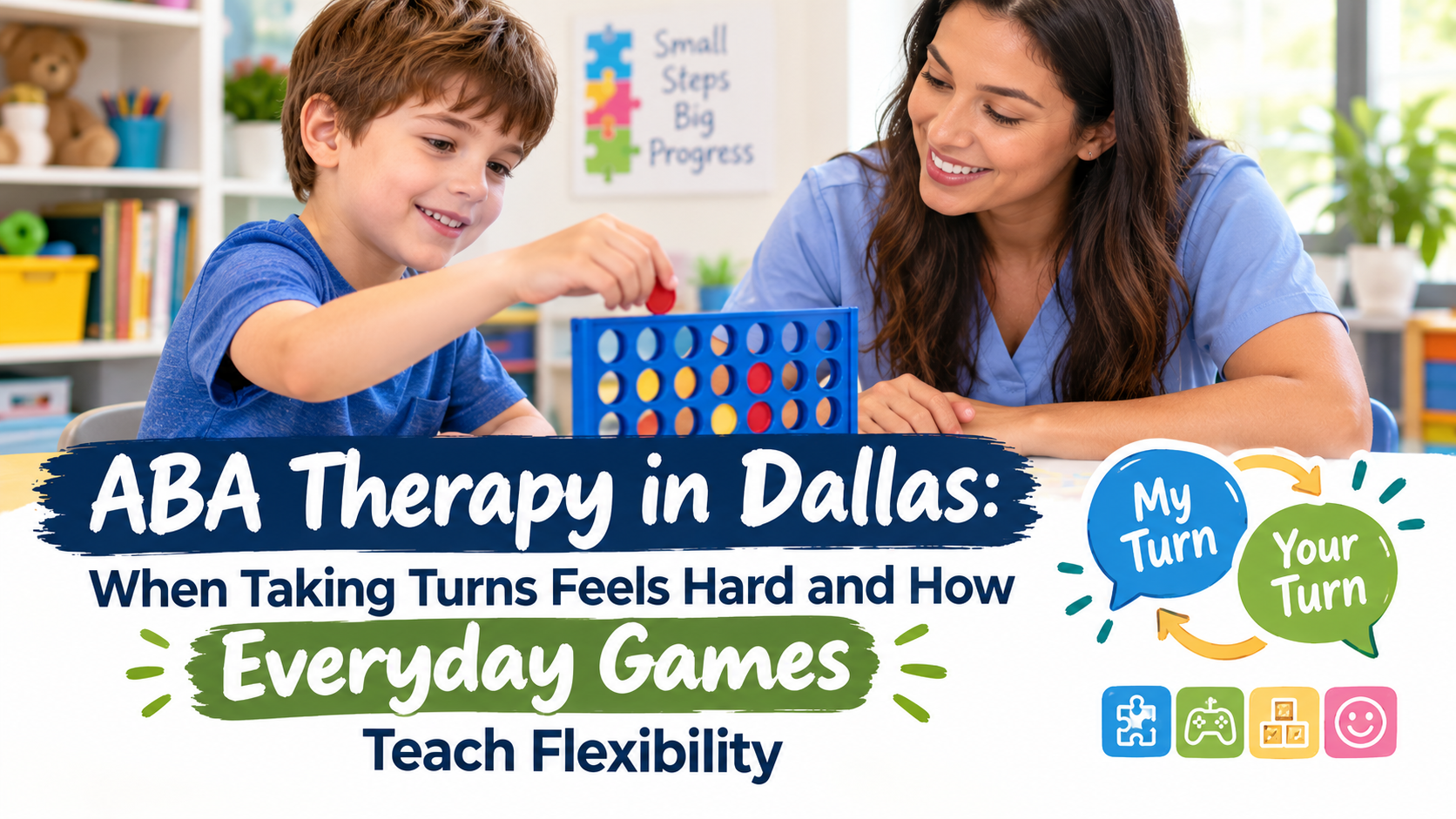
Play gives therapists opportunities to work on communication, social interaction, flexibility, turn-taking, imitation, problem-solving, and many other skills.
For example, a simple game with a ball could become an opportunity to practice:
- Asking for a turn.
- Waiting.
- Taking turns.
- Following a direction.
- Responding to another person.
- Using appropriate communication.
- Handling the end of an activity.
A toy kitchen could become an opportunity to practice pretend play, requesting, following a sequence, and social interaction.
This is one reason pediatric ABA therapy Dallas can look very different from traditional classroom instruction.
The therapist isn’t simply watching the child play. They are using meaningful activities to create opportunities for skill development.
What About Breaks?
Breaks are an important part of many therapy sessions.
Children aren’t expected to work continuously without rest. Depending on the treatment plan and the child’s needs, the therapist may incorporate planned breaks or teach the child how to appropriately request one.
A break could involve:
- Quiet time
- Looking at a favorite book
- Playing with a preferred item
- Movement
- A short sensory activity
- Sitting in a comfortable area
- Another appropriate preferred activity
Teaching a child to appropriately communicate that they need a break can itself be an important skill.
For example, instead of becoming frustrated when an activity becomes difficult, a child may learn to communicate “break” or use another individualized communication response.
That skill can eventually become useful at home, school, and in the community.
What If a Child Doesn’t Want to Participate?
This is one of the most common concerns parents have before beginning ABA therapy for kids Dallas.
Children may refuse activities, become frustrated, lose interest, or need additional support. That’s part of working with children.
The therapist’s response should be individualized. Rather than assuming every refusal means the child simply needs to “try harder,” the therapy team considers what may be happening and uses the treatment plan to guide the response.
The team may adjust:
- The difficulty of the task
- The length of the activity
- The type of reinforcement
- The environment
- The way an instruction is presented
- The amount of prompting
- The timing of the activity
The broader goal is to help the child develop skills that increase independence and participation rather than creating unnecessary frustration.
A Sample Day in a Center-Based ABA Program
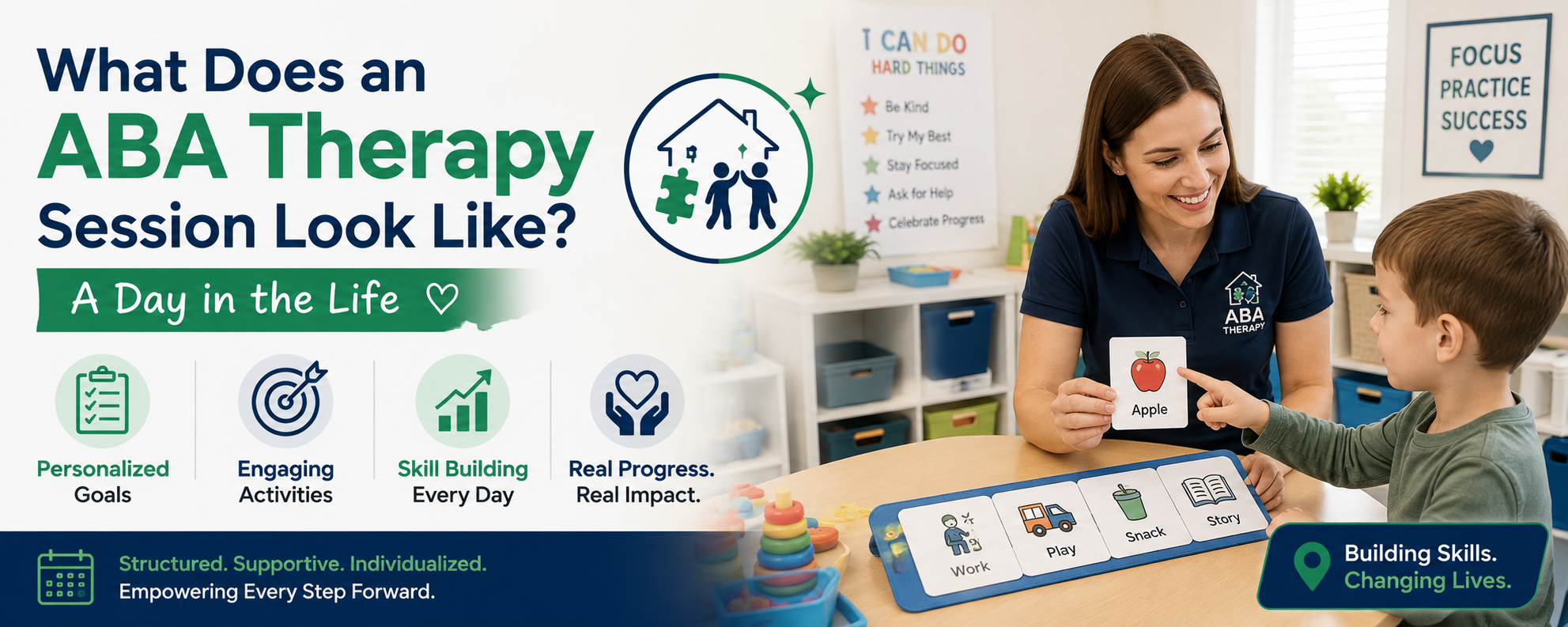
A child’s exact schedule will depend on their individualized treatment plan, but a session could include several different types of activities.
Arrival and Transition
The child arrives and works with the therapist on transitioning into the therapy environment. This might include greeting others, putting belongings away, or choosing an opening activity.
Structured Learning
The RBT may work on specific goals using structured teaching or DTT. Activities are kept appropriate for the child’s developmental level.
Play-Based Learning
The child transitions into play. The therapist uses the child’s interests to practice communication, social interaction, imitation, or other goals.
Natural Environment Teaching
The therapist creates opportunities to practice skills in a more natural setting. The child may request an item, follow a routine, interact with another person, or practice functional communication.
Break
The child receives an appropriate break or practices requesting one.
Daily Living Skills
Depending on the treatment plan, the child may practice routines such as cleaning up, handwashing, eating-related skills, dressing-related skills, or other age-appropriate tasks.
Social Opportunities
The child may practice taking turns, sharing, responding to peers, participating in a group activity, or communicating with others.
Wrap-Up
The therapist reviews the session data and communicates relevant information to the supervising team and, when appropriate, the family.
Again, this is an example rather than a universal schedule. A child’s actual day may look very different.
What Does In-Home ABA Therapy Look Like?
For families considering in-home ABA therapy Dallas, therapy takes place in the child’s familiar environment.
This can be helpful when goals involve everyday routines. For example, the therapist may work on communication during mealtime, following directions during cleanup, dressing routines, appropriate play, or other skills that occur naturally at home.
In-home therapy can also give therapists insight into situations that may be difficult for a child outside of a clinical environment.
Families interested in ABA therapy near Dallas may want to ask providers whether services are available in the home, clinic, school, or community and which setting best fits the child’s treatment goals.
What Does Center-Based ABA Therapy Look Like?
Center-based ABA therapy Dallas provides treatment in a dedicated therapeutic environment.
A center may offer opportunities for structured learning, play, social interaction, group activities, and skill practice within a consistent setting.
For some children, a center can provide a useful environment for practicing skills before transferring them to home, school, or the community.
For families in or around Highland Park, choosing between in-home and center-based services may depend on the child’s needs, family schedule, treatment goals, and available services.
The important question isn’t simply which setting sounds best. It is which environment allows the child’s treatment team to work effectively toward meaningful goals.
How Parents Are Part of the Process
ABA therapy isn’t something that happens only between the child and therapist.
Parent involvement can be an important part of treatment. Families can learn strategies that may help children use their skills outside of therapy.
Parent training may cover areas such as:
- Supporting communication
- Encouraging independence
- Reinforcing appropriate behaviors
- Practicing skills during everyday routines
- Responding consistently to challenging situations
- Creating opportunities for learning at home
This helps bridge the gap between therapy sessions and everyday life.
A child may learn to request something successfully during therapy, but the long-term goal is for that communication skill to become useful with parents, siblings, teachers, caregivers, and other people.
How Progress Is Measured
Another important part of autism behavior therapy Dallas is tracking progress.
Therapists collect data related to treatment goals. The BCBA reviews this information to determine whether the child is making progress and whether adjustments are needed.
Progress may involve more than reducing challenging behavior.
A child might make progress by:
- Communicating needs more effectively
- Completing more steps independently
- Playing appropriately with others
- Following directions
- Participating in routines
- Tolerating changes
- Developing new social skills
- Increasing functional communication
Every child’s goals are different, which is why individualized treatment planning matters.
Families comparing best ABA therapy providers Dallas, top-rated ABA therapists Dallas, or ABA clinics in Dallas should ask how providers measure progress and communicate that progress to families.
Choosing ABA Services in the Dallas and Highland Park Area
Parents researching Dallas autism services may come across many different providers and treatment models. Cost, location, scheduling, insurance coverage, setting, therapist availability, and the child’s individual needs can all affect the decision.
Families may also search for affordable ABA therapy Dallas TX, private ABA therapy Dallas, intensive ABA programs Dallas, or ABA therapy cost Dallas while comparing options.
Rather than choosing based on one factor alone, consider asking:
- What ages does the provider serve?
- Are services available in-home, center-based, or both?
- How is the treatment plan developed?
- How frequently does the BCBA oversee treatment?
- How are parents involved?
- How is progress measured?
- What communication can families expect from the therapy team?
- Does the provider offer early intervention?
- What insurance plans or payment options are accepted?
- How does the provider handle transitions between activities?
- How are breaks and communication needs incorporated?
Families looking for ABA therapy near me Dallas or find ABA therapist Dallas can use these questions to make comparisons based on their child’s actual needs rather than simply choosing the closest provider.
Frequently Asked Questions About ABA Therapy Sessions
How long is an ABA therapy session?
Session length varies depending on the child’s treatment plan, age, goals, schedule, and service setting. Some children receive several hours of therapy while others may have shorter sessions.
Does ABA therapy involve only table work?
No. ABA can include structured learning, play, natural environment teaching, movement, social activities, communication practice, and everyday routines.
Will my child get breaks during therapy?
Breaks can be incorporated into treatment based on the child’s needs and treatment plan. Children may also learn appropriate ways to request a break.
What is the difference between NET and DTT?
NET uses natural activities and environments to create learning opportunities, while DTT uses more structured, clearly defined teaching trials. Both approaches can be used as part of an individualized program.
Does the RBT create my child’s treatment plan?
The BCBA is responsible for developing and overseeing the treatment plan. The RBT provides direct services under appropriate supervision and implements the goals and strategies outlined by the supervising clinician.
Can ABA therapy happen at home?
Yes. In-home ABA therapy Dallas can address skills during familiar routines and environments when that setting is appropriate for the child’s treatment goals.
Is ABA appropriate for toddlers?
Early support can be valuable when a child has developmental or behavioral needs. ABA therapy for toddlers Dallas should be individualized to the child’s developmental level, communication abilities, strengths, and family priorities.
Making the First Step Feel Less Overwhelming
Starting ABA Therapy in Dallas doesn’t mean your child will suddenly be expected to sit still and complete difficult tasks for hours. A thoughtful ABA program meets children where they are and builds skills gradually.
A session may include DTT, NET, play, communication practice, structured activities, breaks, movement, social opportunities, and everyday routines. The RBT provides direct support while the BCBA oversees the treatment program and monitors progress.
For families exploring developmental therapy Dallas, special needs therapy Dallas, behavioral intervention Dallas TX, or autism support services Dallas, understanding the day-to-day experience can make the decision to begin therapy feel more manageable.
At Radiant Spectrum Therapy, families can explore individualized ABA services designed around each child’s needs, strengths, goals, and environment. Whether you are considering services in Highland Park, Dallas, or surrounding communities, the first step is simply learning what options are available and determining what type of support makes sense for your child.
The goal of ABA therapy in Dallas TX isn’t to make every child follow the same routine. It is to help children build meaningful skills, communicate more effectively, participate in everyday life, and become more independent — one achievable step at a time.
Contact us at 972–310–4991 or visit https://radiantspectrumtherapy.com/ to learn more.