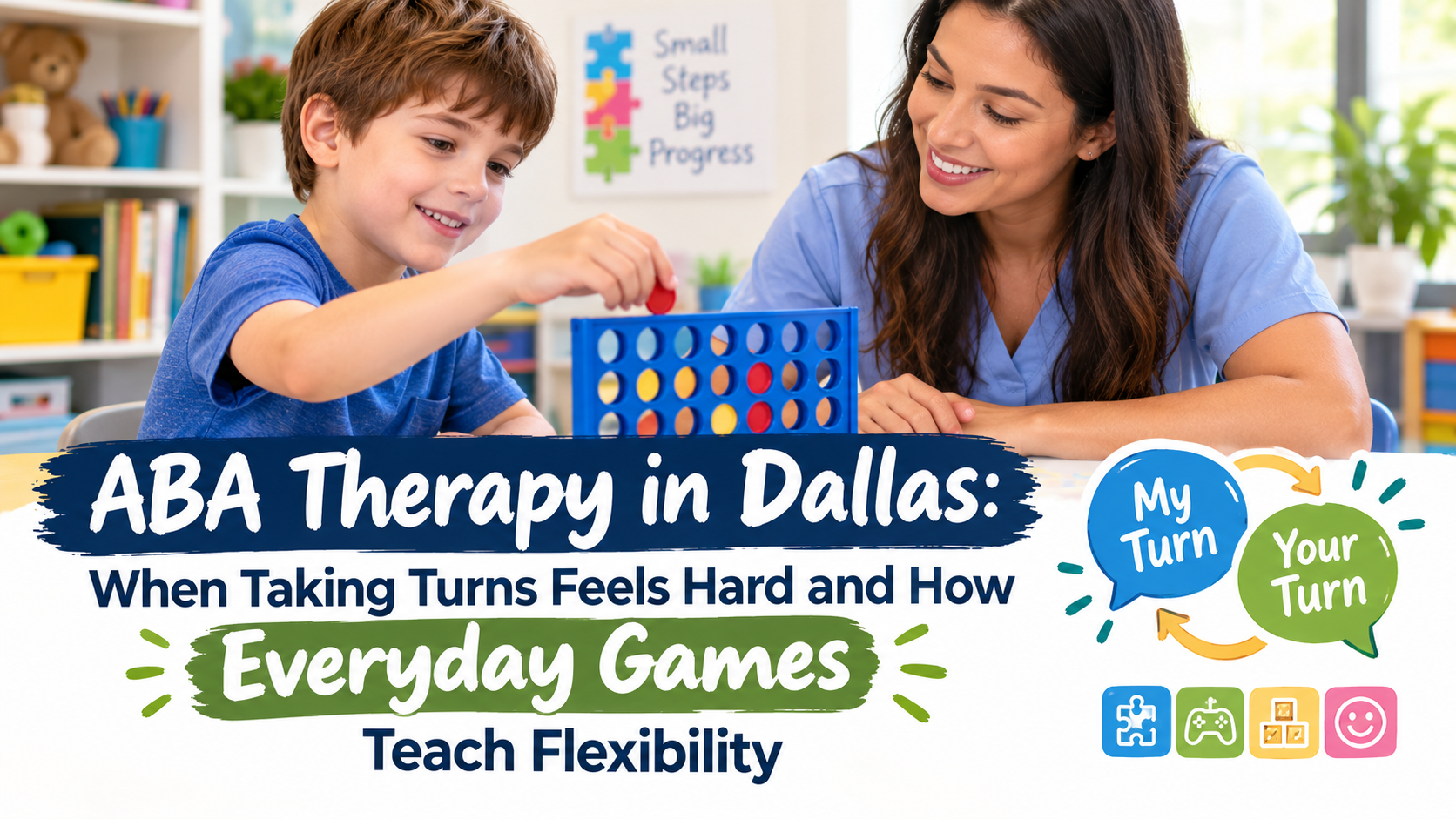

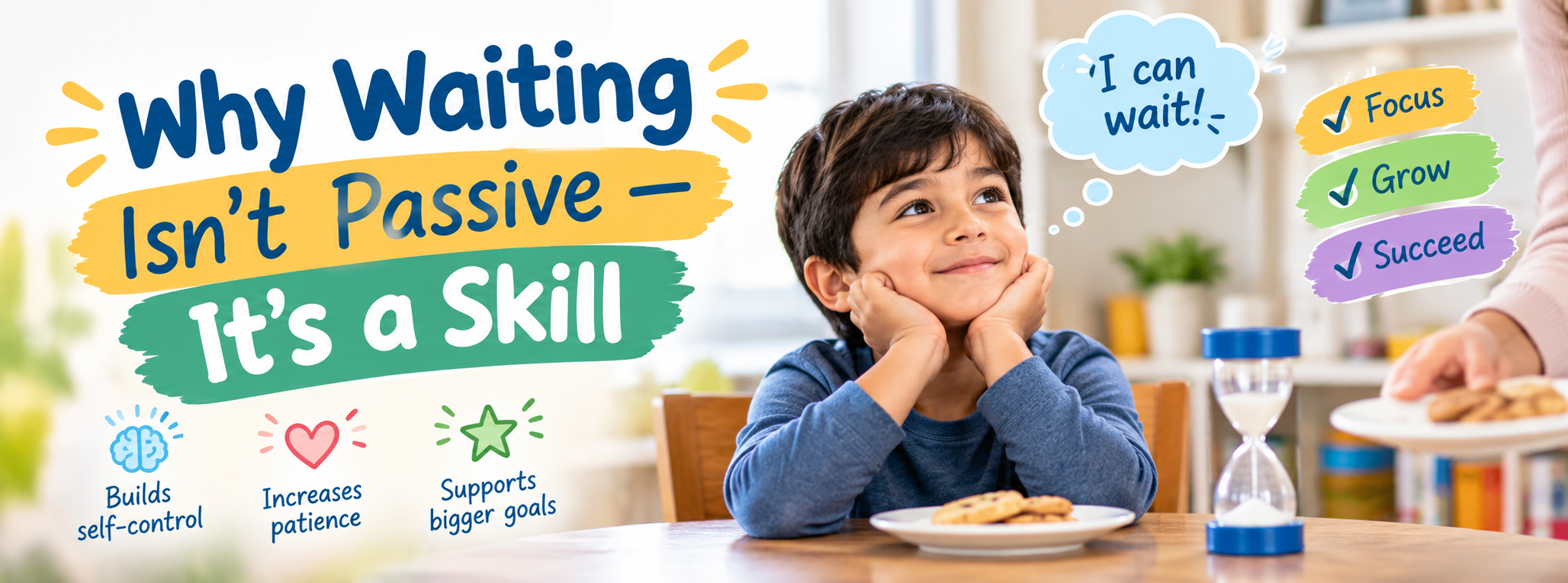
Waiting can look like a simple part of everyday life. A child waits for a snack, waits for a turn, waits for a parent to finish a conversation, or waits for a favorite activity to begin. But for some children, especially children who have difficulty with transitions, communication, flexibility, or delayed access to preferred activities, waiting can be a surprisingly challenging skill.
This is one reason ABA Therapy in Dallas can focus on more than reducing challenging behaviors. ABA therapy can also help children build practical skills that make everyday situations easier to navigate. Learning how to wait, for example, can support communication, independence, flexibility, and participation at home, school, and in the community.
Waiting is not simply about telling a child to “be patient.” It is a skill that can be taught, practiced, supported, and gradually strengthened.
What Does It Really Mean to Wait?
Waiting means being able to tolerate a delay between wanting something and getting it.
That delay might be only a few seconds at first. Over time, a child may learn to wait for longer periods while remaining engaged in an appropriate activity or using a communication strategy.
For example, imagine a child asks for a favorite toy while their parent is putting away groceries. Instead of immediately receiving the toy, the child may need to wait for a short period.
A successful waiting routine might look like:
- The child asks for the toy.
- The parent acknowledges the request.
- The child receives a clear indication that the toy is coming.
- The child waits for a short period.
- The toy is provided after the waiting period.
- The child learns that waiting does not mean the request has been forgotten.
The goal isn’t to make children wait indefinitely. Instead, the goal is to help them understand that a short delay can be manageable.
Why Waiting Can Be Difficult
Adults often underestimate how much information is involved in waiting.
When someone says, “Just wait a minute,” an adult usually understands what that means. A child may not.
They may wonder:
- How long is a minute?
- What am I supposed to do while I wait?
- Will I actually get what I asked for?
- Did my parent hear me?
- Can I ask again?
- What happens if I become upset?
- What should I do if the activity takes longer than expected?
For a child who has difficulty with uncertainty or delayed gratification, waiting can feel unpredictable.
This is where ABA therapy Dallas families seek can focus on breaking a larger skill into smaller, understandable steps.
Rather than treating waiting as an expectation a child should automatically know, a behavior professional can look at what the child currently understands and determine what skills need to be developed.
Waiting Is Connected to Communication
One of the most important parts of teaching waiting is making sure children have appropriate ways to communicate.
A child who cannot easily communicate “I want it,” “How much longer?” or “I need help” may become frustrated when something they want is delayed.
Communication can take many forms.
Depending on the child’s individual needs, they might use:
- Spoken words
- Gestures
- Sign language
- Picture communication
- An AAC device
- A visual card
- A simple phrase such as “my turn”
- A learned request for help
The specific communication method matters less than giving the child a reliable way to express what they need.
Applied Behavior Analysis Dallas programs often consider communication skills when addressing behaviors associated with waiting. When children have a functional way to communicate, they may have more options available to them when they encounter a delay.
Waiting Doesn’t Mean Sitting Still
A common misconception is that successful waiting means a child must sit quietly with nothing to do.
That isn’t necessarily the case.
For many children, waiting becomes easier when they know what they can do during the delay.
A child might:
- Look at a short book
- Play with a small waiting activity
- Hold a visual timer
- Sing a familiar song
- Complete a simple task
- Stay near a parent while an activity is prepared
- Engage with a preferred but appropriate item
This turns waiting from an empty period into a predictable routine.
For example, instead of saying, “Wait for dinner,” a parent might establish a simple routine where the child helps place napkins on the table while dinner is being finished.
The child is still waiting — but they are also participating.
Start With a Wait That Is Actually Achievable
One of the biggest mistakes adults can make is expecting too much too soon.
If a child can comfortably wait for five seconds, asking them to wait for ten minutes may create an unnecessary challenge.
ABA therapy services Dallas families use can break skills into smaller steps based on the child’s current abilities.
A waiting goal might begin with a very short delay.
Step 1: Request
The child appropriately asks for an item or activity.
Step 2: Acknowledge
The adult responds so the child knows the request was heard.
Step 3: Introduce a Brief Delay
The child waits for a short, achievable period.
Step 4: Provide the Expected Outcome
The requested item or activity becomes available after the waiting period.
Step 5: Gradually Increase the Delay
As the child becomes more successful, the waiting period can be adjusted gradually.
This approach helps the child experience success instead of repeatedly encountering a situation that feels impossible.
Visuals Can Make Waiting More Predictable
Children don’t always understand abstract descriptions of time.
“Five minutes” can be difficult to picture.
A visual can make the waiting period easier to understand.
Depending on the child’s age and abilities, families and therapists may use:
- Visual timers
- Countdown strips
- First-Then boards
- Picture schedules
- Waiting cards
- Simple written countdowns
- Visual activity sequences
For example:
First wait → Then tablet
Or:
First shoes → Then playground
These visuals can provide information that spoken instructions alone may not communicate clearly.
Over time, the child may need less support as the waiting routine becomes familiar.
Waiting Can Build Flexibility
Waiting isn’t only about delayed access to a favorite item. It can also help children practice flexibility.
Daily life rarely happens exactly when we expect it to.
A restaurant may take longer than expected. A doctor’s appointment may run late. A sibling may need attention first. A favorite activity may not be immediately available.
Children who develop waiting skills can begin learning that a delay does not necessarily mean something has gone wrong.
That doesn’t mean every delay will be easy.
Instead, the child can gradually develop strategies for handling situations that don’t happen immediately.
This is one reason ABA therapy for autism Dallas families consider may include goals related to flexibility, transitions, communication, and coping with changes in routine.
Waiting Can Be Practiced Everywhere
Waiting doesn’t have to happen only during structured therapy.
Everyday routines provide countless opportunities.
At Home
A child can practice waiting while:
- A snack is being prepared
- A parent finishes a phone call
- A sibling takes a turn
- A favorite show is starting
- A bath is being prepared
- A toy is being set up
At School
Waiting may be practiced when:
- Waiting for a teacher’s instruction
- Waiting in line
- Taking turns during group activities
- Waiting for materials
- Waiting for a classmate to finish
In the Community
Community situations can offer even more natural opportunities:
- Waiting at a restaurant
- Waiting at a doctor’s office
- Waiting at the playground
- Waiting in a store
- Waiting for an elevator
- Waiting for a family member
These situations can help children understand that waiting is part of everyday life rather than something that only happens during therapy.
The Importance of Reinforcement
When children are learning a new skill, recognizing successful attempts matters.
Reinforcement can help a child understand which behavior is producing a positive outcome.
For example, if a child successfully waits for a short period, an adult might immediately acknowledge the effort and provide access to the requested activity.
The reinforcement doesn’t always have to be elaborate.
It might be:
- Access to a preferred toy
- Praise
- A favorite activity
- A turn with something interesting
- A high five
- Verbal recognition such as “You waited!”
The appropriate reinforcement depends on the individual child and the goal being taught.
In behavior therapy Dallas families explore, reinforcement is often individualized rather than assuming that the same strategy will work for every child.
What If the Child Struggles?
Difficulty waiting does not mean a child is being defiant or intentionally difficult.
There may be several reasons the child is struggling.
Perhaps the waiting period is too long. Maybe the child doesn’t understand when the requested item will become available. They may not have a communication strategy for asking for help. The environment may be overwhelming. Or they may simply need more opportunities to practice.
Instead of asking only, “How do we make the child wait?” it can be more useful to ask:
“What does the child need in order to be successful while waiting?”
That question can lead to a more individualized approach.
A BCBA or other qualified professional may look at what happens before, during, and after the difficulty to better understand the situation.
Waiting Shouldn’t Be Used as a Punishment
There is an important difference between teaching a child to wait and deliberately withholding something to make a child upset.
The purpose of waiting practice should be to build a useful life skill.
A supportive approach provides:
- Clear expectations
- Reasonable waiting periods
- Predictability
- Appropriate communication options
- Reinforcement for successful waiting
- Gradual increases in difficulty
The goal is not simply compliance.
The larger goal is helping a child become more comfortable navigating the ordinary delays that come with daily life.
How ABA Can Individualize Waiting Goals
Every child begins at a different point.
One child may already be able to wait for several minutes but struggle when the expected activity changes. Another child may need to begin with only a few seconds.
This is where individualized BCBA services Dallas families seek can be valuable.
A BCBA may consider questions such as:
- What situations are most difficult for the child?
- How does the child currently communicate requests?
- How long can the child comfortably wait?
- What supports make waiting easier?
- What activities are motivating?
- What happens when the child becomes frustrated?
- What skills should be taught alongside waiting?
These details can help create a plan that fits the child’s needs instead of applying the same waiting expectation to everyone.
In-Home and Center-Based Opportunities
Waiting skills can be practiced in different environments.
In-home ABA therapy Dallas families participate in can provide opportunities to work on waiting during familiar routines such as meals, play, chores, bedtime, and sibling interactions.
Center-based ABA therapy Dallas programs may provide structured opportunities to practice waiting around activities, group routines, transitions, and social interactions.
Neither setting automatically makes waiting easier. The useful part is creating opportunities for the child to practice the skill in meaningful situations.
For some families, a combination of environments can provide opportunities to practice skills across different settings.
Waiting Is a Skill That Can Grow
Learning to wait doesn’t happen all at once.
A child might begin by waiting for five seconds. Later, they may wait for thirty seconds. Eventually, they may learn to tolerate longer delays, use communication to ask questions, or independently choose an activity while waiting.
Progress can look different from child to child.
Sometimes the biggest improvement isn’t a longer waiting period. It may be the child learning to communicate appropriately instead of becoming frustrated. It may be recognizing a visual cue. It may be transitioning to another activity independently.
Those smaller steps can matter because they contribute to a larger goal: helping children participate more comfortably and independently in everyday life.
Supporting Waiting Skills at Home
Parents don’t need to turn every moment into a formal therapy session.
Instead, look for small, natural opportunities.
Try:
- Giving a clear “first-then” direction.
- Starting with short waiting periods.
- Using a visual timer when appropriate.
- Acknowledging the child’s communication.
- Providing something appropriate to do while waiting.
- Praising successful waiting.
- Gradually increasing the delay when the child is ready.
- Keeping expectations consistent between caregivers.
- Practicing during ordinary routines instead of only during difficult situations.
Most importantly, keep the goal realistic.
If a child is learning to wait, success may begin with just a few seconds.
Waiting Builds Skills Beyond the Moment
At first, waiting may seem like a very small goal.
But the skill can connect to many larger areas of development.
A child who learns to wait may also get opportunities to practice:
- Communication
- Self-management
- Flexibility
- Turn-taking
- Following routines
- Problem-solving
- Independence
- Social participation
These are skills that can be useful at home, school, and in the community.
That is why waiting deserves to be treated as a skill — not simply as a behavior adults expect children to have automatically.
How to Get Started With ABA Therapy in Dallas
For families exploring ABA Therapy in Dallas, it can be helpful to look beyond broad treatment descriptions and ask how a provider approaches practical, everyday goals.
Consider asking how the provider addresses:
- Communication
- Waiting and turn-taking
- Transitions
- Independence
- Social skills
- Family involvement
- Generalization across settings
- Individualized treatment planning
A good starting point is understanding your child’s current strengths and identifying the everyday situations where additional support could make a meaningful difference.
At Radiant Spectrum Therapy, individualized goals can focus on helping children develop practical skills that support participation in their daily routines. Whether a child is practicing communication, transitions, independence, or waiting, the objective is to build skills that can carry beyond a therapy session.
Final Thoughts: Waiting Is Active Learning
Waiting may look like doing nothing, but for a child who is still developing this ability, a waiting moment can involve communication, self-management, flexibility, and problem-solving all at once.
The goal isn’t to expect a child to become perfectly patient overnight.
It’s to give them the tools and practice they need to understand what waiting means, communicate during a delay, and gradually become more comfortable when something they want isn’t immediately available.
For families considering ABA Therapy in Dallas, waiting can be one of many practical skills worth exploring as part of an individualized approach to development. With the right support, small waiting moments can become opportunities for meaningful growth — one manageable step at a time.
Contact us at 972–310–4991 or visit https://radiantspectrumtherapy.com/ to learn more.