
Teaching a new habit can feel overwhelming for any parent, especially when routines already feel full and unpredictable. Whether you are helping your child learn to brush their teeth independently, follow a morning routine, clean up after playtime, or practice calming strategies, building habits takes patience, consistency, and the right support.
For families raising children with autism, habit-building often requires more structure and repetition than people realize. Every child learns differently, and what works for one child may not work for another. The good news is that new habits can absolutely be taught successfully when parents use supportive strategies and create an environment where learning feels manageable.
Families searching for Autism Treatment Highland Park often want practical guidance they can use at home every day. Teaching a new habit is not about perfection. It is about helping children gain confidence, independence, and predictability in ways that make daily life easier for the whole family.
Why Habits Matter for Children with Autism
Habits create structure. Structure helps reduce stress and uncertainty. For many children on the autism spectrum, predictable routines help them feel safe and comfortable because they know what to expect.
When healthy habits are introduced gradually and reinforced consistently, children begin to understand patterns in their environment. This can improve communication, transitions, emotional regulation, and independence.
Simple habits may include:
- Putting shoes away after coming home
- Washing hands before meals
- Using words or visuals to ask for help
- Following a bedtime routine
- Completing homework before screen time
- Taking deep breaths when frustrated
- Cleaning up toys after playtime
Many families receiving ABA therapy Highland Park, TX learn that small habits often lead to bigger developmental progress over time.
Start Small Instead of Changing Everything at Once
One of the most common mistakes parents make is trying to teach too many habits at the same time. Children can become overwhelmed quickly when expectations change all at once.
Instead, choose one habit and focus on that first.
For example, if your goal is to create a smoother bedtime routine, begin with one simple step such as putting pajamas on independently. Once that becomes familiar, you can add brushing teeth, putting dirty clothes away, or reading quietly before bed.
Breaking habits into smaller steps makes learning easier and creates more opportunities for success.
Professionals offering behavioral therapy Park Cities often encourage families to focus on achievable goals first because repeated success helps children stay motivated.
Use Consistency Every Day
Consistency is one of the most important parts of teaching a new habit.
Children learn through repetition. If a habit is practiced one day but ignored the next, it becomes harder for the child to understand expectations.
Consistency includes:
- Using the same instructions
- Following the same sequence of steps
- Practicing at the same time each day
- Keeping rewards predictable
- Responding calmly when mistakes happen
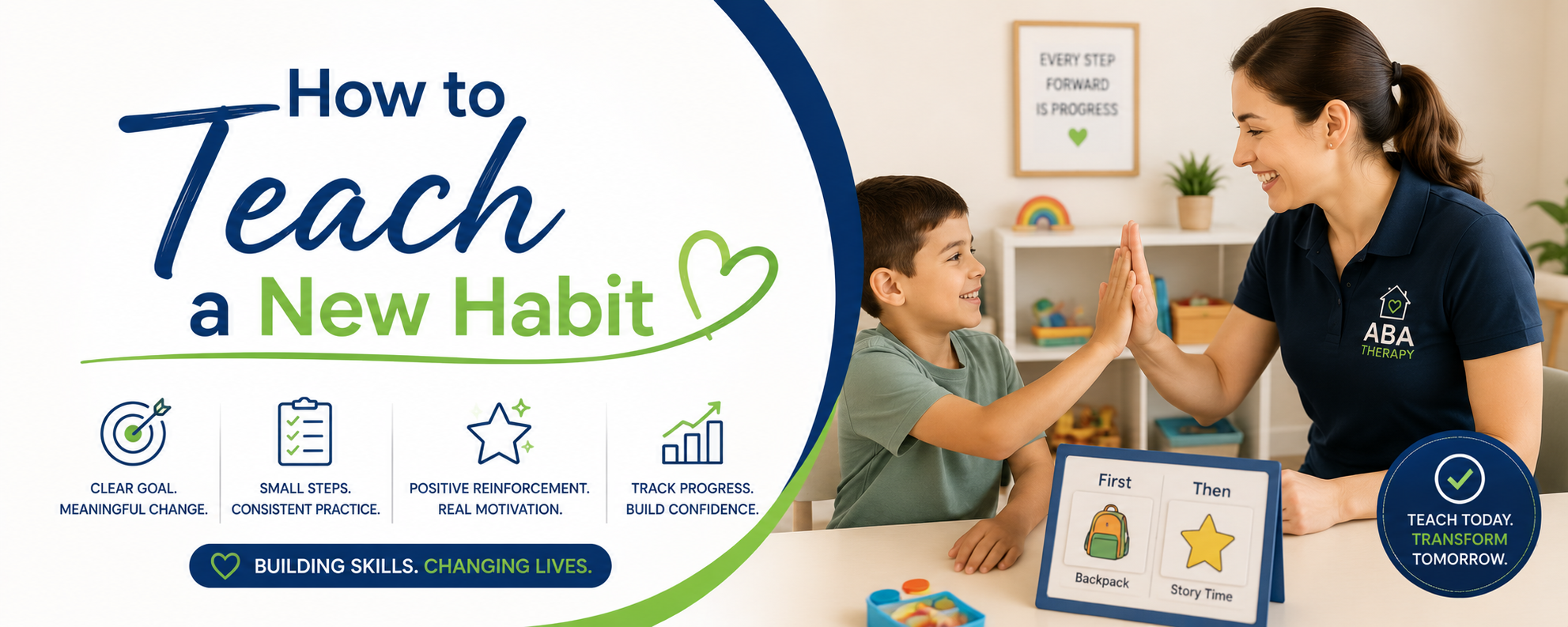
For example, if you are teaching your child to hang up their backpack after school, practice it every single day in the same order:
- Walk inside
- Take off shoes
- Hang backpack
- Wash hands
- Have snack
Over time, the routine becomes automatic.
Families participating in ABA Parent Training often learn how powerful consistency can be when it comes to reducing stress and improving cooperation.
Visual Supports Can Make Learning Easier
Many children with autism process visual information more effectively than spoken instructions alone.
Visual supports help make expectations clear and reduce confusion.
Helpful visual tools include:
- Picture schedules
- Step-by-step charts
- Reward boards
- Timers
- Color-coded reminders
- Visual checklists
For example, if you are teaching handwashing, you can create a chart showing:
- Turn on water
- Use soap
- Scrub hands
- Rinse
- Dry hands
Children often respond well when they can see each step instead of relying only on verbal directions.
Many center-based autism services use visual systems throughout the day because they improve understanding and help children feel more independent.
Positive Reinforcement Builds Motivation
Children are more likely to repeat behaviors that lead to positive experiences.
Positive reinforcement means rewarding the behavior you want to see more often.
Rewards do not always have to be large. In fact, small immediate reinforcement is often the most effective.
Examples include:
- Verbal praise
- Stickers
- Extra playtime
- Favorite snacks
- High fives
- Tokens toward a reward
- Choosing a preferred activity
Instead of saying:
“Good job.”
Be specific:
“I love how you put your shoes away all by yourself.”
Specific praise helps children understand exactly what behavior was successful.
Professionals providing Home-Based ABA Therapy frequently help parents identify reinforcers that motivate their child in natural home environments.
Teach One Step at a Time
Some habits involve many smaller actions. Trying to teach the entire routine all at once can feel overwhelming.
This is where breaking tasks into steps becomes helpful.
For example, brushing teeth may involve:
- Getting the toothbrush
- Applying toothpaste
- Brushing top teeth
- Brushing bottom teeth
- Rinsing mouth
- Putting toothbrush away
Teaching each step individually allows children to build confidence gradually.
Therapists working in in-home ABA therapy Dallas programs often use this strategy because it allows children to practice habits directly in the environment where they naturally occur.
Make Habits Part of Existing Routines
New habits are easier to learn when they are connected to routines that already exist.
Instead of introducing a completely separate activity, attach the new behavior to something your child already does consistently.
For example:
- Brush teeth after putting pajamas on
- Put dishes away after dinner
- Wash hands before snack time
- Read quietly after bath time
Linking habits together creates stronger routine patterns and helps children remember what comes next.
This strategy is commonly used in pediatric behavioral health Highland Park programs because predictable routines often reduce anxiety and resistance.
Keep Instructions Clear and Simple
Long explanations can sometimes make learning more difficult.
Short, direct instructions are usually easier for children to process.
Instead of saying:
“Okay, before we go outside I need you to remember to put your toys away because we talked about cleaning up earlier and I don’t want the room messy when we get back.”
Try:
“Put toys in the bin.”
Simple instructions reduce confusion and help children focus on the action you want them to complete.
Many ABA providers 75205 encourage parents to use concise language consistently so children hear the same expectations repeatedly.
Be Patient During the Learning Process
Habits take time.
Children may need many repetitions before a behavior becomes consistent. Progress is rarely perfectly smooth. Some days will go well, and other days may feel frustrating.
Regression does not mean failure.
A child who successfully completes a habit for several days may suddenly resist it again. This is normal during the learning process.
Remaining calm and patient helps children feel supported rather than pressured.
Parents sometimes feel discouraged when progress seems slow, but steady repetition usually leads to meaningful improvement over time.
Avoid Relying Only on Punishment
Punishment alone rarely teaches lasting habits.
Children need guidance, support, and opportunities to practice the correct behavior.
Instead of focusing only on what went wrong, redirect toward what should happen next.
For example:
Instead of:
“You never clean up your toys.”
Try:
“Toys go in the basket before we start a new activity.”
Positive teaching strategies help children learn expectations without creating unnecessary stress or shame.
Families involved in Center-Based ABA programs often discover that encouragement and structure are more effective than constant correction.
Celebrate Progress Along the Way
Every small improvement matters.
Sometimes parents focus so heavily on the end goal that they forget to acknowledge progress happening in smaller moments.
If your child usually refuses to start a task but today completed one step independently, that is progress.
If your child tolerated a new routine with fewer reminders, that matters too.
Celebrating progress keeps motivation strong for both children and parents.
Create a Calm Learning Environment
Children learn habits more effectively when the environment feels calm and predictable.
Too much noise, clutter, or distraction can make it difficult for children to focus on learning new routines.
Helpful strategies may include:
- Reducing background noise
- Keeping materials organized
- Creating designated spaces for routines
- Using calm transitions between activities
- Giving advance warnings before changes
Many local ABA clinic Texas programs help families adjust home environments in ways that support learning and independence.
Practice Habits Across Different Settings
Once a child learns a habit in one location, the next step is helping them use it in other environments.
For example, if your child learns to clean up toys at home, encourage the same habit at a grandparent’s house, school, or community setting.
Practicing skills in multiple environments helps habits become more flexible and dependable.
This is one reason families often benefit from combining support across home and clinical settings.
Parent Involvement Makes a Huge Difference
Parents play one of the biggest roles in helping habits become successful long-term.
Children spend most of their time at home, which means everyday routines provide countless opportunities for learning.
When parents feel supported and confident, teaching habits becomes more manageable.
This is why parent training for autism can be so valuable. Parents learn practical strategies they can use during meals, playtime, school routines, transitions, and daily activities.
The goal is not perfection.
The goal is creating routines that help children feel successful and independent over time.
When Professional Support Can Help
Some habits are more challenging to teach than others, especially when communication difficulties, sensory needs, emotional regulation, or behavioral challenges are involved.
Professional support can help families identify why a child may be struggling and develop strategies tailored to their specific needs.
Support may include:
- Creating structured routines
- Teaching communication skills
- Reducing problem behaviors
- Improving transitions
- Building self-help skills
- Strengthening emotional regulation
- Supporting social development
Families looking for Autism Treatment Highland Park often benefit from individualized approaches that focus on practical everyday skills rather than one-size-fits-all solutions.
Whether support happens through Home-Based ABA Therapy or center-based autism services, the most effective plans are collaborative and designed around the child’s unique strengths.
Final Thoughts
Teaching a new habit takes patience, repetition, and encouragement. Progress may happen slowly at first, but small consistent steps often lead to meaningful long-term growth.
Children thrive when expectations are clear, routines feel predictable, and successes are celebrated.
For parents, it is important to remember that habit-building is a process. There will be challenges along the way, but every practice opportunity helps strengthen learning.
With the right support, children can build habits that improve independence, confidence, and daily life. Whether families are exploring ABA therapy Highland Park, TX, searching for in-home ABA therapy Dallas, or seeking guidance through ABA Parent Training, consistent support and practical strategies can make a lasting difference.
Over time, the little routines practiced every day often become the foundation for bigger successes in the future.
Contact us at 972–310–4991 or visit https://radiantspectrumtherapy.com/ to learn more.