
For many families, screen time can be both a helpful tool and a daily challenge. Tablets, phones, video games, and television provide entertainment, educational opportunities, and sometimes a much-needed break during busy days. However, when it is time to turn those devices off, many parents find themselves facing resistance, frustration, and even full-blown tantrums.
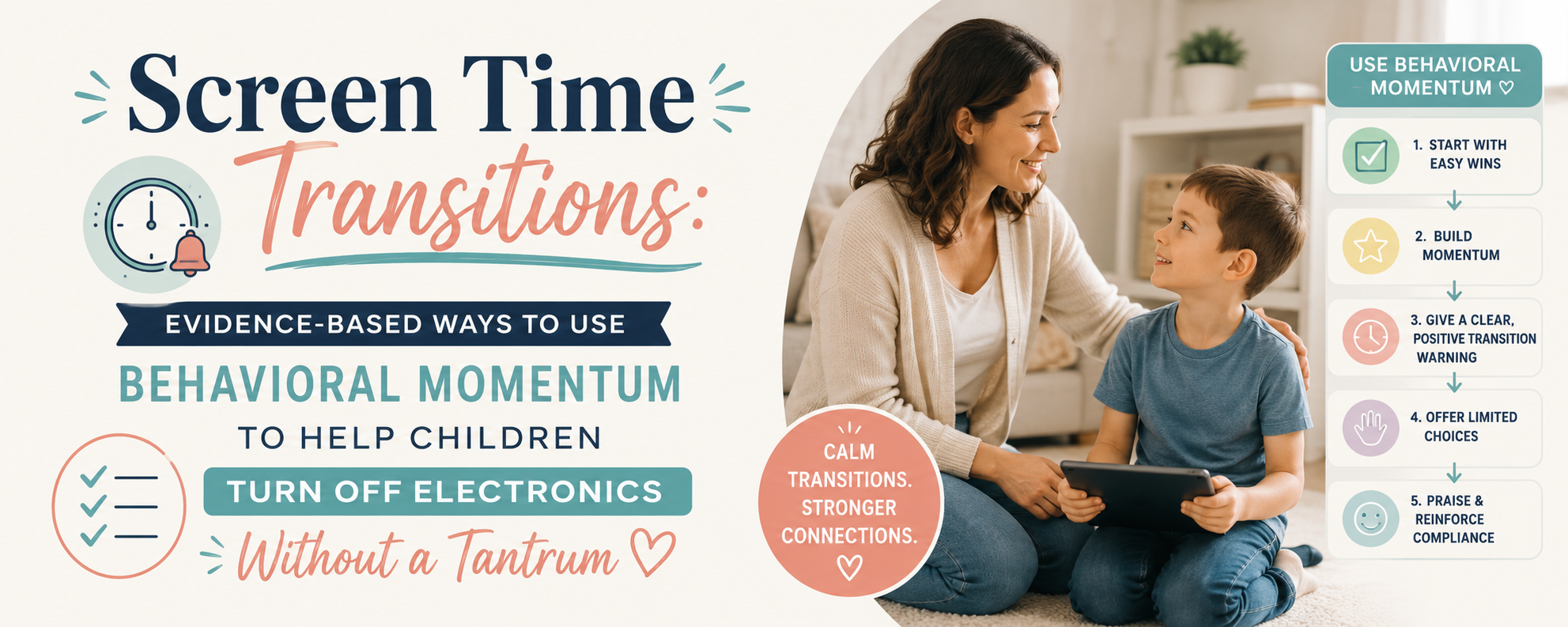
Children often struggle with transitions, and moving from a highly preferred activity like screen time to a less preferred task can feel overwhelming. Fortunately, research in behavioral science has identified effective strategies that can make these transitions smoother. One of the most successful approaches is called behavioral momentum.
Behavioral momentum helps children build success through a series of easy, achievable actions before moving toward a more challenging request. When used consistently, this strategy can significantly reduce power struggles and help families create more peaceful routines around electronics.
Professionals providing ABA Therapy in Dallas frequently teach behavioral momentum techniques because they are practical, evidence-based, and adaptable to a wide range of ages and abilities.
Why Screen Time Transitions Are So Difficult
To understand why transitions can be challenging, it helps to look at what happens during screen use.
Electronic devices are designed to capture attention. Bright visuals, sounds, interactive rewards, and immediate feedback create a highly engaging experience. When a child is deeply focused on a preferred activity, stopping abruptly can feel disappointing and frustrating.
For children with autism and other developmental differences, transitions may be even more difficult because they often thrive on predictability and routine. An unexpected interruption can create anxiety and emotional dysregulation.
Many providers of autism services Dallas TX work closely with families to develop transition strategies that reduce stress while encouraging flexibility and independence.
What Is Behavioral Momentum?
Behavioral momentum is based on a simple principle: people are more likely to comply with a difficult request after successfully completing several easy requests.
Think of it like pushing a heavy object. It takes effort to get it moving, but once momentum builds, continuing forward becomes easier.
In behavioral therapy, this means presenting a series of tasks the child is likely to complete successfully before introducing a more challenging instruction.
For example:
- Give a child three simple requests:
- “Give me a high five.”
- “Touch your nose.”
- “Show me your favorite toy.”
- After successful responses, present the transition request:
- “Time to turn off the tablet.”
Because the child is already experiencing success and cooperation, the transition often occurs with less resistance.
Professionals working in behavioral therapy North Texas settings frequently incorporate behavioral momentum into daily routines because it promotes positive interactions rather than conflict.
The Importance of Preparation
One of the biggest mistakes parents make is ending screen time without warning.
Imagine being absorbed in a movie and having someone suddenly turn off the television. Most adults would feel irritated. Children are no different.
Preparing a child for the upcoming transition can dramatically reduce frustration.
Helpful warning intervals include:
- 15-minute warning
- 10-minute warning
- 5-minute warning
- 2-minute warning
- Final reminder
Visual timers can also help children see how much time remains. Many children respond better when they can predict exactly when the activity will end.
Families receiving ABA Parent Training often learn how to use visual supports and countdown systems to make transitions more predictable and less stressful.
Building Behavioral Momentum Before Screen Time Ends
The key to successful behavioral momentum is creating several opportunities for success before asking the child to stop the preferred activity.
Here is an example:
Five minutes before screen time ends:
- Ask the child to identify a character on the screen.
- Ask them to point to something in the room.
- Ask them to hand you a nearby object.
- Offer praise after each successful response.
- Then present the transition instruction.
This sequence helps establish cooperation while maintaining a positive interaction.
The goal is not to trick the child but to build confidence and engagement before introducing a difficult transition.
Many clinicians in ABA therapy Dallas programs teach parents to use this strategy consistently so it becomes part of the family’s daily routine.
Pairing the End of Screen Time With Something Positive
Children are more willing to leave a preferred activity when they know another positive experience is coming next.
Instead of saying:
“Turn off the tablet now.”
Try:
“Tablet time is finished, and then we get to build with blocks.”
Or:
“After the game ends, we’re making popcorn together.”
This approach shifts attention away from what is ending and toward what is coming next.
Professionals in Home-Based ABA Therapy often help families identify motivating follow-up activities that encourage smoother transitions throughout the day.
Using First-Then Language
First-Then statements are simple but highly effective.
Examples include:
- First turn off the tablet, then we’ll play outside.
- First put away the game, then we’ll read your favorite book.
- First finish screen time, then we’ll have a snack.
This structure creates clarity and predictability.
Children know exactly what is expected and what positive outcome follows the transition.
Many providers of in-home ABA therapy Dallas services use First-Then language as a foundational strategy for reducing transition-related behaviors.
Reinforcing Successful Transitions
Positive reinforcement plays a critical role in building long-term success.
When a child transitions away from electronics appropriately, acknowledge the effort immediately.
Examples include:
- “Great job turning off the tablet when I asked.”
- “I love how calmly you switched activities.”
- “That was excellent listening.”
Praise should be specific so the child understands exactly what behavior earned recognition.
Some families also use token systems, sticker charts, or other reinforcement methods to encourage consistent success.
Professionals at many Dallas ABA centers teach individualized reinforcement systems that align with each child’s interests and developmental needs.
Staying Calm During Resistance
Even with excellent planning, difficult moments will still happen.
When resistance occurs, parents often feel tempted to negotiate, argue, or repeatedly repeat instructions.
Unfortunately, these responses can sometimes increase the behavior.
Instead:
- Keep directions simple.
- Use a calm voice.
- Avoid lengthy explanations.
- Follow through consistently.
- Reinforce cooperation when it occurs.
Remaining calm helps prevent escalation and models emotional regulation.
Families participating in autism parent training Dallas programs often practice these skills through role-play and coaching so they feel more confident handling challenging situations.
Creating Consistent Screen Time Routines
Consistency is one of the strongest predictors of successful transitions.
When screen time rules change frequently, children may become confused or test limits more often.
Helpful guidelines include:
- Establishing clear start and end times.
- Using the same warning system each day.
- Following through consistently.
- Keeping expectations predictable.
A consistent routine reduces uncertainty and helps children understand what will happen next.
Many Dallas autism specialists emphasize routine-building because predictable environments often support emotional regulation and behavioral success.
The Role of Visual Supports
Visual supports can make abstract concepts easier for children to understand.
Examples include:
- Visual schedules
- Countdown charts
- Timers
- First-Then boards
- Daily routine checklists
Visual tools reduce reliance on verbal reminders and provide concrete information about upcoming transitions.
Children often feel more secure when they can see what comes next rather than relying solely on verbal instructions.
This is one reason visual supports are commonly incorporated into Center-Based ABA programs as well as home-based interventions.
When Additional Support May Be Helpful
If screen time transitions consistently result in severe tantrums, aggression, property destruction, or significant family stress, additional support may be beneficial.
Behavior challenges are often connected to underlying factors such as:
- Difficulty with transitions
- Communication challenges
- Emotional regulation struggles
- Sensory preferences
- Reinforcement patterns
A thorough assessment can help identify why the behavior is occurring and which interventions are likely to be most effective.
Families seeking DFW ABA therapy services often benefit from individualized plans that address transition difficulties within the context of the child’s unique needs and strengths.
Helping Children Build Lifelong Transition Skills
The ultimate goal is not simply getting a child to turn off a device. It is helping them develop the skills needed to manage transitions throughout life.
Every day, children encounter situations where they must stop one activity and move to another:
- Leaving the playground
- Finishing a favorite game
- Starting homework
- Going to bed
- Preparing for school
Behavioral momentum provides a practical, research-supported way to strengthen cooperation and reduce frustration during these moments.
With preparation, consistency, reinforcement, and patience, families can create calmer routines around electronics while teaching valuable self-regulation skills that extend far beyond screen time.
Whether delivered through ABA Therapy in Dallas, Home-Based ABA Therapy, Center-Based ABA, or other forms of pediatric behavioral therapy Dallas, these evidence-based strategies can help children transition more successfully and give parents the confidence to navigate one of the most common challenges in modern family life.
By focusing on small successes, building momentum, and creating positive experiences around transitions, families can transform screen time from a daily battleground into a manageable part of a healthy routine.
Contact us at 972–310–4991 or visit https://radiantspectrumtherapy.com/ to learn more.