
For children participating in therapy services, motivation plays a significant role in learning, engagement, and skill development. Whether sessions take place in a clinic, at home, or in the community, therapists often rely on toys, games, sensory materials, and learning tools to create meaningful opportunities for growth. However, even the most exciting toy can lose its appeal when it is available every day without variation.
This is where a toy rotation system becomes incredibly valuable. By carefully cleaning, sanitizing, organizing, and rotating therapy materials, providers can maintain a child’s interest while creating a structured environment that supports progress. A well-planned rotation system not only helps preserve novelty but also ensures toys remain safe, hygienic, and appropriate for therapeutic goals.
Families seeking Autism Treatment Highland Park services often notice that children respond positively when therapy materials feel fresh and engaging. The strategic use of rotating toy bins allows therapists and parents to maximize motivation without constantly purchasing new items.
Why Novelty Matters in Therapy
Children naturally become accustomed to familiar items. A toy that once inspired excitement may eventually become part of the background. This process, known as habituation, is completely normal. When children encounter the same materials repeatedly, the motivational value can decrease over time.
In therapeutic settings, maintaining interest is important because motivation often drives participation. A child who is eager to interact with materials may be more willing to practice communication, social skills, problem-solving, motor development, and daily living skills.
Many professionals providing ABA therapy Highland Park, TX services use rotation systems because they understand that introducing toys at strategic intervals can increase engagement and create new learning opportunities. Rather than relying on constant novelty through purchasing new items, therapists create controlled access to existing resources.
A toy that has been stored away for several weeks can often regain the same excitement it generated when first introduced.
Benefits of a Toy Rotation System
A structured toy rotation system provides numerous advantages for both therapists and families.
Increased Motivation
Children often show renewed interest when toys reappear after a period of absence. This renewed excitement can improve participation during therapy sessions.
Reduced Overstimulation
Too many toys available at once can overwhelm some children. Limiting available options creates a calmer environment that encourages focused play.
Improved Organization
Therapy programs frequently involve dozens or even hundreds of materials. Categorizing items into bins simplifies setup and cleanup while helping therapists quickly locate what they need.
Better Hygiene
A scheduled rotation system naturally creates opportunities for regular cleaning and sanitization. Toys can be thoroughly disinfected before returning to active use.
Goal-Based Programming
Organized bins allow therapists to align materials with specific learning objectives, making sessions more efficient and intentional.
Providers delivering center-based autism services often rely on organized toy systems to maintain consistency across multiple therapy rooms while ensuring materials remain engaging for children throughout the week.
Step One: Categorizing Therapy Toys
The foundation of an effective rotation system begins with categorization.
Rather than grouping toys randomly, organize them according to function and therapeutic purpose. This approach allows therapists and parents to select materials that support specific goals.
Common categories include:
Sensory Toys
These items provide sensory input and can help support regulation and engagement.
Examples include:
- Sensory bins
- Fidget toys
- Textured balls
- Kinetic sand
- Water beads
- Light-up toys
Fine Motor Toys
These materials help develop hand strength, coordination, and dexterity.
Examples include:
- Pegboards
- Building blocks
- Lacing cards
- Stacking toys
- Manipulative puzzles
Communication Toys
These toys encourage requesting, labeling, commenting, and conversational interaction.
Examples include:
- Pretend play sets
- Toy kitchens
- Animal figurines
- Dolls
- Vehicles
Cause-and-Effect Toys
These materials help teach actions and consequences.
Examples include:
- Pop-up toys
- Musical toys
- Interactive buttons
- Light-up activities
Social Play Toys
These toys encourage turn-taking, cooperation, and shared attention.
Examples include:
- Board games
- Cooperative games
- Play sets
- Group activities
Gross Motor Toys
These support movement and physical activity.
Examples include:
- Balance equipment
- Therapy balls
- Bean bags
- Movement games
Professionals working in Center-Based ABA environments often separate materials into categories so therapists can quickly access resources that align with treatment objectives.
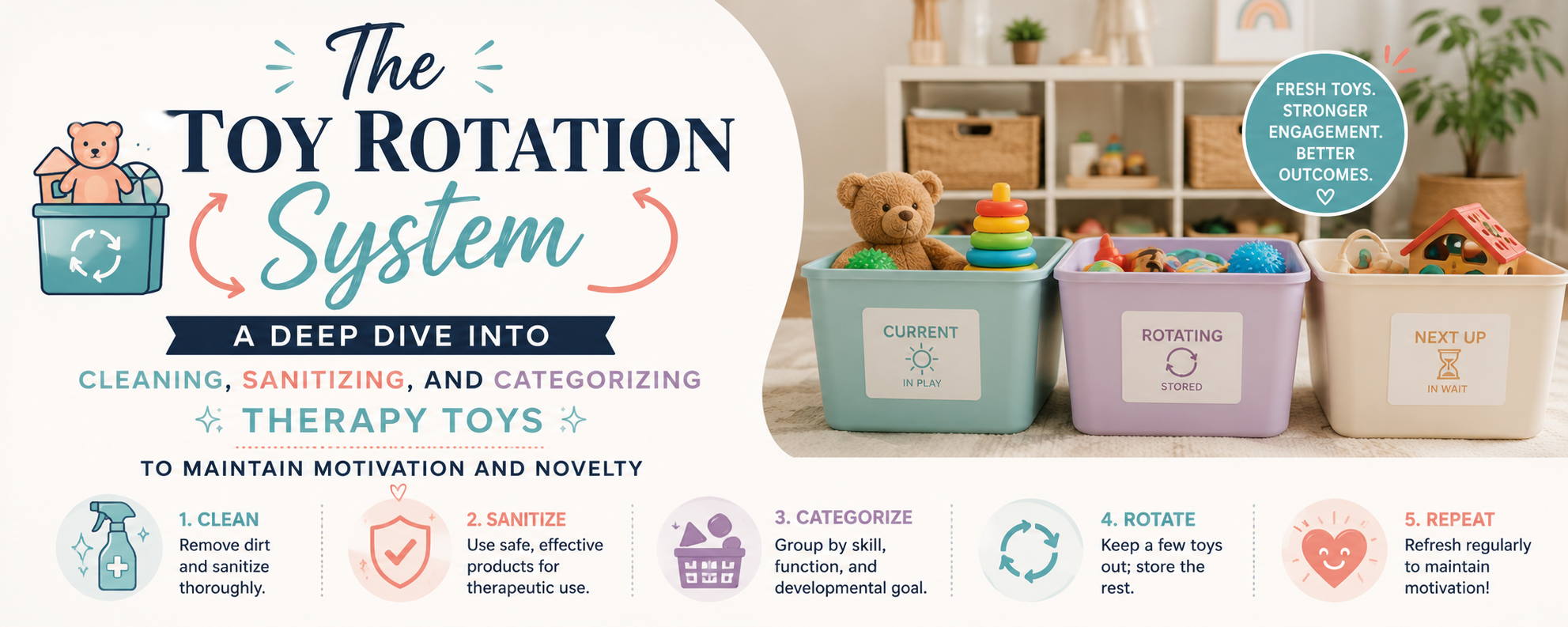
Step Two: Creating Rotating Bins
After categorizing materials, the next step involves creating rotation bins.
Many clinics use durable storage containers labeled by category and rotation schedule. Clear bins allow staff to quickly identify contents while keeping materials protected during storage.
A common approach is to create three to six separate bins for each category.
For example:
- Sensory Bin A
- Sensory Bin B
- Sensory Bin C
- Communication Bin A
- Communication Bin B
- Communication Bin C
Only one bin from each category remains available at a time. The remaining bins stay stored until the next rotation period.
This system creates variety while preventing clutter.
Organizations offering local ABA clinic Texas services frequently use color-coded bins to simplify organization across therapy teams.
Step Three: Establishing a Rotation Schedule
Consistency is key to maintaining novelty.
Most therapy programs rotate materials on a predictable schedule.
Common schedules include:
Weekly Rotation
Materials change every seven days.
This schedule works well for children who attend therapy frequently and may lose interest in toys quickly.
Biweekly Rotation
Materials change every two weeks.
This approach balances familiarity with novelty and is often effective for many learners.
Monthly Rotation
Materials change every month.
This schedule works well for larger toy collections and allows children to fully explore materials before rotation.
Providers delivering behavioral therapy Park Cities services often adjust rotation frequency based on individual needs and preferences.
Some children thrive with frequent changes, while others benefit from longer exposure to familiar materials.
Step Four: Cleaning Before Rotation
A toy rotation system is also an excellent tool for maintaining cleanliness.
Every time a toy leaves active use, it should undergo cleaning before returning to storage.
The first step involves removing visible dirt, debris, food residue, or other contaminants.
General cleaning recommendations include:
- Wiping surfaces with soap and water
- Washing washable toys according to manufacturer instructions
- Inspecting toys for damage
- Discarding broken items
- Removing worn-out materials
Routine maintenance helps ensure toys remain safe and appealing.
Many families participating in Home-Based ABA Therapy choose to adopt similar cleaning procedures to maintain consistency between home and clinic environments.
Step Five: Proper Sanitization Procedures
Cleaning removes dirt, while sanitizing reduces germs.
Both processes are essential.
Sanitization procedures vary based on material type.
Plastic Toys
Plastic items are generally the easiest to sanitize.
Many can be:
- Washed with soap and water
- Sanitized using approved disinfectant products
- Air-dried completely before storage
Wooden Toys
Wood requires special care.
Excessive moisture can damage surfaces, so gentle cleaning methods are recommended.
Fabric Toys
Fabric items may require machine washing or specialized cleaning according to manufacturer guidelines.
Electronic Toys
These should be wiped carefully while protecting electronic components from moisture.
Professionals involved in pediatric behavioral health Highland Park settings often implement detailed sanitization protocols to maintain safe therapeutic environments.
Step Six: Evaluating Toy Effectiveness
Not every toy remains useful forever.
Rotation periods provide valuable opportunities to evaluate materials.
Ask questions such as:
- Does the toy still motivate participation?
- Does it support therapeutic goals?
- Is it age-appropriate?
- Is it durable?
- Is it safe?
Toys that consistently fail to engage children may be removed from circulation.
Likewise, highly preferred materials may deserve inclusion in future rotation cycles.
Many ABA providers 75205 regularly review toy inventories to ensure therapy materials continue supporting meaningful learning experiences.
Implementing Toy Rotation at Home
Parents can benefit from toy rotation just as much as therapy providers.
Families often notice that children play more independently when fewer toys are available at one time.
Simple home implementation might involve:
- Dividing toys into several groups.
- Storing inactive toys out of sight.
- Rotating selections every few weeks.
- Cleaning toys before reintroduction.
- Observing which materials generate the strongest engagement.
Parents participating in ABA Parent Training frequently learn strategies for creating structured home environments that support learning while reducing clutter.
A toy rotation system can become a practical extension of those strategies.
Aligning Rotations With Treatment Goals
One of the most effective uses of toy rotation is aligning materials with current treatment objectives.
For example:
- Communication goals may emphasize pretend play materials.
- Fine motor goals may emphasize construction toys.
- Social goals may emphasize cooperative games.
- Sensory goals may emphasize tactile materials.
By intentionally selecting toys based on developmental priorities, therapists create opportunities for meaningful practice throughout sessions.
This approach is commonly used in center-based autism services where multiple therapists collaborate to support individualized programming.
Supporting Consistency Across Settings
Consistency helps children generalize skills across environments.
When therapists and families communicate about preferred toys, successful activities, and rotation schedules, children often experience smoother transitions between settings.
Programs offering in-home ABA therapy Dallas services frequently collaborate with parents to identify motivating materials that can be used both during therapy and throughout daily routines.
This shared approach helps reinforce learning opportunities outside formal sessions.
Final Thoughts
An effective toy rotation system is far more than an organizational strategy. It is a practical method for maintaining motivation, encouraging engagement, supporting hygiene, and maximizing the value of existing therapy materials.
By categorizing toys thoughtfully, creating rotating bins, establishing consistent schedules, and maintaining proper cleaning and sanitization practices, therapists and families can create environments that feel fresh, organized, and purposeful.
Whether implemented in Center-Based ABA programs, through Home-Based ABA Therapy, or by families participating in ABA Parent Training, toy rotation can become a powerful tool for sustaining interest and supporting long-term learning.
For families exploring Autism Treatment Highland Park, ABA therapy Highland Park, TX, behavioral therapy Park Cities, in-home ABA therapy Dallas, center-based autism services, parent training for autism, ABA providers 75205, pediatric behavioral health Highland Park, or a local ABA clinic Texas, a well-designed toy rotation system can play an important role in creating engaging, motivating, and productive therapy experiences.
Contact us at 972–310–4991 or visit https://radiantspectrumtherapy.com/ to learn more.